Southwire Surge Guard vs Progressive Industries
This comparison is usually written as a brand fight. It is not one. Both ranges span surge-only to full EMS, and the model you pick is the whole decision.
Heads up: this page contains affiliate links. If you buy through one, Camp & Chock may earn a commission at no extra cost to you. It never changes which product we put first — how this site is funded.

The short answer
Pick by model, not brand. Both companies sell surge-only protectors and full electrical management systems, and the difference between those two things is far larger than the difference between the two badges. If you want the device that disconnects on low voltage — the fault that actually destroys air conditioners — buy a full EMS from either brand. If the budget only reaches a surge-only unit, buy one and know what it does not cover.
Part of our power and surge protection guide. If you have not yet settled what an EMS adds over a surge protector, read surge protector vs EMS first — it is the decision this page assumes you have already made. For the other brand pairing people compare, see Progressive vs Hughes Power Watchdog.
Our picks at a glance
Tap any row to jump to the full write-up.
| # | Product | Best for | Beginner fit | Price |
|---|---|---|---|---|
| 1 | 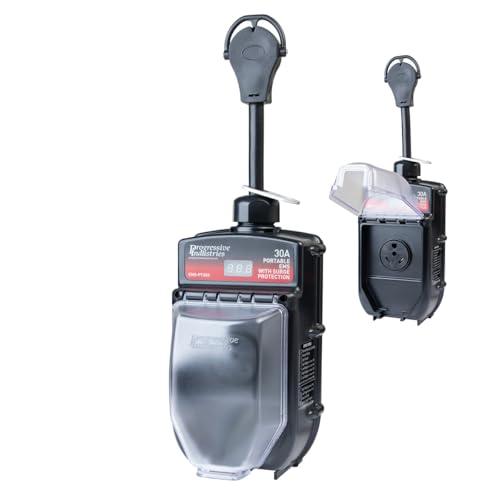 Progressive Industries EMS-PT30X Portable EMS (30 amp)A full electrical management system rather than a surge protector: it watches voltage and wiring and cuts power before a bad pedestal reaches your rig. | 30-amp rigs, no compromise | Good | |
| 2 | 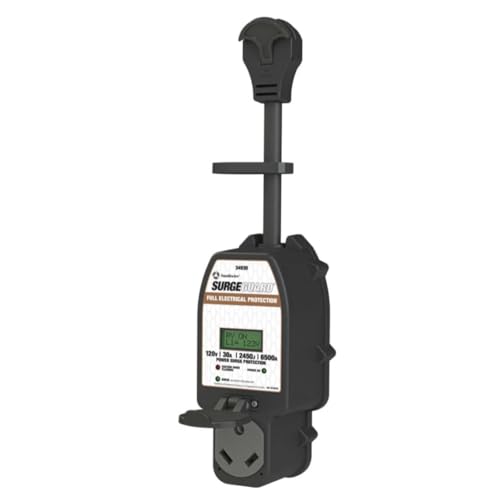 Southwire Surge Guard Portable Surge Protector (30 amp)The one you can buy locally on a Saturday when the pedestal has already misbehaved and you are not waiting for shipping. | Wide availability | Strong | |
| 3 | 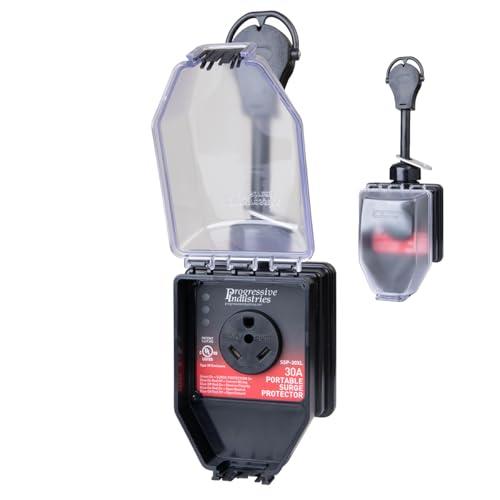 Progressive Industries SSP-30XL Surge Protector (30 amp)The honest budget pick: it catches miswired pedestals and surges, and it will not save your air conditioner from a brownout. | A real budget option | Strong |
Prices come from Amazon and were last checked November 12, 2026. They change constantly, so a price older than 48 hours is withdrawn rather than shown stale — those rows read “Check price on Amazon” instead and go straight to the current listing. #ad — these are affiliate links.
Why the brand question is the wrong question
Search for this comparison and you will find pages arguing about which company builds better hardware. That argument is close to unanswerable from the outside, because neither company publishes failure-rate data and we do not test products.
What is publicly verifiable is far more useful: both ranges contain devices that do fundamentally different jobs. Progressive Industries sells the SSP line, which is surge-only with wiring-fault indicator lights, and the EMS line, which monitors voltage continuously and disconnects. Southwire’s Surge Guard range likewise spans surge-only portable units up to full electrical management.
So a reader comparing “Southwire vs Progressive” is often actually comparing a surge-only unit from one brand against a full EMS from the other, concluding one brand is better, and buying the wrong category. Read the model number on the box. It is the only comparison that changes what happens when the pedestal misbehaves.
What the two product classes actually do
| Surge-only protector | Full electrical management system | |
|---|---|---|
| Absorbs a voltage spike | Yes | Yes |
| Detects open ground or reversed polarity | Yes, by indicator light | Yes, and it refuses to connect |
| Cuts power on low voltage | No | Yes |
| Cuts power on high voltage | No | Yes |
| Reconnects automatically once the fault clears | Not applicable | Yes |
| Protects an air conditioner from a brownout | No | Yes |
| Tells you why it refused | A light | A named fault code |
| Relative price | A fraction of the EMS | Several times the surge-only unit |
The row that justifies the price gap is “cuts power on low voltage.” A hot afternoon on a crowded loop sags pedestal voltage; motors draw more current to do the same work; compressors cook. A surge-only device watches that happen and does nothing, because nothing it is designed to catch is occurring.
Where each brand genuinely differs
With the category question settled, there are two real differences worth weighing.
Availability. Southwire is stocked extremely widely, including in general retail and in the camping store you can physically reach on a Saturday. That is worth something concrete: if the pedestal has already misbehaved and you are not willing to camp unprotected while a box ships, the device you can buy today wins over the device you would have preferred.
Range clarity. Progressive’s naming makes the category obvious — SSP means surge-only, EMS means electrical management — which is genuinely helpful when you are buying your first one. The Surge Guard range is broader and the model number carries more of the meaning, so it is easier to buy the wrong class of device by accident.
Beyond that, both are established names in this category, both publish their specifications, and we have no honest basis for ranking their build quality against each other. Saying so is more useful than inventing a winner.
The picks
1. Best for 30-amp rigs, no compromise
Progressive Industries EMS-PT30X Portable EMS (30 amp)
A full electrical management system rather than a surge protector: it watches voltage and wiring and cuts power before a bad pedestal reaches your rig.
- Specification
- 30 amp portable unit
- Specification
- Full EMS: monitors voltage and pedestal wiring, not only surges
- Specification
- Cuts power on a fault and reconnects automatically once it clears
What it does well
- It disconnects on low voltage, which is the fault that actually destroys air conditioners. A surge-only device will not
- Tells you what is wrong at the pedestal before the trailer is plugged in
- Reconnects on its own after a fault clears, so you do not come home to a warm fridge
The real tradeoff
- Several times the price of a surge-only protector
- Portable units get stolen, so budget for a lock or buy the hardwired version
- The display is small and you will be reading it in the dark
How it measures up
These are judgments from published specifications and what we see at the lodge, not laboratory results. How we choose.
- Beginner fit
- Good — Plug in, read the code, wait. The codes take one read of the manual.
- Protection breadth
- Strong — Low voltage, high voltage, miswired pedestal, surges.
- Diagnostics
- Strong — It tells you why it refused, which is most of the value.
- Value
- Good — Expensive against a surge strip, cheap against a converter.
Specifications from Progressive Industries.
2. Best for Wide availability
Southwire Surge Guard Portable Surge Protector (30 amp)
The one you can buy locally on a Saturday when the pedestal has already misbehaved and you are not waiting for shipping.
- Specification
- 30 amp portable
- Specification
- Pedestal wiring diagnostics
- Specification
- Weather-resistant housing
What it does well
- Stocked almost everywhere, including the camping store you can reach on a Saturday
- Straightforward diagnostic lights and a housing that tolerates weather
The real tradeoff
- The Surge Guard range spans surge-only to full EMS, so the model number matters more than the brand name
How it measures up
These are judgments from published specifications and what we see at the lodge, not laboratory results. How we choose.
- Beginner fit
- Strong — Lights, not codes.
- Protection breadth
- Good — Check the specific model. The range spans surge-only to full EMS.
- Diagnostics
- Good — Enough to refuse a bad pedestal.
- Value
- Good — Fair, and availability has its own value.
Specifications from Southwire.
3. Best for A real budget option
Progressive Industries SSP-30XL Surge Protector (30 amp)
The honest budget pick: it catches miswired pedestals and surges, and it will not save your air conditioner from a brownout.
- Specification
- 30 amp surge-only protector
- Specification
- Indicator lights for pedestal wiring faults
- Specification
- No automatic disconnect on voltage
What it does well
- A fraction of the price of the EMS, and it still catches a miswired pedestal before you plug in
- Nothing to read or learn. The lights say go or no-go
- Small enough that you actually carry it
The real tradeoff
- Does not disconnect on low voltage. That is the fault that kills air conditioners, and this will watch it happen
- Surge-only protection is the floor, not the goal
How it measures up
These are judgments from published specifications and what we see at the lodge, not laboratory results. How we choose.
- Beginner fit
- Strong — Three lights. No manual required.
- Protection breadth
- Adequate — Surges and wiring faults only. No voltage cutoff.
- Diagnostics
- Good — Enough to refuse a bad pedestal.
- Value
- Strong — The right answer when the EMS is genuinely out of budget.
Specifications from Progressive Industries.
How we choose
Protection breadth before anything else. A device that catches surges and ignores voltage sag is covering the less damaging half of the problem. That is the ranking above in one sentence.
Diagnostics you can read in the dark. Most of the value of these devices on any given night is being told that the pedestal is miswired before you plug the trailer into it. A named fault code beats a single warning light; an app beats both, which is the Hughes argument on its own page.
Automatic reconnect. An overnight brownout that trips the device and then clears should not cost you a refrigerator full of food. Full EMS units reconnect on their own.
Beginner usability. Three lights that say go or no-go are genuinely easier than codes. That is the honest advantage of the cheaper devices and it is why they are not simply worse.
We do not test products and say so on how we choose. Everything above comes from each manufacturer’s published information.
Which to buy, by situation
A 30-amp travel trailer and a normal budget: the full EMS. It is the most expensive thing most first-season owners buy that is not furniture, and it is protecting a converter, a refrigerator and an air conditioner that together cost a great deal more.
You need something before this weekend: whichever capable unit is physically in stock near you. Availability is a real specification. Check the model to be sure what class you are getting.
The EMS is genuinely out of budget: a surge-only unit, deliberately and with your eyes open. It will catch a miswired pedestal, which is a common fault and a real hazard, and it will not save an air conditioner from a brownout. That is a reasonable trade at the right price — it is only a bad trade if nobody told you.
A 50-amp rig: buy the 50-amp version of whichever you choose. The interesting faults on 50-amp service hide on one leg, so per-leg monitoring is the thing to look for, and the 50-amp roundup covers it.
Pick by what you want it to catch
Low voltage as well as surges, with fault codes and automatic reconnect: the full EMS. Something capable you can buy locally today: the widely stocked Surge Guard, after checking the model class. Surges and wiring faults only, at a fraction of the price: the surge-only unit, chosen knowingly.
Best for 30-amp rigs, no compromise
Progressive Industries EMS-PT30X Portable EMS (30 amp)
A full electrical management system rather than a surge protector: it watches voltage and wiring and cuts power before a bad pedestal reaches your rig.
Best for Wide availability
Southwire Surge Guard Portable Surge Protector (30 amp)
The one you can buy locally on a Saturday when the pedestal has already misbehaved and you are not waiting for shipping.
Best for A real budget option
Progressive Industries SSP-30XL Surge Protector (30 amp)
The honest budget pick: it catches miswired pedestals and surges, and it will not save your air conditioner from a brownout.
What neither brand will do for you
Create amps. A protector does not make a 15-amp outlet into a 30-amp service. That is an adapter question, and adapters do not create current either — see the dogbone adapter guide.
Last forever. Surge components are sacrificial by design; absorbing hits is how they work and it uses them up. Do RV surge protectors go bad covers how you tell.
Replace a working cord. A damaged power cord is its own hazard and no protector downstream of it fixes that. If yours is crushed, replace it, and the power cord roundup is where to start.
Questions people actually ask
Is Southwire Surge Guard or Progressive Industries better?
Both brands sell surge-only protectors and full electrical management systems, so the model decides what you are protected against far more than the brand does. Neither company publishes failure-rate data, and this site does not test products, so we do not rank their build quality against each other.
What is the difference between a Progressive SSP and an EMS?
The SSP line is surge-only with indicator lights for pedestal wiring faults. The EMS line monitors voltage continuously and disconnects the trailer on low or high voltage, then reconnects automatically once the fault clears. Low voltage is the fault that damages air conditioners, and only the EMS acts on it.
Do all Surge Guard models include electrical management?
No. The Surge Guard range spans surge-only portable units through to full electrical management, so the model number carries the meaning rather than the brand name. Check which class you are buying before you order.
Is a surge-only RV protector worth buying?
Yes, if the full EMS is genuinely out of budget and you understand the limit. A surge-only unit catches voltage spikes and will refuse a miswired pedestal, which is a common and real hazard. It will not disconnect your trailer during a brownout.
Should I buy a portable or hardwired surge protector?
Portable units are stolen off pedestals routinely, so a portable should be bought alongside a cord lock. A hardwired unit cannot be lifted, but it also stays with the trailer rather than moving to your next one.
Sources
Read next
Power & Surge Protection
RV Surge Protector vs EMS: What the Cheaper One Misses
The clearest explanation of surge-only versus full electrical management, and which faults each one actually catches.
Power & Surge Protection
Progressive EMS vs Hughes Power Watchdog
Two full EMS units compared on diagnostics, interface, repairability and what happens after a big surge.
Power & Surge Protection
Best RV Surge Protector for a First Travel Trailer
Surge protectors and full electrical management systems compared, with the low-voltage problem explained properly.
Power & Surge Protection
Best 30-Amp RV Surge Protector
Four 30-amp options from full EMS to a budget surge-only unit, and how to tell which service your trailer has.
Reviewed October 17, 2026. Spot something out of date? Tell us and we will fix it.