Best RV Tire Pressure Monitoring System
You will not feel a trailer tire going down. By the time you notice, the tire has usually already come apart and taken some of the trailer with it.
Heads up: this page contains affiliate links. If you buy through one, Camp & Chock may earn a commission at no extra cost to you. It never changes which product we put first — how this site is funded.
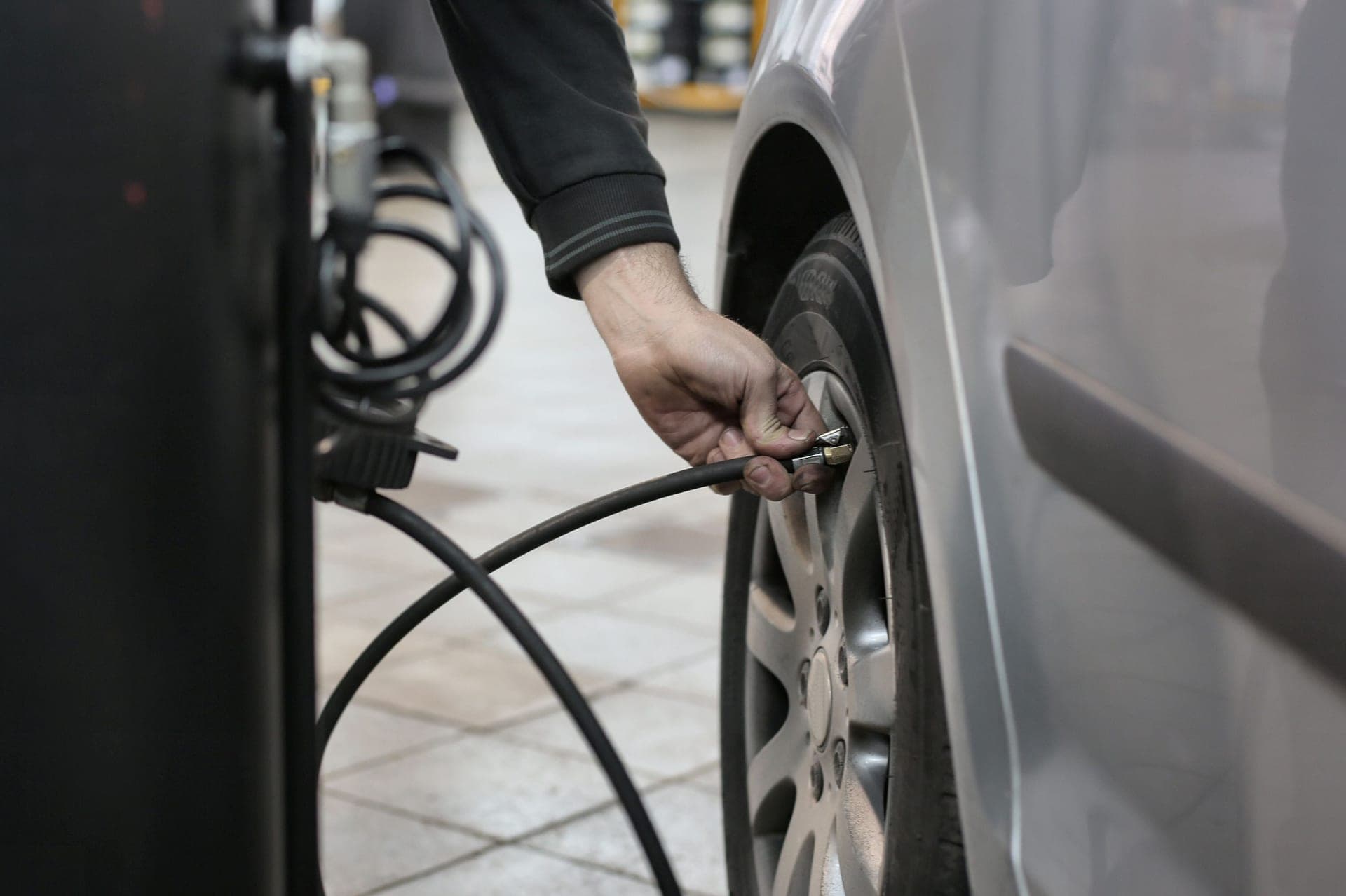
The short answer
Buy a system with flow-through sensors and per-wheel temperature as well as pressure. Flow-through means you can top up pressure without unscrewing anything, and temperature is how a failing tire announces itself before it lets go. The cheaper system gives you the same fundamental warning with a plainer monitor.
Part of our towing and security guide. This is the least exciting purchase in the hub and the one most likely to prevent an expensive day.
Our picks at a glance
Tap any row to jump to the full write-up.
| # | Product | Best for | Beginner fit | Price |
|---|---|---|---|---|
| 1 | TST 507 Tire Pressure Monitoring SystemThe only warning you get before a trailer tire fails, because a trailer gives you no feedback through the steering wheel. | Knowing before the blowout | Good | |
| 2 | EEZTire Tire Pressure Monitoring SystemThe lower-cost way into tire monitoring: the same fundamental warning, a plainer monitor, and replaceable sensor batteries. | A cheaper way in | Good | |
| 3 | 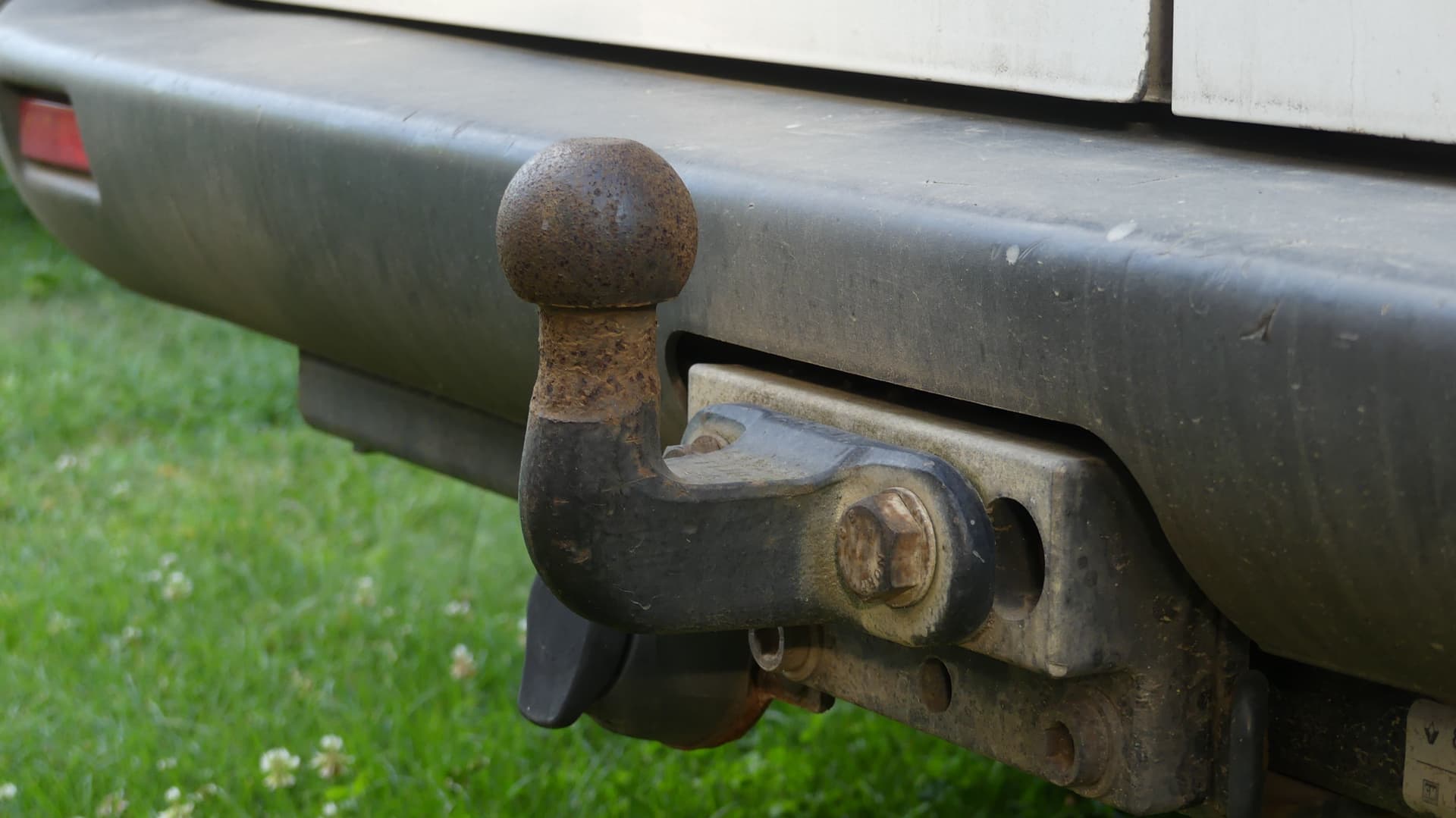 Master Lock Receiver Hitch Pin LockReplaces the clip pin anyone can pull out in a parking lot. It protects the ball mount, not the trailer. | Keeping the ball mount | Strong |
Prices are not published here. They change constantly and a stale number is worse than no number, so every button goes straight to the current Amazon listing. #ad — these are affiliate links and photographs are stock images of the category, not of the individual product.
Why a trailer needs this more than a car does
In a car, a tire losing pressure changes how the steering feels. You notice a pull, or a vagueness, and you stop.
A trailer gives you none of that. It is behind you, its tires are not connected to anything you hold, and a tow vehicle heavy enough to pull a trailer is not going to be unsettled by one of its tires going soft. The first indication is usually a noise, and by then the tire has come apart.
That is what makes this category different. It is not a convenience that saves you checking pressures; it is the only warning channel that exists.
What a failure actually costs
A trailer tire that disintegrates at highway speed throws tread. Tread hitting the underside of a trailer tears out wiring, damages the wheel well and skirt, and sometimes punctures the plumbing. The tire is the cheap part of the repair.
The NHTSA publishes general guidance on tire safety and maintenance that is worth reading, and the practical summary for a trailer is that under-inflation and heat are what kill tires.
The picks
1. Best for Knowing before the blowout
TST 507 Tire Pressure Monitoring System
The only warning you get before a trailer tire fails, because a trailer gives you no feedback through the steering wheel.
- Specification
- Monitor plus per-wheel sensors
- Specification
- Flow-through sensor option lets you inflate without removing them
- Specification
- Signal repeater available for long rigs
What it does well
- A trailer tire losing pressure gives you no steering feedback at all. The monitor is the only warning you get
- Flow-through sensors mean topping up pressure does not require unscrewing anything
- Watches temperature as well as pressure, and heat is how a failing tire announces itself
The real tradeoff
- Costs more than most first-season purchases
- Sensors need batteries and occasional attention
- Long rigs may need the repeater, which is an extra
How it measures up
These are judgments from published specifications and what we see at the lodge, not laboratory results. How we choose.
- Beginner fit
- Good — Setup is a one-evening job, then it is automatic.
- Install effort
- Good — Screw sensors on, pair them, done.
- Warning quality
- Strong — Pressure and temperature, per wheel.
- Value
- Good — Expensive against a tire, cheap against the damage one does.
Specifications from TST.
2. Best for A cheaper way in
EEZTire Tire Pressure Monitoring System
The lower-cost way into tire monitoring: the same fundamental warning, a plainer monitor, and replaceable sensor batteries.
- Specification
- Monitor plus sensors
- Specification
- Sensor kits sold in several counts
- Specification
- User-replaceable sensor batteries
What it does well
- Usually costs less than the category leader for the same fundamental job
- Sensor batteries are user-replaceable, which keeps the running cost sane
The real tradeoff
- A more basic monitor interface
- Long rigs will want the repeater here too
How it measures up
These are judgments from published specifications and what we see at the lodge, not laboratory results. How we choose.
- Beginner fit
- Good — Comparable setup.
- Install effort
- Good — Screw-on sensors.
- Warning quality
- Good — Pressure and temperature alerts.
- Value
- Strong — The reason to choose it.
3. Best for Keeping the ball mount
Master Lock Receiver Hitch Pin Lock
Replaces the clip pin anyone can pull out in a parking lot. It protects the ball mount, not the trailer.
- Specification
- Locking receiver pin
- Specification
- Common 5/8 in diameter for 2 in receivers
- Specification
- Weather-resistant
What it does well
- Replaces the clip pin anyone can pull out in a parking lot in two seconds
- Stops the ball mount walking off, which is the cheap theft that happens constantly
The real tradeoff
- Protects the ball mount, not the trailer. A coupler lock is a different product
- The lock cylinder wants a squirt of lubricant once a season
How it measures up
These are judgments from published specifications and what we see at the lodge, not laboratory results. How we choose.
- Beginner fit
- Strong — Swap it for the clip pin.
- Install effort
- Strong — None.
- Deterrence
- Good — Stops opportunists, not a determined thief.
- Value
- Strong — Cheap relative to a ball mount.
Specifications from Master Lock.
What to look for
Flow-through sensors
Standard sensors screw onto the valve stem and seal it, so topping up pressure means removing the sensor, inflating, and refitting. Flow-through sensors let air through, so you inflate with the sensor in place.
This sounds minor. In practice it is the difference between checking pressures being a two-minute job and a fifteen-minute one, and the version that takes fifteen minutes is the version you skip.
Temperature as well as pressure
Heat is the mechanism of most tire failures. An under-inflated tire flexes more, flexing generates heat, and heat destroys the rubber and the belts. A system that reports temperature often warns you before pressure has changed enough to trip an alarm.
It also catches a dragging brake, which shows up as one wheel running hotter than its neighbors and which you would otherwise discover by smell.
Sensor count and the spare
How many sensors to buy
| Setup | Sensors needed |
|---|---|
| Single-axle trailer | 2, plus 1 for the spare if you want it |
| Tandem-axle trailer | 4, plus 1 for the spare |
| Tandem trailer and tow vehicle | 8, plus spares |
| Triple-axle trailer | 6, plus 1 for the spare |
Monitoring the spare is worth it. A spare that has quietly gone flat in its carrier is a spare you find out about at the worst possible moment.
A repeater for long rigs
The sensors have to reach the monitor in the cab. On a long fifth wheel the rear sensors are a long way back, and a repeater is the supported solution. Check availability before buying if your rig is long.
Battery life and replaceability
Sensors run on small batteries. Systems where those are user-replaceable keep the running cost sensible. Systems where they are not mean replacing sensors, which is a much worse proposition over several seasons.
What it does not replace
A monitor tells you what pressure a tire is at. It does not tell you the tire is six years old, which is the other common cause of trailer tire failure. Check the date code on the sidewall, and treat age as a reason to replace regardless of tread depth.
It also does not set your pressures. Use the figure on your trailer's placard, not the number on the tire sidewall, which is a maximum rather than a recommendation. That check belongs in the towing safety checklist.
Mistakes first-timers make
Buying too few sensors. Count the wheels, then add the spare.
Setting alarm thresholds and then ignoring them. The alarm exists so you stop. Stopping to look at a warm tire is twenty minutes; not stopping is a repair.
Using the sidewall maximum as the target pressure. Use the trailer placard.
Assuming a new trailer's tires are good. Trailer tires are frequently the cheapest component on a new trailer, and they age whether you use them or not.
Questions people actually ask
Do I really need a TPMS on a travel trailer?
If you tow any distance, yes. A trailer tire losing pressure gives you no feedback through the steering wheel, so a monitor is the only advance warning that exists.
How many TPMS sensors do I need?
One per wheel, so two for a single axle and four for a tandem, plus one for the spare. Monitoring the spare is worth it, because a flat spare is discovered at the worst moment.
What are flow-through sensors?
Sensors that let air pass, so you can inflate the tire without removing the sensor. It turns a pressure check from a fifteen-minute job into a two-minute one, which is the difference between doing it and skipping it.
Why does temperature matter as much as pressure?
Heat is the mechanism of most tire failures, and an under-inflated tire flexes and heats before pressure drops far enough to alarm. Temperature also catches a dragging brake, which shows up as one wheel running hot.
What pressure should my trailer tires be?
Use the figure on your trailer's placard, not the maximum printed on the tire sidewall. The sidewall number is a maximum rather than a recommendation.
Does a TPMS mean I do not need to check tire age?
No. Age is a separate failure mode and a monitor cannot see it. Check the date code on the sidewall and replace by age regardless of how much tread is left.
Sources
Read next
Towing & Security
RV Towing Safety Checklist
A pre-departure towing checklist covering hitch, chains, brakes, tires, loading and the rooftop items people forget.
Towing & Security
Best Weight Distribution Hitch for a Travel Trailer
Weight distribution hitches with integrated sway control, sized by tongue weight, with an honest account of setup complexity.
Towing & Security
How to Hitch a Travel Trailer (Step by Step)
The full hitching sequence with the latch and jack checks that prevent a trailer coming off the ball.
Reviewed September 25, 2026. Spot something out of date? Tell us and we will fix it.