Best RV Leveling Blocks for a First Travel Trailer
Six options, one clear starting point, and the honest reason the expensive curved leveler exists. If you only read the first box, you will still buy the right thing.
Heads up: this page contains affiliate links. If you buy through one, Camp & Chock may earn a commission at no extra cost to you. It never changes which product we put first — how this site is funded.
The short answer
Buy a ten-pack of interlocking leveling blocks. They cost very little, they work on every travel trailer, and the interlock is what stops a stack shuffling apart under the tire. If you would rather pay to skip the trial and error, the curved leveler lets you drive up and stop at whatever height reads level, in one attempt.
This page is part of our leveling and chocks guide, written for someone who picked up a travel trailer recently and discovered that campsites are not flat. Leveling is the first job at every site and the one that most obviously separates people who have done it before from people who have not.
Our picks at a glance
Tap any row to jump to the full write-up.
| # | Product | Best for | Beginner fit | Price |
|---|---|---|---|---|
| 1 | Camco FasTen Leveling Blocks (10-pack)The default first purchase for a travel trailer: interlocking blocks you stack into a ramp, cheap enough to buy two sets. | Most first trailers | Strong | |
| 2 | Andersen Hitches Camper LevelerThe one that removes the trial and error: a curved ramp you drive up until level, then stop, with a chock that drops in behind. | Leveling in one attempt | Strong | |
| 3 | Beech Lane Camper Leveler KitThe same drive-up-and-stop mechanism as the category leader, usually bundled more completely and usually for less. | The curved-ramp idea for less | Strong | |
| 4 | Tri-Lynx Lynx Levelers (10-pack)The upgrade you make after your first soft-ground site: the same stacking idea with a structure that spreads weight instead of concentrating it. | Heavier rigs and soft ground | Good | |
| 5 | 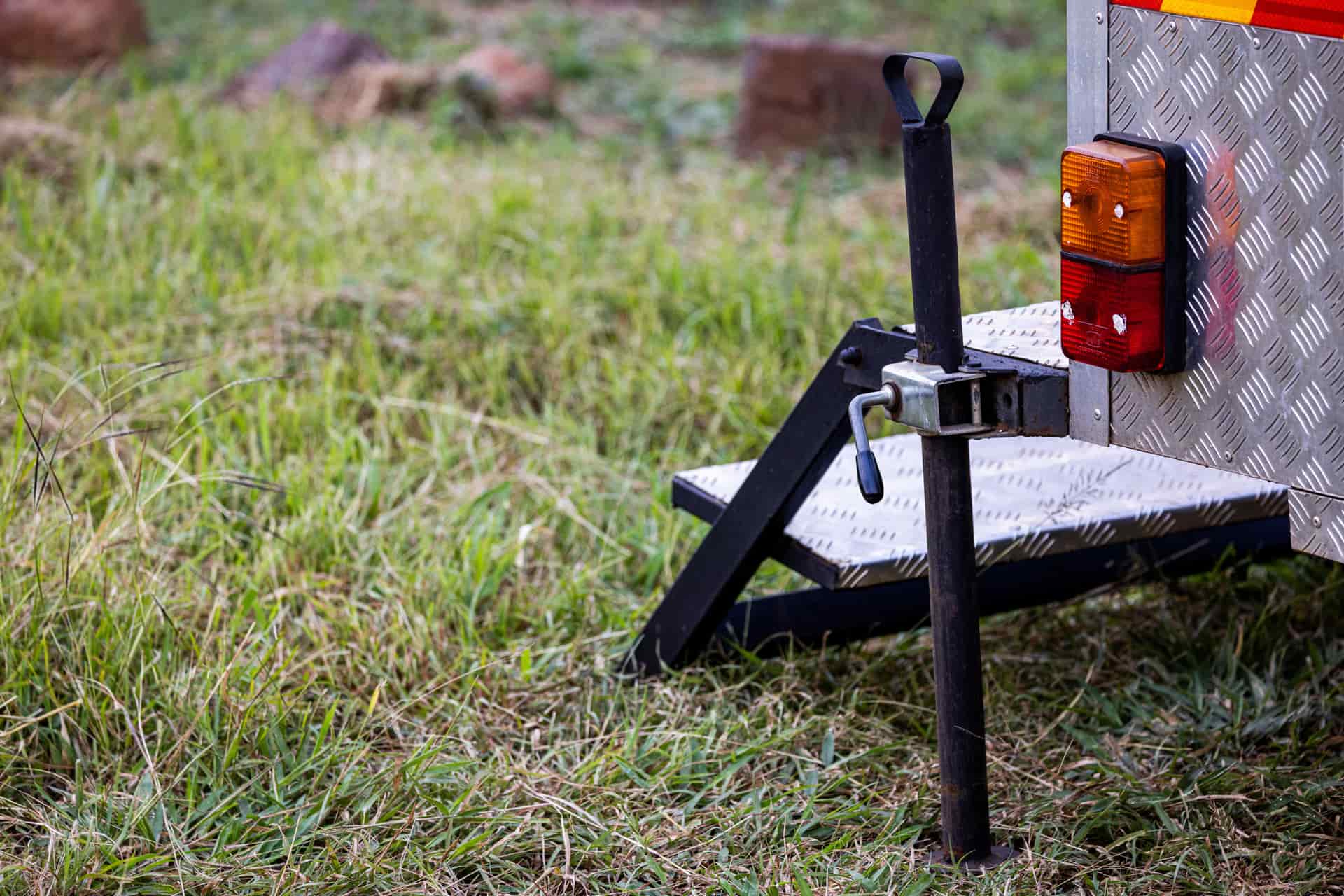 Camco Stabilizing Jack PadsFour squares of plastic that stop your stabilizer jacks burying themselves in a wet grass site overnight. | Stopping jacks sinking | Strong | |
| 6 | Camco Leveling Block Storage BagA bag, honestly. But the reason people lose leveling blocks is that they never had anywhere to put them. | Not losing blocks | Strong |
Prices are not published here. They change constantly and a stale number is worse than no number, so every button goes straight to the current Amazon listing. #ad — these are affiliate links and photographs are stock images of the category, not of the individual product.
Who this is for
A first travel trailer, towed to sites with mixed surfaces: gravel pads, grass, the occasional concrete slab. You want the camper level side to side so the fridge works properly and so nothing rolls off the counter, and you want it done before the light goes.
If you already own a motorhome with hydraulic auto-leveling, none of this applies to you and you can skip the whole category. Everything here is about a towed trailer with no leveling system of its own.
How we choose
We do not run a test lab and we do not claim to. What this site has instead is a lodge that hosts RV sites every weekend, which means watching a new rig get set up on the same ground, over and over, with whatever gear the owner brought. What holds and what sinks stops being a matter of opinion fairly quickly.
On top of that, picks are chosen against published manufacturer specifications, current availability, and whether a beginner can use the thing correctly without reading a forum thread first. Our full methodology is here, including what we deliberately do not do.
The picks
1. Best for Most first trailers
Camco FasTen Leveling Blocks (10-pack)
The default first purchase for a travel trailer: interlocking blocks you stack into a ramp, cheap enough to buy two sets.
- Specification
- Interlocking 10-pack
- Specification
- Stacks into a ramp
- Specification
- Carry bag sold separately
What it does well
- The blocks lock together, so a two-high stack does not shuffle apart when the tire rolls onto it
- Ten blocks covers one axle on most sites and two axles on gently sloped ones
- Cheap enough that losing one in the grass is annoying rather than expensive
The real tradeoff
- You still guess how many to stack, then pull forward and re-check
- On soft ground they sink, and nothing in the design prevents that
How it measures up
These are judgments from published specifications and what we see at the lodge, not laboratory results. How we choose.
- Beginner fit
- Strong — No instructions needed. Stack, drive up, stop.
- Stability once set
- Good — The interlock is what keeps a stack honest.
- Speed to level
- Adequate — Trial and error. You will pull forward twice.
- Value
- Strong — The least money you can spend and still do this properly.
Specifications from Camco.
2. Best for Leveling in one attempt
Andersen Hitches Camper Leveler
The one that removes the trial and error: a curved ramp you drive up until level, then stop, with a chock that drops in behind.
- Specification
- Curved ramp plus matching chock
- Specification
- One unit per side
- Specification
- Continuous height adjustment within its range
What it does well
- You drive up until the bubble centers and stop. No stacking, no guessing, no second attempt
- Any height within its range, rather than the fixed steps a block stack gives you
- The matching chock drops in behind the tire, so one product covers two jobs
The real tradeoff
- Several times the price of a bag of blocks
- Wants a genuinely firm surface. The curved face concentrates load more than a wide block stack does
- Bulky to store for what it is
How it measures up
These are judgments from published specifications and what we see at the lodge, not laboratory results. How we choose.
- Beginner fit
- Strong — The clearest cause and effect in the category.
- Stability once set
- Good — Fine on firm ground, less happy on soft.
- Speed to level
- Strong — One pull-up. This is what you are paying for.
- Value
- Adequate — Expensive per unit of plastic, cheap per hour of frustration.
Specifications from Andersen Hitches.
3. Best for The curved-ramp idea for less
Beech Lane Camper Leveler Kit
The same drive-up-and-stop mechanism as the category leader, usually bundled more completely and usually for less.
- Specification
- Curved ramp plus chock
- Specification
- Sold as a two-side kit
- Specification
- Rubber grip pads in most kits
What it does well
- Works the same way as the better-known curved leveler and usually costs less
- Kits normally arrive with the chocks and grip mats, so nothing is missing on night one
- The grip pads genuinely help on smooth concrete pads
The real tradeoff
- Same soft-ground caveat as every curved leveler
- Kit contents vary between listings, so read what is actually in the box
How it measures up
These are judgments from published specifications and what we see at the lodge, not laboratory results. How we choose.
- Beginner fit
- Strong — Drive up, stop, chock. Nothing to learn.
- Stability once set
- Good — The grip pads are a real help on concrete.
- Speed to level
- Strong — Single attempt, same as the original.
- Value
- Strong — The reason most people end up here instead.
Specifications from Beech Lane.
4. Best for Heavier rigs and soft ground
Tri-Lynx Lynx Levelers (10-pack)
The upgrade you make after your first soft-ground site: the same stacking idea with a structure that spreads weight instead of concentrating it.
- Specification
- Interlocking 10-pack
- Specification
- Open honeycomb structure
- Specification
- Stacks up or spreads sideways
What it does well
- The honeycomb structure spreads load, which is the one thing that helps most on soft sites
- Laid two wide instead of two high, they sink far less than a narrow stack
- Long-lived. These are the ones you still own in five years
The real tradeoff
- Costs more than a basic interlocking set for a difference you only notice on bad ground
- The open structure collects gravel and mud
How it measures up
These are judgments from published specifications and what we see at the lodge, not laboratory results. How we choose.
- Beginner fit
- Good — Same idea as any stacking block, slightly more to carry.
- Stability once set
- Strong — The wide footprint is what stops the slow sink.
- Speed to level
- Adequate — Still stack and check.
- Value
- Good — Worth it if your regular sites are grass or dirt.
Specifications from Tri-Lynx.
5. Best for Stopping jacks sinking
Camco Stabilizing Jack Pads
Four squares of plastic that stop your stabilizer jacks burying themselves in a wet grass site overnight.
- Specification
- Set of four
- Specification
- Spreads jack-foot load
- Specification
- Stackable with leveling blocks
What it does well
- Spreads the jack foot over a much larger area, which is the whole reason jacks bury themselves in grass
- Cheap, light, and they live permanently in the same compartment
The real tradeoff
- One more thing to remember to collect when you leave
- Does nothing for a jack already at full extension
How it measures up
These are judgments from published specifications and what we see at the lodge, not laboratory results. How we choose.
- Beginner fit
- Strong — Put one under each foot.
- Stability once set
- Good — A real difference on soft ground.
- Speed to level
- Strong — Adds seconds.
- Value
- Strong — Small money, and it prevents a bad morning.
Specifications from Camco.
6. Best for Not losing blocks
Camco Leveling Block Storage Bag
A bag, honestly. But the reason people lose leveling blocks is that they never had anywhere to put them.
- Specification
- Zippered bag
- Specification
- Sized for a 10-block set
- Specification
- Carry handles
What it does well
- Blocks live in one place instead of loose in a bumper compartment
- Wet, muddy blocks go back in the bag instead of onto everything else
The real tradeoff
- It is a bag. Any tote works. This one is simply the right size
How it measures up
These are judgments from published specifications and what we see at the lodge, not laboratory results. How we choose.
- Beginner fit
- Strong — Nothing to understand.
- Stability once set
- Adequate — Not applicable. It is storage.
- Speed to level
- Good — Faster only because you can find your blocks.
- Value
- Good — Cheap, and it ends a recurring annoyance.
Specifications from Camco.
What to look for
There are only three real decisions in this category, and none of them are about brand.
Stacking blocks or a curved ramp
Stacking blocks are cheap, universal and slow. You guess a height, drive up, check the bubble, and usually do it again. A curved leveler is a continuous ramp: you drive up it until the bubble centers and stop, so any height within its range is available and you get there in one attempt. You are paying, quite specifically, for not having to pull forward a second time.
For a first season, either is a correct answer. Buy the blocks if money matters and you do not mind two attempts. Buy the curved leveler if you arrive at sites after dark, camp somewhere new every weekend, or simply value the ten minutes.
Footprint, which is the soft-ground question
The failure people describe as blocks cracking is almost always blocks sinking. A narrow two-high stack concentrates a lot of weight into a small patch of ground, and wet grass gives way under it. The fix is area, not strength: laying blocks two wide rather than two high, or choosing a design that spreads load across an open structure, changes the outcome far more than paying for a tougher plastic does.
The same principle is why jack pads matter. A stabilizer jack foot is a few square inches. On a grass site it will find its way into the ground overnight, and you will wake up on a trailer that is no longer level.
How many you actually need
More than you think for the first trip, and fewer than you think after that. A ten-pack handles one axle at most sites. Two ten-packs handle a tandem axle on a genuinely awkward pitch and cost very little more. We work the arithmetic through properly in how many leveling blocks you need.
Which type suits which situation
| Your situation | What to buy | Why |
|---|---|---|
| First trailer, tight budget | Interlocking ten-pack | Universal, cheap, nothing to learn |
| Arriving after dark, new sites often | Curved leveler | One attempt instead of three |
| Grass and dirt sites | Wide-footprint blocks, laid two wide | Spreads load instead of concentrating it |
| Concrete pads | Any block, plus grip pads | Stacks slide on smooth, damp concrete |
| Stabilizer jacks sinking | Jack pads | The jack foot is far too small on its own |
Mistakes first-timers make
These are the ones we see at the lodge most weekends, in roughly the order they happen.
Leveling side to side last. Side-to-side comes first, with blocks under the low-side wheels, while the trailer is still hitched. Front to back is the tongue jack, afterwards. Doing it in the other order means doing the whole thing twice.
Stacking two high on soft ground and then being surprised. Covered above. Two wide, not two high, whenever the surface gives at all.
Forgetting the chocks until after unhitching. Chocks go in while the trailer is still attached to the truck. A trailer that decides to move while you are cranking the tongue jack is a genuinely dangerous situation, and the order of operations is the entire defense. Our wheel chock guide covers which type does which job.
Driving off with the blocks still down. Universal, and the reason the storage bag is on this list at all. Blocks that live in a bag get counted; blocks loose in a compartment do not.
Questions people actually ask
How many leveling blocks do I need?
One ten-pack covers a single axle at most sites. Buy two if you have a tandem axle or camp anywhere genuinely uneven. You rarely need more than three blocks stacked under any one wheel, and if you do, the site is the problem rather than the blocks.
Are RV leveling blocks bad for your tires?
Not if the tire sits fully supported on the block. The problem is a tire that is only partly on the block, with the sidewall hanging over the edge, which loads one part of the tread. Drive on until the whole contact patch is on the stack, then stop.
Do I need leveling blocks for a travel trailer?
Yes, for almost any site. Absorption fridges work best close to level, doors and slides sit better, and sleeping on a slope is worse than it sounds. Very few campsites are level enough to skip them.
Can I just use wood instead?
You can, and plenty of people do. Use solid lumber rather than plywood, cut it wider than the tire, and check it for splits every season. The honest comparison is in our guide on leveling blocks versus wood.
What is the difference between leveling blocks and stabilizer jack pads?
Blocks go under the tires to change the trailer's height and get it level. Jack pads go under the stabilizer jack feet to stop them sinking into soft ground. They do different jobs and you want both.
Do curved levelers work on grass?
They work, but less well than on firm ground. The curved face concentrates load into a smaller area than a wide block stack does, so on genuinely soft grass a wide-footprint block set is the better tool.
Sources
Read next
Leveling & Chocks
How Many Leveling Blocks Do I Need?
Block counts by axle setup, how to estimate lift from a bubble reading, and when more blocks is the wrong answer.
Leveling & Chocks
How to Level a Travel Trailer (Step by Step for Beginners)
The full arrival sequence for leveling a towed trailer, in the order that means you only do it once.
Leveling & Chocks
Best RV Wheel Chocks for a Travel Trailer
Wedge chocks, X-chocks and the difference between a trailer that rolls and a trailer that rocks.
Leveling & Chocks
RV Leveling Blocks vs Wood: An Honest Comparison
Blocks against lumber on cost, weight, stacking, storage and safety, plus the ramp trick that makes wood work.
Reviewed September 25, 2026. Spot something out of date? Tell us and we will fix it.