Travel Trailer Essentials Checklist
Work down it once before your first trip and again before your second. By the third you will not need it, which is the point of a checklist.
Heads up: this page contains affiliate links. If you buy through one, Camp & Chock may earn a commission at no extra cost to you. It never changes which product we put first — how this site is funded.
The short answer
The short version: three utilities, two site jobs, and the small stuff. Sewer, water and power each need their own hardware; arriving needs leveling and chocks; and then there is a short list of cheap items that are easy to forget and annoying to be without. If you want the whole hookup half in one purchase, the bundled kit is the fast route.
Part of our first-season starter kit guide. The reasoning behind each choice is in RV must-haves for beginners — this page is deliberately just the list.
Sewer
- 20-foot sewer hose. Fifteen feet reaches most sites, twenty reaches nearly all. Ten will strand you.
- Clear elbow with a bayonet fitting. So you can see when the tank is genuinely empty instead of guessing.
- Sewer hose support. Gravity does the work only if the hose runs downhill the whole way.
- Disposable gloves. Non-negotiable, and they cost almost nothing.
- Tank treatment. Start each empty tank with water and treatment in it.
- Rapid-dissolving toilet paper. Supermarket version is fine for a standard black tank.
Fresh water
- Drinking-water hose, 25 feet. Marked as drinking-water safe. A garden hose is not, and you will taste it.
- Pressure regulator. Adjustable brass if you can; campground pressure is unregulated and RV plumbing is not built for the high end of it.
- Inline water filter. Optional on the first trip, wanted by the third.
- A 45-degree hose elbow. Stops the hose kinking hard at the trailer inlet, which is where they fail.
Power
- Surge protector or EMS, matched to your amperage. Check the plug on your power cord: 30-amp has three prongs, 50-amp has four and is visibly larger.
- Extension cord for your service. Pedestals are not always where you would like them.
- Dogbone adapter. For the site that only has the other service available.
- A padlock for the surge protector. It sits outside, unattended, all night.
Arriving and leveling
- Leveling blocks (a ten-pack) or a curved leveler.
- Wheel chocks, one pair minimum. A different job from leveling.
- Jack pads. Stops the tongue jack and stabilizers sinking into soft ground.
- A small level. A phone app works; a stick-on bubble level on the trailer frame is easier.
The small stuff people forget
Everything in this section is cheap, and all of it is what people mention a season later as the thing they wish they had brought:
- Headlamp, rechargeable. Charge it before the trip, not during.
- Basic tool kit that lives in the trailer permanently.
- First aid kit, ditto. Awnings and campfires produce small injuries with impressive regularity.
- Step rug. Keeps the site outside.
- Duct tape and cable ties. Between them they solve most of what goes wrong mid-trip.
- A spare set of trailer keys, kept somewhere other than the trailer.
The four to buy first
If you order nothing else this week, these four cover the job with no workaround and the two items people most often arrive without.
Best for Having everything on day one
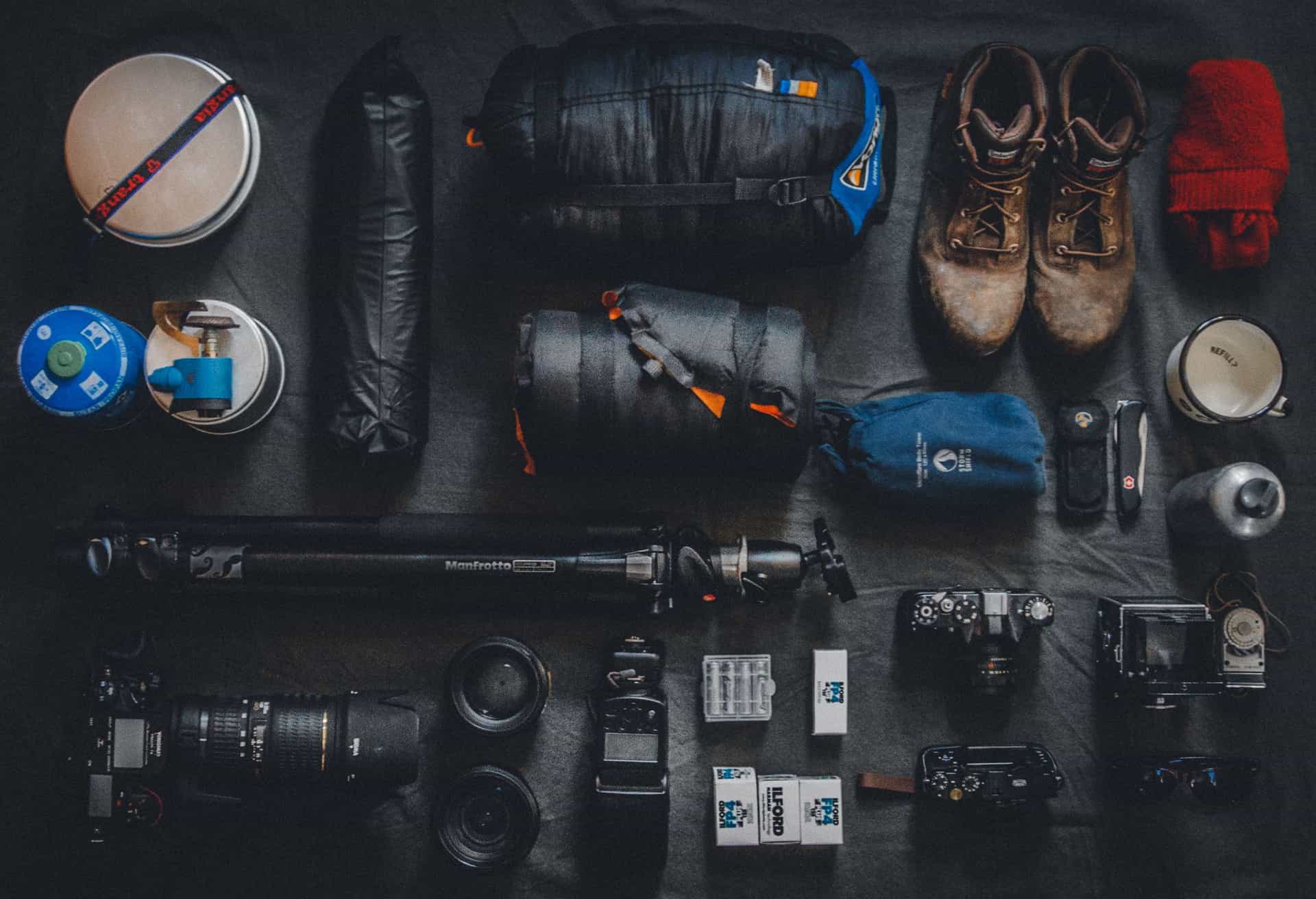
Camco RV Starter Kit
One box so nothing is missing on night one. Every item in it is the basic version, and that is a fair trade for week one.
Best for Seeing when the tank is done
Camco RhinoFLEX Clear 45-Degree Sewer Adapter
The clear elbow: the cheapest way to know a black tank is genuinely empty rather than probably empty.
Best for The obvious thing nobody packs
Heavy-Gauge Disposable Nitrile Gloves (box)
Keep a box in the sewer compartment itself. The gloves that live inside the trailer are the gloves you do not use.

Best for Every hookup after sunset
Rechargeable LED Headlamp
You will hook up in the dark more often than you expect, and every one of those jobs needs both hands.
What is not on this list
Deliberately: a weight distribution hitch (a towing-setup decision, not an accessory purchase — see our guide), upgraded stabilizers, a macerator pump, and a second sewer hose. All real, none of them first-trip items.
Before you pull away, the arrival and departure checklist is the other half of this — the one that stops you towing off with the steps down.
Questions people actually ask
What are the essentials for a first travel trailer trip?
A 20-foot sewer hose with a clear elbow and gloves, a drinking-water hose with a pressure regulator, a surge protector matched to your amperage, leveling blocks, wheel chocks, and a headlamp. Everything else can wait.
What length sewer hose should I buy?
Twenty feet. Fifteen reaches most sites and twenty reaches nearly all of them, while a 10-foot hose will leave you unable to reach the connection at some sites with no workaround available.
What do people most often forget on a first RV trip?
Consumables rather than hardware: disposable gloves, tank treatment, tape and cable ties, and a charged headlamp. Keeping them in one labeled box that lives in the trailer is the fix.
Do I need a water filter on my first trip?
No, but you will want one by the third. The pressure regulator is the item in that category that genuinely cannot wait, because unregulated campground pressure can burst a line inside a wall.
Sources
Read next
First-Season Starter Kit
RV Must-Haves for Beginners
The first-season shortlist, ordered by when you need each item: leaving the lot, arriving, hooking up, the first night, the first dump.
First-Season Starter Kit
RV Setup and Departure Checklist
The arrival and departure sequence for a travel trailer, in the order that avoids redoing work or damaging something.
Sewer & Water
How to Hook Up an RV Sewer Hose (Step by Step)
The full sewer connection and dumping sequence, in order, with the two checks that prevent the story you tell for years.
Power & Surge Protection
RV Electrical Hookup for Beginners (Step by Step)
The full pedestal connection sequence, why order matters, and what to do when the protective device refuses.
Reviewed September 25, 2026. Spot something out of date? Tell us and we will fix it.