Best RV Hitch Lock
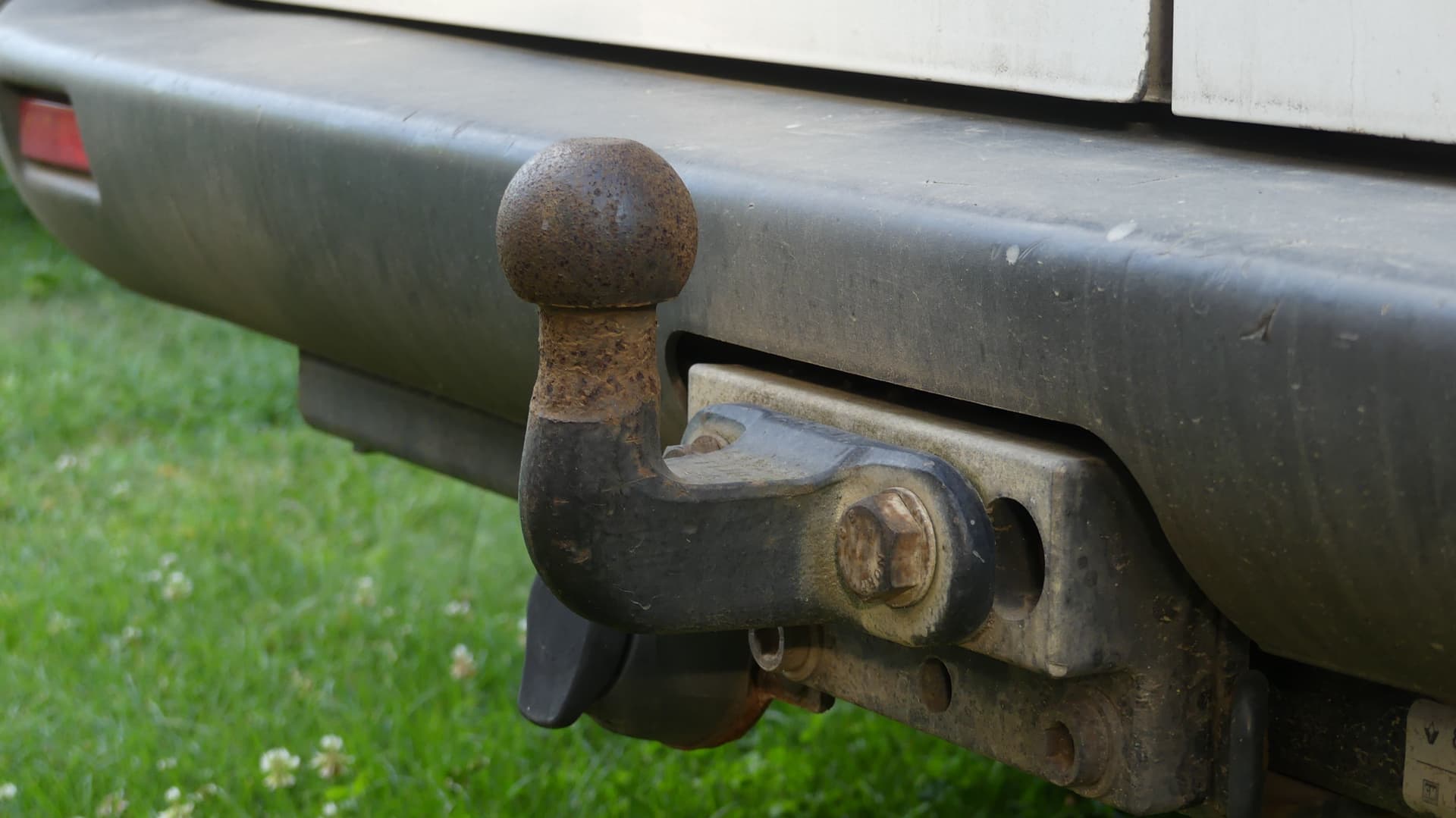
The clip pin holding your ball mount in can be pulled out by anyone in two seconds. This is the cheapest thing on the site and it fixes that.
Heads up: this page contains affiliate links. If you buy through one, Camp & Chock may earn a commission at no extra cost to you. It never changes which product we put first — how this site is funded.
The short answer
Buy a locking receiver pin first. It replaces the clip pin that anybody can pull out of your hitch in a parking lot, and it costs very little. Then buy a coupler lock, because that is the one that stops somebody towing the whole trailer away. They are two different products protecting two different things.
Part of our towing and security guide. The difference between the two types is set out in full in hitch lock versus coupler lock.
Our picks at a glance
Tap any row to jump to the full write-up.
| # | Product | Best for | Beginner fit | Price |
|---|---|---|---|---|
| 1 | Master Lock Receiver Hitch Pin LockReplaces the clip pin anyone can pull out in a parking lot. It protects the ball mount, not the trailer. | Keeping the ball mount | Strong | |
| 2 |  Trimax UMAX100 Universal Coupler LockThe lock that matters when the trailer is parked and unhitched: it blocks the coupler so it cannot be dropped onto another ball. | Locking the trailer itself | Good | |
| 3 | Master Lock Trailer Coupler LockThe lighter coupler lock. Easier to fit and carry, a less serious obstacle, and the right trade for a driveway rather than a truck stop. | A simpler, lighter coupler lock | Strong |
Prices are not published here. They change constantly and a stale number is worse than no number, so every button goes straight to the current Amazon listing. #ad — these are affiliate links and photographs are stock images of the category, not of the individual product.
Two products, two jobs
The terminology gets used loosely and it causes people to buy one thing and believe they have covered both.
A receiver lock replaces the pin and clip that holds your ball mount in the tow vehicle's receiver. Without it, the ball mount is held in by a clip that takes two fingers to remove, and ball mounts are stolen from parking lots constantly because they are worth money and take seconds.
A coupler lock fits over the trailer's coupler when the trailer is unhitched, so nobody can reverse up, drop the coupler onto their own ball and drive off with the whole thing.
Both are cheap. Buying one and assuming you are covered is the common mistake.
The picks
1. Best for Keeping the ball mount
Master Lock Receiver Hitch Pin Lock
Replaces the clip pin anyone can pull out in a parking lot. It protects the ball mount, not the trailer.
- Specification
- Locking receiver pin
- Specification
- Common 5/8 in diameter for 2 in receivers
- Specification
- Weather-resistant
What it does well
- Replaces the clip pin anyone can pull out in a parking lot in two seconds
- Stops the ball mount walking off, which is the cheap theft that happens constantly
The real tradeoff
- Protects the ball mount, not the trailer. A coupler lock is a different product
- The lock cylinder wants a squirt of lubricant once a season
How it measures up
These are judgments from published specifications and what we see at the lodge, not laboratory results. How we choose.
- Beginner fit
- Strong — Swap it for the clip pin.
- Install effort
- Strong — None.
- Deterrence
- Good — Stops opportunists, not a determined thief.
- Value
- Strong — Cheap relative to a ball mount.
Specifications from Master Lock.
2. Best for Locking the trailer itself
Trimax UMAX100 Universal Coupler Lock
The lock that matters when the trailer is parked and unhitched: it blocks the coupler so it cannot be dropped onto another ball.
- Specification
- Universal coupler lock
- Specification
- Hardened steel body
- Specification
- Fits a range of coupler sizes
What it does well
- Blocks the coupler so nobody can drop your trailer onto their own ball and drive away
- The universal fit covers common coupler sizes, so it survives a trailer upgrade
- Heavy enough to look like more trouble than the next trailer along
The real tradeoff
- Bulky and heavy to stow
- Universal fit means it is not a perfect fit on anything in particular
How it measures up
These are judgments from published specifications and what we see at the lodge, not laboratory results. How we choose.
- Beginner fit
- Good — Fitting it the first time takes a minute of fiddling.
- Install effort
- Strong — None.
- Deterrence
- Strong — Visible, heavy and slow to defeat.
- Value
- Good — Real money, real deterrence.
Specifications from Trimax.
3. Best for A simpler, lighter coupler lock
Master Lock Trailer Coupler Lock
The lighter coupler lock. Easier to fit and carry, a less serious obstacle, and the right trade for a driveway rather than a truck stop.
- Specification
- Coupler lock
- Specification
- Fits common coupler sizes
- Specification
- Keyed cylinder
What it does well
- Lighter and easier to fit than the heaviest universal locks
- Widely stocked, and keys can often be matched across other locks in the range
The real tradeoff
- A lighter build is a lighter deterrent
- Check your coupler size before buying. Fit is not truly universal
How it measures up
These are judgments from published specifications and what we see at the lodge, not laboratory results. How we choose.
- Beginner fit
- Strong — Straightforward.
- Install effort
- Strong — None.
- Deterrence
- Good — Opportunists, yes.
- Value
- Strong — Sensible price.
Specifications from Master Lock.
What to look for
Pin diameter for a receiver lock
Two-inch receivers, which is what most half-ton trucks and SUVs have, take a five-eighths inch pin. Larger two-and-a-half inch receivers take a bigger pin. Measure or check your vehicle's specification before ordering, because a pin that is too small rattles and one that is too large will not go in.
Weather resistance on the cylinder
This lock lives on the back of a vehicle, under the spray from every wet road you drive. A cylinder that seizes is useless, and a rusted lock you cannot open is worse than no lock because it is welded to your own hitch.
Look for a stated weather-resistant or shrouded cylinder, and put a squirt of lubricant in it once a season along with the rest of your start-of-season jobs.
Fit for a coupler lock
Coupler locks are sold as universal, and universal means they fit a range rather than fitting yours perfectly. Check your coupler size — most travel trailers are a two-inch or two-and-five-sixteenths inch ball — against the lock's stated range.
Which lock for which situation
| Situation | Lock needed |
|---|---|
| Hitched up, parked at a store | Receiver lock, plus a coupler lock through the latch |
| Trailer unhitched at a campsite | Coupler lock |
| Trailer stored at home on a driveway | Coupler lock, and consider a wheel lock too |
| Ball mount left in the receiver | Receiver lock |
| Long-term storage lot | Coupler lock plus a wheel lock. Visible deterrence matters |
Keyed alike, if you can
Some ranges let you order locks keyed to the same key. If you are buying two or three locks, that is a genuine quality-of-life improvement over a keyring that grows every season.
How much security is realistic
Worth being honest about. None of these stops a determined, equipped thief. What they do is stop the opportunist, and the opportunist is who actually takes ball mounts and unattended trailers.
The principle is comparative rather than absolute: a locked trailer next to an unlocked one is not the one that goes. Visible, heavy, slow-to-defeat hardware moves you down the list, and that is the whole realistic goal.
Mistakes first-timers make
Buying one lock and thinking it covers both. The main one. Receiver and coupler are different products.
Ordering the wrong pin diameter. Check your receiver size first.
Never lubricating the cylinder. A seized lock on your own hitch is a genuinely annoying problem and it is entirely preventable.
Leaving the only key in the trailer. Which is now locked. Keep a spare somewhere sensible, meaning not in the vehicle either.
Questions people actually ask
What is the difference between a hitch lock and a coupler lock?
A receiver hitch lock replaces the pin holding your ball mount in the tow vehicle, protecting the ball mount. A coupler lock fits over the trailer's coupler when unhitched, stopping someone towing the trailer away. They protect different things.
What size hitch pin lock do I need?
Two-inch receivers, which most trucks and SUVs have, take a five-eighths inch pin. Larger two-and-a-half inch receivers take a bigger pin. Check your vehicle's specification before ordering.
Will a hitch lock stop a determined thief?
No. None of these will. What they do is stop the opportunist, who is who actually takes ball mounts and unattended trailers. A locked trailer beside an unlocked one is not the one that goes.
Do I need a lock if the trailer is on my own driveway?
Yes. Trailers are taken from driveways, and a coupler lock plus a visible wheel lock is the sensible minimum for anything stored outside.
Why does my hitch lock keep seizing?
It lives in road spray on the back of a vehicle. Choose a lock with a shrouded or weather-resistant cylinder and put a squirt of lubricant in it once a season.
Sources
Read next
Towing & Security
Best Trailer Coupler Lock
Coupler locks compared on deterrence, fit and weight, with fitting instructions and the sizing check to do first.
Towing & Security
Hitch Lock vs Coupler Lock: What Each One Protects
The two lock types compared on what they protect, when each applies, and the situations that need both at once.
Towing & Security
RV Towing Safety Checklist
A pre-departure towing checklist covering hitch, chains, brakes, tires, loading and the rooftop items people forget.
Reviewed September 25, 2026. Spot something out of date? Tell us and we will fix it.