Best RV Backup Camera for a Travel Trailer
One check before you buy anything: walk to the back of the trailer and look for a factory camera plate. It changes the whole decision.
Heads up: this page contains affiliate links. If you buy through one, Camp & Chock may earn a commission at no extra cost to you. It never changes which product we put first — how this site is funded.
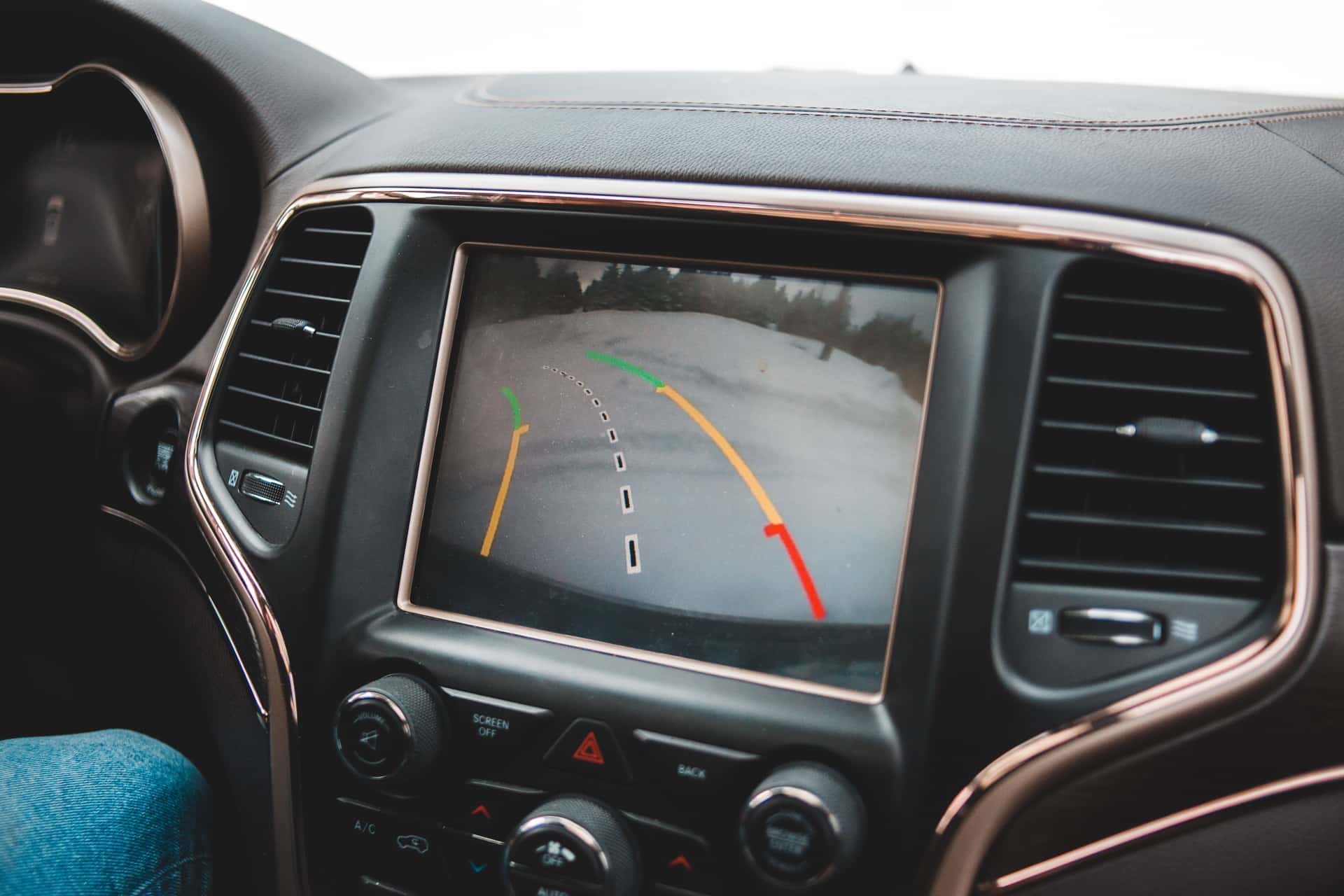
The short answer
Walk to the back of your trailer. If there is a black rectangular plate up high, buy the camera designed for it — power is already there and fitting is roughly a screwdriver job. If there is no plate, buy a self-contained wireless system instead, and accept that you are mounting and powering it yourself.
Part of our towing and security guide. This is the purchase most first-time trailer owners want on day one, usually right after their first attempt at backing into a site.
Our picks at a glance
Tap any row to jump to the full write-up.
| # | Product | Best for | Beginner fit | Price |
|---|---|---|---|---|
| 1 | Furrion Vision S Wireless Backup CameraIf there is a black plate on the back of your trailer, this is the camera it was designed for, and fitting it is roughly a screwdriver job. | Trailers with a factory Furrion mount | Strong | |
| 2 | Haloview MC7108 Wireless Backup Camera SystemThe answer when your trailer has no factory camera plate: it works on anything, at the cost of mounting and powering it yourself. | Trailers with no factory mount | Good | |
| 3 |  TST 507 Tire Pressure Monitoring SystemThe only warning you get before a trailer tire fails, because a trailer gives you no feedback through the steering wheel. | Knowing before the blowout | Good | |
| 4 | 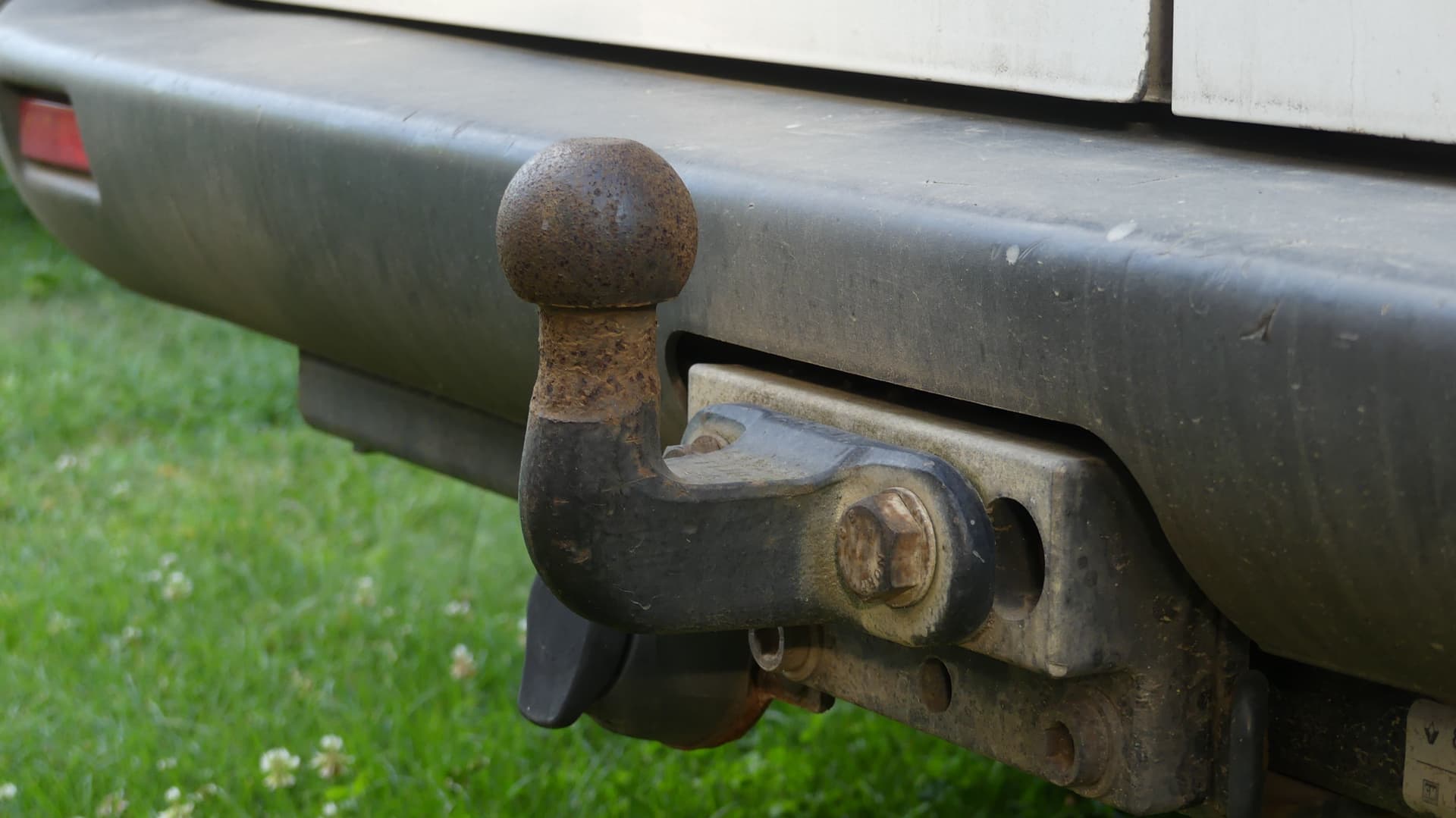 Master Lock Receiver Hitch Pin LockReplaces the clip pin anyone can pull out in a parking lot. It protects the ball mount, not the trailer. | Keeping the ball mount | Strong |
Prices are not published here. They change constantly and a stale number is worse than no number, so every button goes straight to the current Amazon listing. #ad — these are affiliate links and photographs are stock images of the category, not of the individual product.
The check that decides everything
Many travel trailers built in recent years leave the factory with a pre-wired camera mounting plate on the rear wall, high up and centered. It is usually a black rectangle with a cover on it, and behind the cover is a powered connector.
If you have one, the camera built for that mount is close to plug and play: unclip the cover, plug the camera in, screw it on, pair the monitor. No cable run, no drilling, no wiring.
If you do not have one, you are choosing a system that brings its own mounting and its own power, and the install becomes the real work. That is entirely doable — covered step by step in how to install a wireless backup camera — but it changes which product is the right buy.
Which route are you on?
| What is on the back of your trailer | What to buy | Install effort |
|---|---|---|
| A black factory camera plate | The camera designed for that mount | Minimal. A screwdriver |
| No plate, but a marker light up high | Self-contained wireless system | Moderate. Power from the marker light |
| No plate, nothing useful up high | Self-contained wireless system | Moderate. Mount and power both on you |
| A plate but a different brand's | Check the connector before buying | Depends. Adapters exist for some |
Who this is for
Someone towing a travel trailer who has discovered that reversing is harder than it looks, and that a spotter is not always available. Also anyone who wants to see what is behind them on the highway, which is the use case people underestimate before buying and value most afterwards.
How we choose
Install effort first, because a camera that never gets fitted protects nobody. Then daylight picture quality, because the monitor sits on a dash in sun. Then whether the wireless link stays reliable over the length of the rig.
We do not bench-test cameras. Picks come from published specifications, compatibility reality, and what we see actually fitted on rigs that pull into the lodge. Full methodology here.
The picks
1. Best for Trailers with a factory Furrion mount
Furrion Vision S Wireless Backup Camera
If there is a black plate on the back of your trailer, this is the camera it was designed for, and fitting it is roughly a screwdriver job.
- Specification
- Wireless camera and monitor
- Specification
- Designed for the pre-wired Furrion mounting plate found on many trailers
- Specification
- Monitor mounts in the tow vehicle
What it does well
- If your trailer already has the black Furrion plate on the back, this is close to plug-and-play
- No cable to run the length of the trailer, which is the job that stops most people
- The pre-wired plate means power is already there
The real tradeoff
- Only a bargain if you have that plate. Otherwise you are paying for compatibility you cannot use
- Wireless range and interference vary. A long fifth-wheel is a harder case than a 22 ft trailer
How it measures up
These are judgments from published specifications and what we see at the lodge, not laboratory results. How we choose.
- Beginner fit
- Strong — With the plate, genuinely easy.
- Install effort
- Strong — No cable run and no drilling, if the plate is there.
- Picture in daylight
- Good — Clear enough for hitching and lane checks.
- Value
- Good — Strong with the plate, poor without it.
Specifications from Furrion.
2. Best for Trailers with no factory mount
Haloview MC7108 Wireless Backup Camera System
The answer when your trailer has no factory camera plate: it works on anything, at the cost of mounting and powering it yourself.
- Specification
- Wireless system with a 7-inch monitor
- Specification
- Expandable to additional cameras
- Specification
- Independent of any factory plate
What it does well
- Works on any trailer, because it does not depend on a manufacturer's mounting plate
- A bigger monitor than most bundled systems, which matters when it sits on the dash in daylight
- Adding a second camera later is supported rather than a hack
The real tradeoff
- You are mounting and powering the camera yourself, which means drilling or a marker-light tap
- More setup decisions than the plug-in option
How it measures up
These are judgments from published specifications and what we see at the lodge, not laboratory results. How we choose.
- Beginner fit
- Good — The install is the hard part, not the use.
- Install effort
- Adequate — Mounting and power are on you.
- Picture in daylight
- Strong — The larger monitor is a real advantage.
- Value
- Good — Fair for a complete, non-proprietary system.
Specifications from Haloview.
3. Best for Knowing before the blowout
TST 507 Tire Pressure Monitoring System
The only warning you get before a trailer tire fails, because a trailer gives you no feedback through the steering wheel.
- Specification
- Monitor plus per-wheel sensors
- Specification
- Flow-through sensor option lets you inflate without removing them
- Specification
- Signal repeater available for long rigs
What it does well
- A trailer tire losing pressure gives you no steering feedback at all. The monitor is the only warning you get
- Flow-through sensors mean topping up pressure does not require unscrewing anything
- Watches temperature as well as pressure, and heat is how a failing tire announces itself
The real tradeoff
- Costs more than most first-season purchases
- Sensors need batteries and occasional attention
- Long rigs may need the repeater, which is an extra
How it measures up
These are judgments from published specifications and what we see at the lodge, not laboratory results. How we choose.
- Beginner fit
- Good — Setup is a one-evening job, then it is automatic.
- Install effort
- Good — Screw sensors on, pair them, done.
- Warning quality
- Strong — Pressure and temperature, per wheel.
- Value
- Good — Expensive against a tire, cheap against the damage one does.
Specifications from TST.
4. Best for Keeping the ball mount
Master Lock Receiver Hitch Pin Lock
Replaces the clip pin anyone can pull out in a parking lot. It protects the ball mount, not the trailer.
- Specification
- Locking receiver pin
- Specification
- Common 5/8 in diameter for 2 in receivers
- Specification
- Weather-resistant
What it does well
- Replaces the clip pin anyone can pull out in a parking lot in two seconds
- Stops the ball mount walking off, which is the cheap theft that happens constantly
The real tradeoff
- Protects the ball mount, not the trailer. A coupler lock is a different product
- The lock cylinder wants a squirt of lubricant once a season
How it measures up
These are judgments from published specifications and what we see at the lodge, not laboratory results. How we choose.
- Beginner fit
- Strong — Swap it for the clip pin.
- Install effort
- Strong — None.
- Deterrence
- Good — Stops opportunists, not a determined thief.
- Value
- Strong — Cheap relative to a ball mount.
Specifications from Master Lock.
What to look for
Monitor size, because of daylight
The monitor lives on your dash in direct sun. A small screen that looks fine in a shop is harder to read at noon on a bright road. A larger monitor is the single most noticeable difference between systems in practice, more than resolution numbers.
Wireless range over the length of your rig
Every wireless system has to get a signal from the back of the trailer to the front of the tow vehicle, through or around a metal-skinned box. A 22-foot trailer is an easy case. A long fifth wheel is a harder one, and some systems offer a repeater for exactly that reason.
If your rig is long, read the specification for a stated range and check whether a repeater is available before buying.
Reversing camera or a driving camera
These are different jobs and the distinction matters.
A reversing camera wants a wide field of view and guideline overlays, and you only look at it at walking pace. A driving camera wants a narrower view that shows traffic behind you and works continuously for hours.
Most systems here do both adequately. If you mainly want the highway view, prioritize the monitor and the continuous-use rating. If you mainly want to back into sites, prioritize the field of view.
Expandability
Some systems let you add a second camera later, typically on the side of the trailer to cover the blind spot when changing lanes. If that appeals, buy a system where it is a supported option rather than a project.
Mistakes first-timers make
Buying the plate-specific camera without checking for the plate. The most common return in this category. Look first.
Assuming wireless means no wiring. Wireless refers to the video link. The camera still needs power at the back of the trailer, which is the part that requires work unless you have a factory plate.
Relying on it instead of a spotter. A camera shows you what is directly behind. It does not show the low bollard just outside the frame or the branch at roof height. Use both when you can.
Mounting the monitor where it blocks your view. It is a driving aid, not a windscreen decoration. Low and to the side.
Questions people actually ask
How do I know if my trailer is pre-wired for a backup camera?
Look at the rear wall of the trailer, high and centered. A black rectangular plate with a removable cover usually means there is a powered connector behind it, which makes fitting the matching camera close to plug and play.
Are wireless RV backup cameras any good?
Yes, for a travel trailer. The signal has to cross the length of the rig, so range matters: a short trailer is an easy case and a long fifth wheel may need the repeater some systems offer.
Do I need a backup camera or is a spotter enough?
A spotter is better for obstacles at odd heights and outside the frame. A camera is better for the highway view and for when you are alone. Most people end up using both.
Can I use the camera while driving, not just reversing?
On most RV systems, yes, and it is the use case people value most once they have it. Check the specification for continuous use rather than reverse-only operation.
Does wireless mean no wiring at all?
No. Wireless refers to the video link between camera and monitor. The camera still needs power at the back of the trailer, which is the part that takes work unless you have a factory plate.
Where should the monitor go?
Low and to the side, where you can glance at it without it blocking your view of the road. It is a driving aid rather than a second screen to watch.
Sources
Read next
Towing & Security
Best Wireless RV Backup Camera
Wireless camera systems that work on any trailer, with range guidance by rig length.
Towing & Security
Furrion Vision S Review: Check for the Plate First
The plate-matched wireless camera reviewed, with the compatibility check that decides whether it is the right buy.
Towing & Security
How to Install a Wireless RV Backup Camera
Mounting and powering a wireless trailer camera, including the factory plate route and the marker light tap.
Towing & Security
How to Hitch a Travel Trailer (Step by Step)
The full hitching sequence with the latch and jack checks that prevent a trailer coming off the ball.
Reviewed September 25, 2026. Spot something out of date? Tell us and we will fix it.