Best RV Water Pressure Regulator
Four seconds to fit, and it is the difference between a normal weekend and a burst line behind a wall. Nothing else on this site has a better cost-to-consequence ratio.
Heads up: this page contains affiliate links. If you buy through one, Camp & Chock may earn a commission at no extra cost to you. It never changes which product we put first — how this site is funded.
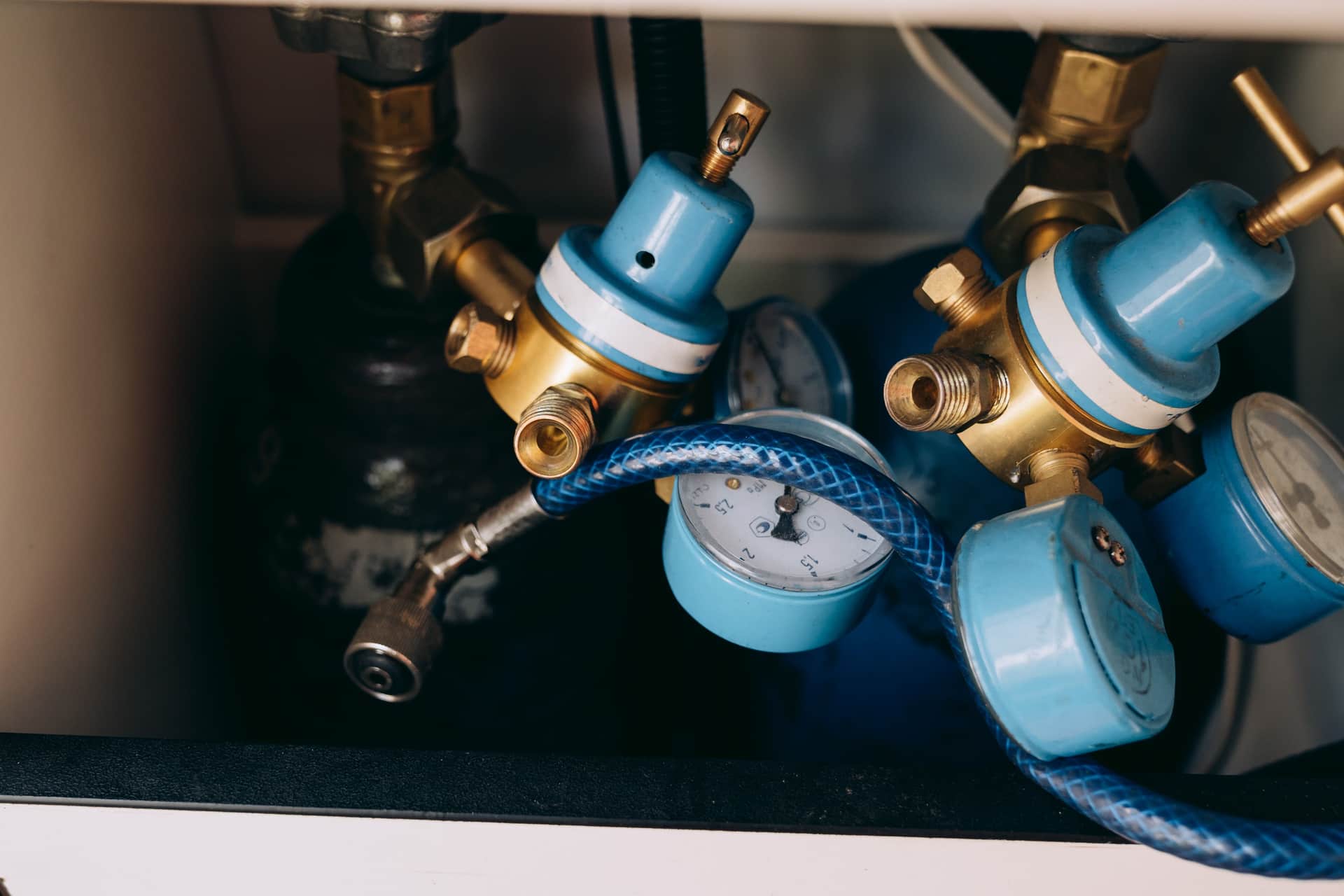
The short answer
Buy a brass fixed regulator today. It screws onto the campsite spigot in four seconds, there is nothing to set, and it protects the entire plumbing system for very little money. If your shower already feels weak, or you want to see what the park is actually delivering, the adjustable version with a gauge gives you both.
Part of our sewer and water guide. This is the least glamorous purchase in this hub and probably the most consequential one.
Our picks at a glance
Tap any row to jump to the full write-up.
| # | Product | Best for | Beginner fit | Price |
|---|---|---|---|---|
| 1 | Camco Brass Water Pressure RegulatorThe cheapest single item that prevents the most expensive damage. Fixed preset, brass body, screws on in four seconds. | The cheapest thing that prevents the worst damage | Strong | |
| 2 | Renator Adjustable Water Pressure Regulator with GaugeThe one with a dial: it shows what the park is delivering and lets you keep usable shower flow instead of a fixed trickle. | Seeing and setting the pressure | Good | |
| 3 | 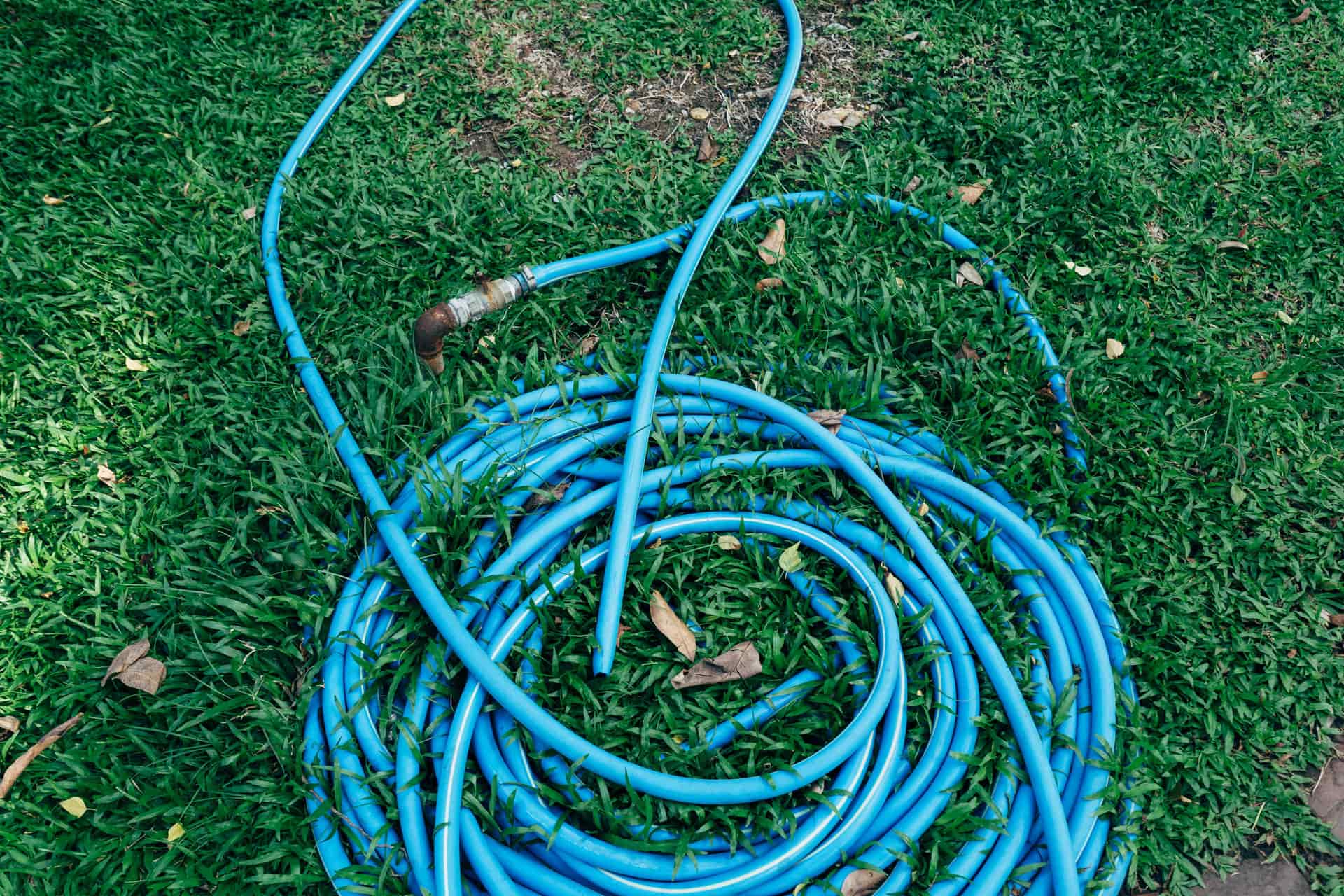 Camco TastePURE Drinking Water Hose (25 ft)The correct part rather than an upgrade: a drinking-water-rated hose, in white so it never gets mixed up with the sewer gear. | The default fresh water hose | Strong | |
| 4 | 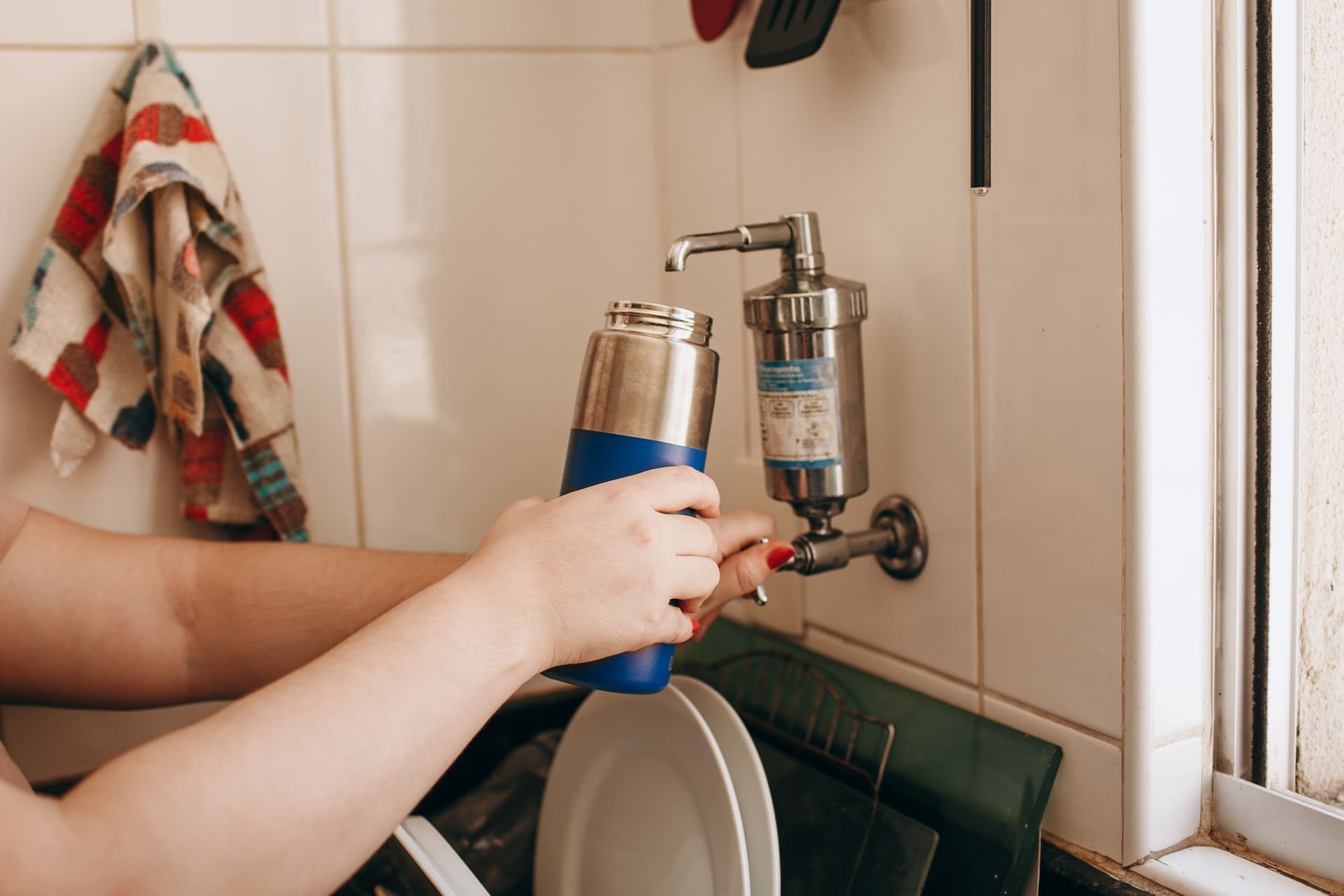 Camco TastePURE Inline RV Water FilterThe one most people start with: screws on, improves the taste, keeps grit out, and gets thrown away at the end of the season. | The simple first filter | Strong |
Prices are not published here. They change constantly and a stale number is worse than no number, so every button goes straight to the current Amazon listing. #ad — these are affiliate links and photographs are stock images of the category, not of the individual product.
Why campground water pressure is a real problem
A house is plumbed in copper or rigid plastic by people who knew what the municipal supply would deliver. A travel trailer is plumbed in flexible tubing with push-fit and crimped connections, in a vibrating box, behind panels you cannot see.
Campground pressure is not consistent. It varies between parks, between pedestals, and across the day. Some parks regulate their supply well. Others have a pump and a pressure setting that suits their irrigation. You have no way of knowing which kind you have pulled into.
A regulator sets an upper bound on that, so the question stops mattering. That is the whole product.
What actually fails
Usually a fitting rather than a pipe. A crimped or push-fit joint behind a wall lets go, and the first you know about it is water where water should not be. Sometimes it is a toilet valve or the water heater relief valve, which is less destructive and considerably more annoying.
The consequence is what makes this purchase easy: a burst line inside a wall soaks insulation and subfloor, and it does not stop until somebody turns the spigot off. If it happens while you are out for the day, it is not a repair, it is a rebuild.
The picks
1. Best for The cheapest thing that prevents the worst damage
Camco Brass Water Pressure Regulator
The cheapest single item that prevents the most expensive damage. Fixed preset, brass body, screws on in four seconds.
- Specification
- Brass inline regulator
- Specification
- Fixed preset pressure
- Specification
- Standard hose thread at both ends
What it does well
- Fits between the spigot and your hose in about four seconds and then protects the whole plumbing system
- Brass rather than plastic, so it survives being over-tightened and left on all season
- A fixed preset means there is nothing to get wrong
The real tradeoff
- You cannot adjust it and you cannot see what it is doing
- Fixed regulators restrict flow more than an adjustable one set higher
How it measures up
These are judgments from published specifications and what we see at the lodge, not laboratory results. How we choose.
- Beginner fit
- Strong — Screw it onto the spigot. There is no step two.
- Control
- Adequate — No adjustment and no gauge.
- Flow
- Adequate — Noticeably more restrictive than an adjustable unit.
- Value
- Strong — The best money-to-risk ratio on the whole site.
Specifications from Camco.
2. Best for Seeing and setting the pressure
Renator Adjustable Water Pressure Regulator with Gauge
The one with a dial: it shows what the park is delivering and lets you keep usable shower flow instead of a fixed trickle.
- Specification
- Adjustable regulator
- Specification
- Dial gauge
- Specification
- Lead-free brass body
What it does well
- The gauge shows what the park is actually delivering, which is how you learn that campground pressure varies wildly
- Adjustable means you can set a sensible pressure and still get usable flow in the shower
The real tradeoff
- You have to set it, and a beginner will not know what to set it to without reading first
- More expensive, and one more thing that can be knocked out of adjustment
How it measures up
These are judgments from published specifications and what we see at the lodge, not laboratory results. How we choose.
- Beginner fit
- Good — One decision to make, and this guide makes it for you.
- Control
- Strong — Set it where you want it.
- Flow
- Strong — The real reason people upgrade.
- Value
- Good — Costs more, changes the shower.
3. Best for The default fresh water hose
Camco TastePURE Drinking Water Hose (25 ft)
The correct part rather than an upgrade: a drinking-water-rated hose, in white so it never gets mixed up with the sewer gear.
- Specification
- 25 ft
- Specification
- Drinking-water safe
- Specification
- White jacket, never confused with sewer gear
What it does well
- Drinking-water rated, which a garden hose is not. This is not an upgrade, it is the correct part
- White for a reason: you will never grab it thinking it is the sewer hose
- Twenty-five feet reaches the spigot at essentially every site
The real tradeoff
- Kinks if you coil it lazily
- Stiff in cold weather
How it measures up
These are judgments from published specifications and what we see at the lodge, not laboratory results. How we choose.
- Beginner fit
- Strong — A hose, in the right color.
- Control
- Adequate — Not applicable.
- Flow
- Good — Standard diameter, no surprises.
- Value
- Strong — Buy two: one for fresh water, one for tank rinsing.
Specifications from Camco.
4. Best for The simple first filter
Camco TastePURE Inline RV Water Filter
The one most people start with: screws on, improves the taste, keeps grit out, and gets thrown away at the end of the season.
- Specification
- Disposable inline filter
- Specification
- Screws between spigot and hose
- Specification
- Typically replaced each season
What it does well
- The cheapest way to stop tasting the campground and to keep grit out of your faucets
- No housing, no cartridge, nothing to assemble
The real tradeoff
- Disposable, so the cost repeats
- Clogs faster on genuinely sedimented water than a canister filter
How it measures up
These are judgments from published specifications and what we see at the lodge, not laboratory results. How we choose.
- Beginner fit
- Strong — Screw it on.
- Control
- Adequate — None.
- Flow
- Adequate — Restricts a little, and more as it clogs.
- Value
- Strong — Low entry cost. Buy the canister later.
Specifications from Camco.
What to look for
Fixed or adjustable
| Fixed | Adjustable with gauge | |
|---|---|---|
| Setup | None. Screw it on | Set the pressure once, check it occasionally |
| Flow rate | More restrictive | Better, because you can set it higher |
| Shows you the pressure | No | Yes |
| Can be set wrong | No | Yes |
| Body material to want | Brass | Brass, lead-free |
| Typical price | Low | Noticeably higher |
The honest summary: the fixed one protects you just as well, and the adjustable one gives you a usable shower. If the trickle from a fixed regulator is going to annoy you every day, that is a legitimate reason to spend more.
Brass, not plastic
Plastic-bodied regulators exist and they are cheaper. They also get over-tightened by hand, left on all season, knocked about in a compartment, and connected in the cold. Brass tolerates all of that. This is a part that lives outdoors on a threaded connection and it should be metal.
Lead-free matters
This is drinking water. Look for a lead-free designation on the body, the same as you would for any potable-water fitting. The EPA publishes guidance on lead in drinking water and plumbing components if you want the background.
Where to fit it
At the spigot, not at the trailer. Fitting it at the spigot means the hose itself is also protected, and a hose that fails under full campground pressure is still a mess even if the trailer survives.
Order at the spigot: regulator first, then filter, then hose, then the trailer.
What pressure to set
If you have an adjustable regulator, the number to use is the one your trailer's manufacturer specifies. It is in the owner's manual and it varies by rig, which is exactly why we are not going to print a figure here and have you trust it over your own documentation.
In the absence of a manual, set it lower rather than higher and work up until the shower is acceptable. The regulator costs nothing to adjust; the alternative failure is expensive.
Mistakes first-timers make
Leaving it in the compartment. It protects nothing from in there. The habit to build is that it goes on the spigot before the hose does, every time, including for one night.
Fitting it at the trailer end. Common, and it leaves the hose exposed to full pressure. Spigot end.
Assuming the park regulates its own supply. Some do. You cannot tell which, and the cost of being wrong is not symmetric.
Blaming the regulator for weak flow and removing it. The flow restriction is real on fixed regulators. The answer is an adjustable one, not no regulator.
Questions people actually ask
Do I need a water pressure regulator for my RV?
Yes. Campground pressure varies widely and an RV is plumbed in flexible tubing with crimped and push-fit joints behind panels. A regulator sets an upper bound so the question stops mattering.
What pressure should I set my RV water regulator to?
Use the figure in your trailer's owner manual, because it varies by rig. If you do not have the manual, set it low and work up until the shower is acceptable rather than starting high.
Where should the regulator go, at the spigot or the trailer?
At the spigot. That way the hose is protected too, and a hose failure under full campground pressure is still a mess even when the trailer survives.
Why is my water flow so weak with a regulator fitted?
Fixed regulators restrict flow more than an adjustable one set higher. If the shower bothers you, move to an adjustable regulator rather than removing the regulator entirely.
Brass or plastic regulator?
Brass. It lives outdoors on a threaded connection, gets over-tightened by hand and knocked about in a compartment. Brass tolerates that and plastic does not.
Does a regulator filter the water too?
No. Those are separate products. The regulator controls pressure and a filter handles sediment and taste, and they go on in that order at the spigot.
Sources
Read next
Sewer & Water
Best RV Fresh Water Hose
Drinking-water-safe hoses compared on length, flexibility and storage, plus why two hoses is the right answer.
Sewer & Water
Best RV Water Filter
Inline and canister water filters compared, with an honest account of what filtration at this level achieves.
Sewer & Water
How to Sanitize an RV Fresh Water Tank
The full tank sanitizing procedure with dilution guidance from an authority, plus the non-bleach alternatives.
First-Season Starter Kit
RV Must-Haves for Beginners
The first-season shortlist, ordered by when you need each item: leaving the lot, arriving, hooking up, the first night, the first dump.
Reviewed September 25, 2026. Spot something out of date? Tell us and we will fix it.