Best RV Sewer Hose Support
If your tank drains slowly, this is almost certainly the missing piece rather than a faulty hose. Waste needs a slope, and the ground does not provide one.
Heads up: this page contains affiliate links. If you buy through one, Camp & Chock may earn a commission at no extra cost to you. It never changes which product we put first — how this site is funded.

The short answer
Buy a 20-foot folding support with a fixed molded slope. It holds the grade by itself, it folds flat rather than telescoping so grit cannot jam it, and it takes the most common first-season complaint — my tank drains slowly — off the table entirely. If storage space is the constraint, the compressing type packs much smaller.
Part of our sewer and water guide. If you have not bought a hose yet, start with the sewer hose roundup and add the support to the same order.
Our picks at a glance
Tap any row to jump to the full write-up.
| # | Product | Best for | Beginner fit | Price |
|---|---|---|---|---|
| 1 | Camco Sidewinder RV Sewer Hose Support (20 ft)The item first-timers most often arrive without: a fixed-slope cradle that makes the tank actually drain instead of sit. | The support most people should buy | Strong | |
| 2 | Slunky RV Sewer Hose Support (20 ft)The one that stores small: it compresses down hard, stretches to the length the site needs, and holds enough slope to drain. | Tight storage | Strong | |
| 3 | 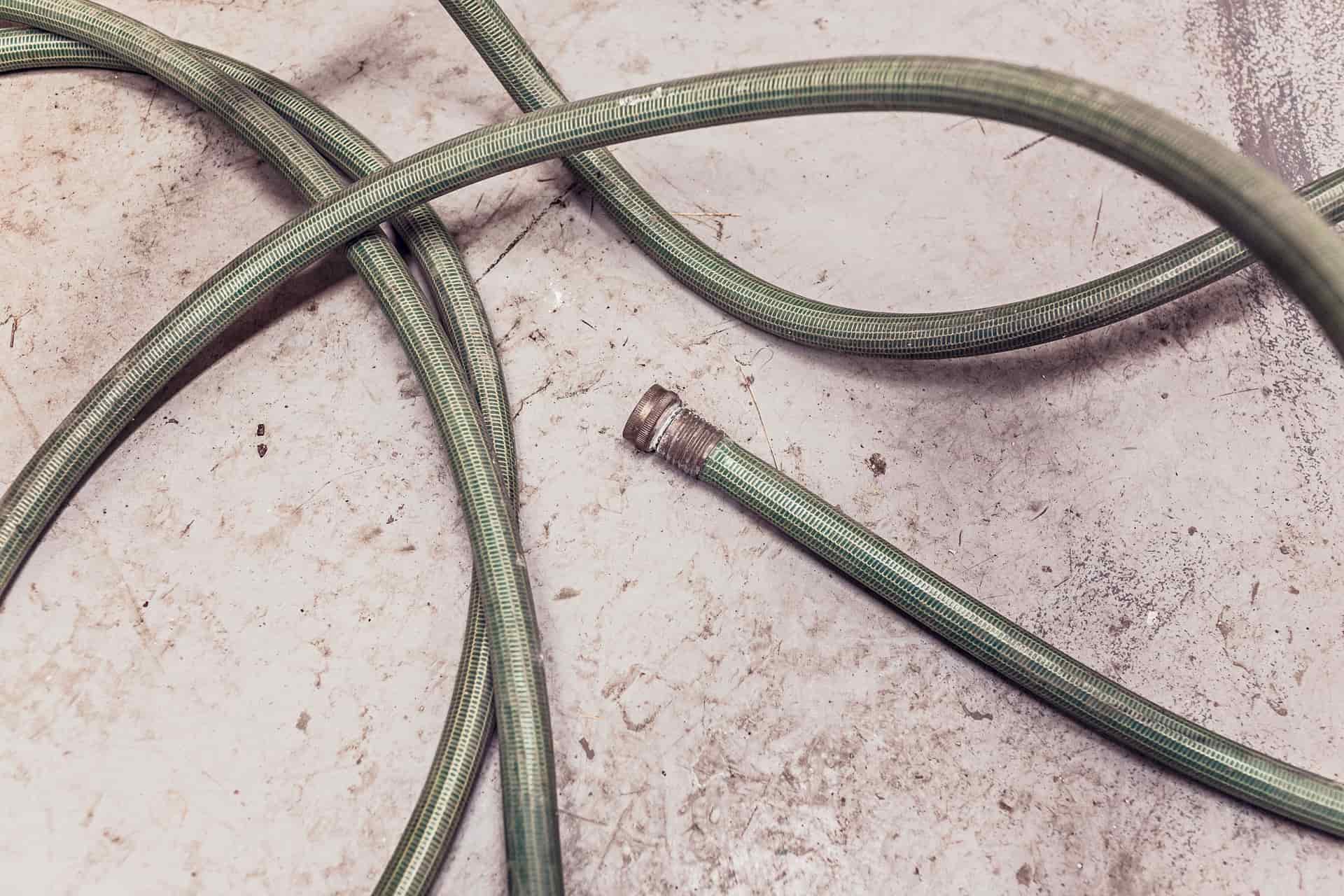 Camco RhinoFLEX Clear 45-Degree Sewer AdapterThe clear elbow: the cheapest way to know a black tank is genuinely empty rather than probably empty. | Seeing when the tank is done | Strong | |
| 4 | Camco RhinoFLEX 20-Ft Sewer Hose KitThe complete first kit: 20 ft in two sections, both fittings, and a clear elbow so you can see when the tank is actually done. | The first sewer hose to own | Strong |
Prices are not published here. They change constantly and a stale number is worse than no number, so every button goes straight to the current Amazon listing. #ad — these are affiliate links and photographs are stock images of the category, not of the individual product.
Why this exists at all
Gravity. Waste water runs downhill and it does not run along a flat hose, or worse, uphill through a sag in one.
A campsite pad is usually flat, and the park's sewer inlet is usually level with it or slightly raised. Your rig's outlet is a foot or so off the ground. That is not much fall over ten or twenty feet, and a hose lying on the ground turns what little there is into a series of dips that hold liquid.
The result is a tank that empties slowly, incompletely, or appears to empty and then reports full again. Every one of those symptoms reads like a faulty hose or a faulty sensor. It is almost always the slope.
The picks
1. Best for The support most people should buy
Camco Sidewinder RV Sewer Hose Support (20 ft)
The item first-timers most often arrive without: a fixed-slope cradle that makes the tank actually drain instead of sit.
- Specification
- 20 ft folding support
- Specification
- Fixed slope molded in
- Specification
- Folds flat, accordion style
What it does well
- Holds the slope by itself. No adjusting, and no collapsing halfway through a dump
- Folds flat rather than telescoping, so it does not jam with grit
- This is the single most common thing first-timers arrive without
The real tradeoff
- Long when folded, and it needs a full-length storage space
- A fixed slope means a badly placed sewer connection still fights you
How it measures up
These are judgments from published specifications and what we see at the lodge, not laboratory results. How we choose.
- Beginner fit
- Strong — Unfold it, lay the hose in, done.
- Durability
- Good — Folding beats telescoping over a season of grit.
- Storage
- Adequate — Flat, but long.
- Value
- Strong — Cheap, and it fixes the slow-drain complaint outright.
Specifications from Camco.
2. Best for Tight storage
Slunky RV Sewer Hose Support (20 ft)
The one that stores small: it compresses down hard, stretches to the length the site needs, and holds enough slope to drain.
- Specification
- 20 ft flexible support
- Specification
- Compresses to a fraction of its length
- Specification
- Self-supporting slope
What it does well
- Compresses far smaller than a folding support, which is the whole reason to choose it
- Stretches to whatever length the site actually needs
The real tradeoff
- A softer structure than a rigid folding support on very uneven ground
- The compressed form still wants its own bag
How it measures up
These are judgments from published specifications and what we see at the lodge, not laboratory results. How we choose.
- Beginner fit
- Strong — Stretch it out, lay the hose in.
- Durability
- Good — Nothing to jam or snap.
- Storage
- Strong — The reason people pick it.
- Value
- Good — A slight premium for the storage win.
3. Best for Seeing when the tank is done
Camco RhinoFLEX Clear 45-Degree Sewer Adapter
The clear elbow: the cheapest way to know a black tank is genuinely empty rather than probably empty.
- Specification
- Clear 45-degree elbow
- Specification
- Fits the standard bayonet hose end
- Specification
- Threaded ring for the sewer inlet
What it does well
- You can see when the flow runs clear, which is the only reliable way to know a tank is empty
- The threaded ring keeps the connection in place instead of backing out mid-dump
The real tradeoff
- Clear plastic stains over a season
- Usually already included in the better kits, so check before buying twice
How it measures up
These are judgments from published specifications and what we see at the lodge, not laboratory results. How we choose.
- Beginner fit
- Strong — Screws on, and then it is obvious.
- Durability
- Good — Fine. It stains rather than fails.
- Storage
- Strong — Tiny.
- Value
- Strong — Small money for real information.
Specifications from Camco.
4. Best for The first sewer hose to own
Camco RhinoFLEX 20-Ft Sewer Hose Kit
The complete first kit: 20 ft in two sections, both fittings, and a clear elbow so you can see when the tank is actually done.
- Specification
- 20 ft supplied as two 10 ft sections
- Specification
- Swivel bayonet fitting at the rig end
- Specification
- Clear 45-degree adapter included in the kit
What it does well
- The kit arrives complete: hose, both fittings and the clear elbow, so nothing is missing at the first dump station
- Two 10 ft sections means you use 10 ft at most sites and 20 ft when you need it, instead of coiling slack
- The clear elbow lets you see when the tank has actually finished, which is the entire job
The real tradeoff
- Bulkier collapsed than a thin-wall hose, and a 4-inch bumper will not take 20 ft of it
- The bayonet fittings need a firm quarter-turn. A lazy connection is how people end up with a mess
How it measures up
These are judgments from published specifications and what we see at the lodge, not laboratory results. How we choose.
- Beginner fit
- Strong — Nothing to buy separately, nothing to work out.
- Durability
- Good — Thicker than the hose bundled with a used trailer.
- Storage
- Adequate — Twenty feet will not fit a 4-inch bumper. Plan for that.
- Value
- Strong — The category default, and deservedly.
Specifications from Camco.
What to look for
Folding or compressing
| Folding (accordion) | Compressing (flexible) | |
|---|---|---|
| How it stores | Folds flat, stays long | Squashes to a short bundle |
| Slope | Fixed, molded in | Follows the ground, self-supporting |
| Very uneven ground | Better. Rigid structure | Adequate. Softer support |
| Grit and mud | Nothing to jam | Nothing to jam |
| Storage length | Full length when folded | Much shorter |
| Typical price | Low | Slightly higher |
Both designs work. The decision is almost entirely about where it is going to live. A folding support is long even when folded, and if your only storage is a sewer compartment sized for a hose, the compressing type is the one that fits.
Avoid telescoping designs
Supports that telescope rather than fold or compress have an obvious appeal: they get very short. The problem is that the sliding sections collect grit from exactly the environment they work in, and a jammed telescoping support is a support you stop using. Folding and compressing designs have nothing to seize.
Length should match your hose
A 20-foot hose wants a 20-foot support. There is no benefit to a support shorter than the hose, because the unsupported section will sag, and the sag is the whole problem. If you run 10 feet at most sites, you can unfold only the part you need.
The homemade question
People build these out of pool noodles, guttering, timber offcuts and plastic crates, and it does work. The reason we still recommend buying one is not snobbery about improvisation — it is that the bought version costs very little, folds into a known shape, and does not need rebuilding each trip.
If you are going to improvise, the principle to get right is continuous support with a consistent fall. A few props under a hose create dips between them, and dips are what you are trying to eliminate. Rain guttering laid on a slight slope is the improvisation that works best, because it supports the whole length.
Mistakes first-timers make
Buying the hose and not the support. The single most common omission in this whole category, and the reason the slow-drain complaint is so widespread.
Supporting only the middle. One prop under the center of a hose creates two dips instead of one. Support the whole length.
Leaving it out overnight in freezing weather. A support with liquid in the hose above it becomes an ice problem. In cold weather, drain and stow after each dump.
Storing it wet with the hose. It does not matter much for the support, but a damp compartment is not doing your hose any favors. Let both dry when you can.
Questions people actually ask
Do I really need an RV sewer hose support?
In practice, yes. A hose lying flat on the ground has no consistent slope, so the tank drains slowly and incompletely. It is the most common thing first-timers arrive without, and it explains most slow-drain complaints.
What slope does a sewer hose need?
A steady, continuous downhill run with no section where the hose rises again. An even gentle fall drains better than a steep one with a dip in it.
Folding or compressing support: which is better?
Both work. Folding is more rigid on uneven ground but stays long when folded. Compressing packs much smaller, which is the deciding factor if your storage is limited.
Can I make my own sewer hose support?
Yes, and rain guttering laid on a slight slope works well because it supports the whole length. What does not work is a few props under the hose, which create dips between them.
Should the support be as long as the hose?
As long as the section you are using. An unsupported length will sag, and the sag is the problem you are solving. If you normally run ten feet, unfold ten feet.
Why avoid telescoping supports?
The sliding sections collect grit from exactly the environment they work in, and once one seizes the support stops being used. Folding and compressing designs have nothing to jam.
Sources
Read next
Sewer & Water
Best RV Sewer Hose for a First Travel Trailer
Complete sewer hose kits compared on length, wall thickness, fittings and storage, for someone doing this for the first time.
Sewer & Water
How to Hook Up an RV Sewer Hose (Step by Step)
The full sewer connection and dumping sequence, in order, with the two checks that prevent the story you tell for years.
Sewer & Water
RV Sewer Hose Storage Ideas
Where to actually store a sewer hose, why the bumper usually will not work, and the separation rule that matters.
Reviewed September 25, 2026. Spot something out of date? Tell us and we will fix it.