Best RV Wheel Chocks for a Travel Trailer
Two different products solve two different problems, and buying one of them does not solve the other. Here is which is which, and what a first setup actually needs.
Heads up: this page contains affiliate links. If you buy through one, Camp & Chock may earn a commission at no extra cost to you. It never changes which product we put first — how this site is funded.

The short answer
Buy a pair of wedge chocks first. They stop the trailer rolling, they cost very little, and no trailer should be unhitched without them. If your trailer rocks when someone walks across it and it has two axles per side, add an X-chock — that is a different product solving a different problem, and it is the one people actually notice at night.
This sits inside our leveling and chocks guide. If you have already got the trailer level and something still feels wrong when you move around inside it, you are in the right place.
Our picks at a glance
Tap any row to jump to the full write-up.
| # | Product | Best for | Beginner fit | Price |
|---|---|---|---|---|
| 1 | Camco Heavy-Duty Wheel Chocks (pair)The chock that stops the trailer rolling. Not the one that stops it rocking, which is a different product, and you need both. | The non-negotiable basics | Strong | |
| 2 | 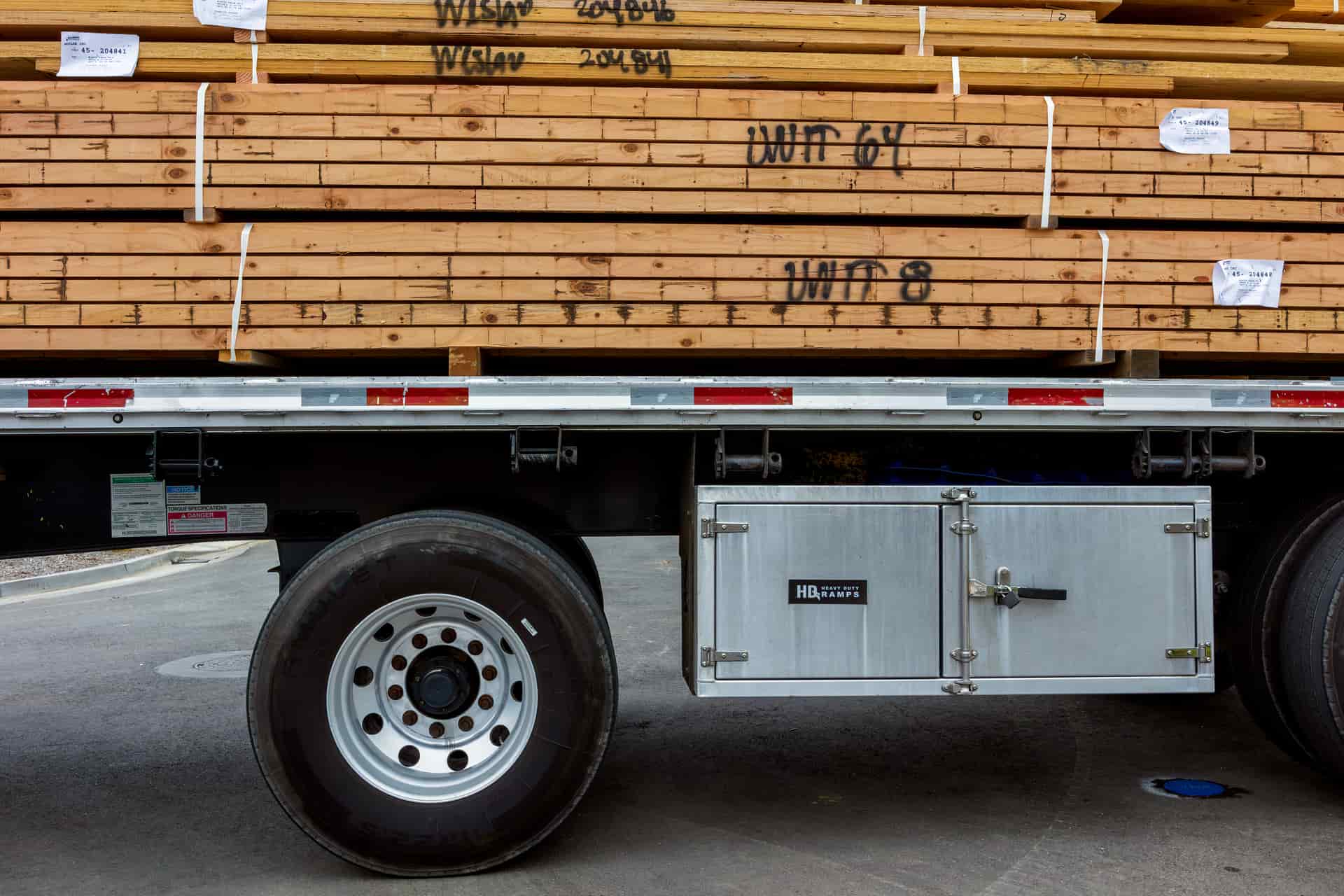 BAL X-Chock Tire Locking ChockThe standard answer to a trailer that rocks when you walk across it, and only useful if you have two axles per side. | Tandem-axle rigs that rock | Good | |
| 3 | MaxxHaul Solid Rubber Wheel Chocks (pair)Rubber rather than plastic: the version that does not slide when the pad is smooth and slightly damp. | Smooth concrete pads | Strong | |
| 4 |  Andersen Hitches Camper LevelerThe one that removes the trial and error: a curved ramp you drive up until level, then stop, with a chock that drops in behind. | Leveling in one attempt | Strong | |
| 5 | 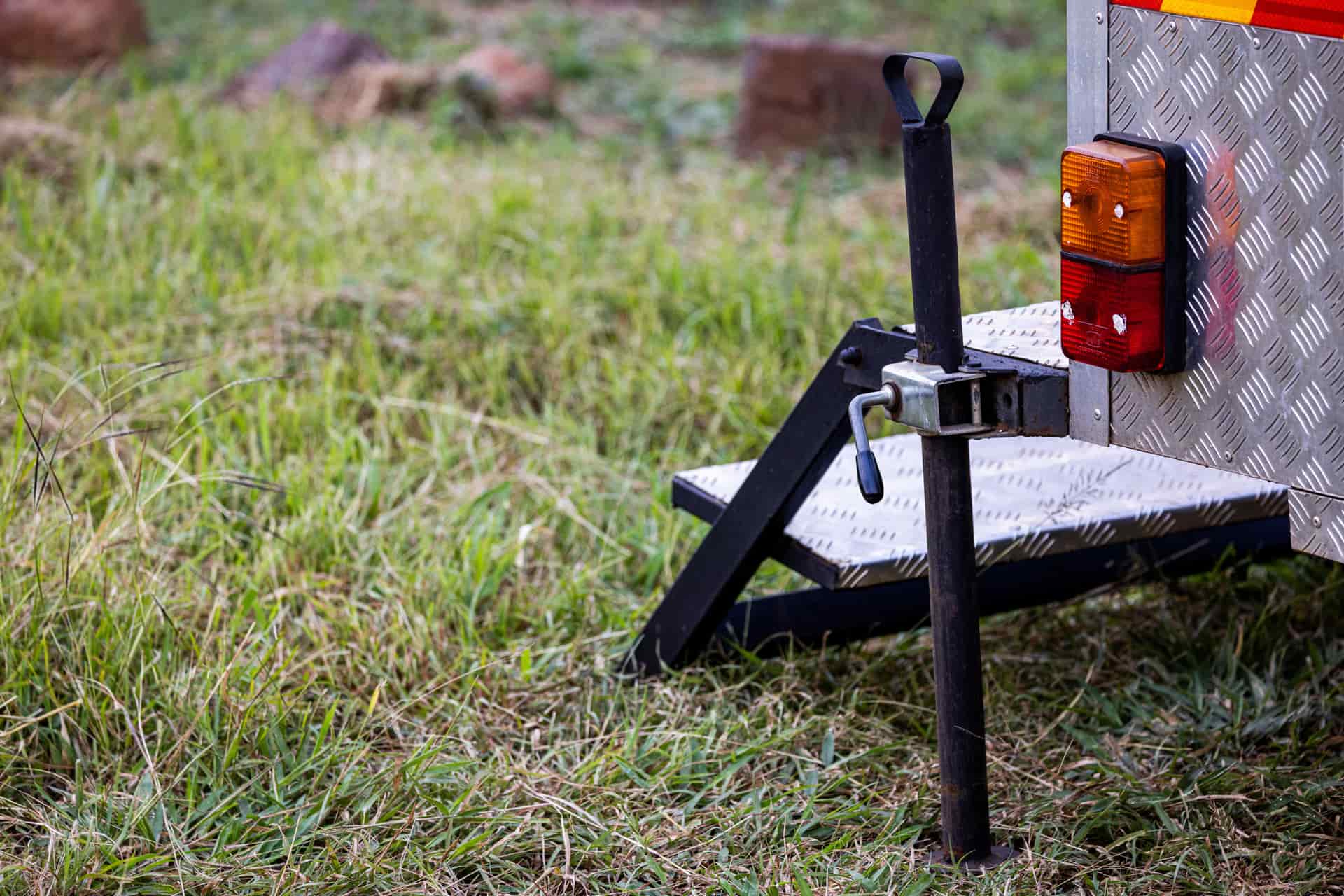 Valterra Stabilizer Jack PadsFunctionally interchangeable with any other jack pad. Buy whichever is in stock, but do buy a spare for the tongue jack. | A second set for the tongue jack | Strong |
Prices are not published here. They change constantly and a stale number is worse than no number, so every button goes straight to the current Amazon listing. #ad — these are affiliate links and photographs are stock images of the category, not of the individual product.
Rolling and rocking are not the same problem
This is the single most useful thing to understand in the category, and almost nobody explains it at the point of sale.
Rolling is the trailer moving forward or backward. A wedge chock stops it, by physically blocking the tire. This is the safety item. It goes in before you unhitch, every time, without exception.
Rocking is the trailer moving a small amount side-to-side and fore-and-aft as you walk around inside. It happens because the suspension and the gap between tandem tires both have play in them. A wedge chock does nothing about this at all, which is why people who bought chocks are still annoyed at bedtime.
The fix for rocking is a chock that expands between two tires and pushes them apart, taking the slack out of the suspension. That only works if you have two axles on each side. On a single-axle trailer there is no second tire to push against, and the honest answer is to spend the money on stabilizer jacks and jack pads instead.
The picks
1. Best for The non-negotiable basics
Camco Heavy-Duty Wheel Chocks (pair)
The chock that stops the trailer rolling. Not the one that stops it rocking, which is a different product, and you need both.
- Specification
- Wedge chock, sold in pairs
- Specification
- Molded grip handle
- Specification
- Works on any axle count
What it does well
- This is the part you are practically obliged to have, and it costs very little
- Works on any trailer, any axle count. There is no compatibility question
- Bright color means you notice them before you drive off
The real tradeoff
- Stops rolling, does nothing about rocking
- Plastic wedges skate on wet concrete if you do not seat them properly
How it measures up
These are judgments from published specifications and what we see at the lodge, not laboratory results. How we choose.
- Beginner fit
- Strong — Push it against the tire. That is the whole method.
- Stability once set
- Good — Against rolling, yes. Against rocking, no.
- Speed to level
- Strong — Instant.
- Value
- Strong — The cheapest genuinely essential thing on this site.
Specifications from Camco.
2. Best for Tandem-axle rigs that rock
BAL X-Chock Tire Locking Chock
The standard answer to a trailer that rocks when you walk across it, and only useful if you have two axles per side.
- Specification
- Fits between tandem-axle tires
- Specification
- Ratchet-driven expansion
- Specification
- One per side is the normal setup
What it does well
- It pushes the two tires apart instead of blocking them, which is what actually stops the side-to-side rock
- The ratchet means you tighten by feel and it stays tight
- Survives being left outside for years
The real tradeoff
- Useless on a single-axle trailer. There is no second tire to push against
- Needs a wrench or the matching ratchet, which is one more thing to keep track of
- Tight tire gaps on some rigs make it a fight to seat the first time
How it measures up
These are judgments from published specifications and what we see at the lodge, not laboratory results. How we choose.
- Beginner fit
- Good — Simple once shown, mildly fiddly the first time.
- Stability once set
- Strong — This is the one thing it does, and it does it.
- Speed to level
- Good — Thirty seconds a side with the ratchet.
- Value
- Good — Buy one per side, not one per trailer.
3. Best for Smooth concrete pads
MaxxHaul Solid Rubber Wheel Chocks (pair)
Rubber rather than plastic: the version that does not slide when the pad is smooth and slightly damp.
- Specification
- Solid rubber
- Specification
- Sold in pairs
- Specification
- Heavier than molded plastic
What it does well
- Rubber grips concrete instead of skating across it
- Heavy enough that it stays where you put it in wind
The real tradeoff
- Noticeably heavier to carry and store
- Rubber marks whatever shares a compartment with it
How it measures up
These are judgments from published specifications and what we see at the lodge, not laboratory results. How we choose.
- Beginner fit
- Strong — Identical method, better grip.
- Stability once set
- Strong — The grip is the whole point.
- Speed to level
- Strong — Instant.
- Value
- Good — A small premium for a real improvement on concrete.
4. Best for Leveling in one attempt
Andersen Hitches Camper Leveler
The one that removes the trial and error: a curved ramp you drive up until level, then stop, with a chock that drops in behind.
- Specification
- Curved ramp plus matching chock
- Specification
- One unit per side
- Specification
- Continuous height adjustment within its range
What it does well
- You drive up until the bubble centers and stop. No stacking, no guessing, no second attempt
- Any height within its range, rather than the fixed steps a block stack gives you
- The matching chock drops in behind the tire, so one product covers two jobs
The real tradeoff
- Several times the price of a bag of blocks
- Wants a genuinely firm surface. The curved face concentrates load more than a wide block stack does
- Bulky to store for what it is
How it measures up
These are judgments from published specifications and what we see at the lodge, not laboratory results. How we choose.
- Beginner fit
- Strong — The clearest cause and effect in the category.
- Stability once set
- Good — Fine on firm ground, less happy on soft.
- Speed to level
- Strong — One pull-up. This is what you are paying for.
- Value
- Adequate — Expensive per unit of plastic, cheap per hour of frustration.
Specifications from Andersen Hitches.
5. Best for A second set for the tongue jack
Valterra Stabilizer Jack Pads
Functionally interchangeable with any other jack pad. Buy whichever is in stock, but do buy a spare for the tongue jack.
- Specification
- Molded pad set
- Specification
- Fits standard jack feet
- Specification
- Nestable for storage
What it does well
- Nest flat, so a second set costs almost no storage space
- Covers the tongue jack, which the standard four-pack often does not
The real tradeoff
- Functionally very close to every other jack pad on the market
How it measures up
These are judgments from published specifications and what we see at the lodge, not laboratory results. How we choose.
- Beginner fit
- Strong — Put it under the foot.
- Stability once set
- Good — Same spread-the-load job.
- Speed to level
- Strong — Seconds.
- Value
- Good — Buy on price. They are equivalent.
Specifications from Valterra.
What to look for
Material, which really means surface
Molded plastic wedges are fine on gravel and grass, where the surface has enough texture to hold them. On smooth concrete, particularly slightly damp concrete, they can skate when the trailer settles. Solid rubber grips, costs a little more and weighs noticeably more. If your regular site is a concrete pad, buy rubber.
Axle count decides half the category
What to buy for your axle setup
| Your trailer | Stops rolling | Stops rocking |
|---|---|---|
| Single axle | Wedge chocks, one per side | Stabilizer jacks plus pads. An X-chock will not fit |
| Tandem axle | Wedge chocks, one per side | One X-chock per side, between the tires |
| Triple axle | Wedge chocks, one per side | X-chocks between each adjacent pair |
How many
Chocks are sold in pairs and the pair is for one side of the trailer. To chock properly you want a wedge in front of and behind a tire on both sides, so two pairs is the complete answer. X-chocks are sold singly and you need one per side. Buying one X-chock and fitting it to the curb side only is a very common half-measure and it does about half the job.
Mistakes first-timers make
Chocking after unhitching. The tow vehicle is what is holding the trailer still until the chocks are in. Take it away first and you are relying on a handbrake that the trailer does not have. Chocks in, then unhitch.
Placing chocks downhill only. A trailer on a slope wants to go one way, and that feels like the only side that matters. Then the ground shifts, or someone climbs in the back, and it moves the other way. Both sides of the tire.
Buying X-chocks for a single-axle trailer. We see this one returned regularly. There is no second tire to expand against. Check your axle count before ordering.
Expecting chocks to fix a bouncy floor. A soft floor under foot is a suspension and stabilizer question, not a chock question. The relevant page is stabilizers versus levelers.
Questions people actually ask
Do X-chocks replace regular wheel chocks?
No. An X-chock expands between two tires to stop the trailer rocking. It is not designed to stop the trailer rolling, and the manufacturers say so. Keep wedge chocks in place as well.
How do X-chocks work?
They sit in the gap between the two tires on a tandem axle and a ratchet expands them, pushing the tires apart. That takes the slack out of the suspension and the axle bushings, which is what causes the side-to-side rock you feel when walking around inside.
Will X-chocks work on a single axle trailer?
No. They need two tires on the same side to expand against. On a single-axle trailer, use wedge chocks for safety and proper stabilizer jacks with pads to deal with movement.
Which side of the tire does a chock go on?
Both. Put a wedge in front of and behind a tire on each side of the trailer. A trailer that is only chocked downhill can still move when the ground softens or the load shifts.
Do I chock before or after unhitching?
Before, always. While the trailer is hitched, the tow vehicle is what is holding it. Chocks go in while that is still true.
Are plastic wheel chocks strong enough?
For a travel trailer on a normal site, yes. The failure mode is sliding rather than crushing, which is why the surface matters more than the material rating. On smooth concrete, rubber grips better.
Sources
Read next
Leveling & Chocks
X-Chocks vs Wheel Chocks: What Each One Actually Stops
The difference between rolling and rocking, which chock fixes which, and why the answer is usually both.
Leveling & Chocks
BAL X-Chock Review: Who It Is For, and Who Should Skip It
The tandem-axle X-chock explained: what it actually stops, and the axle-count check to do before you order.
Leveling & Chocks
Best RV Leveling Blocks for a First Travel Trailer
Interlocking blocks, curved levelers and jack pads compared for someone leveling a trailer for the first time.
First-Season Starter Kit
RV Setup and Departure Checklist
The arrival and departure sequence for a travel trailer, in the order that avoids redoing work or damaging something.
Reviewed September 25, 2026. Spot something out of date? Tell us and we will fix it.