How Many Wheel Chocks Do I Need?
Two for a single axle, four for a tandem, always placed in pairs so the trailer cannot move in either direction. The number people usually buy is half of that.
Heads up: this page contains affiliate links. If you buy through one, Camp & Chock may earn a commission at no extra cost to you. It never changes which product we put first — how this site is funded.
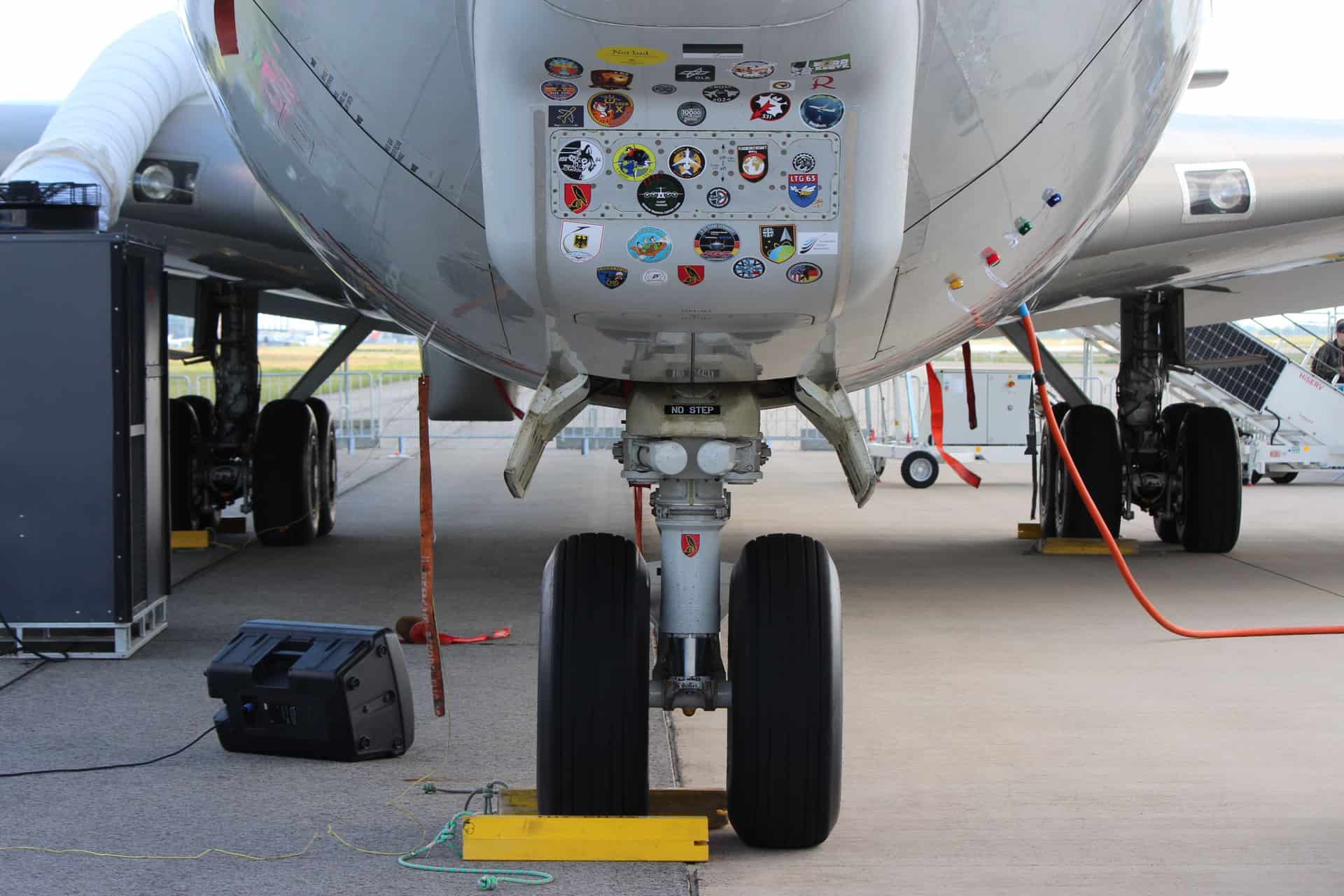
Two chocks for a single-axle trailer and four for a tandem axle, each tire chocked on the downhill side, and both directions covered on at least one tire per side. In practice that means buying two pairs for a tandem-axle travel trailer rather than the one pair most people start with. Chocks are among the cheapest items you will buy for a trailer, and the only reason to own fewer than you need is that nobody told you the number.
This is part of our leveling and chocks guide. Our wheel chock roundup answers which to buy; this page answers how many, which is the question people actually get wrong.
Where the number comes from
A chock is a wedge that stops a tire rolling in one direction. That is a precise statement and the word that matters is “one.” A chock placed behind a tire stops the trailer rolling backward. It does nothing at all about the trailer rolling forward. So a single chock on a trailer is half a solution, and the half it covers is whichever one you happened to guess.
That is why the baseline is a pair per axle per side, placed so that the tire cannot move either way. On a slope, the chock on the downhill side is doing the real work and the uphill one is insurance; on a flat pad there is no downhill side, so both matter equally.
Chock count by trailer layout
| Trailer | Minimum | What we would actually carry |
|---|---|---|
| Single axle (one tire per side) | 2 - one per side, downhill | 4 - a pair per side, front and back of each tire |
| Tandem axle (two tires per side) | 4 - two per side | 4 chocks plus a locking chock per side for rocking |
| Triple axle | 4 - outer tires, both sides | 4 chocks plus a locking chock per side |
| Parked on a noticeable slope | Chock every tire, downhill side | The same, plus leave the trailer hitched if you can |
Why two pairs rather than one for a tandem
A tandem-axle trailer has two tires per side, and they do not necessarily sit on the same surface. One may be on a block, one on gravel; one on the edge of a concrete pad and one off it. Chocking a single tire per side relies on the trailer being a rigid body that cannot move at all if one wheel is held, which is broadly true and not something worth betting a trailer on when the alternative costs the price of a sandwich.
The practical version: chock the rear tire on each side as your default, because that is where you can reach, and chock the front tire as well on any site with a perceptible slope.
Where to put them
Firmly against the tire, square to it, on the ground rather than on the edge of a leveling block. Three details are worth getting right.
Push the chock in until it touches. A chock two inches from the tire is not a chock; it is a thing the trailer rolls into. The trailer should not be able to pick up any speed at all before the chock engages.
Chock before you unhitch, not after. While the trailer is still coupled to the tow vehicle it cannot go anywhere. That is the moment to place the chocks. Unhitching first and then crouching behind the tires is the sequence that produces the stories.
Do not chock onto a leveling block. If a tire is up on a block stack, the chock wants to be on the ground in front of or behind the stack, bearing against the tire, not perched on the top layer where it can slide off the plastic. A chock on a smooth plastic surface is relying on friction that is not there.
What to buy, by the number
Two pairs of wedge chocks covers a tandem-axle trailer properly. The locking chock is a separate product for a separate problem, and only works on a tandem axle.
Best for The non-negotiable basics
Camco Heavy-Duty Wheel Chocks (pair)
The chock that stops the trailer rolling. Not the one that stops it rocking, which is a different product, and you need both.
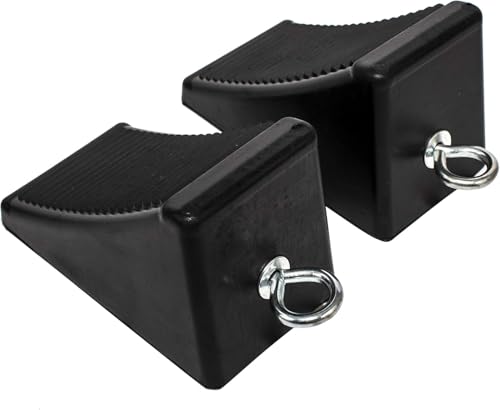
Best for Smooth concrete pads
MaxxHaul Solid Rubber Wheel Chocks (pair)
Rubber rather than plastic: the version that does not slide when the pad is smooth and slightly damp.
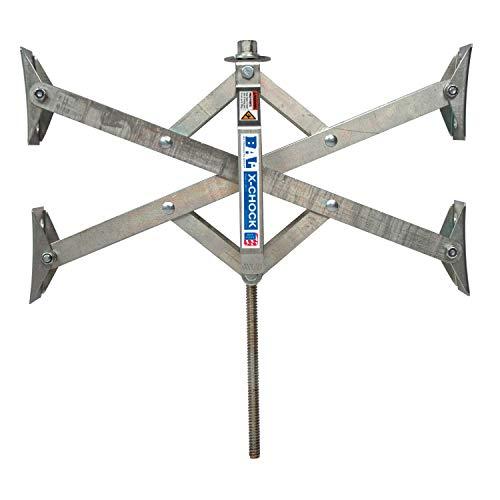
Best for Tandem-axle rigs that rock
BAL X-Chock Tire Locking Chock
The standard answer to a trailer that rocks when you walk across it, and only useful if you have two axles per side.
Which chock material, given you are buying several
Since the honest answer is “buy four,” the material question becomes a cost question. Molded plastic wedges are the cheap default and they are genuinely fine on gravel, grass and dry concrete. Where they let you down is smooth, slightly damp concrete, where a plastic wedge can skate rather than bite.
Solid rubber chocks grip that surface properly and are heavier to carry and store. A reasonable compromise for someone who uses both kinds of site is a pair of each: rubber for the paved pads, plastic for everything else. Full comparison in the roundup.
What about a single-axle trailer?
A single-axle trailer has one tire per side and therefore no gap for a locking chock to work in — that product is useless here, which catches people out. The answer for a single axle is wedge chocks, in pairs, on both sides, and the rocking is addressed through the stabilizer jacks instead. That case has its own page: best wheel chocks for a single-axle trailer.
Keeping track of four chocks
The practical problem with owning four chocks rather than two is that chocks are the item most often left at a campsite. They are small, dark, on the ground, behind a tire, on the side of the trailer you did not walk around. Two habits solve it: buy a bright color, and make “collect the chocks” a line on the departure walk-around rather than something you remember. Our setup checklist includes both directions.
Questions people actually ask
How many wheel chocks do I need for a travel trailer?
Two for a single axle and four for a tandem axle. The minimum is one per side on the downhill side; the number worth owning is a pair per side so the trailer cannot roll in either direction.
Do I need to chock both sides of the trailer?
Yes. Chocking one side only leaves the trailer able to pivot and relies on nothing but luck about which way the ground falls. Chocks are among the cheapest items for a trailer, so there is no reason to cover one side.
Should I chock before or after unhitching?
Before. While the trailer is still coupled it cannot move, which is exactly when you want to be crouching behind a tire. Chock first, then unhitch.
Can I put a wheel chock on top of a leveling block?
Avoid it. A chock on smooth plastic relies on friction that is not there and can slide off the top layer. Place the chock on the ground against the tire, in front of or behind the block stack.
Sources
Read next
Leveling & Chocks
Best RV Wheel Chocks for a Travel Trailer
Wedge chocks, X-chocks and the difference between a trailer that rolls and a trailer that rocks.
Leveling & Chocks
X-Chocks vs Wheel Chocks: What Each One Actually Stops
The difference between rolling and rocking, which chock fixes which, and why the answer is usually both.
Leveling & Chocks
Best Wheel Chocks for a Single-Axle Trailer
Chocks that work on a one-axle trailer, including why the X-chock everyone recommends is the wrong buy for your rig.
First-Season Starter Kit
RV Setup and Departure Checklist
The arrival and departure sequence for a travel trailer, in the order that avoids redoing work or damaging something.
Reviewed October 11, 2026. Spot something out of date? Tell us and we will fix it.