How to Sanitize an RV Fresh Water Tank
A job for the start of every season and after any long storage. It takes an afternoon of mostly waiting, and it is the reason your water tastes like water.
Heads up: this page contains affiliate links. If you buy through one, Camp & Chock may earn a commission at no extra cost to you. It never changes which product we put first — how this site is funded.
Drain everything, bypass the filter, add diluted unscented bleach, fill the tank, run it through every tap until you can smell it, let it stand, then drain and flush until the smell is gone. Do it at the start of each season and after any long storage.
Part of our sewer and water guide. For the dilution figures, use current guidance from the CDC or your trailer manufacturer's manual rather than a number from a forum — the ratios vary with bleach concentration, which has changed over the years.
Why bother
A fresh water tank is a dark, warm, wet plastic box that sits unused for months. Biofilm forms in exactly those conditions. It is why water from a trailer that has been stored over winter tastes wrong, and no filter fixes it because the problem is downstream of the filter.
It is also why people conclude their water filter is useless. The filter is fine; the tank is the issue.
When to do it
At the start of every season, after any storage longer than a month, when the water tastes or smells wrong, and after buying a used trailer — before you drink anything from it. That last one is not optional: you have no idea what the previous owner did.
What you will need
Unscented household bleach, a measuring jug, a funnel if your fill is awkward, and your drinking-water hose. Do not use scented bleach or any bleach with added cleaners.
Worth having before you start
A drinking-water hose you are confident in, a filter you can bypass and re-cartridge afterwards, and a regulator so the refill is not at full park pressure.
Best for The default fresh water hose
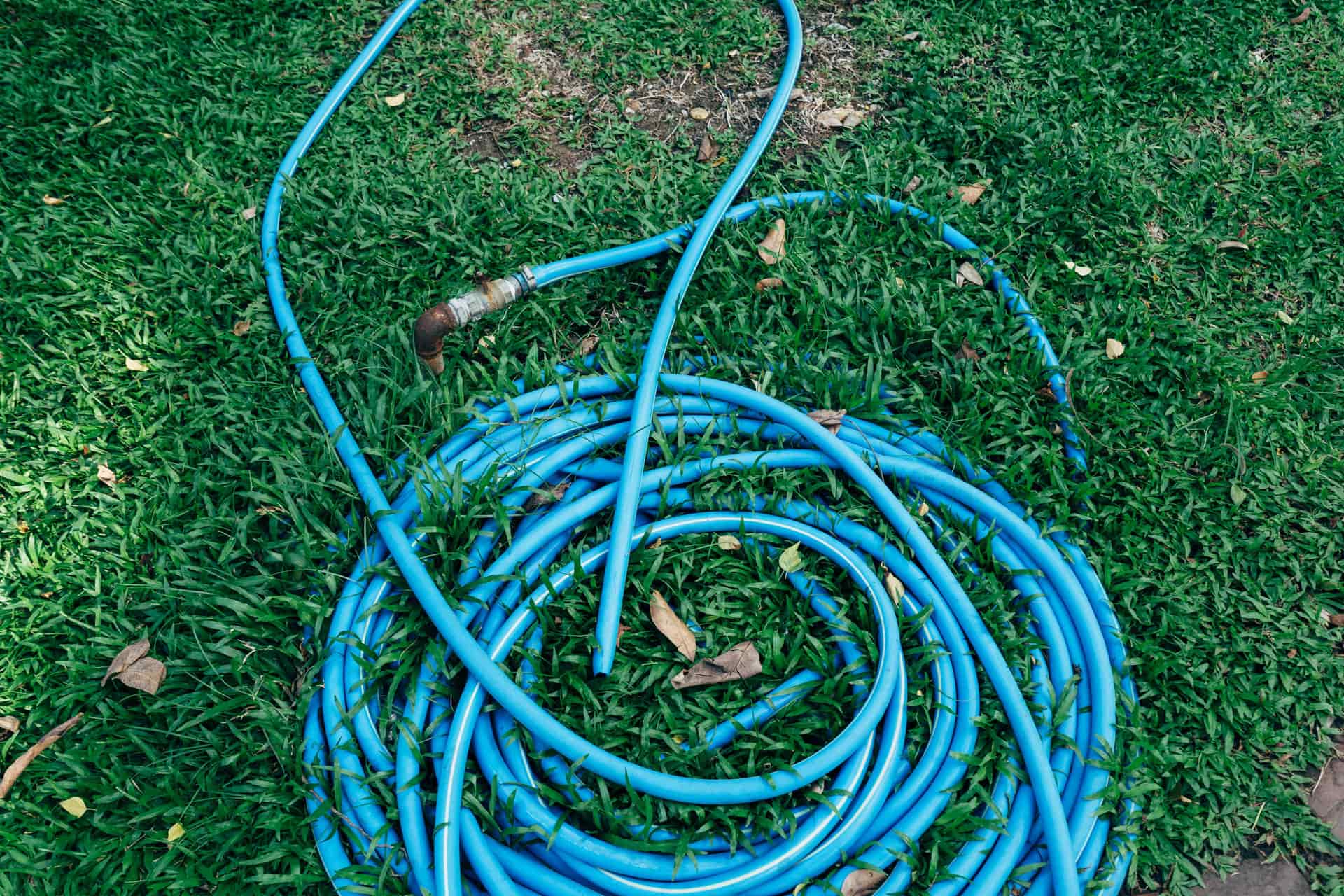
Camco TastePURE Drinking Water Hose (25 ft)
The correct part rather than an upgrade: a drinking-water-rated hose, in white so it never gets mixed up with the sewer gear.
Best for Filtering that earns its housing
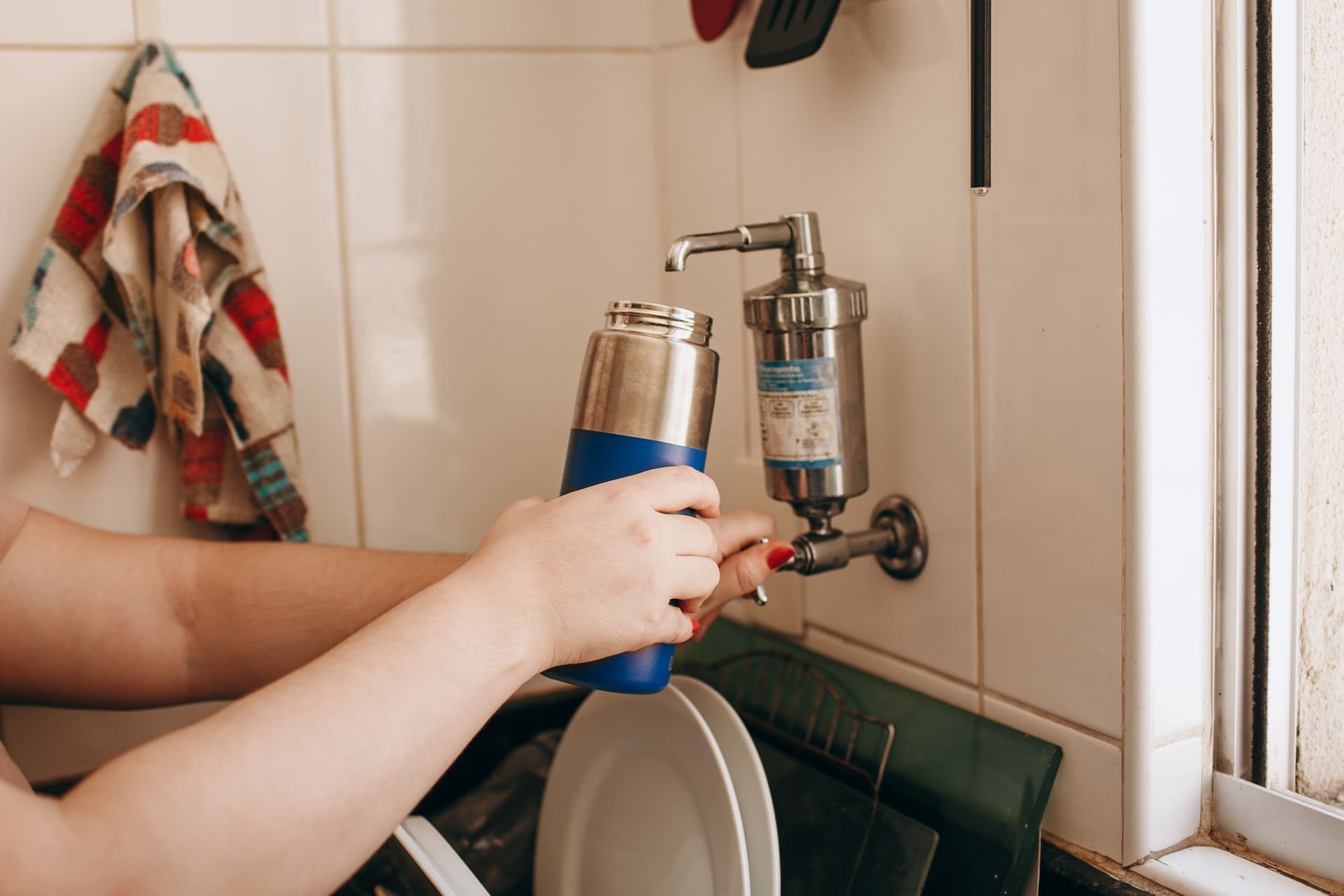
Camco EVO Premium RV Water Filter
A proper canister with a replaceable cartridge: better on sediment than the throwaway inline filters, and cheaper after season one.
Best for The cheapest thing that prevents the worst damage
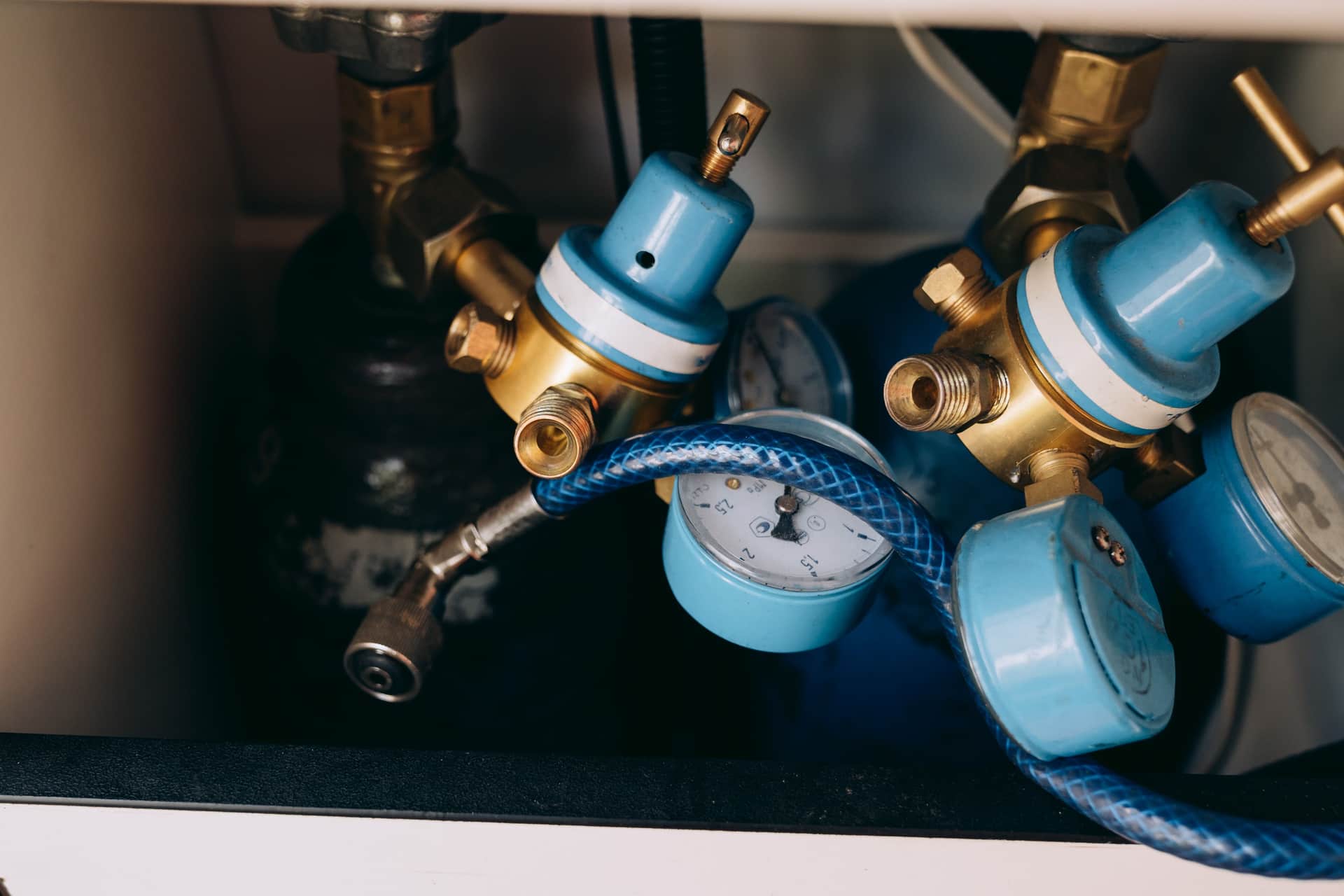
Camco Brass Water Pressure Regulator
The cheapest single item that prevents the most expensive damage. Fixed preset, brass body, screws on in four seconds.
The steps in more detail
Drain everything first
Fresh tank, low point drains, and the water heater. Turn the water heater power off and let it cool before draining it — a hot tank being drained is a burn risk and can damage the element on some rigs.
Take the filter out of the circuit
Sanitizing solution will wreck a carbon cartridge. Either bypass the canister or remove the cartridge, and fit a fresh one at the end. If you are using a disposable inline filter, take it off entirely and fit a new one afterwards. See the water filter roundup.
Dilute in a jug, not in the tank
Mix the bleach with water in a jug first, then pour it in. Neat bleach poured straight into a tank sits concentrated at the bottom and can damage seals and fittings before it disperses.
Run it through every fixture
This is the step people skip and it is the step that matters most. The tank is not the only place biofilm lives — the lines, the pump, the water heater and the faucets all need treating. Open every tap, hot and cold, plus the shower and the toilet, until you can smell the solution at each one, then close it.
Let it stand, then flush properly
Follow the dwell time in your chosen guidance. Then drain, refill, and run every fixture again. Repeat until there is no smell anywhere. It commonly takes two full fills, and being impatient here means drinking bleach flavor for a week.
Doing it without bleach
Two reasonable alternatives if you would rather not use bleach.
A proprietary RV tank sanitizer. Sold specifically for this and dosed per gallon, usually with a shorter dwell time and less residual taste. Follow the product's own instructions.
Diluted white vinegar. Works on taste, odor and light scale, and is much gentler. It is not equivalent to bleach as a disinfectant, so treat it as a freshening step rather than a sanitizing one — useful mid-season, not a substitute for the start-of-season job.
What does not work is hoping. A tank that has sat all winter needs something done to it.
Which approach when
| Situation | Approach |
|---|---|
| Start of season | Full bleach or proprietary sanitizer |
| Just bought a used trailer | Full bleach sanitize, before drinking anything |
| Water tastes slightly stale mid-season | Vinegar flush, or simply refill and run through |
| Stored more than a month | Full sanitize |
| Weekly use all summer | No treatment needed between trips |
What goes wrong
Forgetting the water heater. It holds several gallons. If you do not drain and treat it, you have treated most of the system and left a reservoir of the problem.
Leaving the filter in. The cartridge is finished, and it will keep releasing the taste for weeks.
Not opening every tap. Treats the tank and leaves the lines. Half the job.
Under-flushing. Two full fills is normal. Stop when there is no smell, not when you are bored.
Using scented bleach. The scent additives are not meant for potable systems and the smell lingers in the plastic.
Questions people actually ask
How often should I sanitize my RV fresh water tank?
At the start of every season, after any storage longer than about a month, whenever the water tastes or smells wrong, and immediately after buying a used trailer.
How much bleach do I use to sanitize an RV water tank?
Use the current dilution guidance from the CDC or your trailer manufacturer and read your bleach bottle's concentration. Household bleach strength varies by product and has changed over the years, so a remembered ratio can easily be wrong.
How do I sanitize an RV fresh water tank without bleach?
Use a proprietary RV tank sanitizer according to its instructions. Diluted white vinegar helps with taste, odor and light scale but is not equivalent as a disinfectant, so treat it as a freshening step rather than a sanitizing one.
Do I need to remove the water filter first?
Yes. Sanitizing solution destroys a carbon cartridge, and a spent cartridge will keep releasing the taste for weeks. Bypass the canister or remove the cartridge and fit a fresh one at the end.
Do I have to drain the water heater too?
Yes. It holds several gallons, and skipping it leaves a reservoir of untreated water in the system. Turn its power off and let it cool before draining.
How long does it take?
Most of an afternoon, and nearly all of that is waiting during the dwell time and the flushing. The active work is under an hour.
Sources
Read next
Sewer & Water
Best RV Water Filter
Inline and canister water filters compared, with an honest account of what filtration at this level achieves.
Sewer & Water
Best RV Fresh Water Hose
Drinking-water-safe hoses compared on length, flexibility and storage, plus why two hoses is the right answer.
Sewer & Water
Best RV Water Pressure Regulator
Fixed and adjustable pressure regulators compared, with the flow tradeoff explained and a pressure to aim for.
First-Season Starter Kit
Travel Trailer Essentials Checklist
A first-trip checklist for a new travel trailer, grouped by utility with the commonly forgotten items called out.
Reviewed September 25, 2026. Spot something out of date? Tell us and we will fix it.