Best RV Antifreeze for a Travel Trailer
Nearly every jug on the shelf says -50 F, nearly every jug is pink, and the differences between them matter far less than how much you buy and how you get it into the lines. Here is the short version of a category that is mostly marketing.
Heads up: this page contains affiliate links. If you buy through one, Camp & Chock may earn a commission at no extra cost to you. It never changes which product we put first — how this site is funded.
The short answer
Buy two to three gallons of any ready-to-use pink RV antifreeze rated to −50 F, one gallon at a time rather than in a multipack, because the multipacks in this category are routinely more expensive per gallon. The fluid is close to a commodity and the brand on it is the least important decision you will make today. What actually decides whether your plumbing survives the winter is the pump converter kit — the valve that lets the trailer’s own water pump pull antifreeze through every line instead of you pouring it hopefully into an inlet. And one thing worth knowing before you spend anything: a gallon of this is cheap at a hardware or auto parts store and expensive to ship, so if there is a store on your way home, buy the fluid there and order the tools.
Part of our sewer and water guide. This is the purchase end of winterizing; how to winterize a travel trailer for storage is the full sequence, and the heated water hose roundup is the opposite decision — what to buy if you are camping through the cold rather than closing the trailer up.
Our picks at a glance
Tap any row to jump to the full write-up.
| # | Product | Best for | Beginner fit | Price |
|---|---|---|---|---|
| 1 | 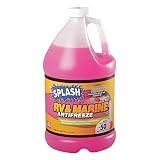 Splash RV & Marine Antifreeze -50 F (1 gallon)The sane way to buy RV antifreeze online: one gallon at a time, ready to use, at the lowest per-gallon price in this group. | Buying exactly as many gallons as your trailer needs | Strong | |
| 2 | 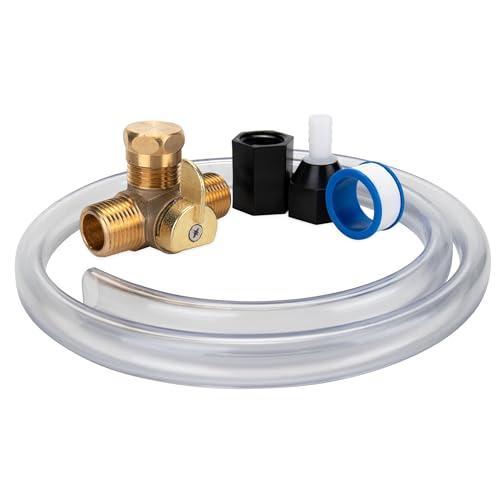 Camco Permanent Pump Converter Winterizing Kit (36543)The one winterizing purchase we would make without hesitating: a permanent valve that lets the onboard pump do the whole job. | Pulling antifreeze through the whole trailer with the onboard pump | Good | |
| 3 | 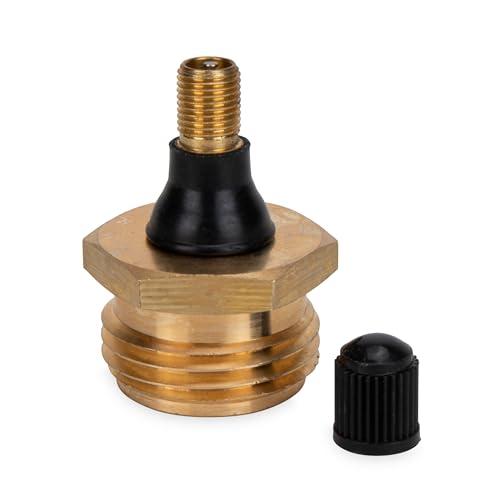 Camco RV Brass Blow Out Plug (36153)A few dollars of brass that either replaces antifreeze in a mild winter or gets it back out again in spring. Buy it either way. | The no-antifreeze method, and for clearing lines in spring | Strong | |
| 4 | 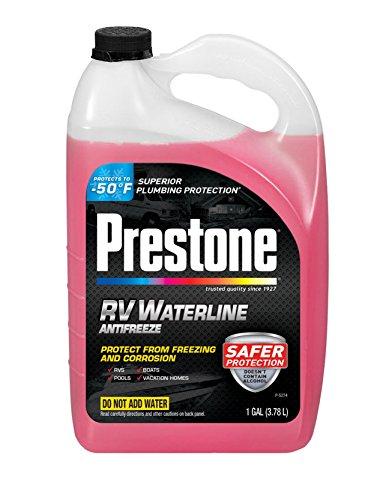 Prestone RV Waterline Antifreeze (AF222, 6-pack of 1 gallon)The brand-name case buy. Right if you intend to winterize this trailer for years and want a published product line behind the fluid. | A brand you can look up, bought once for several seasons | Good | |
| 5 | 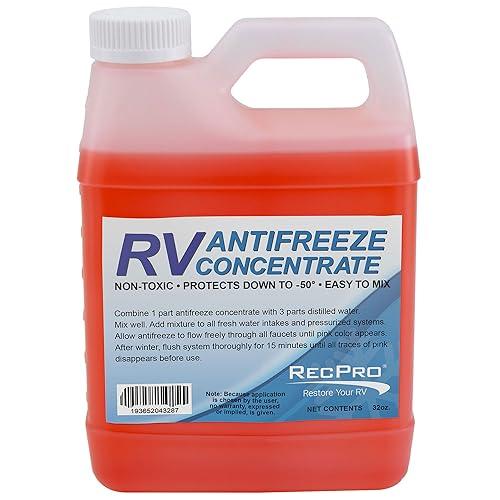 RecPro RV Antifreeze Concentrate -50 F (32 oz, makes 1 gallon)Buy it for the two things it actually gives you: published chemistry and a gallon of antifreeze stored in a quart of space. It is not the value pick and we are not going to pretend it is. | Knowing what is in the jug, and storing it in no space | Adequate |
Prices come from Amazon and were last checked November 12, 2026. They change constantly, so a price older than 48 hours is withdrawn rather than shown stale — those rows read “Check price on Amazon” instead and go straight to the current listing. #ad — these are affiliate links.
What −50 F on the jug actually means
Start here, because it is the only specification printed on most of these products and it does not mean what a first-season owner reasonably assumes.
Burst point is not freeze point. The number on the front of the jug is almost always a burst rating: the temperature down to which the fluid has been judged unlikely to split your pipes. It is not the temperature at which the fluid stays liquid. A −50 F product will start to slush not far below freezing, and slush that will not move is a different problem from ice that splits copper. Practical Sailor, which tests this category properly, puts it bluntly: protect the system to near the freeze point, not the burst point.
And nobody is checking the number. The same tests state there is no ASTM or other industry-accepted standard procedure for determining burst point, and that products claiming −50 contain roughly 30 percent glycol. That is the honest status of the headline figure on every jug in this roundup, including the ones we recommend. Two listings in this very category contradict each other on the same pack size — one calls −50 F a “burst protection” figure, the other calls it a “freezing point” — which is a good illustration of how loosely the word is used.
What to do with that. Not panic, and not pay extra for a bigger number. For a trailer sitting in a driveway through a normal northern winter, a correctly installed −50 F fluid in every line and trap is the thing that works, and under-filling a line is far more likely to hurt you than the difference between −50 and −100 on a label. The rest of this page is therefore about quantity and method rather than about brands.
How many gallons do you actually need?
More than people buy, and less than the multipack sells you.
Two to three gallons is the normal answer for a single-axle or small tandem travel trailer: hot and cold runs to a kitchen sink, a bathroom sink, a shower and a toilet, plus the outside shower if you have one, plus a cup or so poured down each drain trap. If you have a washer prep, an outdoor kitchen or a second bathroom, add a gallon. If you are winterizing a fifth wheel, start at four.
Buy one more jug than your estimate. The failure mode in this job is not having enough fluid at the moment you realize you have not done the outside shower, with the pump already primed. A spare gallon costs very little and keeps indefinitely in a sealed jug.
Do not pour it into the fresh water tank. It is the classic first-timer move and it wastes most of what you bought — a forty-gallon tank will absorb three gallons of antifreeze and barely notice, and then you have to flush all of it out in spring. The tank gets drained, not filled. The pump converter below exists precisely so the pump can draw from a jug instead of from the tank.
How we choose
Cost per gallon, not cost per package. This is the single most useful thing we can tell you about the category, because the pricing is genuinely strange: at the time we wrote this, a four-pack of one brand cost noticeably more than four single jugs of the same brand. We rank on what a gallon costs you, and we say when a multipack is the worse deal.
Ready to use versus concentrate. Ready-to-use is right for almost everyone: you pour it and it works. A concentrate only earns its place when storage space is the constraint, and it introduces the one error in this whole job that is genuinely yours to make — a weak mix.
What the maker is willing to publish. Most of this category is marketplace labeling with a temperature and nothing else. We rank a brand that states its chemistry above one that states only a number, because that is the only way to act on Practical Sailor’s finding that the ethanol-based products they tested protected against corrosion poorly while propylene glycol is the one recommended for potable systems.
Whether it is a fluid or a tool. Two of the five picks here are not antifreeze. They are in the roundup because the search that brought you here is really a job, not a product, and the valve and the brass plug are the two parts that change how well that job goes.
We do not test products and say so on how we choose. No antifreeze on this page was put in a freezer by us, no refractometer was involved, and every temperature figure here is the maker’s own claim, reported as a claim. What we can do is read the labels against an independent test publication, do the per-gallon arithmetic that the packaging makes awkward, and be straight about where to buy it. Sources are linked at the end.
The picks
1. Best for Buying exactly as many gallons as your trailer needs
Splash RV & Marine Antifreeze -50 F (1 gallon)
The sane way to buy RV antifreeze online: one gallon at a time, ready to use, at the lowest per-gallon price in this group.
- Specification
- Listing states -50 F burst protection
- Specification
- Ready to use, not a concentrate
- Specification
- Sold as a single 1-gallon jug
What it does well
- Sold one gallon at a time, which is how you should buy it: most travel trailers take two to three gallons and a four-pack leaves you storing the rest
- Ready to use straight from the jug, so there is no mixing step to get wrong in a cold driveway
- The cheapest per-gallon way to buy this fluid on Amazon on the day we checked, by a wide margin over the multipacks
The real tradeoff
- The -50 F on the label is a burst rating, not a freeze point. It will slush well above that and get harder to pump
- No freeze point, corrosion data or base chemistry is published on the listing, so you are buying on the burst number alone
- A gallon of mostly water is expensive to ship. A hardware or auto parts store near you is usually cheaper, and we would rather say so
How it measures up
These are judgments from published specifications and what we see at the lodge, not laboratory results. How we choose.
- Beginner fit
- Strong — Pour it in. Nothing to mix or measure.
- Published data
- Weak — A burst number and nothing behind it.
- Quantity fit
- Strong — Buy two or three, not four.
- Value
- Good — Cheapest per gallon here; still cheaper in a store.
Specifications from Practical Sailor, on burst vs freeze point.
2. Best for Pulling antifreeze through the whole trailer with the onboard pump
Camco Permanent Pump Converter Winterizing Kit (36543)
The one winterizing purchase we would make without hesitating: a permanent valve that lets the onboard pump do the whole job.
- Specification
- Plumbs into the inlet side of the RV water pump
- Specification
- A valve selects the fresh tank or the siphon hose
- Specification
- Camco publishes it as CSA low lead content certified
- Specification
- Camco part number 36543
What it does well
- Turns the pump you already own into the thing that fills the lines, which is why this is the tool to buy rather than a hand pump
- Permanent: fitted once, every future winterizing is a valve turn and a siphon hose dropped into a jug
- The valve also keeps you from pouring antifreeze into the fresh water tank, which is the mistake that wastes two gallons and then needs flushing out in spring
The real tradeoff
- It is a plumbing job. You are cutting into the pump inlet line, so budget an hour, two hose clamps and the patience to work in a bay
- Nothing about it helps if your pump is buried behind a panel you cannot reach, and on some trailers that is the real answer
- Does nothing on its own. You still buy the antifreeze
How it measures up
These are judgments from published specifications and what we see at the lodge, not laboratory results. How we choose.
- Beginner fit
- Good — Simple parts, but it is a plumbing install.
- Install effort
- Adequate — Cutting into the pump inlet line, once.
- Time saved
- Strong — Every winter after the first one.
- Value
- Strong — Cheap, and it is the part that does the work.
Specifications from Camco.
3. Best for The no-antifreeze method, and for clearing lines in spring
Camco RV Brass Blow Out Plug (36153)
A few dollars of brass that either replaces antifreeze in a mild winter or gets it back out again in spring. Buy it either way.
- Specification
- Brass body with a standard air chuck fitting
- Specification
- Threads onto the city water inlet
- Specification
- Camco part number 36153
What it does well
- The cheapest winterizing tool there is, and in a mild climate with a compressor it can be the only one you need
- Brass rather than plastic, which matters on a part you thread onto the inlet once a year for a decade
- Useful in spring too: blowing the lines clear is how you get antifreeze out without running forty gallons through the system
The real tradeoff
- Air does not reach drain traps, low spots or a water heater you forgot to bypass, which is exactly where antifreeze earns its keep
- You need a compressor, and you need to keep the pressure down. A shop compressor at full tilt is more pressure than trailer plumbing wants
- Not a complete answer anywhere that gets properly cold. Below freezing for weeks, use antifreeze as well
How it measures up
These are judgments from published specifications and what we see at the lodge, not laboratory results. How we choose.
- Beginner fit
- Strong — Threads on. Nothing to learn.
- Install effort
- Strong — None.
- Completeness
- Adequate — Air misses traps and low spots.
- Value
- Strong — The least money in this category.
Specifications from Camco.
4. Best for A brand you can look up, bought once for several seasons
Prestone RV Waterline Antifreeze (AF222, 6-pack of 1 gallon)
The brand-name case buy. Right if you intend to winterize this trailer for years and want a published product line behind the fluid.
- Specification
- Case of six 1-gallon jugs, part number AF222-6PK
- Specification
- Sold for potable water systems
- Specification
- Ready to use
What it does well
- A chemical company with a published product line behind it rather than a marketplace label, which matters more here than the headline temperature
- Sold specifically as a waterline antifreeze for RVs rather than as a general-purpose pink fluid, so the intended use is not something you have to infer from the label color
- Six gallons is two or three seasons for one trailer, so the cost per winter is reasonable even though the sticker is not
The real tradeoff
- You are buying six gallons when you need two or three, and the balance has to be stored somewhere it will not freeze solid
- Clearly the most expensive way to get a single gallon into your trailer this fall
- Still a burst rating on the label, with no freeze point published for the fluid in the jug
How it measures up
These are judgments from published specifications and what we see at the lodge, not laboratory results. How we choose.
- Beginner fit
- Good — Ready to use; just a lot of jugs to lift.
- Published data
- Good — A real product line with literature behind it.
- Quantity fit
- Adequate — Six gallons for a two to three gallon job.
- Value
- Adequate — Good per season, poor for one winter.
Specifications from Prestone.
5. Best for Knowing what is in the jug, and storing it in no space
RecPro RV Antifreeze Concentrate -50 F (32 oz, makes 1 gallon)
Buy it for the two things it actually gives you: published chemistry and a gallon of antifreeze stored in a quart of space. It is not the value pick and we are not going to pretend it is.
- Specification
- One 32 oz bottle makes 1 gallon at the stated 1 to 3 mix ratio
- Specification
- Listing states -50 F protection at that dilution
- Specification
- Listed as propylene glycol and ethanol-free
- Specification
- Sold for marine and RV water lines
What it does well
- The only pick here that states its chemistry: propylene glycol, ethanol-free. Practical Sailor's winterizing tests rated corrosion protection on the ethanol-based products they tried as poor and recommend propylene glycol for potable systems, so a label that commits to it is worth something
- A gallon of antifreeze that stores as a quart bottle, which is a real argument in a trailer where every bay is already full - buy three bottles and you have winterized the trailer from a shoebox of space
- You mix what you need, so an opened bottle is not a half-used gallon sitting in a storage bay all summer
The real tradeoff
- You have to mix it correctly, and a weak mix is burst protection you no longer have. This is the one product here you can get wrong
- You need clean water to mix with, which is awkward on the day you have just drained the trailer
- By a wide margin the most expensive gallon on this page once mixed - several times the price of a ready-to-use jug - and you are supplying the water and doing the work
How it measures up
These are judgments from published specifications and what we see at the lodge, not laboratory results. How we choose.
- Beginner fit
- Adequate — A mixing step you can get wrong.
- Published data
- Good — Chemistry, ratio and burst figure stated; no freeze point.
- Quantity fit
- Strong — A gallon per quart bottle of shelf space.
- Value
- Weak — Several times the per-gallon cost of a ready-to-use jug.
Specifications from RecPro.
What each pick is for, and what it does not do
| Pick | What it is | Published figure | The catch |
|---|---|---|---|
| Splash -50 F, 1 gallon | Ready-to-use pink fluid, bought a gallon at a time | -50 F burst protection (listing) | No freeze point, chemistry or corrosion data published |
| Camco pump converter kit (36543) | A permanent valve on the pump inlet, plus a siphon hose | CSA low lead content certified (Camco) | A plumbing install, and you still buy the fluid |
| Camco brass blow out plug (36153) | Air fitting for the city water inlet | Brass body (Camco) | Air misses traps, low spots and a non-bypassed heater |
| Prestone AF222, 6 x 1 gallon | Brand-name case buy for potable systems | -50 F (listing); propylene glycol product line | Six gallons for a two to three gallon job |
| RecPro concentrate, 32 oz | One quart bottle that mixes up to a gallon | 1 to 3 ratio, propylene glycol, ethanol-free (listing) | The most expensive gallon here, plus a mixing step |
Note what the table cannot show: a meaningful difference between the fluids. Three of these are pink propylene-glycol-type RV antifreeze with a −50 F burst claim and no published freeze point, and we are not going to invent a ranking between them on a specification nobody publishes. The ordering above is about how you buy and how much.
If you are winterizing for the first time this month
Three single gallons of ready-to-use fluid, the pump converter so the trailer's own pump pulls it through every line, and the brass plug for blowing the lines clear again in spring. That is the whole shopping list, and the fluid is the part worth buying locally if you can.
Best for Buying exactly as many gallons as your trailer needs
Splash RV & Marine Antifreeze -50 F (1 gallon)
The sane way to buy RV antifreeze online: one gallon at a time, ready to use, at the lowest per-gallon price in this group.
Best for Pulling antifreeze through the whole trailer with the onboard pump
Camco Permanent Pump Converter Winterizing Kit (36543)
The one winterizing purchase we would make without hesitating: a permanent valve that lets the onboard pump do the whole job.
Best for The no-antifreeze method, and for clearing lines in spring
Camco RV Brass Blow Out Plug (36153)
A few dollars of brass that either replaces antifreeze in a mild winter or gets it back out again in spring. Buy it either way.
Antifreeze or compressed air? The honest comparison
You will find people online who insist antifreeze is unnecessary and others who treat the air method as reckless. Both groups are describing their own climate.
What air genuinely does well. It is fast, it costs almost nothing after the plug, there is nothing pink to flush out in spring, and nothing to taste in your drinking water in April. In a region where winter means a handful of nights a little below freezing, a thorough blow-out is a legitimate complete answer.
What air does not reach. P-traps under the sinks and the shower, the toilet valve, low spots in a line that does not run perfectly downhill, and a water heater you forgot to bypass. Every one of those holds standing water that air pressure flows straight past, and each one is a repair.
What antifreeze does well. It fills. That is the whole case for it: you pump until pink comes out of each fixture in turn, pour a cup into each drain trap and the toilet bowl, and the parts of the system you cannot see have fluid in them rather than air and a little water. It is the forgiving method, which is exactly what a first winter wants.
What it costs you. Twenty to thirty dollars of fluid, a spring flush before you drink from the system, and a faint taste for the first tank if you rush that flush. Use the plug to push most of it out, then sanitize — sanitizing the fresh water tank is the spring half of this job and the step that fixes the taste.
Our position. Do both, in that order: blow the lines out, then pump antifreeze through what remains. It is the belt-and-braces version, the extra cost is one jug, and it removes the judgment call about whether your particular plumbing runs downhill.
Mistakes that waste a jug or a winter
Using automotive coolant. Never. The green and orange stuff in the auto aisle is ethylene glycol, it is toxic, and it has no business in a system you drink from. RV antifreeze is the pink, non-toxic, potable-rated kind and the aisle it sits in is not the same aisle.
Pouring it in the fresh tank. Covered above. The tank is drained and left empty; the lines are what get filled.
Stopping when the kitchen tap runs pink. Every fixture, hot and cold, one at a time, until pink appears at each: both sinks, the shower (hot and cold, and the handheld), the toilet flush, the outside shower, and the city water inlet if your setup fills that line. Then the traps and the bowl.
Leaving the water heater online. It will drink your whole supply and it does not need any. Bypass, drain, move on.
Forgetting the exterior. The black tank flush line and the outside shower are the two that get missed, and the outside shower is the one that freezes first because it is the least insulated plumbing on the trailer. If you have been using the flush line all season, the black tank flush guide covers what is still sitting in it.
Buying the multipack because multipacks are cheaper. Not in this category, and not on the day we checked. Do the division.
Where this sits in a first season
Winterizing is the last job of year one and the one nobody at the dealership demonstrates. The fluid is a commodity, the tools are cheap, and the whole thing takes an afternoon once you have done it once. What it protects is the most expensive thing on the trailer to repair after the roof: plumbing buried in walls and floors.
If the trailer is going into storage rather than back out next weekend, antifreeze is one of three purchases that matter, and the other two are covered elsewhere on this site: a dehumidifier or moisture absorber for the damp that builds up in a closed trailer, and tire covers for the UV that works on sidewalls while the trailer sits still. It is also worth walking the roof before you close it up, because a cracked bead lets water in all winter — the roof sealant roundup is the two tubes for that. And if you are not storing it — if you are the one camping in February — then this is the wrong page: a heated water hose keeps the supply moving and a space heater keeps you in it.
Questions people actually ask
How much RV antifreeze do I need for a travel trailer?
Two to three gallons for a typical travel trailer with a kitchen sink, a bathroom sink, a shower and a toilet, plus a cup poured into each drain trap and the toilet bowl. Add a gallon for a washer prep, an outdoor kitchen or a second bathroom, and start at four gallons for a fifth wheel. Buy one jug more than your estimate - running short with the pump already primed is the usual way this job goes wrong.
Does -50 F RV antifreeze stay liquid at -50 F?
No. That figure is a burst rating, meaning the temperature down to which the fluid is judged unlikely to split your pipes, and the fluid itself will begin to slush not far below freezing. Practical Sailor's winterizing tests note that there is no ASTM or other industry-accepted procedure for determining burst point at all, and that products claiming -50 contain roughly 30 percent glycol. Treat the number as a rough category marker rather than a measurement.
Can I use automotive antifreeze in my RV water lines?
No. Automotive coolant is ethylene glycol and it is toxic. RV plumbing antifreeze is the pink, non-toxic kind sold for potable water systems. They are different products in different aisles and the substitution is not a cost saving, it is a contaminated fresh water system.
Should I pour RV antifreeze into the fresh water tank?
No. The fresh tank gets drained and left empty. A forty-gallon tank would absorb several gallons of antifreeze without meaningfully protecting the lines, and then all of it has to be flushed out in spring. The lines, traps and toilet are what get filled, which is what the pump converter kit is for - it lets the onboard pump draw from a jug instead of from the tank.
Is blowing out the lines enough, or do I need antifreeze too?
Compressed air alone can be enough in a mild winter, and it is fast and cheap. What it cannot do is clear drain traps, the toilet valve, low spots in a line that does not run downhill, or a water heater left un-bypassed. Our position is to do both: blow the lines out first, then pump antifreeze through what remains. The extra cost is about one gallon and it removes the guesswork.
Which brand of RV antifreeze is best?
For most owners the brand is the least important decision in this purchase. The fluids are close to a commodity, almost all of them are pink and labeled -50 F, and none of the mainstream ones publish a freeze point you could compare. Buy on cost per gallon and on whether the jug is ready to use. The one preference worth having is a propylene glycol product from a company that states its chemistry, because independent testing has found corrosion protection on ethanol-based winterizing fluids to be poor.
Is it cheaper to buy RV antifreeze online or in a store?
Usually a store, and we would rather say so than pretend otherwise. A gallon of RV antifreeze is mostly water, which makes it cheap to produce and expensive to ship, so hardware stores, farm stores and auto parts stores often beat online pricing on the fluid in the fall. The winterizing tools are the opposite - a pump converter kit or a brass blow out plug ships for almost nothing and is often not stocked locally.
How do I get the antifreeze back out in spring?
Drain the low points, then push the lines clear with the blow out plug rather than running tank after tank through the system, then refill and sanitize the fresh water system before you drink from it. The sanitizing step is what removes the lingering taste people blame on the antifreeze.
Sources
Read next
First-Season Starter Kit
How to Winterize a Travel Trailer for Storage
The winter storage routine in order, from draining the water system to the moisture and tire protection that prevents a spring surprise.
Sewer & Water
Best Heated RV Water Hose for a Travel Trailer
Heated fresh-water hoses for freezing nights, ranked on diameter, published cold rating and what happens when the power goes off.
Sewer & Water
How to Sanitize an RV Fresh Water Tank
The full tank sanitizing procedure with dilution guidance from an authority, plus the non-bleach alternatives.
Power & Surge Protection
Best RV Space Heater for a Travel Trailer
Space heaters for a travel trailer, ranked by what they cost you in amps: thermostats, low settings, and the propane option's conditions.
Reviewed November 9, 2026. Spot something out of date? Tell us and we will fix it.