Can You Use a Regular Hose for RV Fresh Water?
Technically it will carry water. It is also not rated for drinking water, and it is green, which is the practical problem nobody mentions.
Heads up: this page contains affiliate links. If you buy through one, Camp & Chock may earn a commission at no extra cost to you. It never changes which product we put first — how this site is funded.
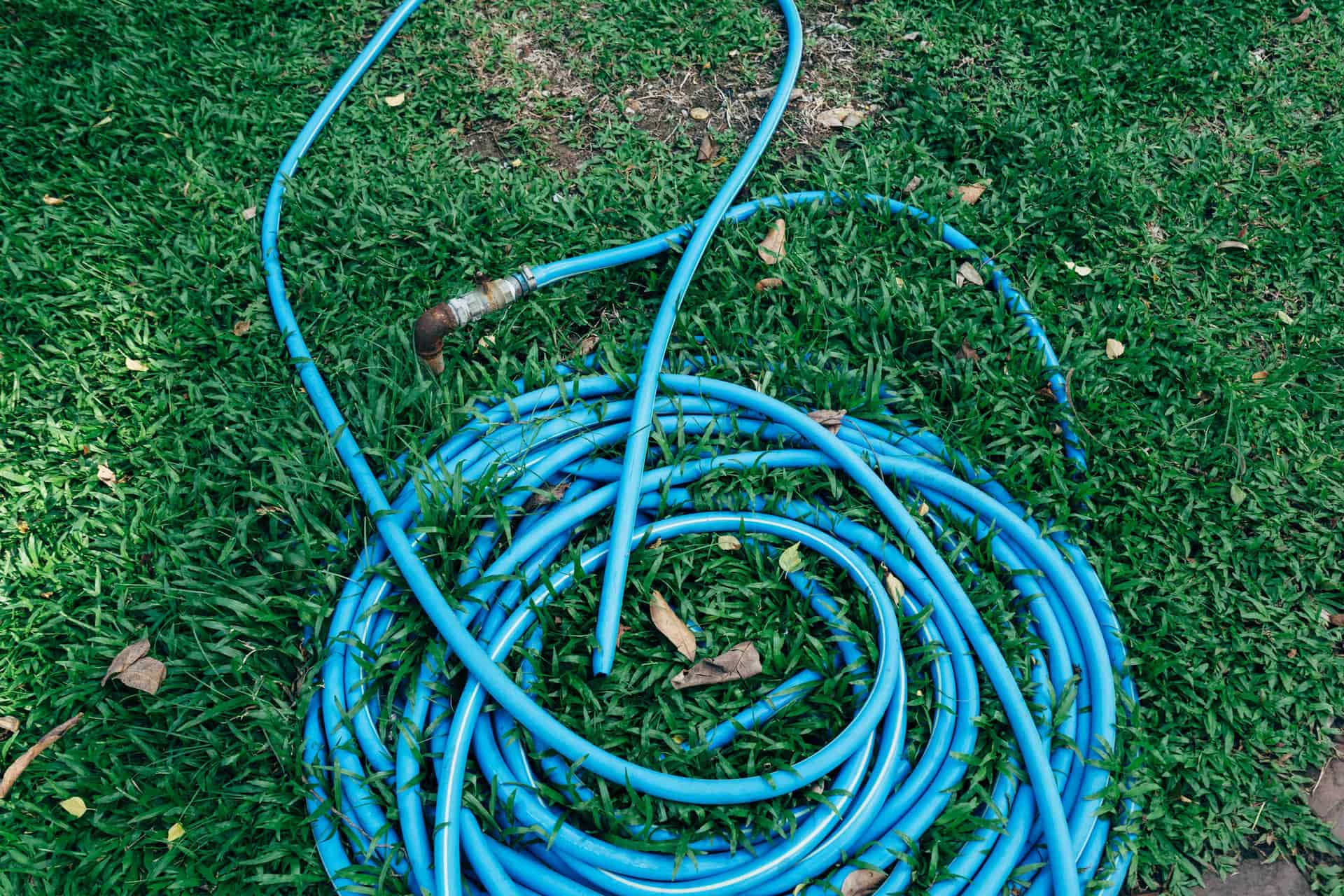
No — use a hose that is rated for drinking water, which a standard garden hose is not. A garden hose is built to carry water to plants, and nothing about its materials is certified for water you will drink, cook with or brush your teeth in. The second reason is more practical and gets less attention: a fresh water hose should be white, because the one mistake you must never make at a campsite is confusing it with a hose that has been near the sewer connection.
Part of our sewer and water guide. Once you have accepted that, the question becomes which hose, and that is the fresh water hose roundup.
The two reasons, in order of how much they matter
Drinking-water rating. A hose sold for RV and marine fresh water use is made to carry potable water. A garden hose is not certified for it, and the materials in a hose that has been coiled in the sun all summer are not something to take on faith for water you are going to drink. This is not an upgrade argument; it is a correct-part argument.
Color coding. This is the one that catches experienced owners rather than new ones. At a campsite you have a fresh water hose, sometimes a rinse hose for the black tank, and a sewer hose, and you handle all of them in the dark at some point. A white hose and a green hose are never confused. Two green hoses eventually are, and the consequence is not recoverable by rinsing.
What “the right setup” actually is
The fresh water side of a campsite is three or four items in a specific order, and most first-season problems come from missing one rather than from buying the wrong brand.
The fresh water chain, spigot to trailer
| Position | Item | What it prevents |
|---|---|---|
| 1. At the spigot | Pressure regulator | Park pressure spikes bursting a fitting or a line inside the wall |
| 2. After the regulator | Water filter | Sediment in your faucet screens and the taste of the campground |
| 3. Between filter and trailer | Drinking-water-rated hose, in white | Carrying potable water through a hose not rated for it |
| 4. Optional, at the trailer | A second short hose or a quick connect | Strain on the trailer's inlet fitting |
The order of the first two is worth getting right rather than guessing, and we have a whole page on it: which order do the filter and regulator go in.
The pressure regulator is the part not to skip
If you only add one thing to a hose, add this. Campground water pressure is not standardized and it is not published; you find out what a park delivers by connecting to it. A fitting or a line inside a wall bursting because the park ran high is among the most expensive cheap-to-prevent failures in RVing.
A fixed brass regulator screws onto the spigot in about four seconds and has nothing to set, which is the right answer for a first season. An adjustable one with a gauge shows you what the park is delivering and lets you keep usable shower flow rather than a fixed trickle, which is why people upgrade. Both are covered in the regulator roundup, and how to use one covers setting it.
The correct parts, cheapest first
A 25-foot drinking-water-rated hose in white is the default and reaches the spigot at nearly every site. The lightweight version coils far smaller if storage is your constraint. Add a brass pressure regulator before anything else, and an inline filter if you want to stop tasting the campground.
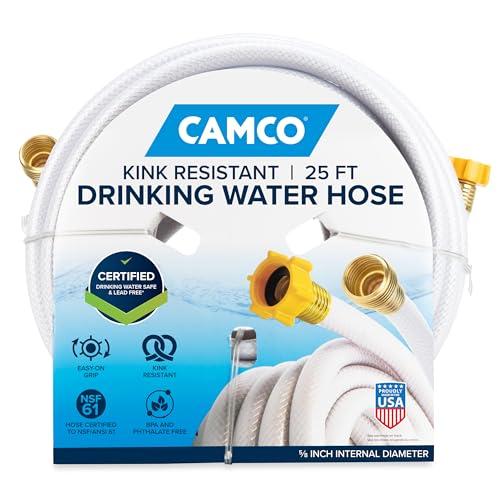
Best for The default fresh water hose
Camco TastePURE Drinking Water Hose (25 ft)
The correct part rather than an upgrade: a drinking-water-rated hose, in white so it never gets mixed up with the sewer gear.
Best for Easy coiling and small storage
Zero-G RV and Marine Drinking Water Hose
The lightweight upgrade: it coils small, stays flexible in the cold, and costs enough to be a second-season purchase.
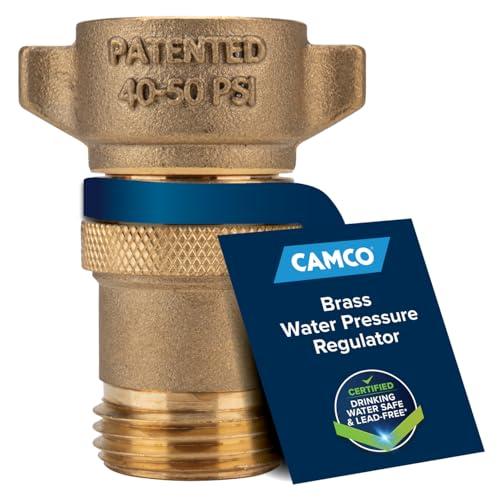
Best for The cheapest thing that prevents the worst damage
Camco Brass Water Pressure Regulator
The cheapest single item that prevents the most expensive damage. Fixed preset, brass body, screws on in four seconds.
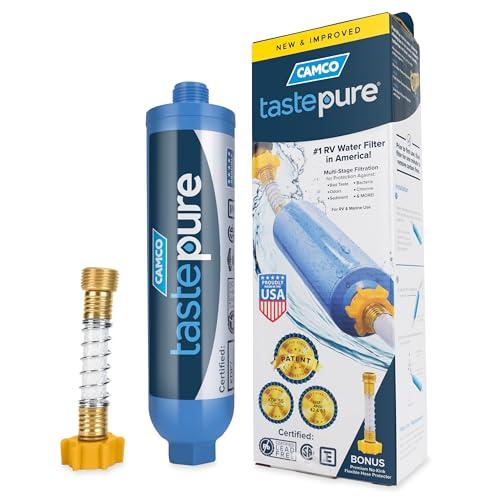
Best for The simple first filter
Camco TastePURE Inline RV Water Filter
The one most people start with: screws on, improves the taste, keeps grit out, and gets thrown away at the end of the season.
What a garden hose is genuinely fine for
Not nothing — there is a real use for one in an RV compartment, and it is a good one.
Keep your old garden hose as the rinse hose: the one you use for the black tank rinser, for washing the sewer hose out, and for rinsing a portable waste tank. It is already the wrong color for fresh water, which is exactly what you want for a hose that must never be mistaken for the drinking supply. Store it on the sewer side of the trailer, away from the white one.
That gives you the two-hose setup that experienced owners end up with for free, and it removes the temptation to use the fresh water hose for a job it should never do.
Length, storage and the two-hose habit
Twenty-five feet is the right first length. It reaches the spigot at essentially every site. Longer hose is more water sitting warm in the sun and more bulk in a compartment you need for other things. The diameter and the thread matter as much as the length, and both are covered in what size water hose for an RV.
Buy two rather than one long one. Two 25-foot hoses give you 50 feet when a site demands it and one hose when it does not, and the second one doubles as a spare if the first gets damaged.
Coil it properly or it will kink. A kinked hose restricts flow and the kink becomes permanent. If stowing it is the part you find tedious, that is the argument for the lightweight flexible version — it costs more and it actually gets put away.
Drain it before storage. Water left in a hose over winter freezes, splits the jacket and is not repairable. This is part of winterizing.
What about the hose at a seasonal site?
A trailer left connected all season is a different case in one respect: the hose is under pressure continuously for months rather than for a weekend. That makes the regulator more important rather than less, and it makes a periodic look at the hose worthwhile — a jacket that has been in direct sun for a season is not the hose it was in May.
Everything else is the same. White hose, regulator at the spigot, filter after it, and the green hose stays on the sewer side where it belongs.
Questions people actually ask
Can you use a garden hose for RV fresh water?
No. A standard garden hose is not rated for drinking water, so it is the wrong part for water you will drink, cook with or brush your teeth in. Use a hose sold as drinking-water safe for RV or marine use, in white so it is never confused with a hose that has been near the sewer connection.
What is the difference between an RV water hose and a garden hose?
The RV hose is rated to carry potable water and is made in white as a color code. A garden hose carries no drinking-water rating and is usually green, which makes it easy to confuse with a rinse hose used on sewer equipment.
What length RV fresh water hose should I buy?
Twenty-five feet, which reaches the spigot at essentially every site. Buying two 25-foot hoses is better than one 50-foot hose: you get the extra reach when a site needs it, one hose when it does not, and a spare if one is damaged.
Do I need a water pressure regulator as well as the right hose?
Yes, and it is the part not to skip. Campground pressure is not standardized or published, and a line bursting inside a wall because a park ran high is one of the most expensive cheap-to-prevent failures in RVing. A fixed brass regulator screws onto the spigot and has nothing to set.
Can I keep my old garden hose for anything?
Yes - use it as the dedicated rinse hose for the black tank rinser, for washing out the sewer hose and for rinsing a portable waste tank. It is already the wrong color for fresh water, which is exactly what you want for that job. Store it on the sewer side of the trailer.
Sources
Read next
Sewer & Water
Best RV Fresh Water Hose
Drinking-water-safe hoses compared on length, flexibility and storage, plus why two hoses is the right answer.
Sewer & Water
What Size Water Hose Do I Need for an RV?
The 5/8 inch diameter, the 3/4 inch garden hose thread and the 25 foot length explained, with the sizing mistakes that cost flow or money.
Sewer & Water
Best RV Water Pressure Regulator
Fixed and adjustable pressure regulators compared, with the flow tradeoff explained and a pressure to aim for.
Sewer & Water
RV Water Filter and Pressure Regulator: Which Goes First
The order of the regulator and filter on a city water line, why it matters, and which of the two you actually need.
Reviewed October 17, 2026. Spot something out of date? Tell us and we will fix it.