Camco FasTen vs Lynx Levelers
Both are interlocking plastic blocks in a ten-pack. The difference is what happens on soft ground, and that is the only question worth asking here.
Heads up: this page contains affiliate links. If you buy through one, Camp & Chock may earn a commission at no extra cost to you. It never changes which product we put first — how this site is funded.
The short answer
Buy the Camco FasTen set if your regular sites are gravel or concrete, and the Lynx Levelers set if they are grass or dirt. Both are interlocking plastic blocks sold in ten-packs that stack into a ramp; the Lynx open honeycomb structure spreads load over a wider area, which is the one thing that matters on ground that gives. On firm ground the extra money buys you nothing you will notice.
Part of our leveling and chocks guide, and a narrower question than the full leveling blocks roundup. This page exists because these two sets are the ones people actually put side by side in a cart, and the comparison everyone writes stops at the price.
Our picks at a glance
Tap any row to jump to the full write-up.
| # | Product | Best for | Beginner fit | Price |
|---|---|---|---|---|
| 1 | 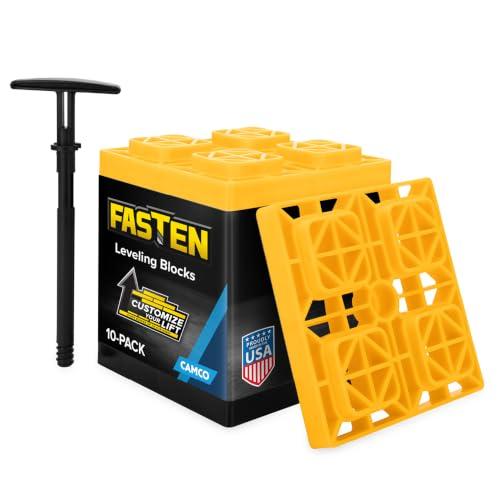 Camco FasTen Leveling Blocks (10-pack)The default first purchase for a travel trailer: interlocking blocks you stack into a ramp, cheap enough to buy two sets. | Most first trailers | Strong | |
| 2 | 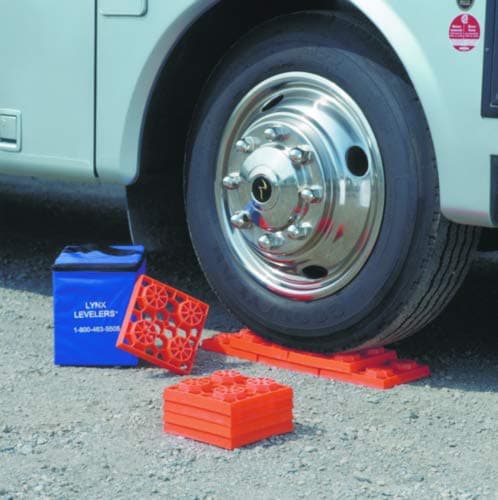 Tri-Lynx Lynx Levelers (10-pack)The upgrade you make after your first soft-ground site: the same stacking idea with a structure that spreads weight instead of concentrating it. | Heavier rigs and soft ground | Good | |
| 3 | 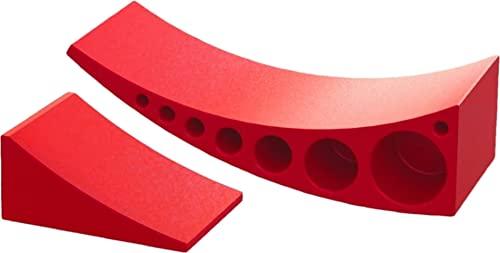 Andersen Hitches Camper LevelerThe one that removes the trial and error: a curved ramp you drive up until level, then stop, with a chock that drops in behind. | Leveling in one attempt | Strong |
Prices come from Amazon and were last checked November 12, 2026. They change constantly, so a price older than 48 hours is withdrawn rather than shown stale — those rows read “Check price on Amazon” instead and go straight to the current listing. #ad — these are affiliate links.
What is the same, which is most of it
It is worth stating the shared ground first, because the honest version of this comparison is that these two products are more alike than different.
Both are ten-packs of interlocking plastic blocks. Both are used the same way: you stack them into a ramp in front of the low wheel, drive up, check the bubble, and pull forward and restack if you guessed wrong. Both interlock, which is the feature that stops a two-high stack shuffling apart as the tire rolls onto it — the thing loose timber will not do. Both are cheap enough that losing one in long grass is annoying rather than expensive. Both are the correct first leveling purchase for a travel trailer.
Neither solves the fundamental awkwardness of stacking blocks, which is that you are guessing the height before you drive onto it. If what you want is to stop guessing, you want a curved leveler instead, and that is a different page: see leveling ramps vs blocks.
The one real difference: footprint
The Lynx design is an open honeycomb. The practical effect is that the load from the tire is carried across a lattice rather than through a solid slab, and the set is designed to be laid out wide as readily as stacked high.
That matters on exactly one kind of site, and it matters a lot there. On grass, wet dirt or soft sand, a narrow two-high stack concentrates the weight of a corner of your trailer into a small patch of ground, and the ground loses. What people describe as blocks cracking is almost always blocks sinking: the stack goes down into the site, the trailer comes off level overnight, and in the morning you are doing it all again. Laid two wide instead of two high, a load-spreading block set sinks far less.
On a compacted gravel pad or a concrete slab, none of that applies. The ground is not going anywhere, both products hold the same height, and the cheaper set is doing the identical job.
Published differences, side by side
| Camco FasTen (10-pack) | Lynx Levelers (10-pack) | |
|---|---|---|
| Structure | Interlocking solid-face blocks | Interlocking open honeycomb |
| How you use it | Stack into a ramp, drive up | Stack into a ramp, or lay wide to spread load |
| Blocks per set | Ten | Ten |
| Load spreading | Standard | The reason to buy it |
| Soft ground | Sinks on grass and wet dirt | Sinks noticeably less laid wide |
| Collects grit | Less | Yes, the open structure holds gravel and mud |
| Carry bag | Sold separately | Sold separately |
| Relative price | The cheaper of the two | A real premium for a situational gain |
How to decide in one step
Think about the last three sites you parked on, or the ones you have booked. Were they gravel, or were they grass?
Mostly gravel, concrete or asphalt: buy the cheaper interlocking set. Spend the difference on a second set, which is more useful than a better single set, because the usual shortage is blocks rather than block quality.
Mostly grass, dirt or a seasonal site: buy the load-spreading set, and get in the habit of laying it wide rather than high. This is the purchase people make after their first soft-ground weekend, and making it first saves the weekend.
A mix, which is most people: either is defensible. If you want one answer, take the cheaper set now and add the other later — experienced owners end up carrying both, and the second set is never wasted.
The picks
1. Best for Most first trailers
Camco FasTen Leveling Blocks (10-pack)
The default first purchase for a travel trailer: interlocking blocks you stack into a ramp, cheap enough to buy two sets.
- Specification
- Interlocking 10-pack
- Specification
- Stacks into a ramp
- Specification
- Carry bag sold separately
What it does well
- The blocks lock together, so a two-high stack does not shuffle apart when the tire rolls onto it
- Ten blocks covers one axle on most sites and two axles on gently sloped ones
- Cheap enough that losing one in the grass is annoying rather than expensive
The real tradeoff
- You still guess how many to stack, then pull forward and re-check
- On soft ground they sink, and nothing in the design prevents that
How it measures up
These are judgments from published specifications and what we see at the lodge, not laboratory results. How we choose.
- Beginner fit
- Strong — No instructions needed. Stack, drive up, stop.
- Stability once set
- Good — The interlock is what keeps a stack honest.
- Speed to level
- Adequate — Trial and error. You will pull forward twice.
- Value
- Strong — The least money you can spend and still do this properly.
Specifications from Camco.
2. Best for Heavier rigs and soft ground
Tri-Lynx Lynx Levelers (10-pack)
The upgrade you make after your first soft-ground site: the same stacking idea with a structure that spreads weight instead of concentrating it.
- Specification
- Interlocking 10-pack
- Specification
- Open honeycomb structure
- Specification
- Stacks up or spreads sideways
What it does well
- The honeycomb structure spreads load, which is the one thing that helps most on soft sites
- Laid two wide instead of two high, they sink far less than a narrow stack
- Long-lived. These are the ones you still own in five years
The real tradeoff
- Costs more than a basic interlocking set for a difference you only notice on bad ground
- The open structure collects gravel and mud
How it measures up
These are judgments from published specifications and what we see at the lodge, not laboratory results. How we choose.
- Beginner fit
- Good — Same idea as any stacking block, slightly more to carry.
- Stability once set
- Strong — The wide footprint is what stops the slow sink.
- Speed to level
- Adequate — Still stack and check.
- Value
- Good — Worth it if your regular sites are grass or dirt.
Specifications from Tri-Lynx.
3. Best for Leveling in one attempt
Andersen Hitches Camper Leveler
The one that removes the trial and error: a curved ramp you drive up until level, then stop, with a chock that drops in behind.
- Specification
- Curved ramp plus matching chock
- Specification
- One unit per side
- Specification
- Continuous height adjustment within its range
What it does well
- You drive up until the bubble centers and stop. No stacking, no guessing, no second attempt
- Any height within its range, rather than the fixed steps a block stack gives you
- The matching chock drops in behind the tire, so one product covers two jobs
The real tradeoff
- Several times the price of a bag of blocks
- Wants a genuinely firm surface. The curved face concentrates load more than a wide block stack does
- Bulky to store for what it is
How it measures up
These are judgments from published specifications and what we see at the lodge, not laboratory results. How we choose.
- Beginner fit
- Strong — The clearest cause and effect in the category.
- Stability once set
- Good — Fine on firm ground, less happy on soft.
- Speed to level
- Strong — One pull-up. This is what you are paying for.
- Value
- Adequate — Expensive per unit of plastic, cheap per hour of frustration.
Specifications from Andersen Hitches.
How many blocks a ten-pack really covers
This is where both products disappoint people, and it is a counting problem rather than a product problem.
A ten-pack is enough to build a useful ramp under one wheel, or a shallower one under two. A tandem-axle trailer with a genuinely low side needs blocks under both tires on that side, built up to the same height, with a ramp leading onto them — and the ramp consumes blocks that are not holding any weight once you are parked. On a site with a real cross-slope, one ten-pack runs out.
The practical answer is to buy two sets if you camp regularly, which is part of why the cheaper set wins more often than the comparison tables suggest. Two inexpensive sets beat one premium set on most sites, and how many leveling blocks do I need does the arithmetic properly.
Pick by the ground, not the brand
Gravel and concrete: the cheaper interlocking set, and buy two. Grass and dirt: the load-spreading honeycomb set, laid wide. Tired of guessing the height: the curved leveler, on firm ground only.
Best for Most first trailers
Camco FasTen Leveling Blocks (10-pack)
The default first purchase for a travel trailer: interlocking blocks you stack into a ramp, cheap enough to buy two sets.
Best for Heavier rigs and soft ground
Tri-Lynx Lynx Levelers (10-pack)
The upgrade you make after your first soft-ground site: the same stacking idea with a structure that spreads weight instead of concentrating it.
Best for Leveling in one attempt
Andersen Hitches Camper Leveler
The one that removes the trial and error: a curved ramp you drive up until level, then stop, with a chock that drops in behind.
Things that are true of both and worth doing
Build the ramp, do not drop a step. Driving a loaded trailer tire up a vertical edge is how blocks break and how tires get damaged. The interlock exists so you can build a slope.
Check level before you unhitch. Side-to-side correction needs the trailer to roll onto something, and once it is unhitched that is far harder. The honest limits are in how to level a camper without moving it.
Keep them in one bag. People lose leveling blocks because the blocks never had anywhere to live. Any tote works.
Do not put a wheel chock on top of a block. Plastic on plastic slides. Chock on the ground.
Questions people actually ask
What is the difference between Camco FasTen and Lynx Levelers?
Both are interlocking plastic leveling blocks sold in ten-packs and both are used the same way. The Lynx set uses an open honeycomb structure that spreads load over a wider area, so it sinks less on grass and soft dirt. On gravel or concrete the two perform the same job and the cheaper set is the sensible buy.
Are Lynx Levelers worth the extra money?
On soft ground, yes - load spreading is the thing that stops a block stack sinking overnight and taking the trailer off level. On compacted gravel or concrete the premium buys nothing you will notice, and two cheaper sets are more useful than one premium set.
How many leveling blocks do I need for a travel trailer?
One ten-pack covers one wheel comfortably or two wheels shallowly, including the ramp blocks that carry no weight once parked. A tandem-axle trailer on a real cross-slope will use more than one set, so most regular campers end up carrying two.
Can leveling blocks crack under a travel trailer?
What is usually described as cracking is sinking. A narrow stack concentrates a corner of the trailer's weight into a small patch of ground, and soft ground gives way. Laying blocks two wide rather than two high spreads the load and largely solves it.
Sources
Read next
Leveling & Chocks
Best RV Leveling Blocks for a First Travel Trailer
Interlocking blocks, curved levelers and jack pads compared for someone leveling a trailer for the first time.
Leveling & Chocks
RV Leveling Ramps vs Blocks
Curved ramps against stacking blocks, decided by ground firmness rather than price. Four picks across both formats.
Leveling & Chocks
How Many Leveling Blocks Do I Need?
Block counts by axle setup, how to estimate lift from a bubble reading, and when more blocks is the wrong answer.
Leveling & Chocks
How to Level a Camper on a Hill
Leveling a travel trailer on a sloped or hillside site, including the safe stacking limit and the chocking order.
Reviewed October 17, 2026. Spot something out of date? Tell us and we will fix it.