How to Level a Camper Without Moving It
Half of this is easy and half of it is physically impossible. The tongue jack handles front to back from where you stand. Side to side needs the tire to go up on something.
Heads up: this page contains affiliate links. If you buy through one, Camp & Chock may earn a commission at no extra cost to you. It never changes which product we put first — how this site is funded.
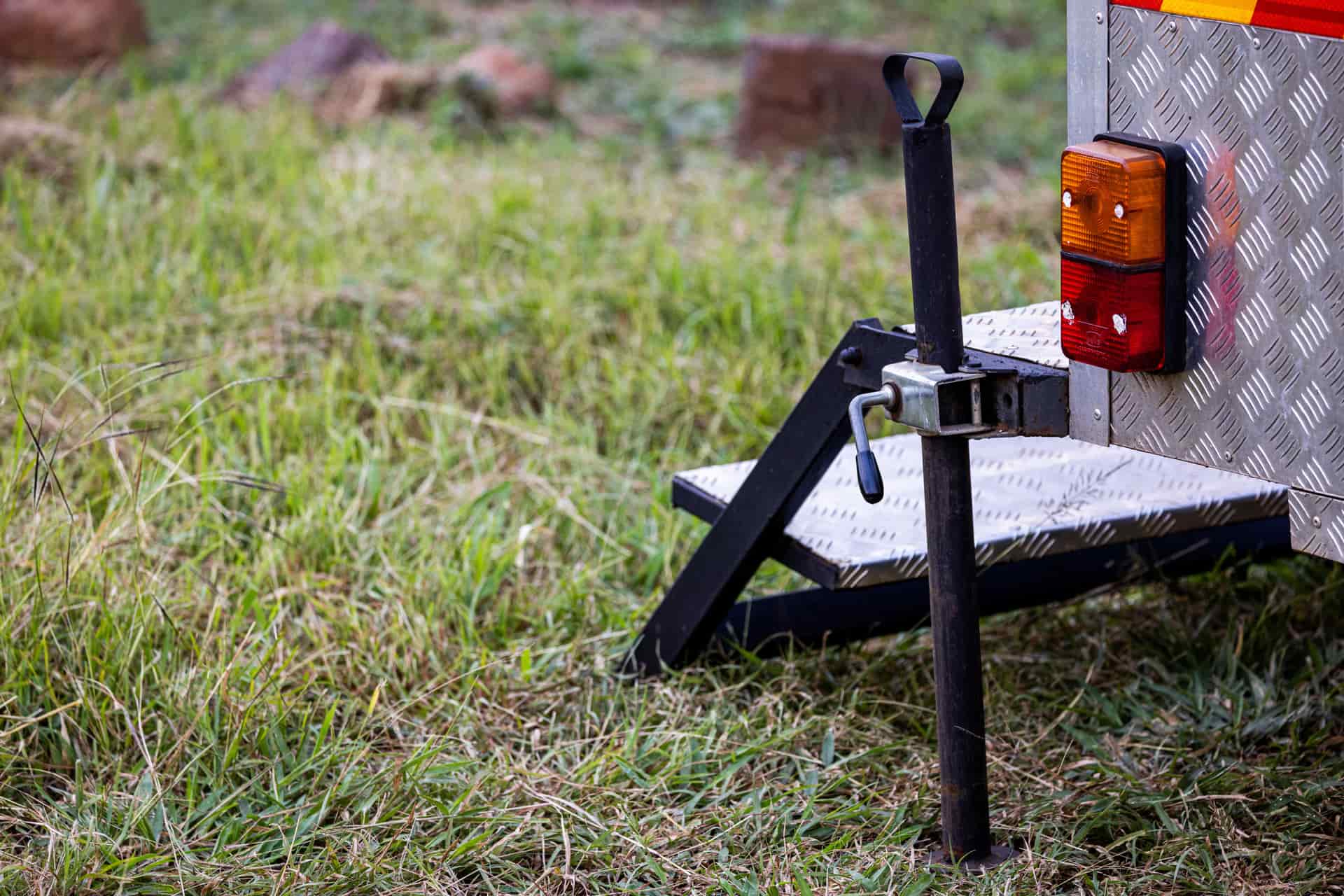
Front to back, yes: raise or lower the tongue jack until the bubble centers, and the trailer never moves. Side to side, no — the low tire has to get up onto something, and getting it up there means moving the trailer. There is no tool that lifts a loaded travel trailer tire sideways onto a block. If you are already unhitched and off level side to side, the realistic options are to rehitch and redo it, or to accept it and stop the trailer rocking instead. This page covers both honestly.
Part of our leveling and chocks guide, and the specific case our full leveling walkthrough assumes away. That page starts at “before you unhitch.” This one starts where a lot of people actually are.
Why the two directions are completely different problems
A travel trailer rests on three points: the two tires on the ground and the tongue jack at the front. Those three points are not equivalent.
The tongue jack is a screw or a motor whose entire purpose is to raise and lower that end of the trailer, and it does so with the trailer exactly where it is. Front-to-back level is therefore a twenty-second adjustment with no repositioning at all. You can do it unhitched, with the stabilizers down, at midnight.
The tires are different. There is no mechanism between the axle and the ground that changes the height on one side. To raise the low side you have to put something under that tire, and a loaded trailer tire is sitting on the ground with several thousand pounds on it. It is not going to be levered up, and the trailer has to roll onto whatever you place.
The thing people try, and why it is a bad idea
The obvious workaround is to use a bottle jack or the stabilizer jacks to lift one side and slide a block under the tire. Do not. Stabilizer jacks are not designed to lift the trailer — they are designed to stop a level trailer moving, and most are explicitly rated for stabilizing rather than lifting. Using them as a jack bends the jack, and sometimes bends the frame mount they are bolted to.
A proper bottle jack under the axle or a frame jacking point will lift the trailer, and it is what you would use for a tire change. Using it routinely to level is slow, needs a jack stand to be safe, and is a great deal more work than pulling forward four feet. It is the wrong tool for a convenience problem.
What you can do, in order of how much it moves the trailer
Options from zero movement upward
| Option | Does the trailer move? | What it fixes |
|---|---|---|
| Adjust the tongue jack | No | Front-to-back level, completely |
| Lower the stabilizers onto pads | No | Rocking and bounce - not level, but usually the real complaint |
| Shift heavy items inside the trailer | No | A very slight lean on soft ground. Not a real leveling method |
| Rehitch, pull forward, place blocks, back on | Yes, a few feet | Side-to-side level, properly. The only method that does |
| Drive up a curved ramp | Yes, a few feet | Side-to-side level in one attempt instead of two |
If you are already set up and off level side to side
Be honest about how far off you are, because the answer depends on it.
Slightly off — a half bubble. Leave it. A travel trailer that is a little low on one side is fine to sleep in and fine for the fridge. Drop the stabilizer jacks onto pads so it stops moving, and the thing that was bothering you will mostly go away — because what usually bothers people is the rocking, not the slope.
Noticeably off — things roll off the counter. Rehitch and do it again. It is fifteen minutes and you will sleep better. There is no shortcut here that is faster than simply doing it properly, and every improvised alternative is some flavor of lifting the trailer with something that should not be lifting the trailer.
Badly off, and the fridge matters. An absorption fridge needs to be reasonably level to circulate its coolant, and running one well off level over several days is genuinely bad for it. If the trailer is far enough out that the fridge is a concern, that settles it: rehitch and redo.
The gear that makes this easier next time
Pads so the stabilizers bite without sinking, a curved ramp so side-to-side takes one attempt instead of three, and a locking chock so a level trailer stops rocking.
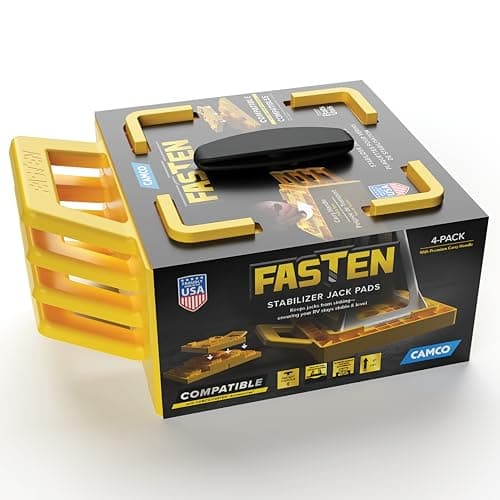
Best for Pads that stack with your leveling blocks
Camco FasTen RV Stabilizer Jack Pads (4-pack)
The pad to buy if your leveling blocks are Camco FasTen: the two systems lock together, so a tall stack under a jack stays a stack.
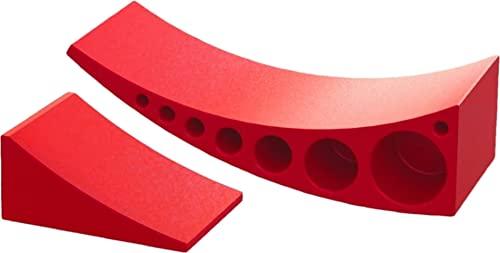
Best for Leveling in one attempt
Andersen Hitches Camper Leveler
The one that removes the trial and error: a curved ramp you drive up until level, then stop, with a chock that drops in behind.
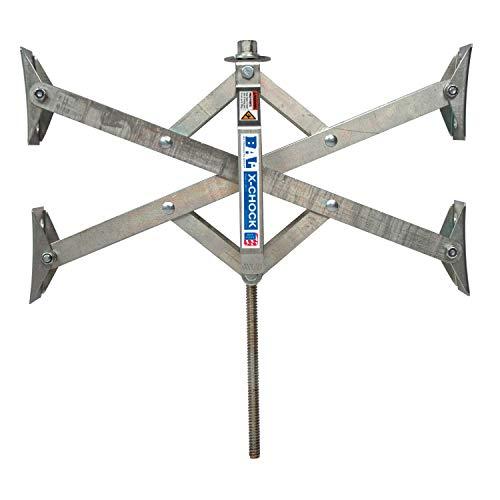
Best for Tandem-axle rigs that rock
BAL X-Chock Tire Locking Chock
The standard answer to a trailer that rocks when you walk across it, and only useful if you have two axles per side.
How to not be in this position again
The whole problem is that side-to-side leveling has to happen before you unhitch, and the information you need arrives after you have parked. Two habits fix it.
Check level before you unhitch, every time. Put a small bubble level on the trailer tongue or the doorframe, or use a phone app, while the trailer is still coupled. If you are off, you are four feet and one minute from fixing it. If you have unhitched, you are fifteen minutes from fixing it. The entire difference is the order of two steps.
Carry a format that does it in one attempt. The reason people unhitch while off level is that getting the block height right is trial and error and they give up. A curved ramp removes the guessing — drive up until the bubble centers, stop. Our ramps versus blocks comparison covers which format suits your usual ground, and how many blocks you need gets the quantity right if you stay with blocks.
What about automatic leveling systems?
Some larger fifth wheels and motorhomes have hydraulic auto-leveling, which does level the rig side to side from a parked position — because it lifts the whole vehicle on hydraulic legs rather than putting anything under a tire. That is a factory system on an appropriately built chassis. It is not an accessory you add to a travel trailer, and a travel trailer frame is not designed to be carried on jack legs. If you have it, use it. If you do not, you cannot buy your way to it.
Questions people actually ask
Can you level a camper without moving it?
Front to back, yes - the tongue jack does that from where the trailer stands. Side to side, no. The low tire has to come up onto a block or a ramp, and getting it there means the trailer has to roll onto it.
Can I use my stabilizer jacks to lift one side and level the trailer?
No. Scissor and post stabilizer jacks are rated to steady a level trailer, not to carry it. Cranking one hard enough to lift a tire bends the jack and can tear the frame bracket it is bolted to.
How level does a travel trailer need to be?
Close enough that things do not roll off the counter and the absorption fridge can circulate its coolant. A half bubble out is liveable; noticeably out over several days is genuinely bad for the fridge.
My trailer rocks even though it is level. What fixes that?
Not leveling. Rocking comes from the suspension and tire sidewalls flexing, so the answer is stabilizer jacks on pads and, on a tandem axle, a locking chock between the tires.
Sources
Read next
Leveling & Chocks
How to Level a Travel Trailer (Step by Step for Beginners)
The full arrival sequence for leveling a towed trailer, in the order that means you only do it once.
Leveling & Chocks
RV Leveling Ramps vs Blocks
Curved ramps against stacking blocks, decided by ground firmness rather than price. Four picks across both formats.
Leveling & Chocks
How to Keep a Travel Trailer From Rocking
Why a parked trailer still moves, and the order of operations plus gear that stops it.
Leveling & Chocks
RV Stabilizers vs Levelers: What Each One Is For
The difference between leveling gear and stabilizing gear, and why using a stabilizer jack to lift can damage the frame.
Reviewed October 11, 2026. Spot something out of date? Tell us and we will fix it.