RV Stabilizers vs Levelers: What Each One Is For
One of these lifts and one of these steadies, and the most expensive mistake in this category is using a stabilizer as a jack.
Heads up: this page contains affiliate links. If you buy through one, Camp & Chock may earn a commission at no extra cost to you. It never changes which product we put first — how this site is funded.
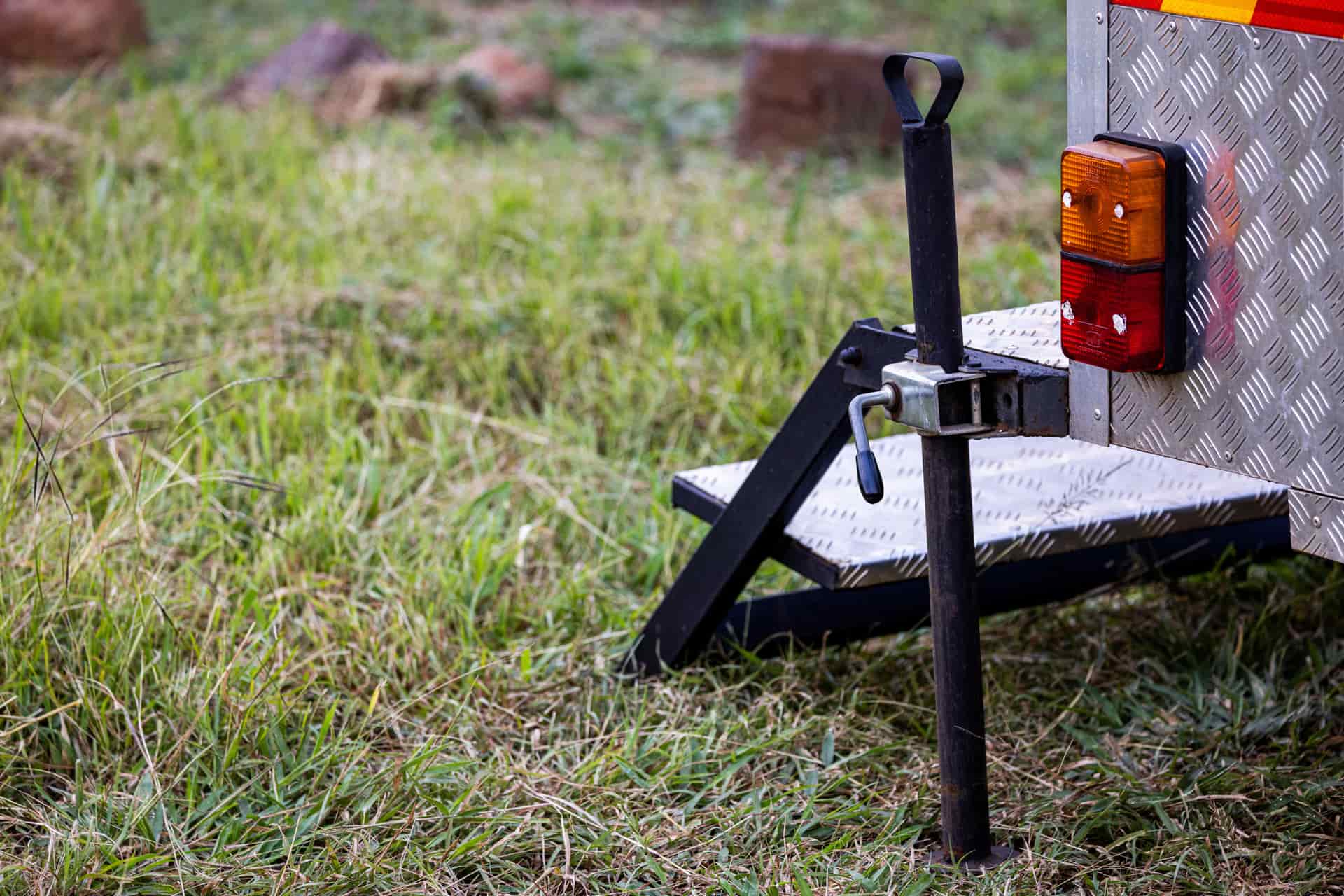
Levelers get the trailer level. Stabilizers stop a level trailer from moving. They are not interchangeable, and a stabilizer jack used to lift a corner is being used outside what it was designed for.
This one belongs to our leveling and chocks guide, and it exists because the two words get used as if they meant the same thing everywhere except in the manuals.
The short version
| Levelers | Stabilizers | |
|---|---|---|
| Job | Change the trailer's height and attitude | Stop a level trailer moving |
| Typical products | Blocks, curved levelers, the tongue jack | Scissor jacks, jack pads, X-chocks |
| When used | First, on arrival | Last, after unhitching and leveling |
| Takes the trailer's weight | Yes, through the tires | Only lightly, by design |
| Can be used for the other job | No | No, and trying will damage the frame |
What leveling actually is
Leveling is geometry. You are changing the trailer's attitude so the floor is horizontal in both directions: side to side using blocks under the low-side wheels, and front to back using the tongue jack. The weight goes through the tires and the tongue jack, which are both designed to carry it.
The step-by-step version is in how to level a travel trailer.
What stabilizing actually is
Stabilizing is about removing movement, not weight. A travel trailer is a box on leaf springs; walking to the back of it makes it flex and sway. Stabilizer jacks planted at the corners give the frame something to push against, and the sway largely stops.
The crucial detail is how far down to wind them. You lower each jack until it takes weight and then you stop. You are not lifting the corner. Scissor jacks on most travel trailers are rated for stabilizing loads, not for supporting the trailer, and winding one down hard enough to raise a corner puts the trailer's weight into a point on the frame that was never meant to carry it.
Which product fixes which complaint
| What you notice | What it is | What fixes it |
|---|---|---|
| Cupboard doors swing open | Not level | Blocks under the low side |
| Shower water pools at one end | Not level | Blocks, or the tongue jack |
| Fridge underperforms | Not level | Level it properly, check on a fridge shelf |
| Trailer sways when you walk | Not stabilized | Stabilizer jacks on pads, plus X-chocks on a tandem axle |
| Jacks sink overnight | Point load on soft ground | Jack pads under every foot |
| Bouncy floor mid-span | Neither, usually | Nothing external. That is floor construction |
Jack pads are the cheap fix nobody buys first
A stabilizer jack foot is a few square inches of steel. On a grass or gravel site it will find its way into the ground under load, sometimes within a few hours. By morning the trailer is no longer level, and the jacks are no longer doing anything.
Pads spread that load across a much larger area. They cost very little, they weigh almost nothing, and they live permanently in the same compartment as the blocks. Buy a set for the stabilizer jacks and a second set for the tongue jack, which carries more load than any of them.
Stabilizing gear worth owning
Pads under every jack foot, and an X-chock per side if your trailer has two axles and still moves.
Best for Stopping jacks sinking
Camco Stabilizing Jack Pads
Four squares of plastic that stop your stabilizer jacks burying themselves in a wet grass site overnight.
Best for A second set for the tongue jack
Valterra Stabilizer Jack Pads
Functionally interchangeable with any other jack pad. Buy whichever is in stock, but do buy a spare for the tongue jack.
Best for Tandem-axle rigs that rock
BAL X-Chock Tire Locking Chock
The standard answer to a trailer that rocks when you walk across it, and only useful if you have two axles per side.
If you have a single-axle trailer
X-chocks are not available to you, so stabilizers and pads carry the whole load of the rocking problem. Get the trailer genuinely level first — a trailer sitting slightly twisted moves more — then set all four stabilizers onto pads, evenly. That is as good as it gets on a single axle, and it is usually good enough.
Questions people actually ask
What is the difference between a leveler and a stabilizer?
A leveler changes the trailer's height so the floor is horizontal. A stabilizer stops a trailer that is already level from swaying. They do different jobs and you need both.
Can stabilizer jacks lift the trailer?
No. They are rated for stabilizing loads, not for supporting the trailer's weight. Lifting with them can bend the jack or damage the frame member it bolts to.
What are the best stabilizer blocks for a travel trailer?
Jack pads rather than blocks. Look for a wide, flat pad that spreads the jack foot's load, in a set of four for the stabilizers plus one for the tongue jack, which carries the most weight.
Do stabilizer jacks stop a trailer rocking completely?
They remove most of it. Nothing makes a trailer rigid, because it is a box on leaf springs. On a tandem axle, adding X-chocks removes the rest of the noticeable movement.
How far should I lower stabilizer jacks?
Until each one takes weight, then stop. If a corner of the trailer starts to rise, you have gone too far and you are lifting rather than stabilizing.
Sources
Read next
Leveling & Chocks
How to Level a Travel Trailer (Step by Step for Beginners)
The full arrival sequence for leveling a towed trailer, in the order that means you only do it once.
Leveling & Chocks
Best RV Wheel Chocks for a Travel Trailer
Wedge chocks, X-chocks and the difference between a trailer that rolls and a trailer that rocks.
Leveling & Chocks
BAL X-Chock Review: Who It Is For, and Who Should Skip It
The tandem-axle X-chock explained: what it actually stops, and the axle-count check to do before you order.
Reviewed September 25, 2026. Spot something out of date? Tell us and we will fix it.