Best RV Space Heater for a Travel Trailer
A trailer heater is not really a heat decision, it is an electricity decision. A 1500 watt heater is roughly twelve and a half of the thirty amps at your pedestal, which is why the low setting matters more than the high one.
Heads up: this page contains affiliate links. If you buy through one, Camp & Chock may earn a commission at no extra cost to you. It never changes which product we put first — how this site is funded.
The short answer
Buy a small ceramic heater with a thermostat and a 900 watt low setting, and run it on low. That is the whole answer for most trailers: the thermostat makes it cycle instead of running flat out, and the low setting keeps it near 7 amps instead of nearly 13, so the converter, the fridge on electric and the coffee maker can all still have their share of a 30 amp pedestal. If your trailer is heavily loaded or the site has a tired pedestal, add a 200 watt personal heater instead and point it where you are sitting — it will not heat the trailer, and it also will not trip anything. And if there is no hookup at all, a propane radiant heater is the only thing on this page that works, with conditions: ventilation, working carbon monoxide and LP alarms, and never while anyone is asleep.
Part of our power and surge protection guide. The electrical hookup guide explains what a pedestal is actually giving you, and what size extension cord for an RV covers the cord between you and it — which matters here, because a heater is the appliance most likely to find out whether that cord was undersized.
Our picks at a glance
Tap any row to jump to the full write-up.
| # | Product | Best for | Beginner fit | Price |
|---|---|---|---|---|
| 1 | 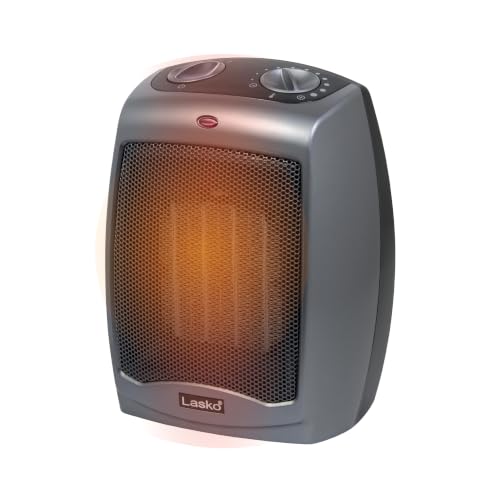 Lasko 9 in Tabletop Ceramic Heater with Thermostat (754201)The default electric heater for a travel trailer: a thermostat, a 900 W low setting that fits an amp budget, and a tip switch, for about the price of two tanks of propane. | Most trailers, most nights | Strong | |
| 2 | 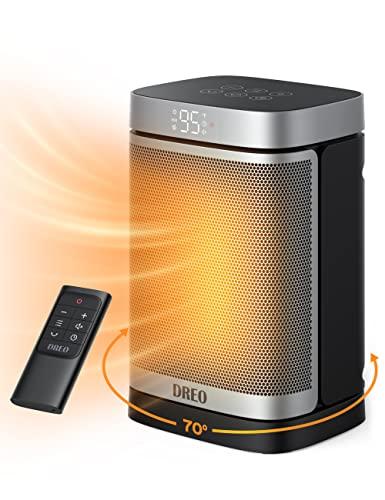 Dreo 1500 W PTC Ceramic Space Heater with ThermostatThe upgrade pick for a trailer you heat every night: a proper thermostat, an ECO mode that keeps the draw down, and a timer so it stops by itself. | A thermostat, a timer and an ECO mode that cuts the draw | Good | |
| 3 | 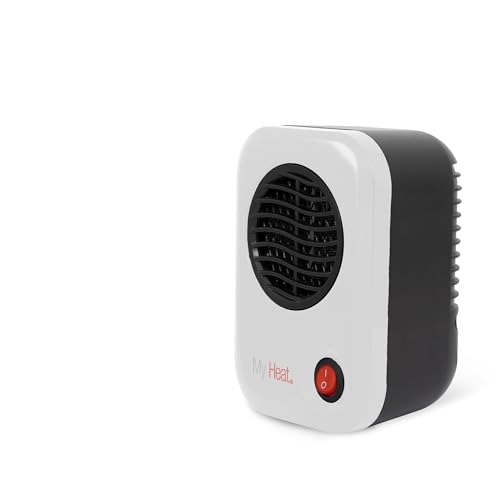 Lasko MyHeat Personal Space HeaterThe honest low-draw pick. Not a trailer heater - a person heater, and the only one here you can run without doing amp arithmetic first. | Running heat without touching the amp budget | Strong | |
| 4 | 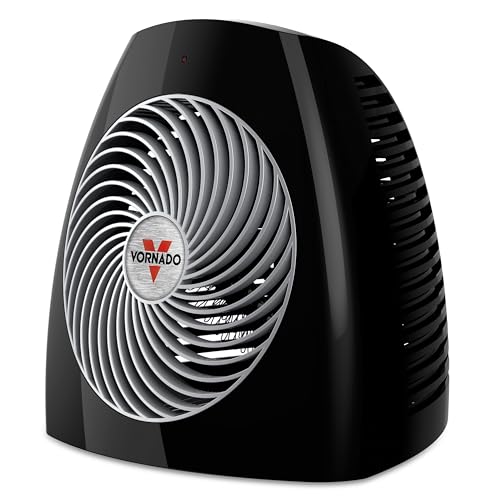 Vornado MVH Whole Room Space HeaterThe pick if your complaint is that one end of the trailer is warm and the other is not. Circulation, three steps, and the safety pair published. | Moving warm air the length of the trailer | Strong | |
| 5 | 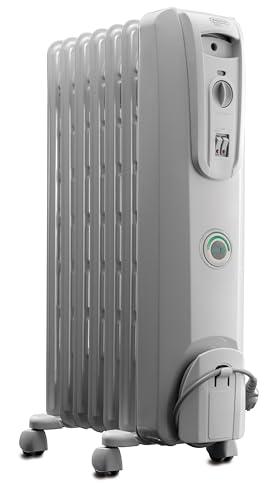 De'Longhi Oil-Filled Radiator Heater 1500 W (EW7707CM)The quiet overnight option: steady radiant heat with no fan noise, at the cost of weight, warm-up time and storage space. | Silent heat that keeps giving after it switches off | Good | |
| 6 | 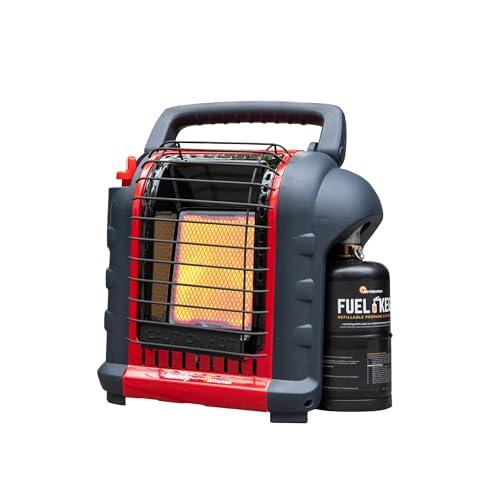 Mr. Heater Portable Buddy Propane Heater (MH9BX)The no-hookup answer, with conditions attached: ventilation, working CO and LP alarms, and never while anyone is asleep. | Heat with no hookup at all | Adequate |
Prices come from Amazon and were last checked November 12, 2026. They change constantly, so a price older than 48 hours is withdrawn rather than shown stale — those rows read “Check price on Amazon” instead and go straight to the current listing. #ad — these are affiliate links.
Why this is an amp question, not a BTU question
Here is the arithmetic that decides the whole category, and it is short.
A 1500 watt heater draws about 12.5 amps at 120 volts. Watts divided by volts gives amps: 1500 / 120 = 12.5. Lasko’s own specification sheet for its 9 in ceramic heater puts it slightly higher at 12.7 A on high, and 7.0 A on the 900 W low setting. Every full-size electric heater sold in the United States is a 1500 W heater, because that is as much as a standard 15 A household circuit will take. So they all cost you the same amps on high, and the only meaningful differences are the thermostat, the low setting and the shape.
A 30 amp pedestal gives you 30 amps in total. Not 30 amps for the heater. The converter charging the battery, a residential fridge or an absorption fridge running on electric, the water heater on electric, the microwave, a coffee maker: those are the things already spending your thirty. A 1500 W heater is roughly 42 percent of the service on its own, which is why “the breaker trips every time I make coffee” is such a common first-winter complaint.
On a 50 amp rig this is a much smaller problem, because a 50 amp service is two 50 amp legs and a heater on one of them is a quarter of that leg. If you have 50 amps, the constraint shifts from amps to whether the heater is pleasant to live with. Most first trailers are 30 amp, so the rest of this page assumes 30.
And on a 15 or 20 amp household outlet — the one in your driveway — a 1500 W heater is most of the circuit. That is the case where the 200 W personal heater stops being a compromise and becomes the right product.
How we choose
Does it have a low setting, and how low? This is the first question for a trailer and it is barely mentioned in household reviews. A heater with 1500 W and nothing else gives you one choice: all of it. A 900 W low setting, or an ECO mode that steps down once the space is warm, is what lets heat coexist with the rest of your electric load.
Does it have a real thermostat? A thermostat means the element cycles off when the space is warm, so the average draw over an hour is far below the peak and the trailer stops swinging between stuffy and cold. A heater with only a power switch runs at full draw until you intervene, which in a trailer usually means at 2 am.
Tip-over and overheat protection, published. A trailer is a vehicle with narrow aisles, pets, kids and a floor that is not always level. We will not rank a 1500 W heater without tip-over protection above one with it, and where a maker publishes the feature we say so, and where they do not, we say that instead.
Will it survive being stored and towed? A heater lives in a cabinet for eight months and then gets driven down the interstate. Light, compact and cheap wins over tall and heavy in a trailer, which is why the oil-filled radiator — the nicest heat here — is not the top pick.
And what it would take to burn the trailer down. Every heater here has a clearance requirement. Our selection leans toward cool-touch housings, self-regulating ceramic elements and sealed radiators over anything with a visible glowing coil, because a trailer has soft furnishings within three feet of every surface.
We do not test products and say so on how we choose. No heater here was run overnight by us, no temperature rise was measured and no runtime was timed. Every wattage, BTU and amp figure below is the maker’s published number or simple arithmetic from it, labeled as such. The judgment we are adding is which specifications matter in a 30 amp trailer, which is not the same list that matters in a bedroom. Sources are linked at the end.
The picks
1. Best for Most trailers, most nights
Lasko 9 in Tabletop Ceramic Heater with Thermostat (754201)
The default electric heater for a travel trailer: a thermostat, a 900 W low setting that fits an amp budget, and a tip switch, for about the price of two tanks of propane.
- Specification
- 1500 W high and 900 W low, plus a fan-only mode (Lasko's figures)
- Specification
- Lasko's specification sheet for this ceramic heater gives 12.7 A on high and 7.0 A on low at 120 V
- Specification
- Adjustable thermostat, overheat protection and a tip switch
- Specification
- 9 in tall tabletop body
What it does well
- The 900 W low setting is the setting that matters in a trailer: 7.0 A on Lasko's own figures, which leaves room on a 30 A pedestal for the converter, the fridge on electric and a coffee maker
- A real thermostat, so it cycles instead of running flat out until you turn it off - that is the difference between a warm trailer and a tripped breaker at 2 am
- Small enough to live in a cabinet all summer and cheap enough that you are not precious about it bouncing down the highway
The real tradeoff
- Check the model number: this is the 754201, which Lasko lists with a tip switch. The near-identical older 754200 is published without automatic tip-over protection, and in a trailer with a pet or a kid that is the spec that matters
- A tabletop heater needs a flat, clear surface with nothing flammable within a few feet, which is a real constraint in a small trailer
- On high it is 1500 W and about 12.7 A. Treat high as a short burst, not a setting you leave on
How it measures up
These are judgments from published specifications and what we see at the lodge, not laboratory results. How we choose.
- Beginner fit
- Strong — Two settings and a dial.
- Amp draw
- Good — 7.0 A on low, 12.7 A on high (Lasko).
- Safety features
- Good — Overheat plus tip switch on this model.
- Value
- Strong — The least money for a thermostat and a low setting.
Specifications from Lasko.
2. Best for A thermostat, a timer and an ECO mode that cuts the draw
Dreo 1500 W PTC Ceramic Space Heater with Thermostat
The upgrade pick for a trailer you heat every night: a proper thermostat, an ECO mode that keeps the draw down, and a timer so it stops by itself.
- Specification
- 1500 W PTC ceramic element
- Specification
- Thermostat with an ECO mode and five modes in total
- Specification
- 70 degree oscillation, remote control, 12 hour timer
What it does well
- The ECO mode is the feature to buy here: it drops to a lower power level once the room reaches temperature instead of cycling the full 1500 W on and off, which is gentler on a pedestal and on your breaker
- A 12 hour timer means you can set it to run until morning and stop, which is the right way to use electric heat in a trailer you are not watching
- The remote sounds like a gimmick until it is 3 am and the heater is at the other end of a 24 ft trailer
The real tradeoff
- 1500 W on full is still roughly 12.5 A, and oscillation does not change that. The ECO mode is what manages the draw, so use it
- Taller and heavier than the Lasko, so it needs a floor spot where it will not be knocked over and a travel home where it will not roll around
- More features means more to fail, and a heater is not a product category where features age well
How it measures up
These are judgments from published specifications and what we see at the lodge, not laboratory results. How we choose.
- Beginner fit
- Good — Five modes to learn, all optional.
- Amp draw
- Adequate — About 12.5 A at the full 1500 W.
- Safety features
- Good — Dreo lists an overheat sensor and a tip-over switch.
- Value
- Good — ECO and a timer for a little over the Lasko.
Specifications from Dreo.
3. Best for Running heat without touching the amp budget
Lasko MyHeat Personal Space Heater
The honest low-draw pick. Not a trailer heater - a person heater, and the only one here you can run without doing amp arithmetic first.
- Specification
- Lasko publishes 682 BTU output, which is about 200 W
- Specification
- Roughly 1.7 A at 120 V by arithmetic from that figure
- Specification
- Cool-touch exterior, self-regulating element, overheat shutoff
- Specification
- 6 ft cord
What it does well
- About 200 W. You can run this on a 20 A household outlet, off a modest inverter, or alongside everything else on a loaded 30 A pedestal and not think about it once
- Cool-touch housing and a self-regulating element rather than a glowing coil, which is the right design for a space where a blanket can end up against it
- Small and quiet enough to point at a footwell, a bunk or a wet bathroom and leave running
The real tradeoff
- It will not heat a trailer. At 682 BTU it warms the air immediately around it, and treating it as the trailer's heat source in January is how you get a cold night and a disappointed review
- No thermostat and no timer - it is on or off
- No tip-over switch is published, which is less alarming on a cool-touch 200 W unit than on a 1500 W one but still worth knowing
How it measures up
These are judgments from published specifications and what we see at the lodge, not laboratory results. How we choose.
- Beginner fit
- Strong — Plug in. One switch.
- Amp draw
- Strong — About 1.7 A from Lasko's 682 BTU figure.
- Safety features
- Good — Cool touch, overheat shutoff; no tip switch.
- Value
- Strong — The cheapest heat on this page.
Specifications from Lasko.
4. Best for Moving warm air the length of the trailer
Vornado MVH Whole Room Space Heater
The pick if your complaint is that one end of the trailer is warm and the other is not. Circulation, three steps, and the safety pair published.
- Specification
- Three heat settings with an adjustable thermostat
- Specification
- Tip-over protection and auto shut-off
- Specification
- Vornado's vortex circulation rather than a directional fan
What it does well
- Vornado's whole point is air circulation rather than a hot stream aimed at one spot, and a travel trailer is a long narrow box where that distinction is unusually easy to feel
- Three heat settings instead of two gives you a middle step, which is useful when low is not quite enough and high is more amps than you have
- Both tip-over protection and auto shut-off are published, which is the pair you want in a vehicle
The real tradeoff
- Costs roughly twice the Lasko for a difference that is about comfort rather than capability
- The top setting is still a 1500 W class heater, so the amp arithmetic is unchanged
- Metal and plastic housings on a circulating heater are bulky to store in a trailer where every cabinet is already full
How it measures up
These are judgments from published specifications and what we see at the lodge, not laboratory results. How we choose.
- Beginner fit
- Strong — A dial and a switch.
- Amp draw
- Adequate — 1500 W class on the top setting.
- Safety features
- Strong — Tip-over plus auto shut-off published.
- Value
- Adequate — You are paying for air movement.
Specifications from Vornado.
5. Best for Silent heat that keeps giving after it switches off
De'Longhi Oil-Filled Radiator Heater 1500 W (EW7707CM)
The quiet overnight option: steady radiant heat with no fan noise, at the cost of weight, warm-up time and storage space.
- Specification
- 1500 W, permanently sealed oil-filled radiator
- Specification
- No fan, so no noise and no moving air
- Specification
- Model EW7707CM
What it does well
- Silent. There is no fan, which matters more than people expect in a trailer where you can hear a toothbrush two rooms away
- The oil stays warm after the element cuts out, so the heat is steady rather than arriving in blasts. For sleeping, it is the nicest heat on this page
- Nothing glowing and no hot air stream, which makes it the easiest of these to live with in a small space
The real tradeoff
- Heavy, tall and awkward - this is the one product here that is genuinely annoying to store and to secure for travel, and it is not designed to be bolted down
- Slow. It takes a while to warm a space and a while to stop, so it suits overnight running rather than taking the chill off in ten minutes
- Still a 1500 W heater, so it occupies the same roughly 12.5 A of your pedestal as the plastic ones that cost a third as much
How it measures up
These are judgments from published specifications and what we see at the lodge, not laboratory results. How we choose.
- Beginner fit
- Good — Simple, but heavy to move.
- Amp draw
- Adequate — About 12.5 A at 1500 W.
- Safety features
- Good — No exposed element; De'Longhi lists safety features.
- Value
- Adequate — The most expensive electric pick here.
Specifications from De'Longhi.
6. Best for Heat with no hookup at all
Mr. Heater Portable Buddy Propane Heater (MH9BX)
The no-hookup answer, with conditions attached: ventilation, working CO and LP alarms, and never while anyone is asleep.
- Specification
- 4,000 and 9,000 BTU/hr settings, stock number F232000
- Specification
- Oxygen depletion sensor and tip-over switch
- Specification
- Mr. Heater's information sheet states it is certified for indoor use in the USA and outdoor use only in Canada
- Specification
- Listings give 200 to 225 sq ft of heating area and roughly 3 hours at the high setting on a 1 lb cylinder
What it does well
- Zero amps. This is the only heater here that works at a site with no electric hookup, in a storage lot, or during the outage that made you look for a heater in the first place
- An oxygen depletion sensor and a tip-over switch are both published, which is the specification that separates this category from the unvented heaters that should never be indoors
- Radiant heat warms you rather than the air, so it feels effective fast in a space that is losing heat through single-pane windows
The real tradeoff
- Burning propane inside produces water vapor, and a trailer is already the dampest place you own. Running one of these for hours with the windows shut is how you get condensation on every surface and mold by spring
- Not a heater to sleep with. Mr. Heater's own literature is explicit about ventilation requirements, and your trailer's carbon monoxide and LP alarms must be working before you light it - if yours are past their date stamp, replace them first
- A 1 lb cylinder is about three hours on high, so real use means a hose and filter to a 20 lb tank, which is an extra purchase and an extra thing to store
How it measures up
These are judgments from published specifications and what we see at the lodge, not laboratory results. How we choose.
- Beginner fit
- Adequate — Safe use has rules you must read.
- Amp draw
- Strong — None. That is the entire point.
- Safety features
- Good — ODS and tip-over switch published.
- Value
- Good — Cheap heat where there is no power.
Specifications from Mr. Heater.
What each one costs you in amps, on the makers' published figures
| Pick | Published power | Amps at 120 V | Thermostat |
|---|---|---|---|
| Lasko 754201 ceramic | 1500 W high / 900 W low, plus fan only | 12.7 A / 7.0 A (Lasko's figures) | Yes, adjustable dial |
| Dreo 1500 W PTC ceramic | 1500 W, with an ECO mode that steps down | About 12.5 A at full power (arithmetic) | Yes, plus a 12 hour timer |
| Lasko MyHeat personal | 682 BTU published, about 200 W | About 1.7 A (arithmetic) | No. On or off |
| Vornado MVH | 1500 W class, three heat settings | About 12.5 A at the top setting (arithmetic) | Yes, adjustable |
| De'Longhi oil-filled radiator | 1500 W sealed oil radiator | About 12.5 A (arithmetic) | Yes |
| Mr. Heater Portable Buddy | 4,000 / 9,000 BTU on propane | None | No. Two burner settings |
Read the third column before the first. Five of these six are the same 12.5 amps when you turn them up, and the differences that matter are whether there is a step below that and whether the thermostat does the stepping for you.
If you only buy one
Full hookup and a 30 amp pedestal: the ceramic heater with a thermostat, run on low. A loaded trailer, a tired pedestal or a driveway outlet: the 200 watt personal heater, aimed at you rather than at the room. No hookup at all: the propane radiant heater, with ventilation and working CO and LP alarms.
Best for Most trailers, most nights
Lasko 9 in Tabletop Ceramic Heater with Thermostat (754201)
The default electric heater for a travel trailer: a thermostat, a 900 W low setting that fits an amp budget, and a tip switch, for about the price of two tanks of propane.
Best for Running heat without touching the amp budget
Lasko MyHeat Personal Space Heater
The honest low-draw pick. Not a trailer heater - a person heater, and the only one here you can run without doing amp arithmetic first.
Best for Heat with no hookup at all
Mr. Heater Portable Buddy Propane Heater (MH9BX)
The no-hookup answer, with conditions attached: ventilation, working CO and LP alarms, and never while anyone is asleep.
Running a heater on 30 amps without tripping anything
The arithmetic above becomes a habit after one cold weekend. Here is the habit.
Put the heater on low and leave it there. Low is not the weak setting, it is the setting the heater is designed to cruise at. High is for the first twenty minutes after you arrive.
Take the water heater off electric when the space heater is on. An electric water heater element is typically around 1400 W, which is another 12 amps, and running both is most of a 30 amp service before the fridge has had anything. Water heater on propane, space heater on electric: that split uses the resource you have most of.
Nothing else high-draw at the same time. Microwave, coffee maker, hair dryer, electric kettle, toaster: each of those is 1000 to 1500 W on its own. Make coffee, then turn the heater back up. It is genuinely that simple, and it is why nobody with a 30 amp trailer runs a hair dryer in the morning.
Watch the voltage, not just the breaker. A heater is the appliance most likely to drag a weak pedestal into low-voltage territory, and sustained low voltage is what kills an air conditioner compressor and a converter. This is exactly what a surge protector with a display is for, and the difference between a basic unit and a full EMS is covered in surge protector vs EMS. If your readout sits in the 105 V range with the heater running, you have a pedestal problem, not a heater problem.
Use the cord you were given, not an extension. A long thin extension cord under a sustained heater load is a voltage drop and a warm plug, which is the one failure in this list that is a fire rather than an inconvenience.
Electric or propane: the honest comparison
What electric genuinely buys you. No combustion, no added moisture, no carbon monoxide, and a thermostat you can set and forget. At a site where electricity is included in the nightly rate it is also effectively free heat, which is why so many campers run a space heater and save the propane for travel days and dry camping.
What electric does not buy you. Heat without a pedestal. Heat during an outage. Heat in the plumbing bay — a space heater in the living area does nothing for the underbelly, and that is the furnace’s job in freezing weather.
What propane genuinely buys you. Independence. A 9,000 BTU radiant heater is nearly twice the output of a 1500 W electric heater and needs no hookup whatsoever, which makes it the right product for boondocking, for an outage, and for a shoulder-season trip at a site with no electric.
What propane costs you, stated plainly. Burning propane indoors produces water vapor, and a trailer is already the dampest building you own — which is why the storage end of this problem has its own page in the dehumidifier roundup. It consumes oxygen, which is what the oxygen depletion sensor exists to catch. Mr. Heater’s own literature for the Portable Buddy states it is certified for indoor use in the USA and outdoor use only in Canada, and it is explicit about ventilation. Treat all of that as non-negotiable: crack a vent, never run it while anyone is asleep, and confirm your trailer’s carbon monoxide and LP alarms are in date before you light it. If they are not, that is the purchase to make this week instead of a heater.
Mistakes that cost a breaker, a night or a trailer
Buying on BTU. Every 1500 W electric heater is about 5,100 BTU. A listing claiming to heat 1,000 square feet is making a claim about an insulated room, not about a trailer, and it is not drawing more amps than the others.
Running it on high all night. It will not make the trailer warmer than the thermostat setting, it will cost you the whole amp budget, and it is the single most common cause of the 2 am breaker trip.
Putting it on carpet, a rug or a bed. Hard, flat, clear, with space around it. In a trailer that usually means the floor by the dinette, not a side table with curtains behind it.
Letting the furnace stay off in hard cold. The furnace is the only heat source that warms the plumbing bays. If the overnight low is below freezing, the furnace runs — and if the trailer is going into storage instead, winterizing it with antifreeze is the actual answer to frozen pipes rather than leaving a heater running in an empty trailer.
Trusting a timer to mind an empty trailer. A space heater running unattended in a stored trailer is a bad trade: it costs you a fire risk and an electricity bill to protect plumbing it cannot reach.
Where this sits in a first season
A space heater is the purchase that extends a first season by about six weeks at each end. It is why October and April stop being “too cold to camp” and start being the quietest, cheapest, best weeks at any campground — and it costs less than a tank of propane.
Buy it after the electrical basics are covered, not before. A surge protector comes first, because the heater is the load most likely to reveal a bad pedestal and you want to find out from a display rather than from a dead converter. The right power cord comes next, since a sustained heater load is exactly what finds a damaged one. After that, a $35 ceramic heater with a thermostat is one of the best-value purchases in a first camper season, and the must-haves shortlist is where it fits among everything else.
Questions people actually ask
Can I run a 1500 watt space heater on a 30 amp RV hookup?
Yes, but it is roughly 12.5 amps of your 30, so it has to share. Run it on the 900 watt low setting where it draws around 7 amps, take the water heater off electric while the heater is on, and do not run the microwave, a kettle or a hair dryer at the same time. On a 50 amp rig the heater is a much smaller fraction of the service and the constraint mostly disappears.
How many amps does an RV space heater use?
Divide the watts by 120. A 1500 watt heater is about 12.5 amps, a 900 watt low setting about 7.5, and a 200 watt personal heater about 1.7. Lasko publishes 12.7 amps on high and 7.0 on low for its 9 inch ceramic heater, which is close enough to the arithmetic to plan with.
Will a space heater keep my travel trailer warm in winter?
In mild cold, yes. A 1500 watt electric heater is roughly 5,100 BTU per hour, against 16,000 to 35,000 BTU for a typical travel trailer furnace. On a 40 F night a space heater can carry the whole load and save your propane. Below freezing it becomes a supplement, because only the furnace warms the plumbing bays, and that is the part that freezes.
Is it safe to use a propane heater inside a camper?
Only a heater sold and certified for indoor use, only with ventilation, and never while anyone is asleep. Mr. Heater's Portable Buddy is published with an oxygen depletion sensor and a tip-over switch, and its literature states it is certified for indoor use in the USA and outdoor use only in Canada. Burning propane indoors also adds water vapor to a space that is already damp. Before you light any propane heater, confirm your trailer's carbon monoxide and LP alarms are working and in date.
What kind of space heater is best for an RV?
A small ceramic heater with an adjustable thermostat, a low setting around 900 watts, and published tip-over and overheat protection. Ceramic elements are self-regulating and cool-touch bodies are safer in a narrow space than anything with an exposed glowing coil. An oil-filled radiator gives the nicest, quietest heat but is heavy and awkward to store and tow.
Should I leave a space heater running in a stored RV?
No. A heater left running in an empty trailer is a fire risk and an electricity bill, and it cannot warm the plumbing bays, which is the part you are worried about. Winterize the water system instead, and use a moisture absorber or a dehumidifier for the damp. That combination protects the trailer without anything running unattended.
Why does my breaker trip when I use a space heater in my camper?
Because the heater plus something else exceeded the limit. On a 30 amp service a 1500 watt heater is about 12.5 amps, an electric water heater element is around 12 more, and a microwave or kettle is another 10 to 12. Any two of those together is most of your thirty. Drop the heater to low, put the water heater on propane, and stage the high-draw appliances one at a time.
Sources
Read next
Power & Surge Protection
RV Electrical Hookup for Beginners (Step by Step)
The full pedestal connection sequence, why order matters, and what to do when the protective device refuses.
Power & Surge Protection
Best RV Surge Protector for a First Travel Trailer
Surge protectors and full electrical management systems compared, with the low-voltage problem explained properly.
Power & Surge Protection
What Size Extension Cord for an RV?
Sizing an RV extension cord by amperage and length, plus the order the protector, cord and adapter go in.
Sewer & Water
Best RV Antifreeze for a Travel Trailer
RV plumbing antifreeze for a first winter: how many gallons, what -50 F really means, and the two tools worth ordering online.
Reviewed November 9, 2026. Spot something out of date? Tell us and we will fix it.