Camco TST vs Happy Campers Tank Treatment
One is a liquid you can buy anywhere. One is a granule that does not spill and does not mind the heat. The choice is mostly about where and when you camp.
Heads up: this page contains affiliate links. If you buy through one, Camp & Chock may earn a commission at no extra cost to you. It never changes which product we put first — how this site is funded.

The short answer
Start with Camco TST MAX because you can buy it anywhere, and switch to Happy Campers if you camp in heat or your tank keeps complaining. TST is a liquid, dosed per tank, stocked in essentially every store that sells RV supplies. Happy Campers is a scoop-dosed granule that cannot spill in a moving compartment and holds up better when the tank is warm, which is exactly when people notice their tank.
Part of our sewer and water guide, and a narrower question than the holding tank treatment roundup. These are the two products that end up side by side in a cart, so this page puts them head to head rather than ranking them in a list.
Our picks at a glance
Tap any row to jump to the full write-up.
| # | Product | Best for | Beginner fit | Price |
|---|---|---|---|---|
| 1 | Camco TST MAX RV Holding Tank TreatmentThe one you can always find. Dose it when the tank is empty, add water, and most black-tank complaints never start. | The widely available default | Strong | |
| 2 | Happy Campers Organic RV Holding Tank TreatmentThe one people switch to after a hot week: granular, no spill risk, and it keeps working when the tank is warm. | Hot weather and stubborn tanks | Strong | |
| 3 | 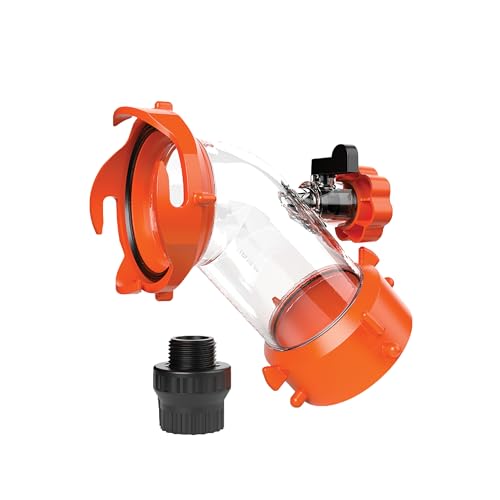 Camco Rhino Blaster Tank RinserA back-flush for a trailer that never came with one. Use a dedicated rinse hose for it, never the drinking-water hose. | Rigs with no built-in flush | Good |
Prices come from Amazon and were last checked November 12, 2026. They change constantly, so a price older than 48 hours is withdrawn rather than shown stale — those rows read “Check price on Amazon” instead and go straight to the current listing. #ad — these are affiliate links.
What a tank treatment is actually for
Worth settling first, because it changes how you judge both products. A holding tank treatment is not a cleaner and it is not a drain unblocker. Its job is to control odor and to keep solids broken down and moving, so that when you open the valve the tank empties properly rather than leaving a layer behind.
Which means the treatment is only half of the answer. The other half is water: a treatment dosed into a tank with no water in it has nothing to work in. Dose when the tank is empty, add a few gallons of water immediately, and most black tank complaints never start. That sequence matters more than which of these two bottles you own.
The real differences, side by side
As published by each manufacturer
| Camco TST MAX | Happy Campers | |
|---|---|---|
| Form | Liquid | Granular |
| Dosing | Per tank, by bottle or pre-measured pack | Per tank, by scoop |
| Spill risk in a moving compartment | Real. It is an open bottle of liquid | None. It is a dry granule |
| Formaldehyde | Not a formaldehyde product | Formaldehyde-free |
| Hot weather | Less effective than the granular option | Holds up in heat, which is the usual reason people switch |
| Availability on a shelf | Stocked almost everywhere | Harder to find in a small town |
| Up-front price | Lower | Higher - one tub, a lot of tanks |
| Cost per tank | Cheap | Reasonable across a long season |
Two of those rows do most of the deciding. Spill risk sounds trivial until a bottle tips over in a pass-through compartment that also holds your sewer hose and your leveling blocks. And hot weather is the single most common reason people change products at all: a tank that was fine in May becomes the main topic of conversation in August.
The picks
1. Best for The widely available default
Camco TST MAX RV Holding Tank Treatment
The one you can always find. Dose it when the tank is empty, add water, and most black-tank complaints never start.
- Specification
- Liquid treatment
- Specification
- Dosed per tank
- Specification
- Sold in bottles and single-dose packs
What it does well
- Stocked essentially everywhere, so you are never hunting for it mid-trip
- Single-dose packs remove the measuring step, and measuring is the step people skip
The real tradeoff
- Liquid bottles spill in a moving compartment
- Less effective if you dump a nearly empty tank
How it measures up
These are judgments from published specifications and what we see at the lodge, not laboratory results. How we choose.
- Beginner fit
- Strong — Drop in a pack, add water.
- Control
- Good — Bottle or pre-dosed pack.
- Flow
- Adequate — Not applicable.
- Value
- Strong — Cheap per tank.
Specifications from Camco.
2. Best for Hot weather and stubborn tanks
Happy Campers Organic RV Holding Tank Treatment
The one people switch to after a hot week: granular, no spill risk, and it keeps working when the tank is warm.
- Specification
- Granular treatment
- Specification
- Scoop-dosed
- Specification
- Formaldehyde-free
What it does well
- Granular, so nothing spills in a moving compartment
- Holds up in heat better than most liquids, which is exactly when people notice their tank
- One container lasts a long season
The real tradeoff
- Higher up-front price than a bottle of liquid
- Harder to find on a shelf in a small town
How it measures up
These are judgments from published specifications and what we see at the lodge, not laboratory results. How we choose.
- Beginner fit
- Strong — One scoop per tank.
- Control
- Good — Dose by scoop.
- Flow
- Adequate — Not applicable.
- Value
- Good — An expensive tub, and a lot of tanks.
3. Best for Rigs with no built-in flush
Camco Rhino Blaster Tank Rinser
A back-flush for a trailer that never came with one. Use a dedicated rinse hose for it, never the drinking-water hose.
- Specification
- Inline rinser with a gate valve
- Specification
- Garden-hose inlet
- Specification
- Sits between the rig and the sewer hose
What it does well
- Gives a trailer with no factory black-tank flush a proper rinse for very little money
- The gate valve lets you back-fill and hold, which is what actually cleans a tank
The real tradeoff
- Never connect your drinking-water hose to it. Use a dedicated rinse hose, always
- One more fitting in the chain, and every fitting is a place to leak
How it measures up
These are judgments from published specifications and what we see at the lodge, not laboratory results. How we choose.
- Beginner fit
- Good — Simple, with one hard rule about hoses.
- Control
- Good — The gate valve is the useful part.
- Flow
- Good — Adequate rinse pressure from a normal spigot.
- Value
- Strong — A cheap fix for a missing factory feature.
Specifications from Camco.
How we choose
Does it survive the compartment. Any treatment you have to be careful with is a treatment you will eventually knock over. A dry product wins this outright and a pre-measured pack closes most of the gap for the liquid.
Does dosing remove a decision. Measuring is the step people skip, and a skipped dose is a worse outcome than a slightly wrong product. Single-dose packs and a fixed scoop both solve it.
Does it hold up warm. Tank odor is a hot-weather problem far more than a cold-weather one, so performance in heat is the performance that matters.
Can you replace it mid-trip. A product you cannot buy in the town you are in has a real practical cost. This is the honest case for the widely stocked option.
We do not test products and do not claim to — see how we choose. The points above come from each manufacturer’s published information and from what the two formats mean in practice.
Which to buy, by how you camp
Weekends, mild weather, first season: the liquid. It is cheaper to start, it is on the shelf of the store you are already in, and single-dose packs remove the measuring step. Buy the packs rather than the bottle if your compartment is crowded.
Hot climate, or a week or more at a time: the granular product. This is where the price difference stops being the deciding factor, because what you are buying is a tank that behaves in August.
A seasonal site where the trailer sits hooked up: the granular product again, and keep the black valve closed between dumps regardless of which you use. A black tank left open drains the liquid and leaves the solids, which is the one habit that reliably creates the problem both of these products exist to prevent.
Touring with unpredictable resupply: the liquid, or carry enough of the granular product for the whole trip. Availability is a specification.
Pick by climate and compartment
Cool weather, weekends, want it on a shelf nearby: the liquid, in single-dose packs. Heat, long stays, or a compartment you do not want a bottle tipping over in: the granular tub. Either way, add the rinser if your trailer has no factory black tank flush.
Best for The widely available default
Camco TST MAX RV Holding Tank Treatment
The one you can always find. Dose it when the tank is empty, add water, and most black-tank complaints never start.
Best for Hot weather and stubborn tanks
Happy Campers Organic RV Holding Tank Treatment
The one people switch to after a hot week: granular, no spill risk, and it keeps working when the tank is warm.
Best for Rigs with no built-in flush
Camco Rhino Blaster Tank Rinser
A back-flush for a trailer that never came with one. Use a dedicated rinse hose for it, never the drinking-water hose.
The part that matters more than the product
If your tank is giving you trouble, the odds are good that the fix is a habit rather than a different bottle. Four of them, in order of how much difference they make.
Keep the black valve closed until you dump. Leaving it open at a full hookup site drains the liquid and strands the solids. This is the single biggest cause of the problem.
Dump when the tank is at least two-thirds full. Volume is what carries solids out. A nearly empty tank dumped often leaves more behind than a full tank dumped occasionally.
Refill with water right after dumping, then dose. A few gallons in the bottom gives the treatment something to work in and stops anything drying onto the tank floor.
Use a clear elbow so you can see when it runs clean. It is the only reliable way to know a tank is genuinely empty rather than probably empty, and it costs very little. More on the whole fitting chain in RV sewer connections explained, and on timing in how often to dump an RV black tank.
Questions people actually ask
Is Happy Campers better than Camco TST?
In heat, the granular product generally holds up better, which is the usual reason people switch. It also cannot spill in a moving compartment. Camco TST costs less up front and is stocked almost everywhere, which matters when you need more mid-trip. We do not test products, so this is a comparison of published form and dosing rather than a lab result.
Should I use liquid or granular RV tank treatment?
Granular if your compartment is crowded or you camp in heat - a dry product cannot tip over and performs better warm. Liquid if you want the lowest entry price and the widest availability, ideally in single-dose packs so there is nothing to measure.
How much tank treatment do I use?
Follow the dose on the product for your tank size, and add it when the tank is empty followed immediately by a few gallons of water. A treatment dosed into a dry tank has nothing to work in, and an undosed tank is worse than a slightly wrong product.
Does tank treatment clean the black tank?
No. A treatment controls odor and keeps solids broken down and moving. Cleaning is a rinse - the factory black tank flush if your trailer has one, or an inline rinser with a gate valve if it does not. Use a dedicated rinse hose, never the drinking water hose.
Can I leave the black tank valve open at a full hookup site?
No. An open black valve drains the liquid and leaves the solids behind, which is the most common cause of the problems tank treatments exist to prevent. Keep it closed and dump when the tank is at least two-thirds full.
Sources
Read next
Sewer & Water
Best RV Holding Tank Treatment
Granular and liquid tank treatments compared, plus the water-and-timing habit that does most of the work.
Sewer & Water
How to Flush an RV Black Tank
Black tank flushing with a built-in inlet or an add-on rinser, and why the sensors read wrong.
Sewer & Water
How Often Should You Dump an RV Black Tank?
When to dump black and gray tanks, why fill level beats a schedule, and the valve habit that prevents most tank problems.
Sewer & Water
RV Sewer Connections Explained
The hardware between your tank valve and the campground inlet, named and explained, including the adapter for a PVC connection at home.
Reviewed October 17, 2026. Spot something out of date? Tell us and we will fix it.