How to Flush an RV Black Tank
Flushing is what stops the slow accumulation that makes sensors lie and tanks clog. Fifteen minutes at each dump, and one rule about hoses that is absolute.
Heads up: this page contains affiliate links. If you buy through one, Camp & Chock may earn a commission at no extra cost to you. It never changes which product we put first — how this site is funded.

Dump, close the valve, run rinse water in, open and drain, and repeat until the clear elbow runs clean. Then add treatment and several gallons of fresh water before anything else goes in. Use a dedicated rinse hose for this, never your drinking-water hose.
Part of our sewer and water guide. The dumping sequence this follows is in how to hook up an RV sewer hose.
Why flushing matters
Dumping empties the liquid. Flushing removes what the liquid left behind.
A black tank that is only ever dumped accumulates residue on the walls and the floor. That residue does three things, in escalating order of annoyance. It coats the level sensors so the panel reads full when the tank is nearly empty. It holds odor that no amount of treatment fixes, because the treatment is working on the water rather than the walls. And eventually it can build into a genuine blockage under the toilet, which is a job nobody wants.
Fifteen minutes at each dump prevents all three.
The one absolute rule
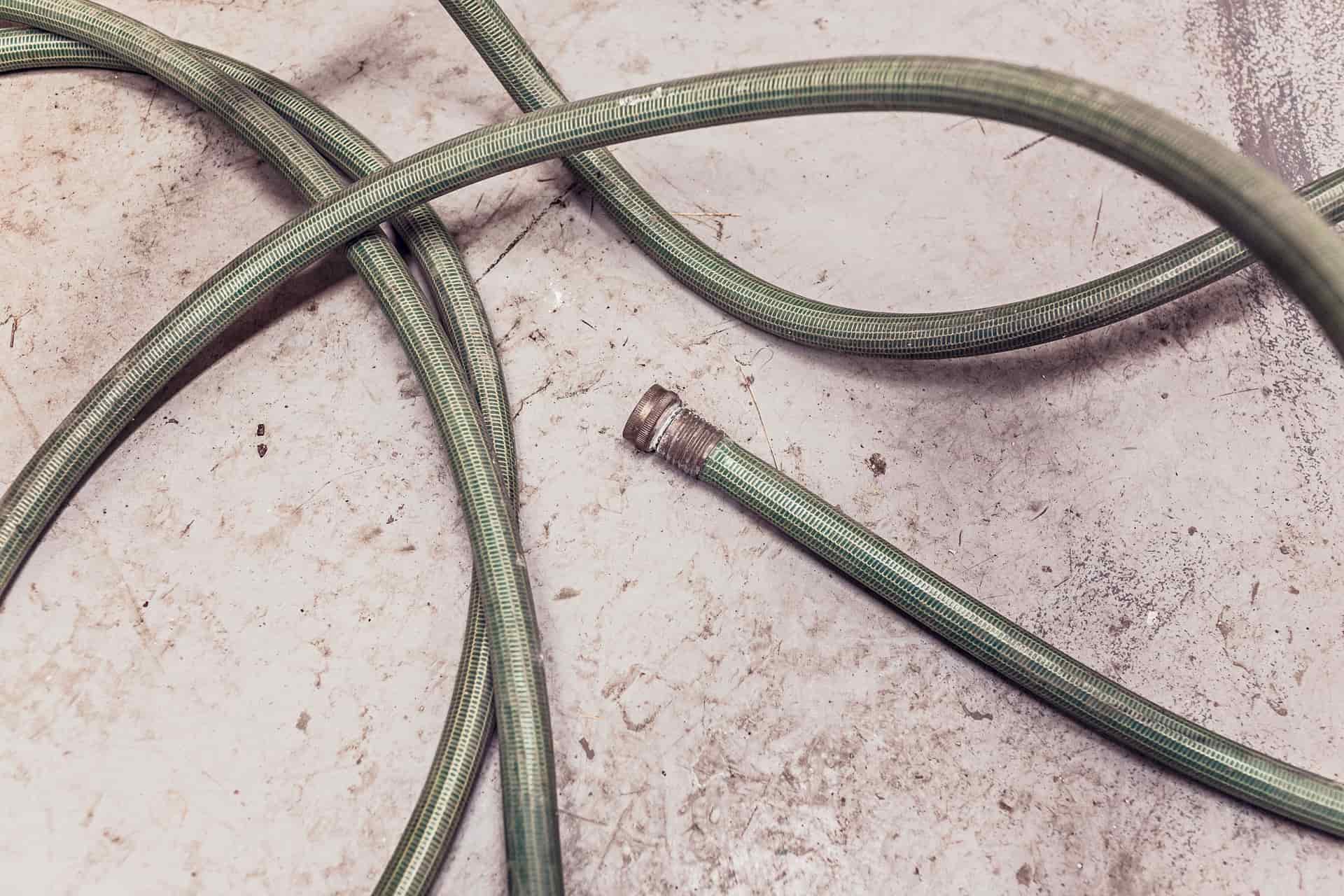
Never connect your drinking-water hose to a black tank flush inlet or a tank rinser. Not once. Not carefully. The flush inlet is connected to the inside of a waste tank, and any backflow is into that hose.
Carry a second hose, mark it clearly, and store it with the sewer gear. It is the cheapest safety measure on this whole site. Both hoses are covered in the fresh water hose roundup.
Three ways to flush
| Method | Requires | How well it works |
|---|---|---|
| Built-in black tank flush | A factory flush inlet on your rig | Best. A spray nozzle inside the tank |
| Inline tank rinser | An inline rinser with a gate valve | Good. Back-fills through the outlet |
| Toilet wand | A wand down the toilet | Adequate. Reaches less of the tank |
| Just adding water through the toilet | Nothing | Better than nothing. No agitation |
If your trailer has a built-in flush
Look for a separate inlet, usually labeled, near the city water connection. It feeds a spray nozzle inside the tank, which is the best arrangement because it agitates as well as fills.
Do not leave it running unattended. A flush inlet with the black valve closed will fill the tank, and a tank filled past the toilet is a situation you will remember.
If it does not
An inline rinser with a gate valve sits between the rig outlet and the sewer hose, and lets you back-fill the tank through the outlet. It is a cheap fix for a missing factory feature and it works well.
The gate valve is the important part: it lets you hold water in the tank rather than having it run straight out, which is what produces the agitation that actually cleans.
The gear for this job
A rinser if your trailer has no factory flush, a treatment to dose afterwards, and the clear elbow that tells you when the rinse water is finally clean.
Best for Rigs with no built-in flush
Camco Rhino Blaster Tank Rinser
A back-flush for a trailer that never came with one. Use a dedicated rinse hose for it, never the drinking-water hose.
Best for Hot weather and stubborn tanks
Happy Campers Organic RV Holding Tank Treatment
The one people switch to after a hot week: granular, no spill risk, and it keeps working when the tank is warm.
Best for Seeing when the tank is done
Camco RhinoFLEX Clear 45-Degree Sewer Adapter
The clear elbow: the cheapest way to know a black tank is genuinely empty rather than probably empty.
Why the sensors lie
Black tank level sensors are usually probes through the tank wall that detect whether liquid is present. Residue bridging a probe reads as liquid, permanently.
So a panel that says two-thirds full immediately after dumping is almost always a coated sensor rather than a full tank. Consistent flushing prevents it, and a serious flushing regime sometimes recovers it. Some sensors never come back, and at that point you go by the calendar and by how the toilet flushes rather than by the panel.
This is the single most common tank complaint we hear at the lodge, and it is almost always sensors rather than tanks.
After the flush: the part people skip
Close the valve, add your tank treatment, then run several gallons of fresh water in. Enough to properly cover the bottom of the tank.
Starting with water in the tank is what allows solids to break down rather than sit. A tank that starts dry is a tank that will give you trouble, and this step takes two minutes.
What goes wrong
Using the fresh water hose. The one rule.
Leaving a built-in flush running unattended. The tank fills. Then the bathroom floor does.
One rinse cycle and stopping. Two or three is normal. The clear elbow tells you when to stop; guessing does not.
Flushing a tank you dumped too early. If the tank was barely full when you dumped, solids stayed behind and a rinse will not shift them all. Wait until two-thirds full next time.
Doing all this in freezing weather. Water in a flush inlet or a hose that then freezes is a problem you have created. In cold weather, blow the lines out afterwards.
Questions people actually ask
How often should I flush my RV black tank?
At every dump. Fifteen minutes each time prevents the residue that coats sensors, holds odor and eventually blocks the tank.
Can I use my drinking water hose to flush the black tank?
No, never. The flush inlet connects to the inside of a waste tank. Carry a second hose, mark it clearly, and store it with the sewer gear.
Why does my black tank read full after dumping?
Almost always residue bridging the level sensors rather than an actual full tank. Consistent flushing prevents it, and a serious flushing regime sometimes recovers it.
How do I flush a black tank without a built-in flush?
Use an inline tank rinser with a gate valve between the rig outlet and the sewer hose, which lets you back-fill and hold water in the tank. A toilet wand is a cheaper option that reaches less of the tank.
How much water should I add after flushing?
Several gallons, enough to properly cover the bottom of the tank, along with your tank treatment. A tank that starts dry is a tank that will give you trouble.
Can I leave the black tank flush running while I do something else?
No. With the black valve closed it will keep filling the tank, and a tank filled past the toilet is a genuinely unpleasant situation. Stay with it.
Sources
Read next
Sewer & Water
Best RV Holding Tank Treatment
Granular and liquid tank treatments compared, plus the water-and-timing habit that does most of the work.
Sewer & Water
How to Hook Up an RV Sewer Hose (Step by Step)
The full sewer connection and dumping sequence, in order, with the two checks that prevent the story you tell for years.
Sewer & Water
Best RV Fresh Water Hose
Drinking-water-safe hoses compared on length, flexibility and storage, plus why two hoses is the right answer.
First-Season Starter Kit
Best RV Toilet Paper (and Whether You Need Special Tissue at All)
Rapid-dissolving supermarket tissue versus RV-specific tissue, and when the specialist option earns its price.
Reviewed September 25, 2026. Spot something out of date? Tell us and we will fix it.