How to Clean an RV Sewer Hose
Most of this happens in the thirty seconds after the tank finishes draining. Get those thirty seconds right and the hose never becomes a job.
Heads up: this page contains affiliate links. If you buy through one, Camp & Chock may earn a commission at no extra cost to you. It never changes which product we put first — how this site is funded.
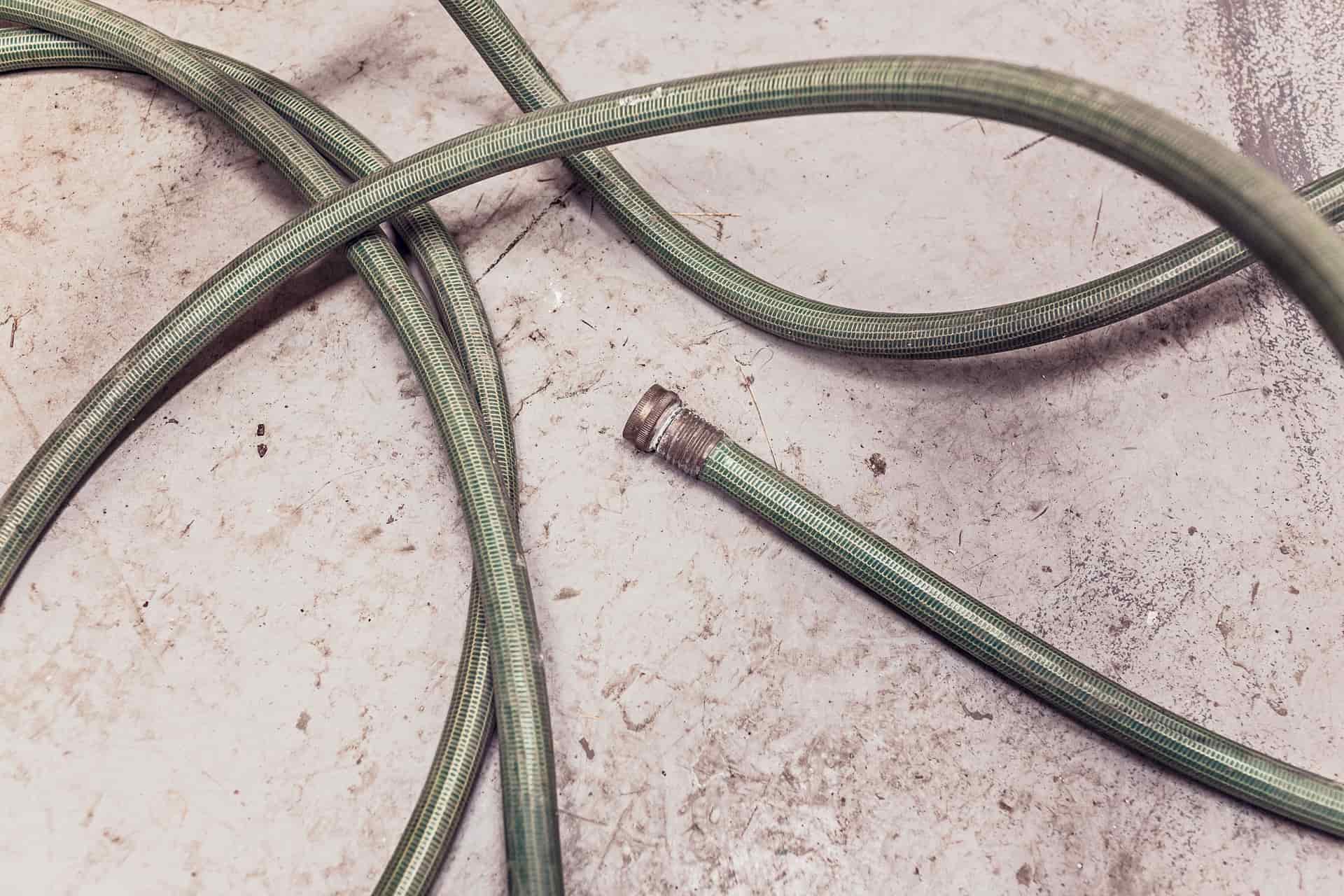
Dump black first, then gray so the gray water rinses the hose for you. Watch the clear elbow until the flow runs clear. Walk the hose from the rig end to the sewer end so the corrugations empty. Disconnect the rig end first. Store it drained and loosely coiled. That is the whole routine, it takes under a minute, and it is the difference between a hose you handle without thinking and a hose nobody wants to touch.
Part of our sewer and water guide. The connection procedure itself is in how to hook up an RV sewer hose; this page is about the part after the tank is empty, which is where every long-term hose problem is either created or avoided.
Why order matters: black first, gray second
This is the single most useful thing on the page. Your gray tank is full of shower and washing-up water, which is warm, soapy and voluminous. Run it through the hose immediately after the black tank and it scours the hose on its way past, for free, with no extra step.
Dump in the other order and you finish with black water in the hose and nothing to rinse it with. Everything after that is an attempt to fix a problem you created by sequencing. If you take one habit from this page, take this one.
The clear elbow is doing real work here
You cannot tell when a tank is empty by sound or by time. The flow slows and you assume it is finished, and often it is not — particularly on a black tank, where the last part is the part worth getting out. A clear elbow turns that guess into an observation: when the flow runs clear, it is done.
It also tells you whether a rinse is needed at all. If the gray water runs through completely clean, the hose is clean. If it does not, you know to do something about it rather than wondering.
Walking the hose, which is the step people skip
An RV sewer hose is corrugated. Those corrugations are what let it compress and flex, and they are also small reservoirs that hold liquid when the hose is lying flat. Closing the valve and unhooking leaves every one of them part full.
The fix is physical: start at the rig end, lift it waist high, and walk toward the sewer inlet keeping the hose raised as you go. You are pushing a wave of liquid ahead of you and out of the inlet. Do it once and look at how much comes out; it is more than you expect, and it is exactly the volume that would otherwise sit in your compartment until the next trip.
A hose that has been walked properly can be stored immediately and will not smell. A hose that has not will smell within a week regardless of how it is stored or what you spray into it.
The gear that makes this easy
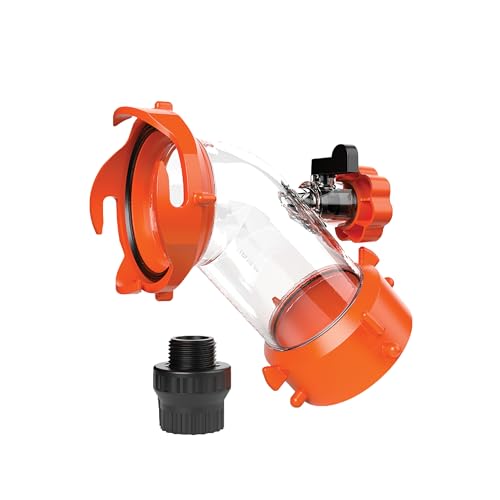
1. Best for Rigs with no built-in flush
Camco Rhino Blaster Tank Rinser
A back-flush for a trailer that never came with one. Use a dedicated rinse hose for it, never the drinking-water hose.
- Specification
- Inline rinser with a gate valve
- Specification
- Garden-hose inlet
- Specification
- Sits between the rig and the sewer hose
What it does well
- Gives a trailer with no factory black-tank flush a proper rinse for very little money
- The gate valve lets you back-fill and hold, which is what actually cleans a tank
The real tradeoff
- Never connect your drinking-water hose to it. Use a dedicated rinse hose, always
- One more fitting in the chain, and every fitting is a place to leak
How it measures up
These are judgments from published specifications and what we see at the lodge, not laboratory results. How we choose.
- Beginner fit
- Good — Simple, with one hard rule about hoses.
- Control
- Good — The gate valve is the useful part.
- Flow
- Good — Adequate rinse pressure from a normal spigot.
- Value
- Strong — A cheap fix for a missing factory feature.
Specifications from Camco.
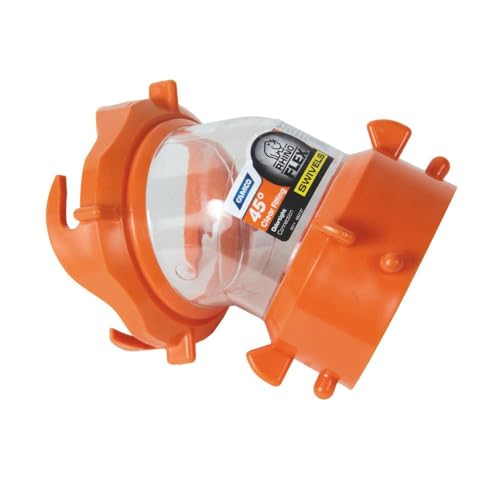
2. Best for Seeing when the tank is done
Camco RhinoFLEX Clear 45-Degree Sewer Adapter
The clear elbow: the cheapest way to know a black tank is genuinely empty rather than probably empty.
- Specification
- Clear 45-degree elbow
- Specification
- Fits the standard bayonet hose end
- Specification
- Threaded ring for the sewer inlet
What it does well
- You can see when the flow runs clear, which is the only reliable way to know a tank is empty
- The threaded ring keeps the connection in place instead of backing out mid-dump
The real tradeoff
- Clear plastic stains over a season
- Usually already included in the better kits, so check before buying twice
How it measures up
These are judgments from published specifications and what we see at the lodge, not laboratory results. How we choose.
- Beginner fit
- Strong — Screws on, and then it is obvious.
- Durability
- Good — Fine. It stains rather than fails.
- Storage
- Strong — Tiny.
- Value
- Strong — Small money for real information.
Specifications from Camco.

3. Best for Hot weather and stubborn tanks
Happy Campers Organic RV Holding Tank Treatment
The one people switch to after a hot week: granular, no spill risk, and it keeps working when the tank is warm.
- Specification
- Granular treatment
- Specification
- Scoop-dosed
- Specification
- Formaldehyde-free
What it does well
- Granular, so nothing spills in a moving compartment
- Holds up in heat better than most liquids, which is exactly when people notice their tank
- One container lasts a long season
The real tradeoff
- Higher up-front price than a bottle of liquid
- Harder to find on a shelf in a small town
How it measures up
These are judgments from published specifications and what we see at the lodge, not laboratory results. How we choose.
- Beginner fit
- Strong — One scoop per tank.
- Control
- Good — Dose by scoop.
- Flow
- Adequate — Not applicable.
- Value
- Good — An expensive tub, and a lot of tanks.
Rinsing options, from built-in to improvised
How to get water back through the system
| Option | How it works | Worth knowing |
|---|---|---|
| Factory black tank flush | A dedicated inlet sprays inside the tank | Best option if you have it. Still needs a dedicated hose |
| Inline tank rinser with a gate valve | Sits between rig and hose; back-fills and holds | Gives a trailer with no factory flush a real rinse cheaply |
| Gray tank last | Soapy gray water scours the hose on the way out | Free, requires only correct sequencing, and does most of the job |
| Clear water down the toilet | Fill, let it slosh while driving, dump again | Slow, uses fresh water, but it works with no equipment at all |
What not to put in the hose
Bleach and household drain cleaners do not belong in an RV waste system. Bleach attacks the rubber seals in the dump valves and kills the biological action that a tank treatment is there to encourage. Caustic drain cleaner can damage the tank and the hose, and the fumes in a confined bay are their own problem. Nothing stronger than a tank treatment and water needs to go in here.
Pressure washers are also a bad idea. The corrugated wall is thin and a pressure washer will put a hole in it from the inside out, which you will not find until the next dump.
Storage, which is where a clean hose goes wrong
A clean hose stored badly becomes a dirty hose. Three things matter.
Store it dry, not just drained. If you can leave it in the sun for ten minutes before packing, do. A hose that goes away with a film of moisture in it is a hose that smells in a closed compartment.
Store it loose, not tightly coiled. Forcing a hose into a tight coil — especially a cold one — cracks the wall at the folds, and the crack is usually invisible until it leaks from the middle. This is the main reason a 20-foot hose does not want to go in a 4-inch bumper. Our sewer hose storage options page covers the realistic alternatives.
Store it in its own place. The hose, the elbow, the gloves, the rinse hose and the seal donut want one compartment nobody else uses. A sewer hose sharing space with camp chairs is how people end up disliking the whole process.
The two that change this job
A back-flush for a trailer with no factory rinse, and a clear elbow so you know when a tank is actually finished rather than probably finished.
Best for Rigs with no built-in flush
Camco Rhino Blaster Tank Rinser
A back-flush for a trailer that never came with one. Use a dedicated rinse hose for it, never the drinking-water hose.
Best for Seeing when the tank is done
Camco RhinoFLEX Clear 45-Degree Sewer Adapter
The clear elbow: the cheapest way to know a black tank is genuinely empty rather than probably empty.
How often does the hose itself need attention?
If you dump black-then-gray and walk the hose every time, the hose needs nothing else. The routine is the maintenance. What does deserve periodic attention is the tank, not the hose: a proper back-flush a few times a season keeps the level sensors honest and stops solids accumulating. That is a different job, covered in the black tank flush guide.
Questions people actually ask
How do you clean an RV sewer hose?
Dump the black tank first and the gray tank second, so the soapy gray water rinses the hose on its way out. Then walk the hose from the rig end to the sewer end to empty the corrugations, disconnect the rig end first, and store it drained and loosely coiled.
Can I use my drinking water hose to rinse the sewer hose?
Never. Keep a second hose in a different color purely for rinsing, stored in the sewer compartment rather than the water compartment. The risk is backflow contamination into a hose you later drink from.
Why does my RV sewer hose smell even after rinsing?
Almost always because liquid is still sitting in the corrugations. Rinsing does not empty them; walking the hose from the rig end to the sewer end with it raised does. A hose stored with a film of moisture in it smells within a week.
Can I use bleach to clean an RV sewer hose?
No. Bleach attacks the rubber seals in the dump valves and kills the biological action a tank treatment relies on. Caustic drain cleaners can damage the tank and hose. Nothing stronger than a tank treatment and water is needed.
Sources
Read next
Sewer & Water
How to Hook Up an RV Sewer Hose (Step by Step)
The full sewer connection and dumping sequence, in order, with the two checks that prevent the story you tell for years.
Sewer & Water
How to Flush an RV Black Tank
Black tank flushing with a built-in inlet or an add-on rinser, and why the sensors read wrong.
Sewer & Water
RV Sewer Hose Storage Ideas
Where to actually store a sewer hose, why the bumper usually will not work, and the separation rule that matters.
Sewer & Water
Best RV Sewer Hose for Long Term Use
What fails on a hose left connected for a season, and the kit and support combination that survives it.
Reviewed October 11, 2026. Spot something out of date? Tell us and we will fix it.