Best RV Camera for Pets in a Travel Trailer
Watching the dog from the trailhead needs three things working at once: power, internet and a camera. Here is what actually works, and the warning that has to come first.
Heads up: this page contains affiliate links. If you buy through one, Camp & Chock may earn a commission at no extra cost to you. It never changes which product we put first — how this site is funded.

The short answer
For watching a dog inside a parked trailer that has mains power and either campground wifi or your own hotspot, the Wyze Cam v4 is the pick and also the budget pick: it is an indoor-capable camera at a price where buying two is reasonable, which matters because one camera only watches one end of a trailer. If you want something that keeps working when the campground wifi does not, the Reolink Go PT Ultra runs on a cellular SIM and solar — the only pick here that is genuinely independent of the site. The warning first, though, because it is the whole point: a camera tells you the trailer is getting hot. It does not cool it. If the air conditioning fails or the power drops, a camera gives you information and no time.
Part of our towing and security guide. If what you want is theft deterrence rather than pet monitoring, that is best RV security camera. Cameras for reversing are a completely different product: best RV backup camera.
Our picks at a glance
Tap any row to jump to the full write-up.
| # | Product | Best for | Beginner fit | Price |
|---|---|---|---|---|
| 1 | 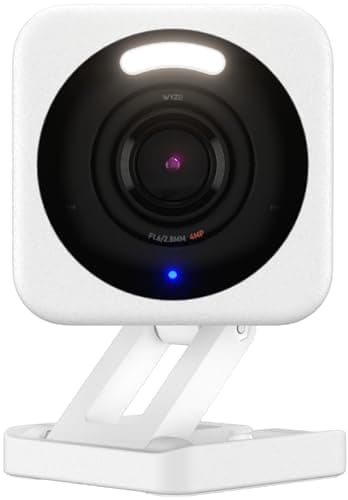 Wyze Cam v4The cheap one that earns its place inside the trailer or on a powered site. Not an unattended-storage camera, and we would rather say so than sell you one. | Watching the inside of the trailer, or a hookup site with power and a hotspot | Strong | |
| 2 | 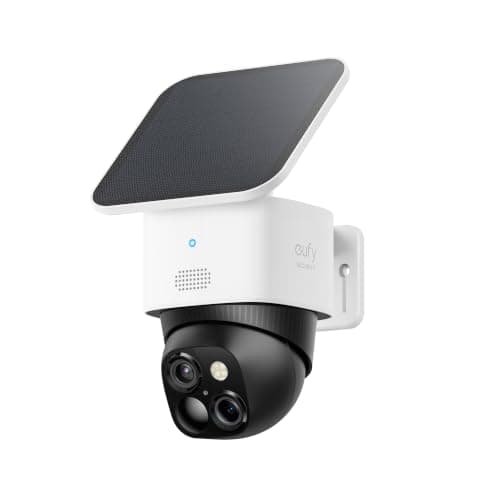 eufy SoloCam S340The driveway camera: solar, no wires, no subscription, and it watches the trailer while it sits on your own wifi between trips. | A trailer kept at home, where there is wifi but no spare outdoor socket | Good | |
| 3 | 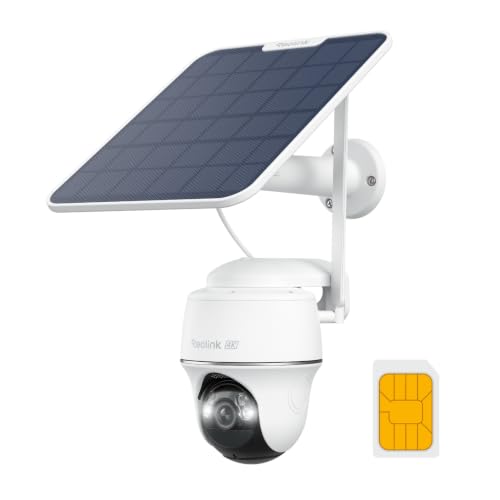 Reolink Go PT UltraThe storage-lot camera. Cellular and solar, so it needs neither the router nor the socket a stored trailer lacks - and it is the only pick here that keeps working when the trailer is alone for a month. | A trailer parked where there is no wifi and no power - storage lots especially | Good | |
| 4 | 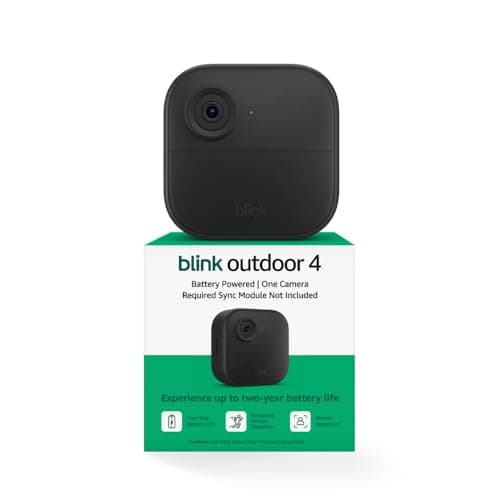 Blink Outdoor 4 (1-camera system with Sync Module)The set-and-forget battery camera. Longest published battery life of the wifi picks, lowest resolution, and still needs a network wherever you put it. | A battery camera you move around - campsite one week, driveway the next | Strong |
Prices come from Amazon and were last checked November 27, 2026. They change constantly, so a price older than 48 hours is withdrawn rather than shown stale — those rows read “Check price on Amazon” instead and go straight to the current listing. #ad — these are affiliate links.
The three things that have to work at once
Power. An indoor camera plugged into a wall outlet needs the trailer to be on shore power or an inverter. If your pedestal trips, the camera goes with it — which is exactly when you most want it. Battery and solar cameras survive that, which is the main reason they are on this page.
Internet. This is where most pet camera setups fail. Campground wifi is frequently unusable for video, and a camera that needs your phone’s hotspot stops working the moment you drive out of range with the phone. The two honest answers are a dedicated hotspot device left in the trailer, or a camera with its own cellular SIM.
A view that covers where the animal actually is. One camera at one end of a 24-foot trailer watches one end of a 24-foot trailer. Dogs move. Two cheap cameras beat one expensive one for this specific job, which is part of why the budget pick is ranked first.
How we chose
Does it work without the campground. Independence from site wifi and site power is the single most useful property here, and it is why a cellular solar camera appears on a page about indoor pet monitoring.
Two-way audio, where it is published. Being able to speak to a dog is genuinely useful. Being able to hear the trailer is more useful still, because a distressed animal is audible before it is obviously visible.
Night vision, published. A trailer with the blinds down in daytime is a dark room.
Cheap enough to buy two. Coverage beats resolution for this job.
What it does not claim. None of these is a temperature sensor, and where a camera publishes an ambient temperature reading we would still not rely on it as a pet safety alarm. We have ranked on monitoring, and said so.
We do not test products and say so on how we choose. No camera here was installed, streamed or battery-tested by us. Every resolution, battery and connectivity figure is the maker’s own.
The picks
1. Best for Watching the inside of the trailer, or a hookup site with power and a hotspot
Wyze Cam v4
The cheap one that earns its place inside the trailer or on a powered site. Not an unattended-storage camera, and we would rather say so than sell you one.
- Specification
- 2.5K QHD, 2560 x 1440
- Specification
- 115.8 degree diagonal field of view
- Specification
- IP65 weather resistant
- Specification
- Published operating range -4 F to 122 F
- Specification
- microSD up to 256 GB; local recording works without a subscription
- Specification
- 2.4 GHz wifi only, no 5 GHz
- Specification
- Wired: 5 V USB power, 6 ft cable supplied, outdoor use needs a suitable adapter
What it does well
- Cheap enough that leaving one in the trailer is barely a decision, and it records to a card without a plan
- The published cold rating is genuinely useful on a camper, where a shoulder-season night goes below freezing
- A good indoor camera for the pet-in-the-trailer problem, which is what a lot of owners actually want to watch
The real tradeoff
- It needs mains power and a network, and a stored trailer has neither. Do not buy this for a storage lot
- AI detection - person, package, vehicle - is behind a Cam Plus subscription; the free tier is motion and sound
- 2.4 GHz only, and the supplied adapter is an indoor one, so outdoor mounting needs more parts than the box implies
How it measures up
These are judgments from published specifications and what we see at the lodge, not laboratory results. How we choose.
- Beginner fit
- Strong — Plug in, scan, done.
- Install effort
- Adequate — Needs a socket, and outdoors needs a weatherproof adapter.
- Works unattended
- Weak — No power and no network means no camera.
- Value
- Strong — The least expensive real camera here.
Specifications from Wyze Cam v4 published specifications.
2. Best for A trailer kept at home, where there is wifi but no spare outdoor socket
eufy SoloCam S340
The driveway camera: solar, no wires, no subscription, and it watches the trailer while it sits on your own wifi between trips.
- Specification
- 3K dual-lens, published at 2880 x 1620 on the wide lens and 2304 x 1296 on the telephoto, with hybrid 8x zoom
- Specification
- 344 degrees of pan and 10 to 70 degrees of tilt, which eufy sells as 360-degree coverage
- Specification
- Removable, adjustable 2.2 W solar panel; eufy publishes three months standalone, measured at 300 seconds of recording a day
- Specification
- Recording storage is built into the camera - eufy publishes 8 GB of onboard eMMC - and there is no monthly fee for local recording
- Specification
- 2.4 GHz wifi only
- Specification
- Color night vision with a spotlight and an f/1.6 lens; eufy publishes weather protection and an operating range of -4 F to 122 F rather than an IP figure
What it does well
- Local storage with no subscription, which over three seasons is the difference between a camera and a camera plus a bill
- Solar plus battery means no cable run to a driveway or a side yard where the trailer parks
- The dual lens and 360-degree pan cover a whole trailer flank from one mounting point
The real tradeoff
- Wifi only. It is the wrong camera for a storage lot, and the searches for an RV security camera with no wifi exist because people buy this class of camera for one
- 2.4 GHz only, so a mesh network that steers devices to 5 GHz can make setup annoying
- Three months is a published figure that assumes the panel gets sun and 300 seconds of recording a day; a shaded north wall is a different story
- Storage is the 8 GB built into the camera. Expandable local storage is a feature of the multi-camera kits that ship with a HomeBase, not of this single-camera listing, so 8 GB of 3K clips is a deterrent record rather than an archive
How it measures up
These are judgments from published specifications and what we see at the lodge, not laboratory results. How we choose.
- Beginner fit
- Good — Quick app setup, no wiring.
- Install effort
- Good — One bracket; aim the panel at the sun.
- Works unattended
- Adequate — Only where your own wifi reaches.
- Value
- Good — No monthly fee is most of the case for it.
Specifications from eufy SoloCam S340 published specifications.
3. Best for A trailer parked where there is no wifi and no power - storage lots especially
Reolink Go PT Ultra
The storage-lot camera. Cellular and solar, so it needs neither the router nor the socket a stored trailer lacks - and it is the only pick here that keeps working when the trailer is alone for a month.
- Specification
- 4G LTE with a prepaid SIM included; the US version switches between AT&T and T-Mobile for the stronger signal, so no wifi is required
- Specification
- 3840 x 2160 (8 MP) at 15 fps
- Specification
- 355 degrees of pan and 140 degrees of tilt
- Specification
- 21.6 Wh rechargeable battery, published at about two months per charge; Reolink's 6 W solar panel keeps it topped up and is a separate purchase, not part of the box
- Specification
- microSD card up to 128 GB for local recording; cloud is optional
- Specification
- IP64, infrared night vision to 33 ft plus dual 2.4 W spotlights for color night video
- Specification
- 2-year limited warranty
What it does well
- The only camera type that works on a stored trailer, because it brings its own network and its own power - everything else here assumes a wifi router and a socket the trailer does not have
- Records to a card in the camera, so a dropped connection does not mean a lost clip
- Pan and tilt from the app means one camera can cover the tongue, the door and the bay doors instead of three
The real tradeoff
- The SIM needs a data plan after the included trial, so this is the one pick here with an ongoing cost - budget it as part of the price
- LTE is only as good as the signal where the trailer sits. A metal storage building or a rural lot can leave it with nothing to report to
- IP64 is splash-rated, not pressure-washer rated, and the solar panel needs real sky - a covered storage row defeats the whole product
- Battery life is a published figure under the maker's assumptions, not a measurement we took
How it measures up
These are judgments from published specifications and what we see at the lodge, not laboratory results. How we choose.
- Beginner fit
- Good — App setup is simple; the SIM plan is the fiddly part.
- Install effort
- Good — Mount it, aim the panel at the sky, done.
- Works unattended
- Strong — No wifi, no mains power, local card storage.
- Value
- Good — Real money, plus data - and nothing else does this job.
Specifications from Reolink Go PT Ultra published specifications.
4. Best for A battery camera you move around - campsite one week, driveway the next
Blink Outdoor 4 (1-camera system with Sync Module)
The set-and-forget battery camera. Longest published battery life of the wifi picks, lowest resolution, and still needs a network wherever you put it.
- Specification
- 1080p HD video
- Specification
- 143 degree diagonal field of view
- Specification
- Two AA lithium cells, published at up to two years on default settings
- Specification
- IP65 weather rating
- Specification
- Requires a Blink Sync Module, which is included in the 1-camera system box but NOT with the cheaper add-on camera listing
- Specification
- Optional weather-resistant power adapter sold separately
What it does well
- Two years on a pair of AA cells is the longest unattended run of any battery camera here, and there is no panel to aim at the sun
- Small and light enough to move with the trailer and re-mount somewhere else without tools
- The 1-camera kit includes the Sync Module, so the box is actually a complete system
The real tradeoff
- Wifi, through the Sync Module. Same storage-lot problem as the rest of the wifi cameras
- 1080p is the lowest resolution here - fine for seeing that someone is there, weak for reading a plate
- Clip storage and smarter detection push you toward a Blink subscription, and the two-year battery figure assumes default settings, not constant recording
How it measures up
These are judgments from published specifications and what we see at the lodge, not laboratory results. How we choose.
- Beginner fit
- Strong — Batteries in, app, done.
- Install effort
- Strong — No cable, no panel, no socket.
- Works unattended
- Adequate — Long battery life, but still needs wifi.
- Value
- Strong — Cheapest complete camera-plus-hub kit.
Specifications from Blink Outdoor 4 technical specifications.
What each one needs from the site
| Pick | Power | Internet | Best use for a pet |
|---|---|---|---|
| Wyze Cam v4 | Mains outlet | Wifi or a hotspot left in the trailer | The inside view, on a powered site. Buy two. |
| eufy SoloCam S340 | Battery with solar | Wifi | A trailer at home or on a site with usable wifi |
| Reolink Go PT Ultra | Battery with solar | Its own cellular SIM | The only pick independent of campground services |
| Blink Outdoor 4 | Battery, with a Sync Module | Wifi | A camera you move between trailer and driveway |
Note that three of the four are marketed as outdoor security cameras. That is not an error: for this job what matters is whether a camera can run without the site’s power and wifi, and the battery-and-solar security cameras are the products that can.
Pick by what the site gives you
Powered site with workable internet: two inexpensive indoor cameras, one at each end. No reliable wifi, or a trailer you leave on battery: the cellular solar camera, which does not care what the campground offers.
Best for Watching the inside of the trailer, or a hookup site with power and a hotspot
Wyze Cam v4
The cheap one that earns its place inside the trailer or on a powered site. Not an unattended-storage camera, and we would rather say so than sell you one.
Best for A trailer parked where there is no wifi and no power - storage lots especially
Reolink Go PT Ultra
The storage-lot camera. Cellular and solar, so it needs neither the router nor the socket a stored trailer lacks - and it is the only pick here that keeps working when the trailer is alone for a month.
Setting up a pet camera properly
Solve internet before you buy the camera. A dedicated hotspot left in the trailer, or a cellular camera. Relying on the phone in your pocket is the setup that fails on the hike.
Put the camera where the dog sleeps, not where the view is nice. And add a second one covering the door, which is where a distressed animal goes.
Add a real temperature alarm. A dedicated temperature monitor with a cellular or wifi alert is a different product from a camera and it is the one that actually matters. The camera then confirms what the alarm is telling you.
Protect the power the camera runs on. A pedestal that trips takes your air conditioning and your camera together. An EMS reduces the chance of a nuisance disconnection, and a battery camera removes one of the two failure modes.
Test it from out of range before you need it. Drive out, lose the campground wifi, and see whether you still have a picture. Do that once, on a cool day, rather than finding out on a hot one.
Mistakes with pet cameras in an RV
Treating the camera as the safety system. The most important sentence on this page. It monitors; it does not cool.
Relying on campground wifi. It is shared, it is oversubscribed, and video is the first thing to fail on it.
Running the hotspot off the phone you are taking with you. The camera works perfectly until you leave the site.
One camera in a long trailer. You can watch an empty sofa with total clarity.
Assuming a battery camera lasts the trip. Battery life claims assume a certain amount of recording. A camera streaming because you keep checking it drains far faster, and the solar panel needs sun it may not get through a trailer window.
Questions people actually ask
What is the best camera for watching a dog in an RV?
On a powered site with workable internet, an inexpensive indoor camera like the Wyze Cam v4 is the practical choice - and buying two is better than buying one expensive one, because a single camera in a 24-foot trailer watches one end of it. If the campground wifi is unreliable or the trailer is on battery, a cellular solar camera such as the Reolink Go PT Ultra is the only type that works independently of what the site provides.
Can a camera keep my pet safe in a parked RV?
No, and this is the most important thing on the page. The risk to an animal in a parked trailer is heat, and heat arrives faster than you can drive back from a trailhead. A camera gives you information and no time. What protects a pet is a dedicated temperature alarm, ventilation or cooling that does not depend on shore power staying on, shade, and somebody nearby who can get in. The camera confirms your setup is working.
Do RV pet cameras need wifi?
Most do, and that is where these setups usually fail - campground wifi is shared and oversubscribed, and video is the first thing to break on it. The two reliable answers are a dedicated mobile hotspot device left inside the trailer, or a camera with its own cellular SIM. Running the camera off the phone in your pocket works right up until you leave the site, which is exactly when you need it.
How many cameras do I need to watch a pet in a travel trailer?
Two, if the trailer is more than a short one. Dogs move, and one camera covers one area - typically either the sleeping spot or the door, not both. The door is worth covering because that is where a distressed animal tends to go. This is the main reason an inexpensive camera you can buy twice beats a single premium one for this job.
Will a battery camera last a whole trip?
Battery life figures assume a certain amount of motion recording, not continuous streaming - and if you check the feed repeatedly, which is the whole point of a pet camera, the drain is much higher. Solar helps only if the panel gets real sun, which it will not do through a trailer window. Plan on charging, or use a mains-powered camera where the site has power.
Can I use an outdoor security camera inside my RV to watch pets?
Yes, and for this job it is often the better choice. The property that matters is whether the camera can run without the site's power and wifi, and battery-and-solar security cameras are the products that can. The trade-offs are physical size, where you can mount them inside, and in some cases a wider field of view than an indoor camera.
Sources
Read next
Towing & Security
Best RV Security Camera for a Travel Trailer
Cellular, solar, battery and wired security cameras for a travel trailer, ranked by where the trailer actually sits - with honest limits on what a camera can do in a storage lot.
Towing & Security
Best Camper Security System for a Travel Trailer
The five security layers worth buying for a travel trailer, ranked in the order to buy them and honest about what each one does not do.
First-Season Starter Kit
RV Accessories for Inside a Camper
The inside gear that earns its cupboard space in a first season, and the popular categories that quietly do not.
Power & Surge Protection
Best RV Surge Protector for a First Travel Trailer
Surge protectors and full electrical management systems compared, with the low-voltage problem explained properly.
Reviewed November 22, 2026. Spot something out of date? Tell us and we will fix it.