Equal-i-zer vs Husky Centerline TS
Both are weight distribution hitches with sway control built in. They get there by different mechanisms, and one of those mechanisms makes a noise you will hear at every turn.
Heads up: this page contains affiliate links. If you buy through one, Camp & Chock may earn a commission at no extra cost to you. It never changes which product we put first — how this site is funded.
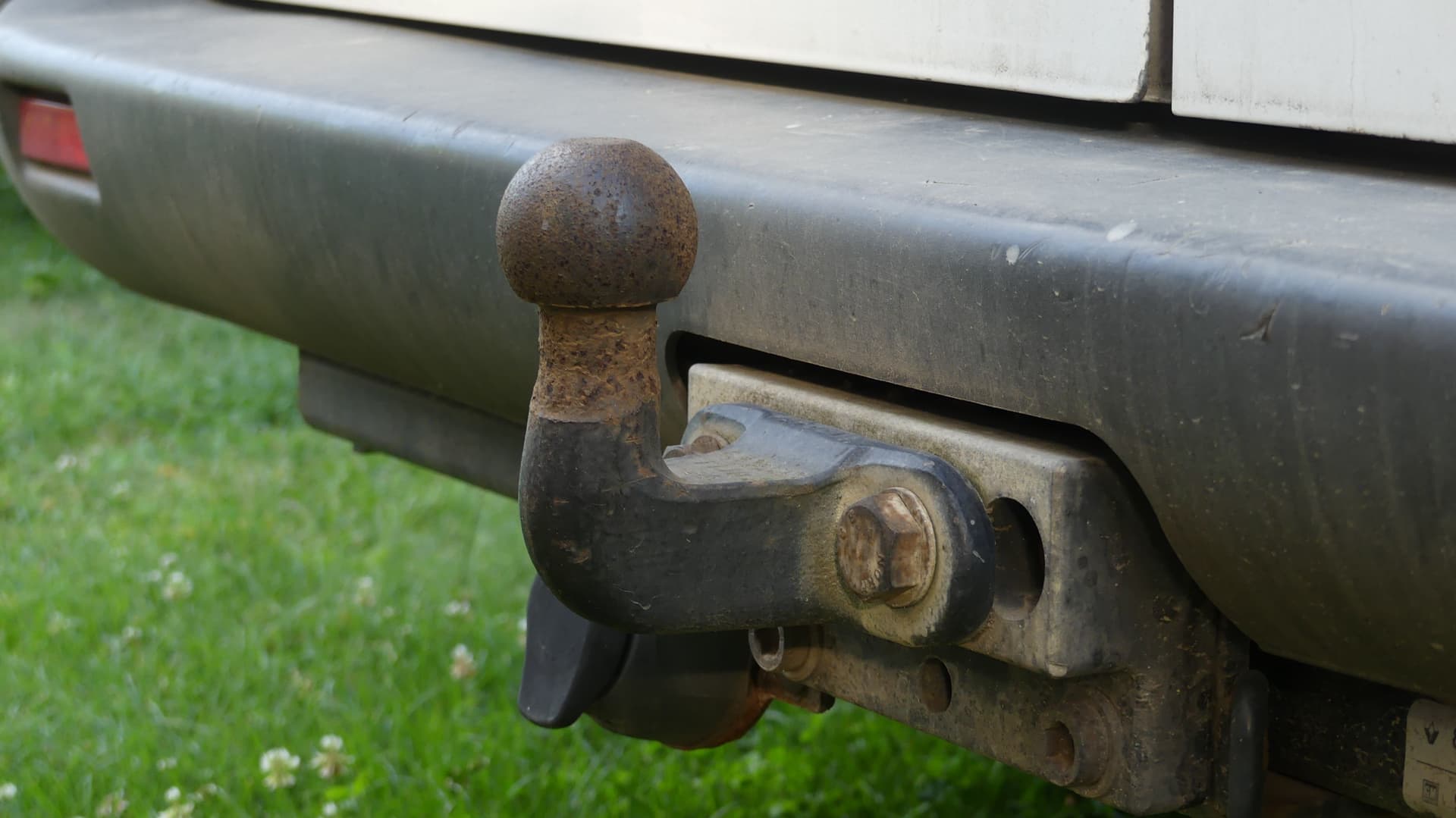
The verdict
Both are correct choices and the difference is smaller than the internet suggests. Buy the Equal-i-zer if you value the fact that every RV shop in the country has set one up before and parts are everywhere — accept that it squeaks, because they all do. Buy the Husky Centerline TS if the squeak would genuinely bother you, because its sway control does not rely on friction pads. Either way, size it to your real tongue weight and have a shop set it up the first time.
Part of our towing and security guide and a head-to-head on the two hitches our weight distribution roundup ranks closest together.
Our picks at a glance
Tap any row to jump to the full write-up.
| # | Product | Best for | Beginner fit | Price |
|---|---|---|---|---|
| 1 | 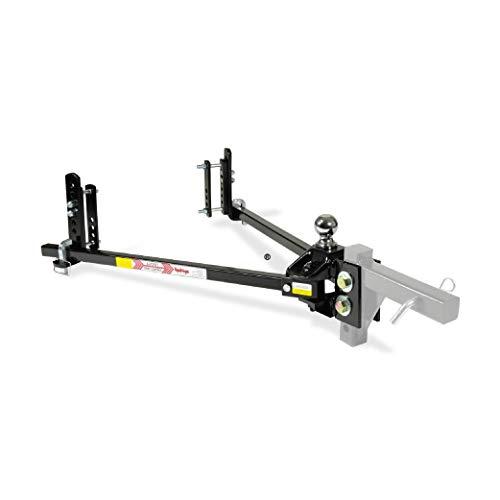 Equal-i-zer 4-Point Sway Control HitchWeight distribution with sway control built in rather than bolted on. Size it to your real tongue weight and let a shop set it up once. | Sway control built in | Adequate | |
| 2 | Husky Centerline TS Weight Distribution HitchThe same category of hitch without the famous squeak. Same sizing homework, same argument for a professional first setup. | Quieter sway control | Adequate | |
| 3 | 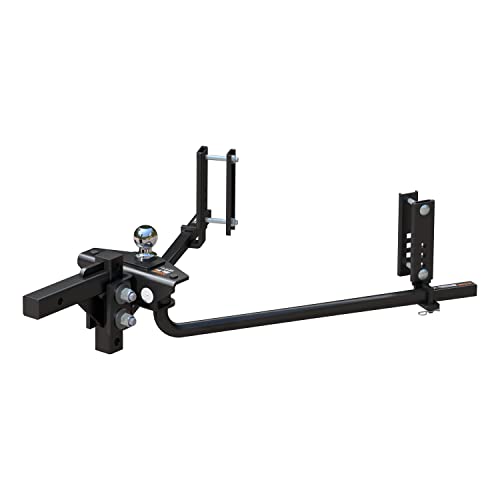 CURT TruTrack Weight Distribution HitchThe widely stocked option: integrated sway control, several weight ratings, and parts you can actually source mid-trip. | Availability and parts support | Adequate |
Prices come from Amazon and were last checked November 12, 2026. They change constantly, so a price older than 48 hours is withdrawn rather than shown stale — those rows read “Check price on Amazon” instead and go straight to the current listing. #ad — these are affiliate links.
How each one controls sway
Weight distribution and sway control are two jobs. Every hitch here does the first the same way: spring bars under tension transfer some of the trailer tongue weight forward onto the tow vehicle's front axle and back onto the trailer axles, so the truck sits level and steers properly. The difference is how each resists the trailer trying to rotate around the ball.
The Equal-i-zer design uses friction. The spring bars bear on brackets with large contact surfaces, and the resistance of steel sliding on steel is what damps a sway before it builds. It is a direct mechanism with nothing to adjust once set — and friction between steel surfaces under load is also exactly what makes noise.
The Centerline TS controls sway through the geometry of how the bars are held rather than through friction pads, which is why owners report it as the quieter system. Same category, same setup homework, comparable result, different noise.
The picks
1. Best for Sway control built in
Equal-i-zer 4-Point Sway Control Hitch
Weight distribution with sway control built in rather than bolted on. Size it to your real tongue weight and let a shop set it up once.
- Specification
- Weight distribution with integrated four-point sway control
- Specification
- Friction-based sway control, no separate bar
- Specification
- Sized by trailer tongue weight
What it does well
- Sway control is built into the design rather than added as a separate friction bar you can forget to fit
- Nothing extra to remove before a tight reversing maneuver, unlike some add-on sway bars
- Well understood, so any RV shop has set one up before
The real tradeoff
- It squeaks. Everyone says so, and it is normal rather than a fault
- Must be sized to your actual tongue weight, and getting that wrong makes towing worse, not better
- Setup is genuinely a job. This is the one purchase on this site worth having a shop do the first time
How it measures up
These are judgments from published specifications and what we see at the lodge, not laboratory results. How we choose.
- Beginner fit
- Adequate — The one item here where a shop setup is money well spent.
- Install effort
- Weak — Initial setup is measurement and adjustment, not just bolting.
- Warning quality
- Strong — Sway is handled by design, not by a bar you might forget.
- Value
- Good — Expensive, and the correct answer for most travel trailers.
Specifications from Equal-i-zer.
2. Best for Quieter sway control
Husky Centerline TS Weight Distribution Hitch
The same category of hitch without the famous squeak. Same sizing homework, same argument for a professional first setup.
- Specification
- Weight distribution with integrated sway control
- Specification
- Rated by tongue weight
- Specification
- No friction pads to squeal
What it does well
- Does not produce the squeak the friction-pad designs are famous for
- Comparable sway performance without a separate bar to remove
The real tradeoff
- Same sizing requirement and same setup complexity
- Less universally familiar to small-town RV shops
How it measures up
These are judgments from published specifications and what we see at the lodge, not laboratory results. How we choose.
- Beginner fit
- Adequate — Setup is still a job.
- Install effort
- Weak — Measurement and adjustment required.
- Warning quality
- Strong — Integrated sway control.
- Value
- Good — Comparable money, quieter life.
Specifications from Husky Towing.
3. Best for Availability and parts support
CURT TruTrack Weight Distribution Hitch
The widely stocked option: integrated sway control, several weight ratings, and parts you can actually source mid-trip.
- Specification
- Weight distribution with integrated sway control
- Specification
- Several tongue-weight ratings
- Specification
- Widely stocked
What it does well
- Easy to find and easy to get parts for
- Integrated sway control rather than an add-on bar
The real tradeoff
- Same sizing and setup requirements as the rest of the category
How it measures up
These are judgments from published specifications and what we see at the lodge, not laboratory results. How we choose.
- Beginner fit
- Adequate — Setup is a job, as always.
- Install effort
- Weak — Measurement and adjustment.
- Warning quality
- Good — Integrated sway control.
- Value
- Good — Fair, with good parts availability.
Specifications from CURT.
The comparison, row by row
Equal-i-zer against the Centerline TS
| Consideration | Equal-i-zer 4-point | Husky Centerline TS |
|---|---|---|
| Sway mechanism | Friction between bars and brackets | Geometry rather than friction pads |
| Noise | Squeaks, audibly, at low speed | Notably quieter - the usual reason to choose it |
| Setup | A real job; measurement and adjustment | The same real job |
| Shop familiarity | Very high - almost any shop has done one | Lower outside RV specialists |
| Reverse and tight turns | No bar to remove first | No bar to remove first |
| Sizing | By tongue weight, not trailer weight | By tongue weight, not trailer weight |
What the third pick is doing here
The CURT TruTrack sits on this page for one reason that has nothing to do with how it tows: parts availability. Integrated sway control, several tongue-weight ratings, and the kind of distribution that means a replacement bracket or a set of washers can be sourced in an unfamiliar town. If neither of the two head-to-head options is in stock when you are ready to buy, it is a genuine third answer rather than a consolation.
What neither of them fixes
A weight distribution hitch does not make a badly loaded trailer safe. If the tongue weight is wrong, the tires are underinflated, or the load is stacked behind the axles, the trailer will still handle badly and the hitch will be blamed. The hitch distributes a correct load. It does not correct a bad one.
Neither hitch is a substitute for knowing your actual numbers, which is the subject of what size weight distribution hitch you need. And if you have not yet decided whether you need one at all, start with do I need a weight distribution hitch.
What setup actually involves, on either one
This is the part that surprises people, and it is identical for both. Fitting a weight distribution hitch is not bolting a part on. It is a measuring exercise with an adjustment at the end of it.
The shop measures the ride height at the front and rear wheel arches of your tow vehicle unhitched, then hitches the trailer with the bars disconnected and measures again, then connects the bars and adjusts until the front arch comes back close to where it started. Getting there involves the head tilt, the number of washers behind it, and how much tension is on the bars. All three interact.
Two things follow from that. First, this is genuinely worth paying for once, and worth standing next to while it happens so you know what was measured and which bolts were involved. Second, the setup is specific to the trailer loaded the way it was loaded on the day. If you later start towing with a full fresh tank or a loaded front compartment, the setup wants revisiting rather than assuming.
Living with either one
Day to day, both add two steps to hitching and two to unhitching: the bars go on after the coupler is latched, and they come off before you lift the tongue. Neither needs anything removed before a tight reversing maneuver, which is a real improvement on the older add-on friction bars that had to be unhooked first and were therefore sometimes left off entirely.
The bars themselves are heavy steel and they live somewhere. Most people keep them in the truck bed, which is fine as long as you remember they are weight ahead of the rear axle and count toward what the system is managing. A chain-tensioned system is the lighter option if handling steel bars is the part you would rather avoid.
Our recommendation for a first travel trailer
Take the Equal-i-zer, have it set up professionally once, and get the shop to show you what they measured and where the adjustment points are. The reason is not that it tows better — it is that when something needs adjusting in an unfamiliar town three states away, the probability that the nearest shop has worked on one is very high.
Take the Centerline TS if you have towed before, you know you are sensitive to noise, and you are comfortable being the person in the parking lot who knows how their own hitch is set up. Both are correct. Neither is a mistake. The hitching procedure itself is in how to hitch a travel trailer.
Questions people actually ask
Does the Equal-i-zer hitch really squeak?
Yes, and it is normal rather than a fault. The sway control works by friction between the spring bars and their brackets, and friction under load makes noise. Lubricating it reduces the squeak and the sway control at the same time.
Is the Husky Centerline TS quieter than the Equal-i-zer?
That is the main reason people choose it. It controls sway through how the bars are held rather than through friction pads, so it does not produce the characteristic creak at low speed.
Which hitch is easier to set up?
Neither, meaningfully. Both require measuring your tow vehicle's ride height loaded and unloaded, sizing the bars to your real tongue weight, and adjusting the head angle. This is the one purchase in this category worth paying a shop to do once.
Do I need to remove anything before backing up?
No. Both have integrated sway control rather than an add-on friction bar, so there is nothing to unhook before a tight reversing maneuver. That is a genuine advantage over older add-on sway bars.
How do I know which bar rating to buy?
By tongue weight, not by trailer weight. Tongue weight is typically a significant fraction of loaded trailer weight, and the correct bar rating brackets your actual measured figure with your gear and water aboard.
Sources
Read next
Towing & Security
Best Weight Distribution Hitch for a Travel Trailer
Weight distribution hitches with integrated sway control, sized by tongue weight, with an honest account of setup complexity.
Towing & Security
What Size Weight Distribution Hitch Do I Need?
How to size spring bars from your real loaded tongue weight, including the gear everyone forgets to count.
Towing & Security
Do I Need a Weight Distribution Hitch?
The tongue-weight test that decides whether you need weight distribution, and why a big truck does not exempt you.
Towing & Security
How to Hitch a Travel Trailer (Step by Step)
The full hitching sequence with the latch and jack checks that prevent a trailer coming off the ball.
Reviewed October 10, 2026. Spot something out of date? Tell us and we will fix it.