RV Water Filter and Pressure Regulator: Which Goes First
Two small brass things, one hose, and a surprising amount of argument about the order. There is a correct answer and a reason for it.
Heads up: this page contains affiliate links. If you buy through one, Camp & Chock may earn a commission at no extra cost to you. It never changes which product we put first — how this site is funded.
The pressure regulator goes first, at the campground spigot, and the filter goes after it. Spigot, then regulator, then a short hose, then the filter, then your drinking water hose, then the rig. The reason is simple: a filter housing is the most pressure-sensitive thing in the chain, and unregulated campground pressure is what cracks one. Protect the filter with the regulator, not the other way around.
This is part of our sewer and water guide, and it settles a question our regulator roundup and filter roundup each mention in passing without resolving.
Why the order matters at all
Campground water pressure is not a known quantity. Some parks deliver something gentle; others are fed off a municipal main at a pressure that would be perfectly normal for a house with copper plumbing and is well above what RV plumbing is built for. You do not know which you have until you measure it, and the fittings and PEX inside a travel trailer are the parts that find out first.
A filter sits in that line as a plastic or composite housing with a seal and a cartridge inside. It is the weakest link by design, because it has to come apart to be serviced. Putting it upstream of the regulator means every pressure spike in the park hits the housing at full strength. Putting it downstream means the housing only ever sees regulated pressure.
The full order, spigot to rig
City water hookup, in order
| Position | Component | Why here |
|---|---|---|
| 1 | Campground spigot | Unknown pressure. Assume it is too high |
| 2 | Pressure regulator | Everything downstream is now protected |
| 3 | Short lead hose (optional) | Takes the weight off the spigot threads |
| 4 | Water filter | Sees regulated pressure only |
| 5 | Drinking water hose | Potable, white, never the garden hose |
| 6 | Rig city water inlet | Through a check valve into the plumbing |
Two practical notes on that chain. A regulator screwed directly onto the spigot with a filter hanging off it puts a lot of leverage on the spigot threads, which is how a park ends up with a broken faucet and you end up having a conversation. A short lead hose between them, or simply resting the filter on the ground, fixes it.
And the hose between filter and rig must be a potable drinking water hose, not a garden hose. That is not a taste preference — it is what the hose is rated to carry. Which one to buy is in best RV fresh water hose.
Do you need both?
You need the regulator. It is not optional, it is the cheapest item in the chain, and it prevents the most expensive failure on the whole site: a fitting letting go inside the trailer while you are out for the day. Our regulator roundup has the pressure numbers.
The filter is genuinely optional, and whether it earns its place depends on what you use the water for. If you fill the fresh tank and drink from it, a filter is worth having, because it removes the grit that clogs faucet screens and the taste that makes people buy bottled water all season. If you drink bottled water anyway and only use the city connection for showers and dishes, a filter is a convenience rather than a necessity.
What to put on the line
A regulator first, in brass. Then a filter sized to how much water you actually run through it over a season.
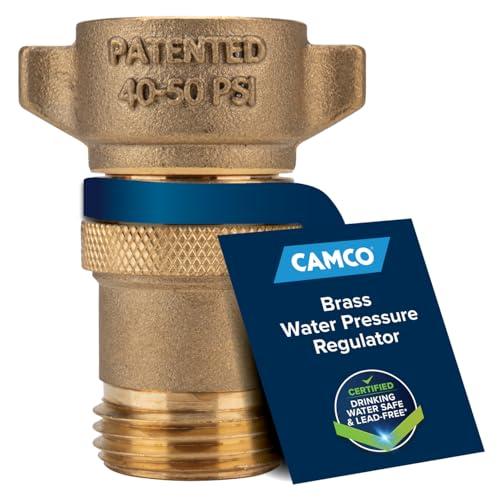
Best for The cheapest thing that prevents the worst damage
Camco Brass Water Pressure Regulator
The cheapest single item that prevents the most expensive damage. Fixed preset, brass body, screws on in four seconds.
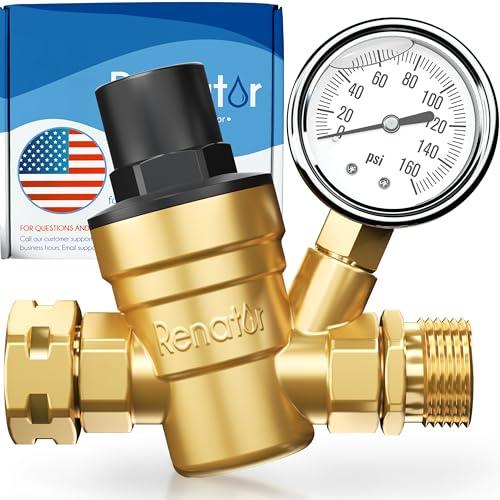
Best for Seeing and setting the pressure
Renator Adjustable Water Pressure Regulator with Gauge
The one with a dial: it shows what the park is delivering and lets you keep usable shower flow instead of a fixed trickle.
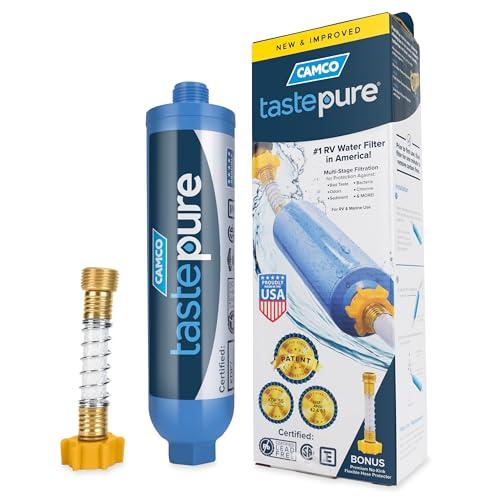
Best for The simple first filter
Camco TastePURE Inline RV Water Filter
The one most people start with: screws on, improves the taste, keeps grit out, and gets thrown away at the end of the season.
Best for Filtering that earns its housing
Camco EVO Premium RV Water Filter
A proper canister with a replaceable cartridge: better on sediment than the throwaway inline filters, and cheaper after season one.
Which regulator, briefly
A fixed brass regulator is the four-second answer: screw it on, there is nothing to set, and it protects the rig. The trade is flow — fixed units restrict more than an adjustable one set sensibly, which you notice in the shower.
An adjustable regulator with a gauge costs more and asks you to choose a pressure, but it also shows you what the park is delivering. That information is worth more than it sounds: it is how you learn that the site you blamed for a weak shower was fine and your filter was clogged.
Which filter, briefly
A disposable inline filter is the starting point: it screws between components, costs little, improves taste, and gets thrown away at the end of the season. A canister filter with a replaceable cartridge costs more up front, handles sediment better, and is cheaper to run after the first year.
The deciding factor is sediment, not taste. If your water runs cloudy or your faucet screens keep clogging, the canister is the right answer and the inline filter will keep clogging instead.
The fittings between them
Everything on this line uses the same standard garden hose thread, which is why the components screw together in any order and why it is possible to get the order wrong. Three small things make the chain behave.
Washers. Each threaded joint needs a rubber washer seated flat. A joint that weeps is almost always a missing, torn or doubled-up washer rather than a cracked fitting, and a pack of spares costs almost nothing and lives in the water compartment.
Brass over plastic at the spigot. The joint at the campground faucet is the one that gets over-tightened by hand, knocked by a passing shoe and left connected all season. Brass tolerates that and plastic cracks, which is why a plastic regulator is the component most often replaced early.
A quick-connect, optionally. If you are connecting and disconnecting frequently, quick-connect fittings on each end save threading components together in the dark. They add one more set of seals to the chain, so they are a convenience rather than an improvement in reliability.
One last point on filters: a filter on the city line does nothing for water already in your fresh tank. If you fill the tank from a spigot, the filter needs to be on the fill line at that moment, not only when you are connected for city water.
Two follow-on questions come up constantly once the order is settled. What number to actually set an adjustable regulator to is in how to use an RV water pressure regulator, and whether any of this helps with hard water — it does not, and here is why — is in best RV water filter for hard water.
The reason you can stack these parts in any order at all is that they all share one thread: 3/4 inch garden hose thread, on the spigot, the regulator, the filter, the hose and your city-water inlet. What size water hose for an RV covers that thread, the 5/8 inch bore the whole system assumes, and why a leak here is almost always the washer rather than the threads.
If you are reading this because you are not sure the filter half is necessary, do I need an RV water filter answers that one directly — and is clear that the regulator is the more urgent of the two purchases.
Questions people actually ask
Does the water filter or the pressure regulator go first?
The regulator goes first, at the spigot, and the filter after it. The filter housing is the most pressure-sensitive component in the chain, so it should only ever see regulated pressure.
Where should I put the water filter on my RV?
Between the pressure regulator and your drinking water hose. Resting it on the ground or on a short lead hose is better than hanging it off the spigot, which puts a lot of leverage on the park's faucet threads.
Do I need a water filter for my RV?
You need the pressure regulator. The filter is optional and worth having if you drink or cook with the water, because it removes grit that clogs faucet screens and the taste that otherwise has you buying bottled water all season.
Do RV water filters reduce water pressure?
Yes, a little, and considerably more once the cartridge loads up with sediment. A clogged filter is the most common cause of weak pressure in a trailer, which you can confirm by taking it out of the chain briefly.
Can I use a garden hose for RV fresh water?
No. A drinking water hose is rated for potable water and a garden hose is not. Use a potable hose between the filter and the rig, and keep it separate from anything used for other jobs.
Does a filter on the city line filter my fresh tank?
No. It only filters water passing through it at that moment. If you want filtered water in the fresh tank, the filter has to be on the line you fill the tank with.
Sources
Read next
Sewer & Water
Best RV Water Pressure Regulator
Fixed and adjustable pressure regulators compared, with the flow tradeoff explained and a pressure to aim for.
Sewer & Water
Best RV Water Filter
Inline and canister water filters compared, with an honest account of what filtration at this level achieves.
Sewer & Water
What Size Water Hose Do I Need for an RV?
The 5/8 inch diameter, the 3/4 inch garden hose thread and the 25 foot length explained, with the sizing mistakes that cost flow or money.
Sewer & Water
How to Sanitize an RV Fresh Water Tank
The full tank sanitizing procedure with dilution guidance from an authority, plus the non-bleach alternatives.
Reviewed October 10, 2026. Spot something out of date? Tell us and we will fix it.