Best RV Roof Coating for a Travel Trailer
A coating refreshes a tired roof. It does not fix a leak - and painting over one is how a small repair becomes a delamination. Here is which product your roof actually needs.
Heads up: this page contains affiliate links. If you buy through one, Camp & Chock may earn a commission at no extra cost to you. It never changes which product we put first — how this site is funded.

The short answer
If your rubber roof is chalky, thin and tired all over but has no actual breach, the product is Dicor’s EPDM acrylic roof coating — with a condition attached: it is part two of a two-part system, and the cleaner and activator is a separate purchase. At a listed 125 sq ft per gallon per coat and two coats, a travel trailer roof is several gallons and most of a weekend. If you have a leak, you do not want coating at all. You want Dicor self-levelling lap sealant for a horizontal seam — the budget pick here and the cheapest genuine fix on the page — or EternaBond RoofSeal tape for a tear or a seam that sealant alone will not hold. Coating over a breach hides it under a fresh white layer, and what happens next costs far more than a tube.
Part of our first-season starter kit guide. If what you are looking for is the sealant rather than the coating, the full ranking is best RV roof sealant.
Our picks at a glance
Tap any row to jump to the full write-up.
| # | Product | Best for | Beginner fit | Price |
|---|---|---|---|---|
| 1 | 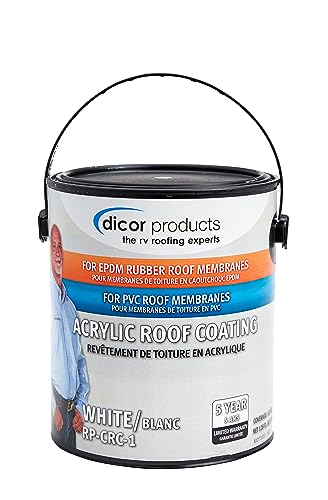 Dicor RP-CRC-1 EPDM Rubber Roof Acrylic Coating, White (1 gal)The whole-roof option, listed here so you can rule it out. A first-season owner with a leak wants a tube or a roll of tape, not two coats of this. | Re-coating a tired but sound roof, not fixing a leak | Adequate | |
| 2 | 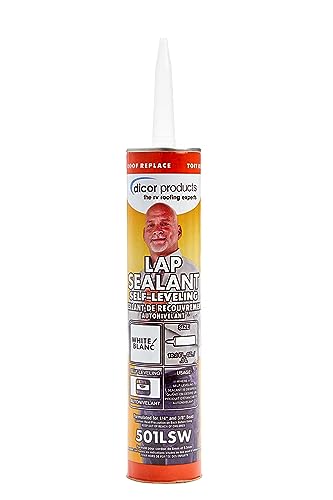 Dicor Self-Leveling Lap Sealant, White (501LSW-1, 10.3 oz)The tube to own before you need it. One of these in a storage bay is the cheapest insurance on the trailer, and it is what the roof was sealed with in the first place. | Every horizontal seam on a rubber roof | Strong | |
| 3 | 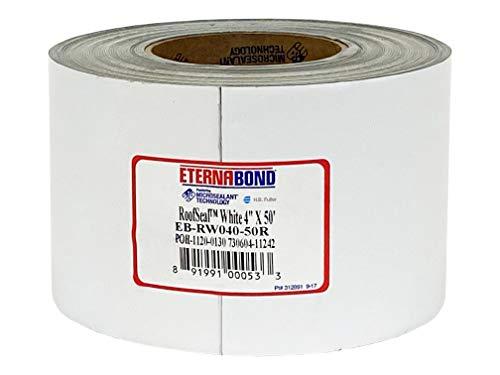 EternaBond RoofSeal White Repair Tape (4 in x 50 ft)The repair for an open seam or a tear, rather than for routine maintenance. Keep the roll flat and warm, and only unroll it when the surface is clean and dry. | A seam or a tear that sealant alone will not hold | Good | |
| 4 | 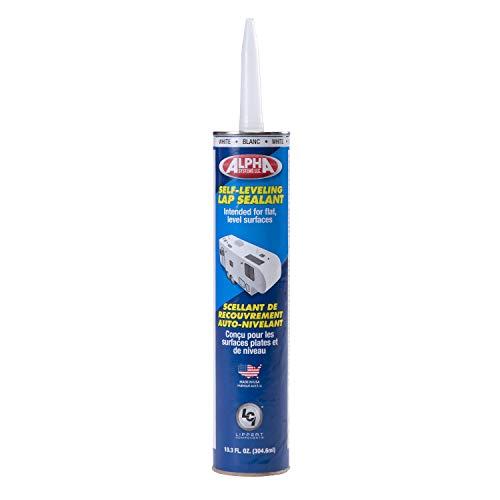 Alpha Systems 1021 Low VOC Self-Leveling Lap Sealant (10.3 oz)The right tube if your roof came from Alpha Systems and you want to match it exactly. Otherwise the Dicor 501 does the same work for less. | Matching a trailer that was not sealed with Dicor | Strong | |
| 5 | 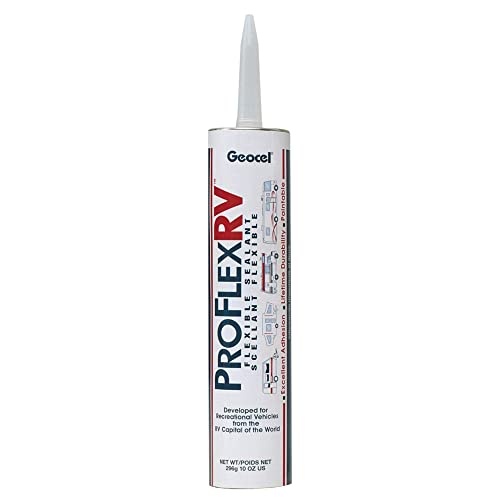 Geocel Pro Flex RV Flexible Sealant, Clear (10 oz)The sidewall and window tube, bought alongside the roof sealant and never used instead of it. Read the EPDM and TPO warning before it goes anywhere near the roof. | Windows, trim and bodywork - not the roof | Good |
Prices come from Amazon and were last checked November 27, 2026. They change constantly, so a price older than 48 hours is withdrawn rather than shown stale — those rows read “Check price on Amazon” instead and go straight to the current listing. #ad — these are affiliate links.
Coating, sealant and tape do three different things
A coating is a surface, not a repair. It goes over the whole membrane and restores a protective, reflective layer. It is the right product for a roof that has gone chalky and lost its surface after a decade in the sun — and a white reflective coat genuinely changes how hot the trailer gets in summer, which is a comfort and an air conditioning cost as much as a maintenance one.
A sealant is a joint. Self-levelling lap sealant is for horizontal seams: the perimeter where the membrane meets the trim, the vent flanges, the skylight, every screw head on the roof. It flows out flat and bonds. Non-sag sealant is the same chemistry for a vertical surface, where a self-levelling product would run down the side of the trailer.
A tape is a bridge. A roll of EternaBond covers a tear, a split seam or a repair where there is a real gap to span, and it does it without a cure time or a dry day. It is the product that will get you off a campground roof and home.
So the diagnosis decides the product. Chalky all over with no water inside: coating. Water inside, traced to a seam: lap sealant. Water inside, traced to a tear or a lifted seam: tape, then sealant over the edge. This is the only decision tree on the page that matters.
What your roof is made of changes the product
EPDM is the common rubber roof on travel trailers and it is what both the Dicor coating and the Dicor lap sealants are sold for. It chalks as it ages — a white residue that runs down the sides after rain is normal and is the membrane’s sacrificial surface doing its job.
TPO is the other common membrane and it is not the same material. The Dicor coating is published for EPDM and PVC; check your own roof and the product’s own compatibility statement before buying anything, because a sealant formulated for the wrong membrane can soften it.
Fibreglass and aluminium roofs are a different job again, and a rubber roof coating is not the product for either. If you are not certain what you have, do not guess from the brochure; look at it.
How we chose
Published compatibility, not implied. We rank products whose makers state which membranes they are for. That is the figure a roof repair turns on.
Published coverage, so you can buy the right quantity. Dicor lists 125 sq ft per gallon per coat. That lets you measure your roof and buy gallons rather than guess and run out halfway along.
Honest about the real scope of the job. The coating is ranked first on this page because the page is about coating, and it carries the clearest warning on the page because most people arriving here should buy a tube instead. We would rather rank it accurately and tell you to rule it out.
Repairability over appearance. A product that can be added to, re-sealed and inspected beats one that has to be stripped.
We do not test products and say so on how we choose. No roof was coated, no adhesion was measured and no coverage figure is ours. Every coverage, compatibility and cure claim here is the maker’s own.
The picks
1. Best for Re-coating a tired but sound roof, not fixing a leak
Dicor RP-CRC-1 EPDM Rubber Roof Acrylic Coating, White (1 gal)
The whole-roof option, listed here so you can rule it out. A first-season owner with a leak wants a tube or a roll of tape, not two coats of this.
- Specification
- Listing states coverage of 125 sq ft per gallon per coat
- Specification
- Part 2 of Dicor's two-part rubber roof coating system
- Specification
- Part 1 is the separate RP-CRP-Q cleaner and activator, sold on its own
- Specification
- Sold for EPDM and PVC roofs; two coats is the normal application
What it does well
- The right product for a roof whose membrane has gone chalky and thin all over but has no actual breach - it restores a protective, reflective layer instead of patching a hole that is not there
- A white reflective coat measurably changes how hot a trailer gets in summer, which is a comfort and an air conditioning cost, not just a maintenance item
- A proper system with published coverage, which lets you buy the right number of gallons rather than guessing
The real tradeoff
- Part 2 only. The cleaner and activator is a separate purchase and the coating is not designed to go on without it, so the real cost and the real time are both higher than the gallon price suggests
- It is not a leak fix, and using it as one hides the problem under a fresh white layer. Find the breach, seal it with lap sealant or tape, and only then consider coating
- At 125 sq ft per gallon per coat and two coats, a typical travel trailer roof is several gallons and most of a weekend. This is a project, not a repair
How it measures up
These are judgments from published specifications and what we see at the lodge, not laboratory results. How we choose.
- Beginner fit
- Adequate — A multi-step, two-product, whole-weekend job.
- Published compatibility
- Good — Sold for EPDM and PVC; coverage stated.
- Where it works
- Adequate — Sound but weathered roofs only.
- Value
- Adequate — Cheap per square foot, expensive per weekend.
Specifications from Dicor.
2. Best for Every horizontal seam on a rubber roof
Dicor Self-Leveling Lap Sealant, White (501LSW-1, 10.3 oz)
The tube to own before you need it. One of these in a storage bay is the cheapest insurance on the trailer, and it is what the roof was sealed with in the first place.
- Specification
- Dicor publishes compatibility with EPDM, TPO and PVC membranes
- Specification
- Dicor also lists adhesion to aluminum, wood, vinyl, galvanized metal, fiberglass, concrete and mortar
- Specification
- Self-leveling, which Dicor specifies for horizontal surfaces
- Specification
- Dicor's cure times at 50-70 F: skins over in 5 minutes, waterproof in 4 hours, 80 percent cured in 48 hours, fully cured in 30 days
- Specification
- HAPS-free formula, 10.3 oz tube
What it does well
- Self-leveling does the hard part for you: squeeze a bead around a vent flange and it flows out flat and seals the edge without tooling, which is the difference between a tidy repair and a smeared one
- It is the sealant most trailers left the factory with, so you are matching the existing chemistry rather than gambling that two products get along
- Waterproof in about four hours on Dicor's figures, so a Saturday morning repair survives a Saturday afternoon storm
The real tradeoff
- Horizontal only. On a vertical surface - a sidewall seam, a window frame, the front cap - it will run and leave you with a drip mark and a thin spot, which is what the non-sag version exists for
- It is not a structural fix. Sealant over a seam that has opened up because a screw has pulled out of soft wood will fail again, and so will sealant over a crack in a skylight
- White stays white but a weathered roof does not, so a fresh bead on an eight-year-old roof looks exactly like a fresh bead on an eight-year-old roof
How it measures up
These are judgments from published specifications and what we see at the lodge, not laboratory results. How we choose.
- Beginner fit
- Strong — Self-leveling means no tooling skill needed.
- Published compatibility
- Strong — EPDM, TPO and PVC, stated by Dicor.
- Where it works
- Adequate — Horizontal surfaces only.
- Value
- Strong — The least money for the most used repair.
Specifications from Dicor.
3. Best for A seam or a tear that sealant alone will not hold
EternaBond RoofSeal White Repair Tape (4 in x 50 ft)
The repair for an open seam or a tear, rather than for routine maintenance. Keep the roll flat and warm, and only unroll it when the surface is clean and dry.
- Specification
- 35 mil total thickness, part number EB-RW040-50R
- Specification
- 4 in wide by 50 ft long
- Specification
- H.B. Fuller's data sheet gives an application temperature of about 4-65 C (roughly 40-150 F) and recommends EternaPrime primer below that
- Specification
- Surfaces must be clean and dry before application
What it does well
- A single-step repair that bridges an actual gap. Where sealant fills a joint, this covers a seam or a tear with a continuous waterproof membrane that is not relying on the crack staying the same size
- Once it is down and rolled, it is down. This is the product people use for the repair they do not want to think about again, and it is the standard answer on a torn roof seam
- One 50 ft roll covers every seam on a typical travel trailer with plenty spare, which is the point: you buy it once and it sits in the bay for the next repair
The real tradeoff
- Unforgiving. It bonds on contact, so a crooked first inch is a crooked repair, and getting it off again takes effort and usually leaves residue
- It needs clean, dry and warm. On the manufacturer's data sheet that means roughly 40 F and up, with a primer below that - so a December roof leak is a tarp-and-wait situation, not a tape situation
- It does not look like a factory roof. This is a visible white stripe across the roof, which nobody sees and which some owners mind anyway. A 25 ft roll of the same tape also exists for less money if one repair is all you need
How it measures up
These are judgments from published specifications and what we see at the lodge, not laboratory results. How we choose.
- Beginner fit
- Good — Simple, but there is no second attempt.
- Published data
- Good — 35 mil, with a stated application range.
- Where it works
- Strong — Bridges gaps that sealant cannot fill.
- Value
- Good — More per repair than a tube, far less than a roof.
Specifications from EternaBond (H.B. Fuller).
4. Best for Matching a trailer that was not sealed with Dicor
Alpha Systems 1021 Low VOC Self-Leveling Lap Sealant (10.3 oz)
The right tube if your roof came from Alpha Systems and you want to match it exactly. Otherwise the Dicor 501 does the same work for less.
- Specification
- Self-leveling, 10.3 oz tube, part number N102101TLCI
- Specification
- Listing states a 1/4 in bead covers 30 ft
- Specification
- Low VOC formula
- Specification
- Sold for RV roofs, vents, antennas and skylights
What it does well
- Alpha Systems supplies roofing membrane to a large share of the RV industry, so on a lot of trailers this is the sealant that matches what is already up there rather than the one that merely gets along with it
- A published coverage figure - a 1/4 in bead for 30 ft - which is rare in this category and genuinely useful when you are working out how many tubes a roof needs
- Low VOC matters when you are working on a roof with your face about two feet from the bead for an hour
The real tradeoff
- Costs about twice the equivalent Dicor tube for a product that does the same job, and on a trailer already sealed with Dicor there is no reason to pay it
- Harder to find in a store, so it is more likely to be a planned order than a Saturday-morning fix
- Self-leveling, so like the Dicor 501 it is for horizontal surfaces only
How it measures up
These are judgments from published specifications and what we see at the lodge, not laboratory results. How we choose.
- Beginner fit
- Strong — Self-leveling, same technique as the 501.
- Published compatibility
- Good — Sold for RV roofs; coverage figure stated.
- Where it works
- Adequate — Horizontal surfaces only.
- Value
- Adequate — A premium over Dicor for a matching brand.
Specifications from Alpha Systems.
5. Best for Windows, trim and bodywork - not the roof
Geocel Pro Flex RV Flexible Sealant, Clear (10 oz)
The sidewall and window tube, bought alongside the roof sealant and never used instead of it. Read the EPDM and TPO warning before it goes anywhere near the roof.
- Specification
- Geocel states excellent adhesion to many surfaces even when damp, slightly oily or frozen
- Specification
- Paintable and UV resistant, per Geocel
- Specification
- Geocel lists aluminum, glass, coated steel (Kynar 500 finishes), steel, wood, fiberglass and vinyl
- Specification
- Geocel's own warning: do not use on extruded polystyrene insulation sheathing, TPO, or EPDM
- Specification
- Clear, 10 oz cartridge, Geocel part number 28128
What it does well
- It sticks to a damp surface, which no other sealant here claims. For the leak you found in the rain, on the day you found it, that is the product
- Clear and paintable, so it is the right choice around a window frame, a marker light or a trim strip where a white bead would be the thing you notice about your trailer
- The cartridge behaves well in a standard caulk gun and tools cleanly, which matters for the detail work it is for
The real tradeoff
- Do NOT put it on a rubber roof. Geocel publishes a direct warning against TPO and EPDM, which is the membrane on most travel trailer roofs, and this is the single most expensive mistake available in this category
- Geocel also warns against acrylic skylight glazing and traffic-bearing surfaces, which rules out two more places people reach for a clear tube
- Clear means you cannot see coverage as easily as with white, so a thin spot is harder to spot before it is a leak
How it measures up
These are judgments from published specifications and what we see at the lodge, not laboratory results. How we choose.
- Beginner fit
- Good — Easy to use; easy to use in the wrong place.
- Published compatibility
- Adequate — Explicitly NOT for TPO or EPDM.
- Where it works
- Good — Windows, trim, metal and fiberglass.
- Value
- Good — Cheap, and it does something nothing else here does.
Specifications from Geocel.
Which product for which problem
| Symptom | Product | Published for | Scope of job |
|---|---|---|---|
| Chalky, thin membrane, no water inside | Dicor EPDM acrylic coating | EPDM and PVC, 125 sq ft/gal/coat | A weekend, plus the separate cleaner/activator |
| Water at a horizontal seam or screw head | Dicor self-levelling lap sealant | Horizontal roof seams on EPDM | An hour, a tube, a dry day |
| A tear or a lifted seam with a real gap | EternaBond RoofSeal tape | Spanning a breach, no cure time | Minutes, and it works in the rain |
| A roof not originally sealed with Dicor | Alpha Systems 1021 self-levelling | Low-VOC self-levelling lap sealant | Same as lap sealant |
| A window, trim or sidewall seam | Geocel Pro Flex | Bodywork and trim - not the roof membrane | An hour |
Buy in this order
Seal the seams first, bridge any tear second, and only coat the membrane third - and only if there is no water getting in. Most first-season owners who search for roof coating need the first two items and not the third.
Best for Every horizontal seam on a rubber roof
Dicor Self-Leveling Lap Sealant, White (501LSW-1, 10.3 oz)
The tube to own before you need it. One of these in a storage bay is the cheapest insurance on the trailer, and it is what the roof was sealed with in the first place.
Best for A seam or a tear that sealant alone will not hold
EternaBond RoofSeal White Repair Tape (4 in x 50 ft)
The repair for an open seam or a tear, rather than for routine maintenance. Keep the roll flat and warm, and only unroll it when the surface is clean and dry.
Best for Re-coating a tired but sound roof, not fixing a leak
Dicor RP-CRC-1 EPDM Rubber Roof Acrylic Coating, White (1 gal)
The whole-roof option, listed here so you can rule it out. A first-season owner with a leak wants a tube or a roll of tape, not two coats of this.
Doing it properly, in the right order
Inspect twice a year and after any branch contact. Every seam, every screw head, every vent flange, the skylight, the antenna base, the perimeter trim. You are looking for cracks in the sealant, not for holes in the membrane.
Clean before anything else. Sealant and coating both bond to the surface, and an EPDM roof’s chalky surface is exactly what they cannot bond to. The coating system has a dedicated cleaner and activator for this reason.
Seal the seams and let them cure. Self-levelling sealant on the horizontals, non-sag on anything vertical, tape over anything with a gap.
Coat only then, and only if needed. Measure the roof, divide by the published coverage, buy that many gallons plus one, and accept that two coats is two days.
Mind what you stand on. Not every travel trailer roof is walkable. Check your own manual before putting your weight anywhere, and work from a ladder at the edges if it is not.
Mistakes that cost a roof
Coating over a leak. Said twice because it is the whole reason this page is written the way it is.
Using a self-levelling product on a vertical surface. It runs. That is what non-sag is for.
Using household silicone anywhere on an RV roof. It will not bond reliably to EPDM, nothing will bond to it afterwards, and removing it is a worse afternoon than the original repair.
Buying one gallon for a 30-foot trailer. At 125 sq ft per gallon per coat, and two coats, the arithmetic is not close.
Starting in October. Sealant and coating both need temperature and a dry window. This is spring and summer work, and it is one of the reasons the autumn storage job should find your roof already sound.
Questions people actually ask
What is the difference between RV roof coating and roof sealant?
A coating goes over the whole membrane to restore a protective, reflective surface on a roof that has weathered and gone chalky. A sealant goes into a joint - a seam, a vent flange, a screw head - to stop water getting through it. They are not alternatives: coating a roof that is leaking at a seam hides the leak rather than fixing it, and the water goes on into the decking and the walls.
Can RV roof coating fix a leak?
No, and using it that way is the most expensive mistake in RV roof care. Find the breach first - almost always a failed seam, a vent flange or a screw head - seal it with self-levelling lap sealant or bridge it with EternaBond tape, let it cure, and only then consider coating the membrane. A fresh white layer over an active leak makes the leak invisible, not absent.
How much roof coating do I need for a travel trailer?
Measure your roof and divide by the published coverage. Dicor lists 125 sq ft per gallon per coat for its EPDM acrylic coating, and two coats is the normal application - so a typical travel trailer roof is several gallons. Remember that the coating is part two of a two-part system: the cleaner and activator is a separate purchase and the coating is not designed to go on without it.
Will RV roof coating work on a TPO roof?
Check the product's own compatibility statement against your own roof. Dicor's EPDM acrylic coating is published for EPDM and PVC membranes. TPO is a different material, and a product formulated for the wrong membrane can soften it rather than protect it. If you are not certain what your roof is made of, look at it and check the manual rather than guessing.
Why is white chalky residue running down the side of my trailer?
On an EPDM rubber roof that is normal and expected - the membrane has a sacrificial surface that chalks as it weathers, and rain carries it down the sides. It is a sign the roof is ageing rather than a sign it is failing. When the membrane has gone thin and chalky all over and the seams are still sound, that is the point at which a coating makes sense.
Can I use silicone sealant on an RV roof?
No. Household silicone does not bond reliably to EPDM, nothing else will bond to it once it is on there, and removing it is harder than the repair you were trying to make. Use a lap sealant formulated for RV roofs - self-levelling on horizontal seams, non-sag on vertical ones - or EternaBond tape where there is a gap to span.
Sources
Read next
First-Season Starter Kit
Best RV Roof Sealant for a Travel Trailer
RV roof and seam sealant explained by what it goes on: self-leveling, non-sag, tape, and the clear tube to keep off a rubber roof.
First-Season Starter Kit
Dicor Lap Sealant Alternatives
What Dicor is known for, and four alternatives that match it on a stated strength or a lower price.
First-Season Starter Kit
How to Winterize a Travel Trailer for Storage
The winter storage routine in order, from draining the water system to the moisture and tire protection that prevents a spring surprise.
First-Season Starter Kit
Best RV Cover for a Travel Trailer
Travel trailer storage covers: breathable tops versus waterproof tarps, how to size the length band, and how to fit one without damaging the trailer.
Reviewed November 22, 2026. Spot something out of date? Tell us and we will fix it.