Best RV Cover for a Travel Trailer
The brand on the bag matters less than two things nobody puts on the front of it: whether the top panel breathes, and whether the cover is the right length. Get those wrong and a cover does more damage than no cover at all.
Heads up: this page contains affiliate links. If you buy through one, Camp & Chock may earn a commission at no extra cost to you. It never changes which product we put first — how this site is funded.

The short answer
Measure your trailer bumper to hitch ball first, because every cover here is sold in stepped length bands and the band is most of the purchase. Then buy a cover with a breathable top panel — the ADCO Designer Series SFS AquaShed is the line most often specified for it. Do not buy on the word “waterproof”: a sealed top traps the moisture already under it against your roof and sidewalls, which is the opposite of what you are trying to achieve. Budget for straps, a ladder, an afternoon, and a roll of patch tape at the same time as the cover, because covers fail at tears rather than wearing out evenly. And before any of it: walk the roof and seal anything cracked. A cover over an unsealed roof just hides the leak until spring.
Part of our first-season starter kit. This is one of four purchases for a trailer going into storage; the winterizing walkthrough is the full sequence, and tire covers are the cheap one you should buy whether or not you cover the whole trailer.
Our picks at a glance
Tap any row to jump to the full write-up.
| # | Product | Best for | Beginner fit | Price |
|---|---|---|---|---|
| 1 | ADCO Designer Series SFS AquaShed Travel Trailer CoverThe default storage cover: a breathable, water-beading top panel in a size band that actually matches your trailer. Measure first, then buy the band. | A trailer stored outdoors through a real winter | Good | |
| 2 | Classic Accessories OverDrive PermaPRO Travel Trailer CoverThe quick-drying choice, with the access zippers and tension panels that decide whether you actually use a cover. Confirm the warranty for your size. | Long storage in a climate that is wet more than it is frozen | Good | |
| 3 | Camco ULTRAGuard Supreme RV Cover (travel trailer)A reasonable brand-name cover with a documentation problem. Buy it for the access panels and the catalog behind it, not for a top-panel claim we could not verify. | Buying a cover from the brand that made the rest of your gear | Good | |
| 4 | RVMasking Travel Trailer RV CoverThe budget pick, and an honest one for a single winter. Read the waterproof claim as a warning rather than a feature, and buy breathable if the trailer is sitting for a year. | One season of cover for the least money | Good | |
| 5 | 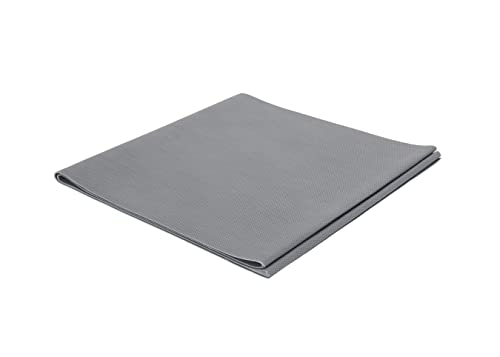 Camco ULTRAGuard Camper & RV Cover Patch Kit (45795)Buy it with the cover, not after the tear. A roll of tape is the cheapest extra winter you can give an expensive cover. | Making a cover last a second and third winter | Strong |
Prices come from Amazon and were last checked November 27, 2026. They change constantly, so a price older than 48 hours is withdrawn rather than shown stale — those rows read “Check price on Amazon” instead and go straight to the current listing. #ad — these are affiliate links.
Should you cover the trailer at all?
Worth asking honestly before you spend what a cover costs, because the answer is not always yes.
What a cover genuinely protects against. Ultraviolet light, which is what chalks gelcoat, cracks sealant beads and turns a black rubber roof gray and brittle. Tree sap and bird droppings, which are acidic and etch a clearcoat if they sit. Pine needles and leaves, which hold water against the roof and dam it up at the edges. Dirt working its way into every seal. None of that is dramatic in a single month, and all of it is why a ten-year-old uncovered trailer looks a decade older than a covered one.
What a cover does not protect against. Water getting in through a failed seal, because the cover is not a roof. Mice, which regard a covered trailer as a more private place to live. Interior humidity, which is what a dehumidifier or moisture absorber is for. And weight — a cover does not carry snow load, it simply sits on whatever the roof is already carrying.
When a cover is a bad idea. If the trailer lives under a carport or in a barn, you have already won and a cover adds abrasion for no benefit. If it sits somewhere properly windy with nothing to break the wind, a cover that cannot be kept taut will flog itself and your sidewalls for four months; in that situation an undersized, well-strapped cover beats a loose large one, and no cover beats a loose one. And if the trailer is in and out all winter — some people do camp in February — you will stop refitting it by December.
Breathable top, water-resistant top, or tarp
This is the real difference between a cover that helps and a cover that causes a problem, and it is rarely explained on the packaging.
Why breathable wins. A trailer is not dry inside and the air around it is not dry either. Seal a non-breathing membrane over the whole thing and the moisture that was already there has nowhere to go: it condenses on the underside of the cover, runs down, and sits against the roof and the upper sidewalls for months. That is how people end up with mildew streaks and soft spots under a cover they bought to prevent exactly that. Covercraft, which distributes the ADCO line, describes the AquaShed fabric as beading water while remaining ventilated to prevent mildew and rust — the two halves of that sentence are the whole design brief.
Why beading matters as much as breathing. Water that beads and runs off does not pool. Water that pools on a flat roof panel freezes, and a frozen puddle is heavy and sharp-edged. Top panels tear at pooled water more often than they tear at anything else except ladders.
What a blue tarp actually does. It is cheap, it is waterproof, and it is the worst option available. It does not breathe at all, it has no shape so it is never taut, its grommets concentrate wind load into six points, and polyethylene sheeting is abrasive against gelcoat. We have seen more paint damage from tarps than from the weather they were keeping off. The RVMasking cover below is cheap for this category and it is still an enormously better object than a tarp.
Be suspicious of “waterproof” in a listing. On a rain jacket it is a feature; on a storage cover it is a warning that nobody designing the product thought about condensation. The branded lines advertise water resistance and ventilation together, and that pairing is the thing to look for.
How we choose
Top panel first, everything else second. The top is what sees the sun, holds the snow and does the breathing. Sides are mostly polypropylene across the whole category and barely differentiate these products. Where we could not verify a top panel claim — and on one pick here we could not — we say so in the write-up rather than quietly ranking on it.
Size bands that actually cover small trailers. A line that starts at 20 ft is no use to someone with a 17 ft single-axle, and plenty of first trailers are exactly that. Bands running from under 18 ft upward are a genuine advantage and we weight them.
Features that decide whether you use it. Zippered or covered access panels, so you can reach a door or a propane compartment without unfitting the whole thing. Tension panels and enough straps to keep it taut. These are the difference between a cover that gets refitted after a December visit and a cover that spends the winter folded in the garage.
Published data, at all. This is a poorly documented category. One line publishes dimensions per part number. One publishes a warranty on at least some sizes. One has retailer descriptions that contradict each other. One publishes nothing but listing bullets. That ordering is most of our ranking, because on a product whose entire value is the fabric, a company willing to describe the fabric in writing is worth paying for.
We do not test products and say so on how we choose. No cover on this page was fitted to a trailer by us, left out for a winter, or wind-tested, and we have measured nobody’s abrasion. Every fabric, layer count and warranty figure below is the maker’s or the retailer’s own, attributed as a claim, and where two retailers disagree about the same product we publish the disagreement. Sources are linked at the end.
The picks
1. Best for A trailer stored outdoors through a real winter
ADCO Designer Series SFS AquaShed Travel Trailer Cover
The default storage cover: a breathable, water-beading top panel in a size band that actually matches your trailer. Measure first, then buy the band.
- Specification
- 3-ply SFS AquaShed top panel that beads water rather than letting it pool (retailer listings)
- Specification
- Described as remaining ventilated to prevent mildew and rust (Covercraft, the brand's own distributor)
- Specification
- Polypropylene sides with ventilation
- Specification
- Sold in stepped length bands as separate part numbers, 52238 through 52247, covering up to 15 ft through 34 to 37 ft
What it does well
- A breathable top panel is the whole point of a storage cover, and this is the line most often specified for it - a sealed tarp traps the moisture it keeps out
- Beading rather than pooling matters more than it sounds: standing water on a flat roof freezes, and the weight of frozen water is what tears a cover panel
- Separate band for nearly every trailer length, so there is a size that genuinely fits rather than a size you tie down tighter
- The brand publishes dimensions per part number, so you can check your trailer against the cover before ordering
The real tradeoff
- Among the most expensive covers in the category, and a cover is a consumable - plan on replacing it rather than inheriting it
- Sized by trailer length in bands, so you must measure bumper to hitch ball first; too large is as damaging as too small because the slack flaps
- We could not find an official ADCO document confirming the 3-ply construction across the whole line, only retailer descriptions, so treat it as a retailer claim
- No cover protects a roof you have not inspected. Sealing comes first, covering second
How it measures up
These are judgments from published specifications and what we see at the lodge, not laboratory results. How we choose.
- Beginner fit
- Good — Fitting is a ladder job; the choice is simple.
- Breathability
- Strong — The claim this line is built on.
- Published data
- Good — Dimensions per band; fabric is a retailer claim.
- Value
- Adequate — The most money, for the best-documented fabric.
Specifications from Covercraft (ADCO Designer Series).
2. Best for Long storage in a climate that is wet more than it is frozen
Classic Accessories OverDrive PermaPRO Travel Trailer Cover
The quick-drying choice, with the access zippers and tension panels that decide whether you actually use a cover. Confirm the warranty for your size.
- Specification
- Ripstop fabric described as repelling water and drying quickly (maker)
- Specification
- Air vents, adjustable tension panels and zippered access (listings)
- Specification
- One retailer publishes a 3-year limited warranty on the 30 to 33 ft size
- Specification
- Sold in fit ranges by trailer length as separate SKUs
What it does well
- Dries quickly, which is the quality that matters in a climate where the cover is wet half the year and the alternative is a damp blanket sitting on your sidewalls
- Tension panels are a real feature rather than marketing: a cover that stays taut is a cover that is not sanding your clearcoat every windy night
- Zippered access means you can get to a door or a compartment without taking the whole cover off, which is the difference between a cover you use and a cover you remove in October and refit in April
- A published warranty, which almost nothing else in this category offers
The real tradeoff
- The warranty figure we found is published for one size by one retailer, not across the line, so check it for the band you are buying
- PermaPRO and PolyPRO 3 are different products from the same brand and are easy to confuse - the 3-ply roof claim belongs to PolyPRO 3, not to this one
- Like every cover here it is sized in length bands, so measure before ordering
- Ripstop fabric resists tearing; it does not resist being dragged over a sharp ladder bracket, which is still how most covers die
How it measures up
These are judgments from published specifications and what we see at the lodge, not laboratory results. How we choose.
- Beginner fit
- Good — Zippers and tension panels help a lot.
- Breathability
- Good — Vents plus a quick-drying fabric.
- Published data
- Adequate — Fabric described; warranty varies by listing.
- Value
- Good — Mid-to-upper price with the most usable features.
Specifications from Classic Accessories.
3. Best for Buying a cover from the brand that made the rest of your gear
Camco ULTRAGuard Supreme RV Cover (travel trailer)
A reasonable brand-name cover with a documentation problem. Buy it for the access panels and the catalog behind it, not for a top-panel claim we could not verify.
- Specification
- UV-resistant, water-resistant polypropylene construction (retailer listings)
- Specification
- Heavy-duty polypropylene side panels
- Specification
- Sold by travel trailer length class as separate SKUs, from 15-18 ft upward
- Specification
- Retailer descriptions of the top panel disagree: some publish a triple-layer top, at least one buying guide describes a breathable Tyvek top
What it does well
- Camco is the brand most first-season owners already own four other things from, and the parts and patch kits are in the same catalog
- Covered access panels on the Supreme listings, which is the feature that lets you reach a door without unfitting the cover
- Length classes run small as well as large, so a 16 ft trailer has a real size rather than a bunched-up 22 ft cover
- Priced below the ADCO line in several bands while still being a named brand with support behind it
The real tradeoff
- We could not get Camco's own specification page to load, and the retailer descriptions we did find contradict each other about the top panel material - that is a real documentation gap and we would rather report it than resolve it for you
- Polypropylene is the standard material here and nothing about it is remarkable; the differences between these covers live in the top panel, which is the part we could not confirm
- Length-class sizing again. Measure bumper to hitch ball
- Prices within the Supreme range jump sharply between bands, so check the band you actually need rather than the headline price
How it measures up
These are judgments from published specifications and what we see at the lodge, not laboratory results. How we choose.
- Beginner fit
- Good — Access panels, familiar brand.
- Breathability
- Adequate — Claimed; the top panel spec is unclear.
- Published data
- Weak — Retailer descriptions conflict.
- Value
- Good — Often undercuts the premium line.
Specifications from Camco.
4. Best for One season of cover for the least money
RVMasking Travel Trailer RV Cover
The budget pick, and an honest one for a single winter. Read the waterproof claim as a warning rather than a feature, and buy breathable if the trailer is sitting for a year.
- Specification
- Sold in both a 600D Oxford version and a 9-layer version at different prices (listings)
- Specification
- Listings claim waterproof, rip-stop and UV-resistant construction, with three reinforced windproof straps
- Specification
- Sold in the same stepped length bands as the branded covers
What it does well
- Routinely half the price of the premium lines in the same length band, which is a genuine difference on a product that has a finite life outdoors regardless of what you pay
- Straps included rather than sold separately, and the listings specify how many
- Two fabric options at two prices, so you can match the spend to how long the trailer will actually sit
The real tradeoff
- A marketplace brand: the waterproof and UV claims are the listing's own, with no manufacturer specification page and no warranty you can look up
- "Waterproof" is the wrong goal for a storage cover and worth being wary of in a listing - a fully sealed top traps condensation against the roof, which is what the breathable tops on the branded covers exist to avoid
- No published fabric weight for the 9-layer version, so the only way to compare it to a 3-ply branded top is by price
- Expect to replace it sooner. On a cover, cheaper usually means fewer seasons rather than fewer features
How it measures up
These are judgments from published specifications and what we see at the lodge, not laboratory results. How we choose.
- Beginner fit
- Good — Straps included, same fitting job.
- Breathability
- Weak — Listings sell waterproofing, not venting.
- Published data
- Weak — Listing claims only.
- Value
- Strong — The least money per season covered.
5. Best for Making a cover last a second and third winter
Camco ULTRAGuard Camper & RV Cover Patch Kit (45795)
Buy it with the cover, not after the tear. A roll of tape is the cheapest extra winter you can give an expensive cover.
- Specification
- 9 in x 6 ft of peel-and-stick patch material (Camco)
- Specification
- One size, no length band to choose
- Specification
- Camco part number 45795; a separate top-panel kit (45791) is sold for roof repairs
What it does well
- Covers fail at tears, not at fabric wearing out evenly, so a roll of patch material is the difference between one season and three
- Costs a tiny fraction of a replacement cover, and the first tear usually appears at a corner or a ladder bracket within weeks of fitting
- Peel and stick, so it is a five-minute repair on a dry day rather than a project
- The only item on this page that is not sized by trailer length, so there is nothing to get wrong
The real tradeoff
- Adhesive patches want a clean, dry, warm surface. Applied to a wet or freezing cover in January, it will lift
- A patch is a repair, not a reinforcement. If the cover is tearing in the same place repeatedly, the cover is too large or too loose and the patch is treating a symptom
- Six feet goes quickly on a long tear, and a cover that needs more than this roll is a cover to replace
How it measures up
These are judgments from published specifications and what we see at the lodge, not laboratory results. How we choose.
- Beginner fit
- Strong — Peel, stick, done.
- Breathability
- Adequate — Not applicable - it is a patch.
- Published data
- Good — Size and part numbers published.
- Value
- Strong — Extends the most expensive item here.
Specifications from Camco.
What each cover publishes, and what it does not
| Pick | Top panel claim | Who says so | The catch |
|---|---|---|---|
| ADCO Designer SFS AquaShed | 3-ply AquaShed, beads water, ventilated | Retailer listings; Covercraft for the ventilation | No ADCO document we could find confirms 3-ply across the line |
| Classic Accessories PermaPRO | Ripstop, repels water, dries quickly | Maker, plus listings for vents and zippers | Easy to confuse with the brand's 3-ply PolyPRO 3 line |
| Camco ULTRAGuard Supreme | Triple-layer top, or a Tyvek top | Retailers, and they contradict each other | Camco's own specification page would not load for us |
| RVMasking travel trailer cover | 600D Oxford or 9-layer, waterproof | Listing only | Sells waterproofing rather than ventilation; no fabric weight |
| Camco cover patch kit (45795) | 9 in x 6 ft peel-and-stick patch | Camco | Needs a clean, dry, warm surface to bond |
Notice what the table cannot show: any measured difference in how long these covers last. Nobody publishes an abrasion figure, a UV rating or a seasons-to-failure number, and we have not run one. What is knowable is which fabric claims are documented and which are not, and that is what the ordering above reflects.
If the trailer is going away this month
A breathable cover in the right length band, a roll of patch tape bought at the same time rather than after the first tear, and tire covers, because sidewalls crack from UV whether or not the rest of the trailer is covered. Seal the roof before any of it goes on.
Best for A trailer stored outdoors through a real winter
ADCO Designer Series SFS AquaShed Travel Trailer Cover
The default storage cover: a breathable, water-beading top panel in a size band that actually matches your trailer. Measure first, then buy the band.
Best for Making a cover last a second and third winter
Camco ULTRAGuard Camper & RV Cover Patch Kit (45795)
Buy it with the cover, not after the tear. A roll of tape is the cheapest extra winter you can give an expensive cover.
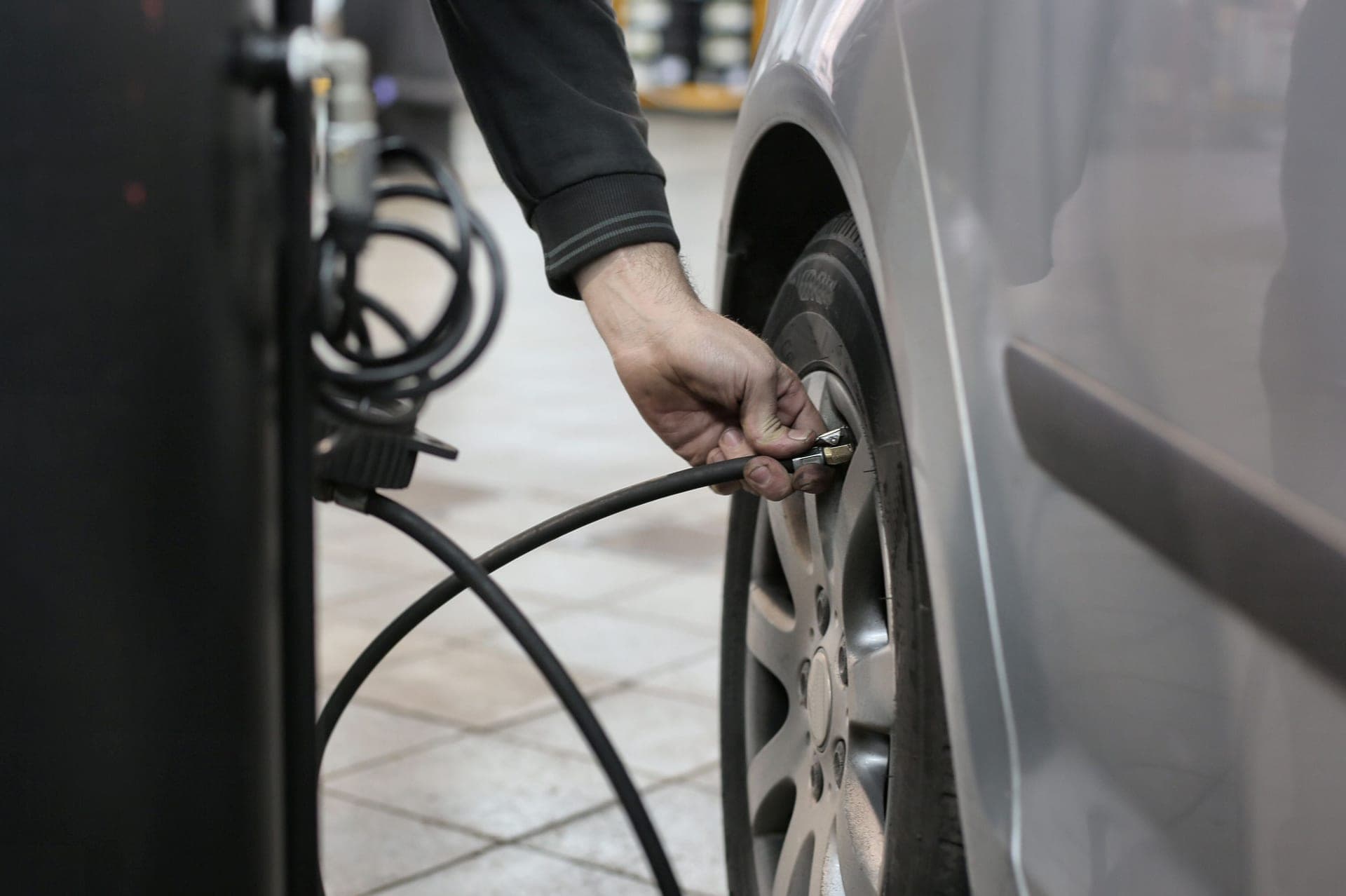
Best for The cheapest way to stop UV damage
Camco Wheel and Tire Protector Covers (pair)
Basic vinyl covers that do the one job that matters: keeping sun off the sidewalls. Buy two pairs for a tandem axle.
Fitting it without damaging the trailer
Most cover damage, and nearly all trailer damage caused by covers, happens during fitting or in the first windy week.
Wash the trailer first. Grit trapped between a cover and the sidewall for four months is a polishing compound with a seasonal schedule. Ten minutes with a hose saves the clearcoat.
Deal with every sharp thing. The rear ladder, the gutter spouts, the awning arms, the antenna, the spare tire bracket and any roof vent corner. Pad them — old towels, pipe insulation, tennis balls on the ladder rails, whatever you have. This single step is the difference between a cover that lasts four winters and one that tears in week two, and it is also why the patch kit is on this page.
Seal the roof before covering it. A cover hides a cracked sealant bead from you for the entire winter while doing nothing to stop water going through it. The roof sealant roundup is the two tubes for that, and this is the right weekend to do it.
Fit it front to back, on a calm day. Start at the front and walk it back, or vice versa, with the cover rolled rather than bundled. On anything over about 24 ft this is a two-person job and arguing about it in a breeze is how a cover ends up in a tree.
Then tension it, and come back and tension it again. Every strap, snug, with the buckles pulled to the underside where they cannot flap against the sidewall. A week later, check it. Fabric relaxes, straps settle, and the cover you left taut on Saturday may be loose by the following weekend.
Leave the jacks down and the tires off the dirt. Not a cover issue exactly, but the same afternoon’s work — stabilizer jacks on pads keep the trailer from settling unevenly over months, and that keeps the cover sitting the way you fitted it.
Mistakes that cost a cover or a sidewall
Buying by the brochure length. The commonest error in the category. Measure bumper to ball.
Buying one size up “to be safe”. Slack is the enemy. A loose cover flaps, a flapping cover abrades, and abrasion on gelcoat is not something you polish out.
Fitting it wet. Trapping a wet roof under a cover for the winter creates exactly the conditions you are trying to prevent. Cover a dry trailer on a dry day.
Forgetting the vents. If your cover has vent flaps, they are not decoration and they should not be strapped shut. If it has none, that tells you something about the cover.
Using a tarp for one season “just this year”. One windy season of polyethylene against a sidewall does more cosmetic damage than four winters of sun.
Assuming the cover replaces winterizing. It does not touch the plumbing, the battery or the interior humidity. It is one of four jobs, and the antifreeze is the one that saves the most expensive repair.
Where this sits in a first season
A cover is the last purchase of your first year and the first one that is genuinely optional. If your trailer is parked in the open through a northern winter, it is worth the money and it visibly pays for itself by year three in the condition of the roof and the sealant. If it lives under cover already, or if you are still camping most months, skip it and spend the money on the things that prevent damage rather than cosmetic aging.
The storage shopping list, in the order the money matters: RV antifreeze and the pump converter first, because split plumbing inside a wall is the worst repair on the list; roof sealant second, because a cracked bead leaks all winter whether or not there is a cover over it; a dehumidifier or moisture absorber third, for the damp that builds up inside a closed trailer; and tire covers and a full cover last, for the UV that works slowly on everything it can reach. If you are new to all of this, the first-time owner tips put the whole first year in order.
A cover protects a roof; it does not restore one. If the membrane underneath has already weathered to a chalky, thin surface, read best RV roof coating before you cover it for another winter.
Questions people actually ask
What size RV cover do I need?
Measure overall length from the furthest point at the back - bumper, ladder or spare tire carrier - to the hitch ball coupler at the front, and buy the band that contains that number. Do not use the length in the brochure, which often excludes the tongue and sometimes the rear bumper. If your measurement falls exactly on a boundary between two bands, take the smaller one: a slightly tight cover is what you want, and a loose cover flaps and abrades the sidewall.
Is a waterproof RV cover better than a breathable one?
No, and this is the most common mistake in the category. A fully sealed cover traps the moisture already present under it, which condenses on the underside and sits against the roof and upper sidewalls for months. That is how people get mildew under a cover they bought to prevent it. The branded lines advertise water resistance and ventilation together, and that pairing is what to look for.
Can I use a tarp instead of an RV cover?
You can, and we would advise against it. A polyethylene tarp does not breathe at all, has no shape so it is never taut, concentrates all the wind load into a handful of grommets, and is abrasive against gelcoat. The cosmetic damage from a loose tarp in a windy season generally exceeds the damage the weather would have done. Even the cheapest purpose-made cover is a much better object.
Will an RV cover damage my paint or gelcoat?
It can, and the cause is almost always slack or grit rather than the fabric itself. Wash the trailer before fitting so there is nothing abrasive trapped underneath, pad every sharp protrusion - ladder, gutter spouts, awning arms, antenna, spare tire bracket - tension every strap with the buckles pulled to the underside, and re-tension it a week later after the fabric has relaxed. A taut cover on a clean trailer does not sand anything.
Do I still need tire covers if I have a full RV cover?
A full cover that reaches down over the wheels does cover the tires, but many do not reach that far, and tire covers are cheap enough that buying both is the easy call. Sidewall cracking from UV is one of the few forms of storage damage that is a safety issue rather than a cosmetic one, so it is worth being sure rather than assuming the cover reaches.
How long does an RV cover last?
Nobody publishes a figure, and we have not tested one, so we will not invent a number. What we can say is how they fail: at tears, usually starting at a sharp protrusion or where slack fabric has flogged in the wind, rather than by the fabric wearing out evenly. That is why padding protrusions and keeping the cover taut matters more than the price on the bag, and why a roll of peel-and-stick patch material bought alongside the cover is such a good investment.
Should I cover my travel trailer in the summer too?
In a very sunny climate there is a real case for it, because UV is what chalks gelcoat and dries out sealant beads, and summer sun is stronger than winter sun. The practical problem is that a trailer you are using every few weekends will not stay covered, and refitting a cover in July heat is nobody's idea of a good afternoon. If the trailer sits unused for long summer stretches, cover it; if it is in and out, cover the tires and keep the roof sealed instead.
Does an RV cover protect against snow?
It keeps snow off the roof surface and off the seals, which is useful, but it does not carry weight. Snow load sits on your roof whether or not a cover is between the two, so a heavy accumulation still needs clearing carefully from a ladder rather than being left because there is a cover on. A cover that beads water rather than pooling it matters here: pooled water on a flat panel freezes, and frozen puddles are what tear top panels.
Sources
Read next
First-Season Starter Kit
How to Winterize a Travel Trailer for Storage
The winter storage routine in order, from draining the water system to the moisture and tire protection that prevents a spring surprise.
First-Season Starter Kit
Best RV Tire Covers for a Travel Trailer
Vinyl, cloth and single-panel tandem covers compared, plus how to measure your tire diameter before you order.
First-Season Starter Kit
Best RV Roof Sealant for a Travel Trailer
RV roof and seam sealant explained by what it goes on: self-leveling, non-sag, tape, and the clear tube to keep off a rubber roof.
First-Season Starter Kit
Best RV Dehumidifier for Winter Storage
Why electric dehumidifiers fail at the storage job, and the no-power options that control winter damp instead.
Reviewed November 16, 2026. Spot something out of date? Tell us and we will fix it.