DampRid vs a Dehumidifier for RV Storage
They are not competing products so much as answers to two different situations. The deciding factor is whether there is an outlet where the trailer sleeps.
Heads up: this page contains affiliate links. If you buy through one, Camp & Chock may earn a commission at no extra cost to you. It never changes which product we put first — how this site is funded.

The short answer
No power at the storage spot: use absorbers — hang two or three disposable moisture absorbers through the trailer, and add a renewable desiccant in each closed wardrobe. They work for months untouched and need nothing. Power at the storage spot: use an electric dehumidifier instead, because it removes measurably more water than any absorber can. The common case — a trailer in a storage lot or a driveway with no outlet — is the absorber case, which is why this page leads with them.
Part of our first-season starter kit guide. Which specific unit to buy once you have made this choice is in the RV dehumidifier roundup and best RV dehumidifier for winter storage.
Our picks at a glance
Tap any row to jump to the full write-up.
| # | Product | Best for | Beginner fit | Price |
|---|---|---|---|---|
| 1 | DampRid Hanging Moisture AbsorberThe cheapest storage insurance there is: hang two or three through the trailer in October and forget about them. | Cheap winter storage insurance | Strong | |
| 2 | 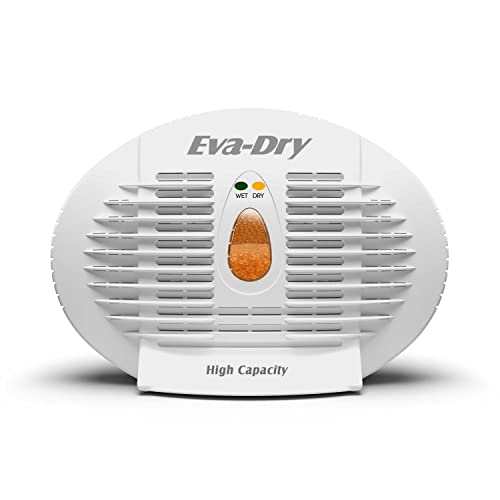 Eva-Dry E-500 Renewable Mini DehumidifierA desiccant brick that needs no power while it works. Right for a wardrobe or a stored trailer, not for a whole damp rig. | Closets and unpowered storage | Strong | |
| 3 | 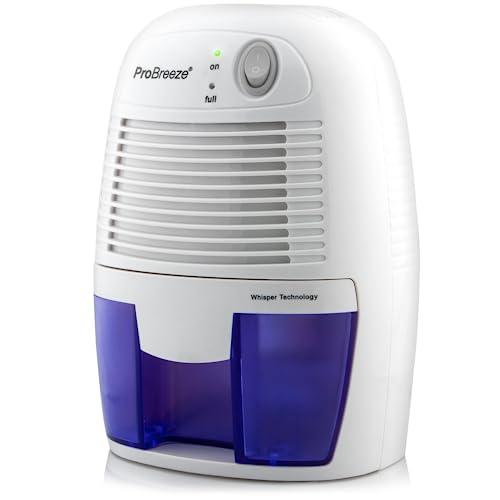 Pro Breeze Electric Mini DehumidifierThe powered option: it removes real water and it needs shore power, which rules it out for the storage months. | A powered site with a damp trailer | Strong |
Prices come from Amazon and were last checked November 12, 2026. They change constantly, so a price older than 48 hours is withdrawn rather than shown stale — those rows read “Check price on Amazon” instead and go straight to the current listing. #ad — these are affiliate links.
Why this matters more in a stored trailer than a lived-in one
A trailer in use has people in it opening doors and running a fan. A trailer in storage is a sealed box with soft furnishings in it, sitting through months of temperature swings. Warm air holds moisture; the air cools overnight against single-pane windows and thin walls; the moisture comes out of the air and onto the coldest surface it can find.
The result is not usually a puddle. It is a musty smell in April, a cushion that has gone slightly dark on the underside, and mildew in the corner of a wardrobe. All of which is cheap to prevent and tedious to fix.
The three things being compared
“DampRid vs a dehumidifier” is actually a three-way choice, and conflating the first two is why people end up disappointed.
A disposable moisture absorber is a calcium-chloride product that pulls water out of the air and collects it as liquid. It needs no power, works for months, and is thrown away when spent. It is the cheapest insurance available.
A renewable desiccant absorbs moisture into a crystal bed and is reset by plugging it in to dry out, then used again. No power while it works, reusable for years, and sized for an enclosed space like a wardrobe rather than a whole trailer.
An electric dehumidifier actively condenses water out of the air into a tank. It removes far more water than either absorber, and it needs continuous shore power and somewhere for the water to go.
How the three compare, as published
| Disposable absorber | Renewable desiccant | Electric dehumidifier | |
|---|---|---|---|
| Needs power while working | No | No | Yes, continuously |
| Needs power at all | Never | To dry out and reset | Always |
| Reusable | No, disposable | Yes, for years | Yes |
| Realistic coverage | Hang several through the trailer | A closet or wardrobe | A small trailer, while plugged in |
| Water removed | Modest | Modest | Measurable - this is the reason to use one |
| Attention needed | None for months | Remember to recharge it | Empty the tank, often daily in a damp rig |
| Risk | Collected liquid damages surfaces if knocked over | Forgetting to recharge it | Useless the moment power is lost |
| Relative cost | Pennies, repeated | Cheap, then free | Highest up front plus running cost |
The row that decides it is the first one. Everything else is detail around the fact that a stored trailer usually has no outlet, and a dehumidifier with no outlet is a paperweight.
The picks
1. Best for Cheap winter storage insurance
DampRid Hanging Moisture Absorber
The cheapest storage insurance there is: hang two or three through the trailer in October and forget about them.
- Specification
- Disposable hanging absorber
- Specification
- No power required
- Specification
- Hangs in a wardrobe or over a rail
What it does well
- Costs very little and works for months untouched, which suits winter storage exactly
- Hang two or three through the trailer rather than relying on one device
The real tradeoff
- Disposable, so it is a repeat purchase
- The collected liquid will damage surfaces if the bag is knocked over
How it measures up
These are judgments from published specifications and what we see at the lodge, not laboratory results. How we choose.
- Beginner fit
- Strong — Hang it up.
- Capacity
- Adequate — Buy several rather than one.
- Running cost
- Good — Disposable, but cheap.
- Value
- Strong — Pennies against a mold problem.
2. Best for Closets and unpowered storage
Eva-Dry E-500 Renewable Mini Dehumidifier
A desiccant brick that needs no power while it works. Right for a wardrobe or a stored trailer, not for a whole damp rig.
- Specification
- Renewable desiccant, no power while working
- Specification
- Plugs in to dry out and reset
- Specification
- Sized for a small enclosed space
What it does well
- Needs no power while it is working, which is the entire point in a stored trailer
- Renewable rather than disposable. Plug it in, dry it out, use it again
- Small enough to live in a wardrobe permanently
The real tradeoff
- Handles a closet, not a whole trailer
- You have to remember to recharge it, and in storage nobody does
How it measures up
These are judgments from published specifications and what we see at the lodge, not laboratory results. How we choose.
- Beginner fit
- Strong — Put it in the cupboard.
- Capacity
- Adequate — A closet, not a trailer.
- Running cost
- Strong — None while in use.
- Value
- Strong — Cheap, and reusable for years.
3. Best for A powered site with a damp trailer
Pro Breeze Electric Mini Dehumidifier
The powered option: it removes real water and it needs shore power, which rules it out for the storage months.
- Specification
- Electric dehumidifier
- Specification
- Small removable tank
- Specification
- Auto shut-off when the tank fills
What it does well
- Actually removes measurable water, which a desiccant brick does not at trailer scale
- Auto shut-off means you can leave it running while you are out
The real tradeoff
- Needs shore power, which rules it out for unpowered storage, and storage is where damp does its worst
- A small tank. In a genuinely damp rig you will empty it daily
How it measures up
These are judgments from published specifications and what we see at the lodge, not laboratory results. How we choose.
- Beginner fit
- Strong — Plug in, empty the tank.
- Capacity
- Good — Handles a small trailer while plugged in.
- Running cost
- Good — Modest, but it needs power.
- Value
- Good — Right tool, wrong months.
How we choose
Does it work with the power the storage spot actually has. Not the power you wish it had. This is the whole ranking in one line.
Does it keep working unattended. Storage is months of nobody visiting. A product that needs weekly attention does not get it, and a dehumidifier with a full tank has stopped working.
Does it cover a realistic area. A desiccant brick handles a wardrobe, not a trailer. Buying one and expecting whole-rig coverage is how people conclude these products do not work.
What happens when it fails. A spent absorber is a spent absorber. A tipped absorber spills a liquid that marks surfaces. A dehumidifier that lost power in November did nothing from November onward and you will not know until spring.
We do not test products and say so on how we choose. The comparisons above come from each product’s published description and from what the three technologies can and cannot do.
What to buy, by where your trailer sleeps
A storage lot with no power, which is most people: two or three disposable absorbers placed through the trailer — one in the bathroom, one in the main living area, one toward the bedroom — plus a renewable desiccant in each closed wardrobe. Place them where a knock cannot tip them onto a surface, which in practice means inside a sink or a shower tray rather than on a countertop.
A driveway or barn with an outlet: an electric dehumidifier with an auto shut-off, run while there is power, plus absorbers in the closets as backup for whenever the power is off. This is the belt-and-braces version and it is the best outcome available.
A humid climate with long storage: both, and check on the trailer once mid-season if you can. Absorbers do get used up, and in a genuinely humid region the spent-by date arrives sooner than the end-of-storage date.
A trailer you use through the winter: neither, mostly. A rig in use with people, heat and ventilation is a different problem, and the answer there is running a fan and cracking a vent rather than chemistry.
Pick by whether there is an outlet
No power: two or three disposable absorbers through the trailer, placed inside a sink or shower so a knock cannot spill them. Closed wardrobes, no power: a renewable desiccant you reset each season. An outlet at the storage spot: an electric dehumidifier with auto shut-off, with absorbers in the closets as backup.
Best for Cheap winter storage insurance
DampRid Hanging Moisture Absorber
The cheapest storage insurance there is: hang two or three through the trailer in October and forget about them.
Best for Closets and unpowered storage
Eva-Dry E-500 Renewable Mini Dehumidifier
A desiccant brick that needs no power while it works. Right for a wardrobe or a stored trailer, not for a whole damp rig.
Best for A powered site with a damp trailer
Pro Breeze Electric Mini Dehumidifier
The powered option: it removes real water and it needs shore power, which rules it out for the storage months.
Where to put them, which matters as much as which
Low rather than high. Cool air falls and damp collects at floor level, and the absorber works on the air that reaches it.
Inside a sink or the shower tray. This is the single most useful placement tip, because it solves the one real hazard: if the collected liquid is knocked over, it goes down a drain rather than onto a countertop or a cushion.
One in each enclosed space, not one for the whole rig. A closed wardrobe is its own microclimate. The absorber in the living area is doing nothing for it.
Away from the mattress and the soft furnishings themselves. You want the air around them dry, not a liquid-collecting container sitting on them.
What people get wrong with each
Buying one absorber for a whole trailer. Then concluding absorbers do not work. Buy several; they cost very little each and that is how they are meant to be used.
Forgetting to recharge the renewable one. It is a genuinely good product and it relies on a step that nobody performs in January. Set a reminder for the day you open the trailer up in spring.
Leaving an electric dehumidifier running with no one to empty it. A full tank with auto shut-off means the unit has been off since whenever the tank filled, and in a damp trailer that can be the first week. Either plumb it to a drain or accept that it needs visits.
Relying on any of them instead of fixing a leak. If there is actual water getting in — a window seal, a roof seam, a vent — no moisture product in the world is the answer. Find it and seal it.
The rest of the storage routine
Damp is one of four things that damage a stored trailer. The others are freezing water lines, sun on the tires, and pests. Water lines are covered in winterizing, tires in the tire cover roundup and tire covers vs wheel covers, and the tanks in how often to dump an RV black tank — a trailer should go into storage with its tanks empty and rinsed, not with anything left sitting in them.
Questions people actually ask
Is DampRid or a dehumidifier better for RV storage?
It depends on one thing: whether the storage spot has power. Disposable absorbers work unplugged for months, which suits a storage lot or a driveway with no outlet. An electric dehumidifier removes considerably more water but needs continuous shore power and someone to empty the tank, so it only suits a powered spot.
How many moisture absorbers do I need in a travel trailer?
Several, not one. Hang or place two or three through the main spaces - bathroom, living area, bedroom - plus one in each closed wardrobe, since a closed closet is its own microclimate. Buying a single absorber for a whole trailer is the usual reason people conclude they do not work.
Can I use an electric dehumidifier in a storage lot?
Only if the lot provides power, which most do not. A dehumidifier with no outlet does nothing, and one that loses power in November has done nothing from November onward without telling you. In an unpowered spot, absorbers are the working answer.
Where should I put moisture absorbers in a stored RV?
Low rather than high, because damp collects at floor level, and inside a sink or the shower tray so that if the collected liquid is knocked over it goes down a drain instead of onto a counter or a cushion. Add one in each enclosed wardrobe.
Do I still need a moisture absorber if I winterize properly?
Winterizing protects the water lines; it does not dry the air inside a sealed trailer through months of temperature swings. Drying the interior and allowing air to circulate before you close it up does most of the work, and absorbers handle what is left.
Sources
Read next
First-Season Starter Kit
Best RV Dehumidifier for Winter Storage
Why electric dehumidifiers fail at the storage job, and the no-power options that control winter damp instead.
First-Season Starter Kit
Best RV Dehumidifier for Damp Trailers and Winter Storage
Desiccant absorbers versus powered dehumidifiers, matched to camping use and to unpowered winter storage.
First-Season Starter Kit
How to Winterize a Travel Trailer for Storage
The winter storage routine in order, from draining the water system to the moisture and tire protection that prevents a spring surprise.
First-Season Starter Kit
RV Tire Covers vs Wheel Covers
Strap-on, slip-on, drawcord and one-piece tandem covers compared by fit, axle count and what stays put in wind.
Reviewed October 17, 2026. Spot something out of date? Tell us and we will fix it.