Winter RV Camping Accessories for a Travel Trailer
Cold weather does not need much gear - it needs the right four things. Water that keeps flowing, heat you can leave on, moisture under control, and a plan for the night it drops further than forecast.
Heads up: this page contains affiliate links. If you buy through one, Camp & Chock may earn a commission at no extra cost to you. It never changes which product we put first — how this site is funded.
The short answer
The purchase that decides whether winter camping works at all is a heated water hose — the Kohree 25 ft is the pick, with self-regulating cable along its whole length. After that, heat you can leave running: the Dreo 1500 W with a thermostat and a 12-hour timer, or the De’Longhi oil-filled radiator if you want it silent. Then moisture, which is the problem nobody warns you about: the Eva-Dry E-500 is a renewable absorber that needs no power. The budget pick of the whole list is a gallon of RV antifreeze — a few dollars, kept on board, so that the night the forecast is wrong you can winterize where you stand rather than drive home with water in the lines.
Part of our first-season starter kit guide. For the full heater comparison see best RV heater for winter; for the hose, see best heated RV water hose.
Our picks at a glance
Tap any row to jump to the full write-up.
| # | Product | Best for | Beginner fit | Price |
|---|---|---|---|---|
| 1 | 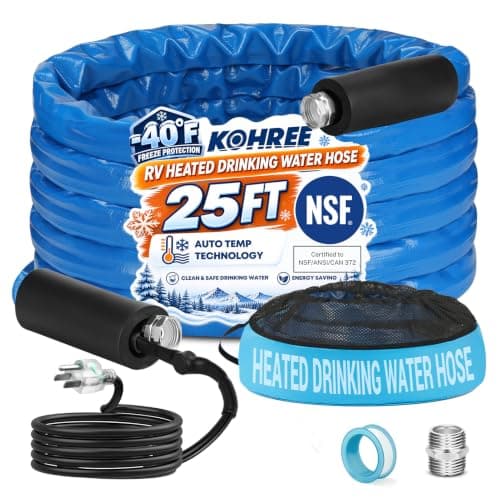 Kohree 25 ft Heated RV Water HoseThe heated hose to buy for a first cold-weather season: right diameter, a thermostat, and a price that does not make you question whether you needed one. | A first winter on full hookups without paying resort-brand money | Strong | |
| 2 | 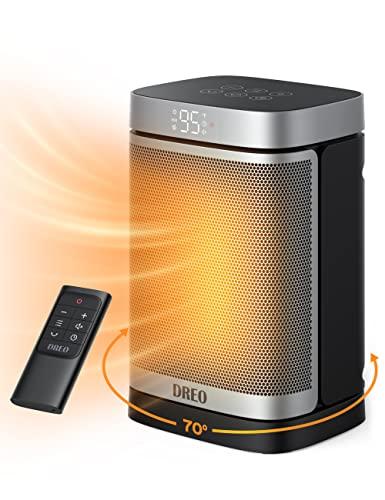 Dreo 1500 W PTC Ceramic Space Heater with ThermostatThe upgrade pick for a trailer you heat every night: a proper thermostat, an ECO mode that keeps the draw down, and a timer so it stops by itself. | A thermostat, a timer and an ECO mode that cuts the draw | Good | |
| 3 | 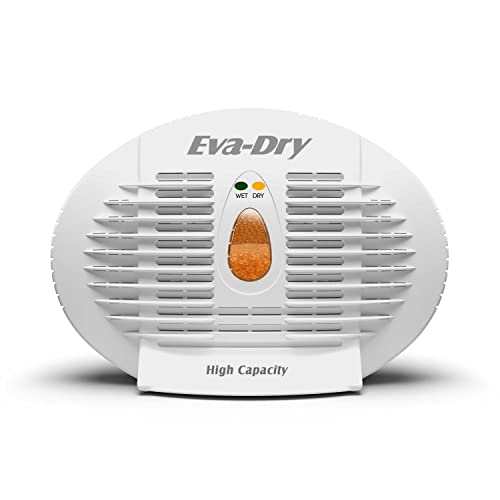 Eva-Dry E-500 Renewable Mini DehumidifierA desiccant brick that needs no power while it works. Right for a wardrobe or a stored trailer, not for a whole damp rig. | Closets and unpowered storage | Strong | |
| 4 | 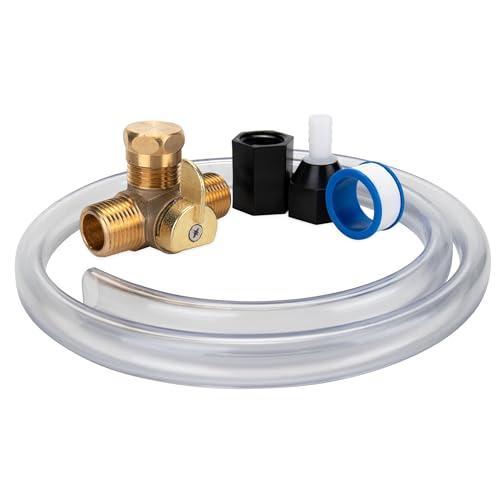 Camco Permanent Pump Converter Winterizing Kit (36543)The one winterizing purchase we would make without hesitating: a permanent valve that lets the onboard pump do the whole job. | Pulling antifreeze through the whole trailer with the onboard pump | Good | |
| 5 | 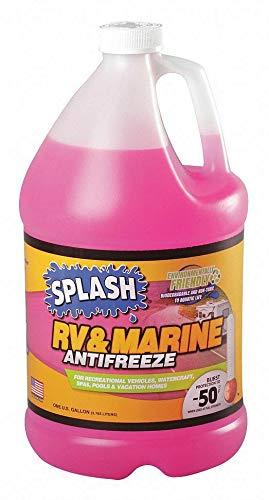 Splash RV & Marine Antifreeze -50 F (1 gallon)The sane way to buy RV antifreeze online: one gallon at a time, ready to use, at the lowest per-gallon price in this group. | Buying exactly as many gallons as your trailer needs | Strong | |
| 6 | 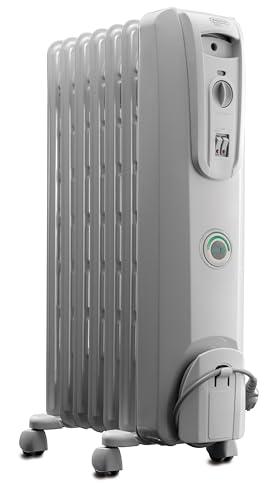 De'Longhi Oil-Filled Radiator Heater 1500 W (EW7707CM)The quiet overnight option: steady radiant heat with no fan noise, at the cost of weight, warm-up time and storage space. | Silent heat that keeps giving after it switches off | Good |
Prices come from Amazon and were last checked November 27, 2026. They change constantly, so a price older than 48 hours is withdrawn rather than shown stale — those rows read “Check price on Amazon” instead and go straight to the current listing. #ad — these are affiliate links.
The four problems winter actually creates
Water stops. A standard hose freezes solid overnight at well above the temperatures people imagine. A heated hose keeps moving water clear; the trailer’s plastic city water inlet, which has no heat cable near it, is the part that cracks and the part you insulate yourself.
Propane runs out faster than you plan for. The furnace is doing the real work — and it is the only heat source that warms the underbelly where your plumbing lives. Electric heat on top of it is how you make a 20 lb cylinder last a week instead of three days.
Everything condenses. Two people breathing in a sealed trailer in cold weather puts an astonishing amount of water into the air, and it lands on every single-pane window and every cold corner. Mould by spring is the result. Ventilation plus an absorber is the answer, and it costs very little.
The forecast is sometimes wrong. A hard freeze you did not plan for is the one that splits a line. A gallon of antifreeze and a pump converter valve already fitted means you can shut the water system down in half an hour wherever you are.
How we chose
Does it solve a winter-specific failure. Not a general nice-to-have that happens to be sold in December. Each pick here maps to one of the four problems above.
Can it be left running unattended. A thermostat and a timer are not conveniences in this context; they are what makes overnight electric heat safe and affordable.
Does it work with no power, where that matters. The moisture absorber here is renewable and unpowered, because a storage bay and a closet have no outlet.
Published ratings only. Every temperature claim here is the maker’s or the listing’s own, and the heated-hose ratings in particular are claims that assume the hose is powered, laid out and unkinked.
We do not test products and say so on how we choose. Nothing here was run in a cold trailer by us and no temperature was measured. Sources are linked at the end.
The picks
1. Best for A first winter on full hookups without paying resort-brand money
Kohree 25 ft Heated RV Water Hose
The heated hose to buy for a first cold-weather season: right diameter, a thermostat, and a price that does not make you question whether you needed one.
- Specification
- 25 ft length, 5/8 in inside diameter, 3/4 in garden hose thread ends
- Specification
- Listing states freeze protection to -40 degrees F
- Specification
- Energy-saving thermostat, so the heat cable is not drawing power all day
- Specification
- Listing states NSF 372 certification (lead-free) for drinking water contact
- Specification
- Heavy-duty outer jacket and a sealed, leak-free fitting design
- Specification
- 120 V AC, plugs into a pedestal or exterior outlet
What it does well
- Does the one job that matters - water keeps flowing on a night that would otherwise end the trip - for roughly a third of the brand-name price
- 5/8 in inside diameter, which is the size the rest of your fresh-water gear assumes. Several cheap heated hoses are 1/2 in and you feel it in the shower
- The thermostat means it is not heating all day in October for nothing, which matters when the site meters your electric
- Standard hose thread at both ends, so it drops into the regulator and filter you already own
The real tradeoff
- Kohree is an Amazon-native brand with no dealer network: if it fails in year three there is nobody local to take it to
- The -40 degrees F figure is the listing's claim and nobody independent has verified it. Treat it as design intent, not a guarantee
- A heated hose is an electrical appliance lying in the mud. It wants its own GFCI-protected outlet, and that is true of every hose on this page
- It should not be coiled tightly while powered, which makes storage bulkier than a plain hose
How it measures up
These are judgments from published specifications and what we see at the lodge, not laboratory results. How we choose.
- Beginner fit
- Strong — Plug it in, connect it, forget it.
- Flow
- Strong — 5/8 in ID, so no shower penalty.
- Cold rating
- Strong — -40 F claimed, past what most owners ever see.
- Value
- Strong — A third of the brand-name price for the same job.
Specifications from Kohree.
2. Best for A thermostat, a timer and an ECO mode that cuts the draw
Dreo 1500 W PTC Ceramic Space Heater with Thermostat
The upgrade pick for a trailer you heat every night: a proper thermostat, an ECO mode that keeps the draw down, and a timer so it stops by itself.
- Specification
- 1500 W PTC ceramic element
- Specification
- Thermostat with an ECO mode and five modes in total
- Specification
- 70 degree oscillation, remote control, 12 hour timer
What it does well
- The ECO mode is the feature to buy here: it drops to a lower power level once the room reaches temperature instead of cycling the full 1500 W on and off, which is gentler on a pedestal and on your breaker
- A 12 hour timer means you can set it to run until morning and stop, which is the right way to use electric heat in a trailer you are not watching
- The remote sounds like a gimmick until it is 3 am and the heater is at the other end of a 24 ft trailer
The real tradeoff
- 1500 W on full is still roughly 12.5 A, and oscillation does not change that. The ECO mode is what manages the draw, so use it
- Taller and heavier than the Lasko, so it needs a floor spot where it will not be knocked over and a travel home where it will not roll around
- More features means more to fail, and a heater is not a product category where features age well
How it measures up
These are judgments from published specifications and what we see at the lodge, not laboratory results. How we choose.
- Beginner fit
- Good — Five modes to learn, all optional.
- Amp draw
- Adequate — About 12.5 A at the full 1500 W.
- Safety features
- Good — Dreo lists an overheat sensor and a tip-over switch.
- Value
- Good — ECO and a timer for a little over the Lasko.
Specifications from Dreo.
3. Best for Closets and unpowered storage
Eva-Dry E-500 Renewable Mini Dehumidifier
A desiccant brick that needs no power while it works. Right for a wardrobe or a stored trailer, not for a whole damp rig.
- Specification
- Renewable desiccant, no power while working
- Specification
- Plugs in to dry out and reset
- Specification
- Sized for a small enclosed space
What it does well
- Needs no power while it is working, which is the entire point in a stored trailer
- Renewable rather than disposable. Plug it in, dry it out, use it again
- Small enough to live in a wardrobe permanently
The real tradeoff
- Handles a closet, not a whole trailer
- You have to remember to recharge it, and in storage nobody does
How it measures up
These are judgments from published specifications and what we see at the lodge, not laboratory results. How we choose.
- Beginner fit
- Strong — Put it in the cupboard.
- Capacity
- Adequate — A closet, not a trailer.
- Running cost
- Strong — None while in use.
- Value
- Strong — Cheap, and reusable for years.
4. Best for Pulling antifreeze through the whole trailer with the onboard pump
Camco Permanent Pump Converter Winterizing Kit (36543)
The one winterizing purchase we would make without hesitating: a permanent valve that lets the onboard pump do the whole job.
- Specification
- Plumbs into the inlet side of the RV water pump
- Specification
- A valve selects the fresh tank or the siphon hose
- Specification
- Camco publishes it as CSA low lead content certified
- Specification
- Camco part number 36543
What it does well
- Turns the pump you already own into the thing that fills the lines, which is why this is the tool to buy rather than a hand pump
- Permanent: fitted once, every future winterizing is a valve turn and a siphon hose dropped into a jug
- The valve also keeps you from pouring antifreeze into the fresh water tank, which is the mistake that wastes two gallons and then needs flushing out in spring
The real tradeoff
- It is a plumbing job. You are cutting into the pump inlet line, so budget an hour, two hose clamps and the patience to work in a bay
- Nothing about it helps if your pump is buried behind a panel you cannot reach, and on some trailers that is the real answer
- Does nothing on its own. You still buy the antifreeze
How it measures up
These are judgments from published specifications and what we see at the lodge, not laboratory results. How we choose.
- Beginner fit
- Good — Simple parts, but it is a plumbing install.
- Install effort
- Adequate — Cutting into the pump inlet line, once.
- Time saved
- Strong — Every winter after the first one.
- Value
- Strong — Cheap, and it is the part that does the work.
Specifications from Camco.
5. Best for Buying exactly as many gallons as your trailer needs
Splash RV & Marine Antifreeze -50 F (1 gallon)
The sane way to buy RV antifreeze online: one gallon at a time, ready to use, at the lowest per-gallon price in this group.
- Specification
- Listing states -50 F burst protection
- Specification
- Ready to use, not a concentrate
- Specification
- Sold as a single 1-gallon jug
What it does well
- Sold one gallon at a time, which is how you should buy it: most travel trailers take two to three gallons and a four-pack leaves you storing the rest
- Ready to use straight from the jug, so there is no mixing step to get wrong in a cold driveway
- The cheapest per-gallon way to buy this fluid on Amazon on the day we checked, by a wide margin over the multipacks
The real tradeoff
- The -50 F on the label is a burst rating, not a freeze point. It will slush well above that and get harder to pump
- No freeze point, corrosion data or base chemistry is published on the listing, so you are buying on the burst number alone
- A gallon of mostly water is expensive to ship. A hardware or auto parts store near you is usually cheaper, and we would rather say so
How it measures up
These are judgments from published specifications and what we see at the lodge, not laboratory results. How we choose.
- Beginner fit
- Strong — Pour it in. Nothing to mix or measure.
- Published data
- Weak — A burst number and nothing behind it.
- Quantity fit
- Strong — Buy two or three, not four.
- Value
- Good — Cheapest per gallon here; still cheaper in a store.
Specifications from Practical Sailor, on burst vs freeze point.
6. Best for Silent heat that keeps giving after it switches off
De'Longhi Oil-Filled Radiator Heater 1500 W (EW7707CM)
The quiet overnight option: steady radiant heat with no fan noise, at the cost of weight, warm-up time and storage space.
- Specification
- 1500 W, permanently sealed oil-filled radiator
- Specification
- No fan, so no noise and no moving air
- Specification
- Model EW7707CM
What it does well
- Silent. There is no fan, which matters more than people expect in a trailer where you can hear a toothbrush two rooms away
- The oil stays warm after the element cuts out, so the heat is steady rather than arriving in blasts. For sleeping, it is the nicest heat on this page
- Nothing glowing and no hot air stream, which makes it the easiest of these to live with in a small space
The real tradeoff
- Heavy, tall and awkward - this is the one product here that is genuinely annoying to store and to secure for travel, and it is not designed to be bolted down
- Slow. It takes a while to warm a space and a while to stop, so it suits overnight running rather than taking the chill off in ten minutes
- Still a 1500 W heater, so it occupies the same roughly 12.5 A of your pedestal as the plastic ones that cost a third as much
How it measures up
These are judgments from published specifications and what we see at the lodge, not laboratory results. How we choose.
- Beginner fit
- Good — Simple, but heavy to move.
- Amp draw
- Adequate — About 12.5 A at 1500 W.
- Safety features
- Good — No exposed element; De'Longhi lists safety features.
- Value
- Adequate — The most expensive electric pick here.
Specifications from De'Longhi.
Which winter problem each item solves
| Problem | The gear | Why this one | Cheaper option |
|---|---|---|---|
| The water hose freezes | Kohree 25 ft heated hose | Self-regulating cable the full length, under $100 | None that works. Insulation alone is not enough. |
| Propane disappearing on the furnace | Dreo 1500 W with thermostat and timer | ECO mode and a timer, so it can run all night | A 400 W personal heater for one seat |
| Condensation on every window | Eva-Dry E-500 renewable absorber | No power needed; rechargeable in an outlet at home | A hanging moisture absorber, replaced each month |
| A freeze you did not plan for | Camco pump converter kit, plus antifreeze | Lets you winterize in 30 minutes anywhere | The antifreeze alone, poured into the traps |
| Fan noise all night | De'Longhi oil-filled radiator | No fan at all; stays warm after it cuts out | Nothing. This is the quiet option. |
The three-item winter kit
A heated hose so you have water, a thermostatically controlled heater so you can sleep, and a gallon of antifreeze on board so a surprise freeze is an inconvenience rather than a repair bill.
Best for A first winter on full hookups without paying resort-brand money
Kohree 25 ft Heated RV Water Hose
The heated hose to buy for a first cold-weather season: right diameter, a thermostat, and a price that does not make you question whether you needed one.
Best for A thermostat, a timer and an ECO mode that cuts the draw
Dreo 1500 W PTC Ceramic Space Heater with Thermostat
The upgrade pick for a trailer you heat every night: a proper thermostat, an ECO mode that keeps the draw down, and a timer so it stops by itself.
Best for Buying exactly as many gallons as your trailer needs
Splash RV & Marine Antifreeze -50 F (1 gallon)
The sane way to buy RV antifreeze online: one gallon at a time, ready to use, at the lowest per-gallon price in this group.
Setting up a trailer for a cold week
Insulate the city water inlet and the regulator. Foam pipe insulation over both. These are the two unheated lumps of standing water in an otherwise heated line, and they are what fail.
Lay the heated hose out, do not coil it. A coiled heated hose concentrates heat in one spot and leaves the run cold. The temperature rating assumes a hose laid straight.
Crack a roof vent. It feels wrong and it is the single most effective thing you can do about condensation. Heat rises and carries the moisture with it; sealing the trailer traps it on the windows.
Keep the grey tank valve closed and drain it in batches. A trickle into a cold sewer connection freezes in the hose. Let the tank fill and dump it in one go.
Watch the pedestal, not just the thermostat. A cold week in a full park is when voltage sags, and a sagging supply is hard on a furnace fan and a converter. An EMS or surge protector is the device that notices.
Winter camping mistakes
Sealing the trailer up tight. Warmer for an hour, damp for a season.
Running two 1500 W heaters on one 30-amp pedestal. Roughly 25 A between them before the converter and the fridge. The breaker trips at 2 am.
Leaving a standard hose connected overnight. It freezes, and a frozen hose under pressure is a split hose at the fitting.
Running a propane heater while asleep. Ventilation, working CO and LP alarms, and never unattended. The heater page goes through that properly.
Assuming winter camping and winter storage are the same job. They are opposites. If the trailer is going to sit, read how to winterize a travel trailer.
Questions people actually ask
What accessories do I need for winter RV camping?
Four things cover the real failures: a heated water hose so your supply keeps flowing, a thermostatically controlled electric heater so you can run heat overnight without burning through propane, moisture control because a sealed trailer in cold weather condenses on every surface, and a gallon of RV antifreeze kept on board in case the forecast is wrong and you need to shut the water system down where you stand.
Can you camp in a travel trailer in winter?
Yes, with the furnace running. The furnace is the only heat source that warms the underbelly where the fresh water lines and tanks live, so it is doing the job that prevents damage while electric heaters handle comfort in the living space. The other three things you need are a heated hose, ventilation plus a moisture absorber, and a habit of dumping the grey tank in batches rather than leaving it trickling into a cold connection.
How do I stop my RV water hose freezing?
Use a heated hose with self-regulating cable, lay it out straight rather than coiled, and insulate the two parts the hose cannot help: the trailer's plastic city water inlet and the pressure regulator at the spigot. Both are unheated lumps of standing water in an otherwise heated line, and both are what actually crack. Plug the hose in before the freeze rather than during it.
Why is my RV so damp in winter?
Because two people breathing in a sealed, heated box put a lot of water into the air and the only cold surfaces for it to land on are your windows and corners. Crack a roof vent - it feels wrong and it is the most effective single fix - and add a moisture absorber. A renewable unpowered absorber works in closets and bays where there is no outlet; a powered dehumidifier is better where there is one.
Should I winterize if I am still camping in cold weather?
Not while you are using the water system, but carry the parts. A pump converter valve already fitted plus a gallon or two of antifreeze means that when a hard freeze arrives unexpectedly, or when the trip ends, you can shut the system down in about half an hour wherever you happen to be rather than driving home with water in the lines.
How many amps does winter RV camping need?
More than you think, which is why the heater choice matters. A 1500 W electric heater is roughly 12.5 A at 120 V by arithmetic, and a heated water hose is a continuous resistive load on top of that, alongside the converter charging the battery and the fridge on electric. On a 30-amp pedestal that is why one 1500 W heater plus a small low-draw unit is the sane setup rather than two big ones.
Sources
Read next
Power & Surge Protection
Best RV Heater for Winter in a Travel Trailer
Overnight electric heat, silent radiant heat, and the propane option for a site with no hookup - with the amp arithmetic done.
Sewer & Water
Best Heated RV Water Hose for a Travel Trailer
Heated fresh-water hoses for freezing nights, ranked on diameter, published cold rating and what happens when the power goes off.
Sewer & Water
Best RV Winterizing Kit for a Travel Trailer
Pump converter valve, blowout plug and antifreeze: the kit that turns winterizing into a 40-minute job you can do yourself.
First-Season Starter Kit
How to Winterize a Travel Trailer for Storage
The winter storage routine in order, from draining the water system to the moisture and tire protection that prevents a spring surprise.
Reviewed November 22, 2026. Spot something out of date? Tell us and we will fix it.