Best RV Winterizing Kit for a Travel Trailer
There is no box on a shelf called a winterizing kit that contains what you need. This is the three-part kit that does, and the part most people buy last is the one that makes the job easy.
Heads up: this page contains affiliate links. If you buy through one, Camp & Chock may earn a commission at no extra cost to you. It never changes which product we put first — how this site is funded.
The short answer
The purchase that makes winterizing simple is the Camco permanent pump converter kit: a valve plumbed into the inlet side of your water pump so the onboard pump pulls antifreeze straight out of the jug and pushes it through the whole trailer. Without it you are pouring fluid into the fresh tank and diluting most of it. Add a 1-gallon jug of ready-to-use RV antifreeze — the Splash -50 °F is the budget pick and the right way to buy it, one gallon at a time, because trailers vary and a case of six is a case of six. The third part is a brass blowout plug, which lets you clear the lines with compressed air first so you need less fluid, or skip antifreeze entirely in a mild climate. Three purchases, all of them cheap, and you will own two of them forever.
Part of our sewer and water guide. The step-by-step procedure is how to winterize a travel trailer for storage — read it alongside this page, which is the shopping list. The fluid itself is ranked on best RV antifreeze.
Our picks at a glance
Tap any row to jump to the full write-up.
| # | Product | Best for | Beginner fit | Price |
|---|---|---|---|---|
| 1 | 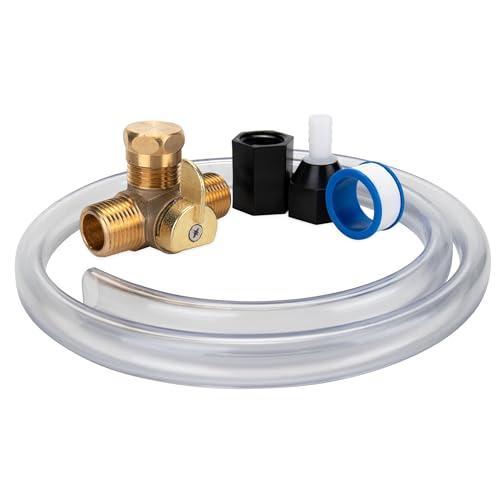 Camco Permanent Pump Converter Winterizing Kit (36543)The one winterizing purchase we would make without hesitating: a permanent valve that lets the onboard pump do the whole job. | Pulling antifreeze through the whole trailer with the onboard pump | Good | |
| 2 | 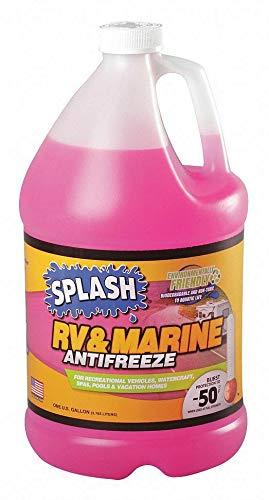 Splash RV & Marine Antifreeze -50 F (1 gallon)The sane way to buy RV antifreeze online: one gallon at a time, ready to use, at the lowest per-gallon price in this group. | Buying exactly as many gallons as your trailer needs | Strong | |
| 3 | 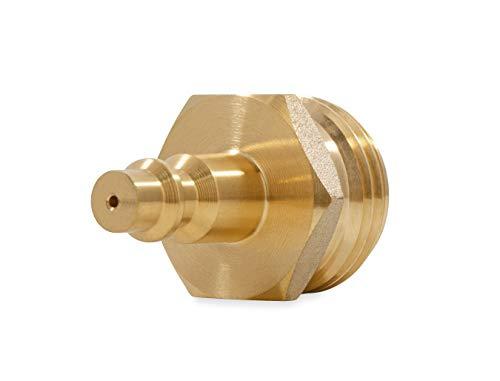 Camco RV Brass Blowout Plug, Quick Connect (36143)A few dollars of brass that either replaces antifreeze in a mild winter or gets it back out again in spring. Buy it either way. | The no-antifreeze method, and for clearing lines in spring | Strong | |
| 4 | 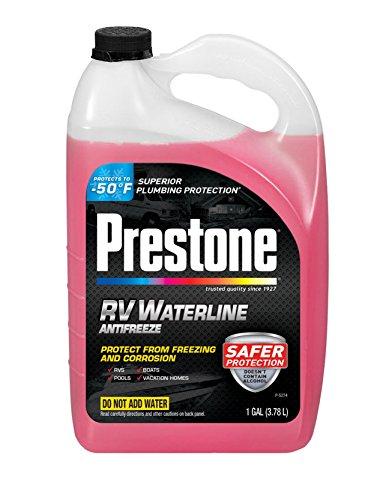 Prestone RV Waterline Antifreeze (AF222, 6-pack of 1 gallon)The brand-name case buy. Right if you intend to winterize this trailer for years and want a published product line behind the fluid. | A brand you can look up, bought once for several seasons | Good | |
| 5 | 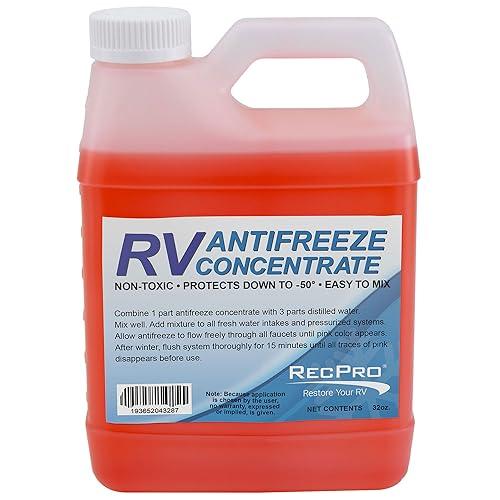 RecPro RV Antifreeze Concentrate -50 F (32 oz, makes 1 gallon)Buy it for the two things it actually gives you: published chemistry and a gallon of antifreeze stored in a quart of space. It is not the value pick and we are not going to pretend it is. | Knowing what is in the jug, and storing it in no space | Adequate |
Prices come from Amazon and were last checked November 27, 2026. They change constantly, so a price older than 48 hours is withdrawn rather than shown stale — those rows read “Check price on Amazon” instead and go straight to the current listing. #ad — these are affiliate links.
The three jobs a winterizing kit has to cover
Getting the water out. Low point drains and the water heater bypass do most of this, and compressed air through a blowout plug finishes it. A line that is empty cannot burst, which is why this step comes before the fluid and why the plug is on this page rather than treated as an optional extra.
Getting antifreeze into what is left. Traps, the pump, the toilet valve and the low spots hold water you cannot blow out. That is what the fluid is for, and it is why the pump converter matters: the pump is the only thing in your trailer that can push fluid to every fixture.
Knowing when you are done. You are done when pink fluid comes out of every tap, hot and cold, and out of the shower and the outside shower, and when the toilet bowl and every drain trap has some in it. That is the test, and it costs nothing.
How much antifreeze do you actually need?
Two to three gallons is the usual answer for a travel trailer if you have blown the lines out first and bypassed the water heater. Without the blowout step, or without a water heater bypass, you can double that — a six-gallon water heater will happily swallow six gallons of antifreeze that was supposed to go into your plumbing.
Which is why we rank single gallons above a case. Buy two, do the job, see how much you used, and buy the case next year if you turn out to be a three-gallon trailer. A case of six bought on guesswork is four jugs stored in a garage.
The concentrate exists for a storage reason, not a value one. A 32 oz bottle that makes a gallon takes a quarter of the shelf space. It costs more per gallon and it adds a mixing step you can get wrong. If you have no storage room, it is a fair trade; if you have a garage, it is not.
How we chose
Does it make the job repeatable. The pump converter is first on this page because it changes winterizing from an improvised afternoon into the same forty minutes every October.
Published certification where it exists. Camco publishes the converter kit as CSA low lead content certified, which matters on a part permanently plumbed into a drinking water system. We rank a published certification above a listing bullet.
Ready to use over concentrate, by default. A step you can get wrong on a job you do once a year is a step worth paying a little more to remove.
Sold in a quantity that matches one trailer. This is why the single gallon outranks the case despite the case being a better per-gallon price for someone who already knows their number.
We do not test products and say so on how we choose. No trailer was winterized and then frozen to verify a burst rating here. Every temperature rating, mix ratio and certification is the maker’s or the listing’s own, reported as a claim.
The picks
1. Best for Pulling antifreeze through the whole trailer with the onboard pump
Camco Permanent Pump Converter Winterizing Kit (36543)
The one winterizing purchase we would make without hesitating: a permanent valve that lets the onboard pump do the whole job.
- Specification
- Plumbs into the inlet side of the RV water pump
- Specification
- A valve selects the fresh tank or the siphon hose
- Specification
- Camco publishes it as CSA low lead content certified
- Specification
- Camco part number 36543
What it does well
- Turns the pump you already own into the thing that fills the lines, which is why this is the tool to buy rather than a hand pump
- Permanent: fitted once, every future winterizing is a valve turn and a siphon hose dropped into a jug
- The valve also keeps you from pouring antifreeze into the fresh water tank, which is the mistake that wastes two gallons and then needs flushing out in spring
The real tradeoff
- It is a plumbing job. You are cutting into the pump inlet line, so budget an hour, two hose clamps and the patience to work in a bay
- Nothing about it helps if your pump is buried behind a panel you cannot reach, and on some trailers that is the real answer
- Does nothing on its own. You still buy the antifreeze
How it measures up
These are judgments from published specifications and what we see at the lodge, not laboratory results. How we choose.
- Beginner fit
- Good — Simple parts, but it is a plumbing install.
- Install effort
- Adequate — Cutting into the pump inlet line, once.
- Time saved
- Strong — Every winter after the first one.
- Value
- Strong — Cheap, and it is the part that does the work.
Specifications from Camco.
2. Best for Buying exactly as many gallons as your trailer needs
Splash RV & Marine Antifreeze -50 F (1 gallon)
The sane way to buy RV antifreeze online: one gallon at a time, ready to use, at the lowest per-gallon price in this group.
- Specification
- Listing states -50 F burst protection
- Specification
- Ready to use, not a concentrate
- Specification
- Sold as a single 1-gallon jug
What it does well
- Sold one gallon at a time, which is how you should buy it: most travel trailers take two to three gallons and a four-pack leaves you storing the rest
- Ready to use straight from the jug, so there is no mixing step to get wrong in a cold driveway
- The cheapest per-gallon way to buy this fluid on Amazon on the day we checked, by a wide margin over the multipacks
The real tradeoff
- The -50 F on the label is a burst rating, not a freeze point. It will slush well above that and get harder to pump
- No freeze point, corrosion data or base chemistry is published on the listing, so you are buying on the burst number alone
- A gallon of mostly water is expensive to ship. A hardware or auto parts store near you is usually cheaper, and we would rather say so
How it measures up
These are judgments from published specifications and what we see at the lodge, not laboratory results. How we choose.
- Beginner fit
- Strong — Pour it in. Nothing to mix or measure.
- Published data
- Weak — A burst number and nothing behind it.
- Quantity fit
- Strong — Buy two or three, not four.
- Value
- Good — Cheapest per gallon here; still cheaper in a store.
Specifications from Practical Sailor, on burst vs freeze point.
3. Best for The no-antifreeze method, and for clearing lines in spring
Camco RV Brass Blowout Plug, Quick Connect (36143)
A few dollars of brass that either replaces antifreeze in a mild winter or gets it back out again in spring. Buy it either way.
- Specification
- Brass body with a built-in quick connect for the compressor hose, rather than a tire-chuck Schrader valve
- Specification
- Screws into the city water inlet
- Specification
- Camco part number 36143
What it does well
- The cheapest winterizing tool there is, and in a mild climate with a compressor it can be the only one you need
- Brass rather than plastic, which matters on a part you thread onto the inlet once a year for a decade
- Useful in spring too: blowing the lines clear is how you get antifreeze out without running forty gallons through the system
The real tradeoff
- Air does not reach drain traps, low spots or a water heater you forgot to bypass, which is exactly where antifreeze earns its keep
- You need a compressor, and you need to keep the pressure down. A shop compressor at full tilt is more pressure than trailer plumbing wants
- Not a complete answer anywhere that gets properly cold. Below freezing for weeks, use antifreeze as well
How it measures up
These are judgments from published specifications and what we see at the lodge, not laboratory results. How we choose.
- Beginner fit
- Strong — Threads on. Nothing to learn.
- Install effort
- Strong — None.
- Completeness
- Adequate — Air misses traps and low spots.
- Value
- Strong — The cheaper of the two winterizing tools here.
Specifications from Camco.
4. Best for A brand you can look up, bought once for several seasons
Prestone RV Waterline Antifreeze (AF222, 6-pack of 1 gallon)
The brand-name case buy. Right if you intend to winterize this trailer for years and want a published product line behind the fluid.
- Specification
- Case of six 1-gallon jugs, part number AF222-6PK
- Specification
- Sold for potable water systems
- Specification
- Ready to use
What it does well
- A chemical company with a published product line behind it rather than a marketplace label, which matters more here than the headline temperature
- Sold specifically as a waterline antifreeze for RVs rather than as a general-purpose pink fluid, so the intended use is not something you have to infer from the label color
- Six gallons is two or three seasons for one trailer, so the cost per winter is reasonable even though the sticker is not
The real tradeoff
- You are buying six gallons when you need two or three, and the balance has to be stored somewhere it will not freeze solid
- Clearly the most expensive way to get a single gallon into your trailer this fall
- Still a burst rating on the label, with no freeze point published for the fluid in the jug
How it measures up
These are judgments from published specifications and what we see at the lodge, not laboratory results. How we choose.
- Beginner fit
- Good — Ready to use; just a lot of jugs to lift.
- Published data
- Good — A real product line with literature behind it.
- Quantity fit
- Adequate — Six gallons for a two to three gallon job.
- Value
- Adequate — Good per season, poor for one winter.
Specifications from Prestone.
5. Best for Knowing what is in the jug, and storing it in no space
RecPro RV Antifreeze Concentrate -50 F (32 oz, makes 1 gallon)
Buy it for the two things it actually gives you: published chemistry and a gallon of antifreeze stored in a quart of space. It is not the value pick and we are not going to pretend it is.
- Specification
- One 32 oz bottle makes 1 gallon at the stated 1 to 3 mix ratio
- Specification
- Listing states -50 F protection at that dilution
- Specification
- Listed as propylene glycol and ethanol-free
- Specification
- Sold for marine and RV water lines
What it does well
- The only pick here that states its chemistry: propylene glycol, ethanol-free. Practical Sailor's winterizing tests rated corrosion protection on the ethanol-based products they tried as poor and recommend propylene glycol for potable systems, so a label that commits to it is worth something
- A gallon of antifreeze that stores as a quart bottle, which is a real argument in a trailer where every bay is already full - buy three bottles and you have winterized the trailer from a shoebox of space
- You mix what you need, so an opened bottle is not a half-used gallon sitting in a storage bay all summer
The real tradeoff
- You have to mix it correctly, and a weak mix is burst protection you no longer have. This is the one product here you can get wrong
- You need clean water to mix with, which is awkward on the day you have just drained the trailer
- By a wide margin the most expensive gallon on this page once mixed - several times the price of a ready-to-use jug - and you are supplying the water and doing the work
How it measures up
These are judgments from published specifications and what we see at the lodge, not laboratory results. How we choose.
- Beginner fit
- Adequate — A mixing step you can get wrong.
- Published data
- Good — Chemistry, ratio and burst figure stated; no freeze point.
- Quantity fit
- Strong — A gallon per quart bottle of shelf space.
- Value
- Weak — Several times the per-gallon cost of a ready-to-use jug.
Specifications from RecPro.
What each part of the kit does
| Part | The job | Buy once or every year? | Skip it? |
|---|---|---|---|
| Camco pump converter kit (36543) | Lets the onboard pump draw antifreeze from the jug | Once - it is a permanent valve | No. This is what makes the job easy. |
| Splash RV antifreeze, 1 gal | Fills traps, pump and low spots that air cannot clear | Every year, two to three gallons | No, unless you blow the lines and accept the risk |
| Camco brass blowout plug (36143) | Clears the lines with compressed air before the fluid goes in | Once | Only if you have no compressor at all |
| Prestone AF222, case of six | The same fluid, brand name, bought by the case | Every few years | Yes, until you know your gallon count |
| RecPro concentrate, 32 oz | A gallon of antifreeze stored in a quart of space | Every year | Yes, if you have storage room |
The three-item kit
A valve that lets the pump do the work, two gallons of ready-to-use fluid, and a brass plug so you can push the water out with air first. Buy all three once and you only repurchase the fluid.
Best for Pulling antifreeze through the whole trailer with the onboard pump
Camco Permanent Pump Converter Winterizing Kit (36543)
The one winterizing purchase we would make without hesitating: a permanent valve that lets the onboard pump do the whole job.
Best for Buying exactly as many gallons as your trailer needs
Splash RV & Marine Antifreeze -50 F (1 gallon)
The sane way to buy RV antifreeze online: one gallon at a time, ready to use, at the lowest per-gallon price in this group.
Best for The no-antifreeze method, and for clearing lines in spring
Camco RV Brass Blowout Plug, Quick Connect (36143)
A few dollars of brass that either replaces antifreeze in a mild winter or gets it back out again in spring. Buy it either way.
What a winterizing kit does not include, and should
A water heater bypass. Most trailers built in the last decade have one fitted. Find yours before you start, because if it is not bypassed your six-gallon tank is about to fill with pink fluid.
A dehumidifier or moisture absorber. A sealed trailer over winter grows mould, and freezing has nothing to do with it. The storage-specific picks are on best RV dehumidifier for winter storage.
A cover, if the trailer sits outside. Covers are a separate call and a separate budget, and a badly fitted one does more harm than none.
Somewhere to note what you did. Which drains you opened, how many gallons it took, whether the outside shower got flushed. Next October you will not remember, and this is the note that makes year two take half as long.
Mistakes that undo the whole job
Pouring antifreeze into the fresh water tank. It works, badly, and it wastes most of a jug diluting itself in whatever water is left in the tank. The pump converter exists precisely to avoid this.
Forgetting the outside shower and the toilet sprayer. Both are plumbing, both freeze, and both are behind a panel you do not open all summer.
Blowing the lines at too high a pressure. Compressed air at shop pressure can damage fittings. Regulate it down — well below your normal city water pressure — and let it work slowly.
Leaving the low point drains closed after draining. They are open for a reason over winter: anything that collects has somewhere to go.
Skipping the heated hose question. If you are not storing the trailer but camping in it through the cold, winterizing is the wrong page — you want a heated water hose and a working furnace instead.
Questions people actually ask
What do I need to winterize an RV?
Three things: a way to get antifreeze through the system, the antifreeze itself, and ideally a way to blow the lines out first. A permanent pump converter valve lets the trailer's own water pump draw fluid straight from the jug, a brass blowout plug lets you clear the lines with regulated compressed air, and two to three gallons of ready-to-use RV antifreeze fills what is left. You also need to find and close your water heater bypass before you start.
How many gallons of RV antifreeze do I need for a travel trailer?
Two to three gallons is typical for a travel trailer if you have drained the tanks, bypassed the water heater and blown the lines out with air first. Without the blowout step, or with the water heater not bypassed, the figure can easily double - a six-gallon water heater will absorb six gallons of fluid on its own. Buy single gallons the first year, note what you used, and buy a case afterwards if it is worth it.
Can you winterize an RV without antifreeze?
In a mild climate, with a thorough compressed-air blowout and the low point drains left open, some owners do. It depends entirely on getting every drop out, and the places that hold water - the pump, drain traps, the toilet valve, the low spots - are exactly the places air does not clear. Antifreeze in those is cheap insurance, and a trap with no fluid in it will freeze and split.
What does -50 F mean on RV antifreeze?
It is a burst protection figure, not a freeze point. The fluid will turn slushy well above -50 F and still not split a pipe, because what damages plumbing is ice expanding against a closed fitting. Treat the number as the temperature below which the maker no longer claims burst protection, not as a liquid-to-solid threshold.
Is a pump converter kit worth it?
It is the one winterizing purchase we would make without hesitating. It is a valve plumbed into the inlet side of the water pump with a siphon hose, so the pump pulls antifreeze straight out of the jug and pushes it to every fixture. The alternative is pouring fluid into the fresh water tank, where most of it dilutes in whatever water remains. Camco publishes the kit as CSA low lead content certified, which matters on a part that lives in a drinking water system.
Do I need to winterize if I store the trailer with a heater running?
Winterize anyway. A heater depends on power staying on, and the one night the breaker trips is the night the lines freeze. Antifreeze in the plumbing removes the failure mode entirely rather than managing it, and it costs less than one repair.
Sources
Read next
Sewer & Water
Best RV Antifreeze for a Travel Trailer
RV plumbing antifreeze for a first winter: how many gallons, what -50 F really means, and the two tools worth ordering online.
First-Season Starter Kit
How to Winterize a Travel Trailer for Storage
The winter storage routine in order, from draining the water system to the moisture and tire protection that prevents a spring surprise.
First-Season Starter Kit
Best RV Dehumidifier for Winter Storage
Why electric dehumidifiers fail at the storage job, and the no-power options that control winter damp instead.
Sewer & Water
Best Heated RV Water Hose for a Travel Trailer
Heated fresh-water hoses for freezing nights, ranked on diameter, published cold rating and what happens when the power goes off.
Reviewed November 22, 2026. Spot something out of date? Tell us and we will fix it.