Best RV Heater for Winter in a Travel Trailer
Winter asks a different question than a chilly October weekend: what can run for twelve hours without tripping a breaker, and what do you use when there is no pedestal at all.
Heads up: this page contains affiliate links. If you buy through one, Camp & Chock may earn a commission at no extra cost to you. It never changes which product we put first — how this site is funded.
The short answer
For a trailer you heat every night on a hookup, the Dreo 1500 W PTC heater is the pick: a real thermostat, an ECO mode that drops the draw once the trailer is warm instead of slamming 1500 W on and off, and a 12-hour timer so it stops by itself. If what you want is quiet, the De’Longhi oil-filled radiator has no fan at all and keeps giving heat after the element cuts out, which is the nicest heat here for sleeping. The Lasko MyHeat is the budget pick — about 400 W on Lasko’s own figure, which is the only heater on this page you can add to a loaded 30-amp pedestal without doing arithmetic first. And if there is no hookup, the Mr. Heater Portable Buddy is the answer, with conditions: ventilation, working CO and LP alarms, and never while anyone is asleep.
Part of our power and surge protection guide. The general ranking, framed around what a 30-amp pedestal allows, is the space heater roundup. If the trailer is going into storage rather than being camped in, read how to winterize a travel trailer first — a heater is not a substitute for winterizing.
Our picks at a glance
Tap any row to jump to the full write-up.
| # | Product | Best for | Beginner fit | Price |
|---|---|---|---|---|
| 1 | 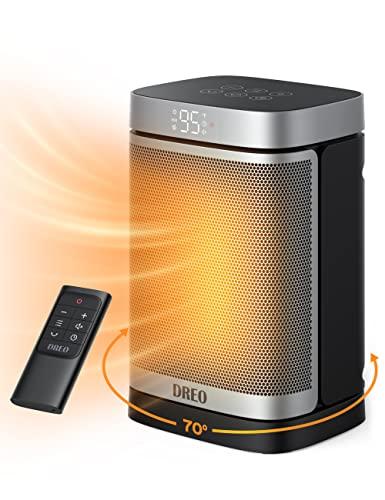 Dreo 1500 W PTC Ceramic Space Heater with ThermostatThe upgrade pick for a trailer you heat every night: a proper thermostat, an ECO mode that keeps the draw down, and a timer so it stops by itself. | A thermostat, a timer and an ECO mode that cuts the draw | Good | |
| 2 | 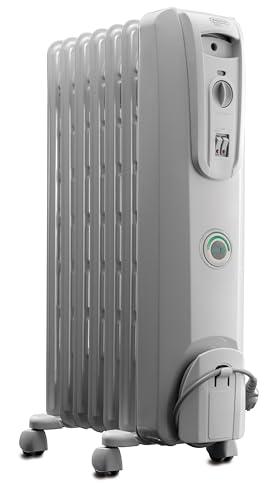 De'Longhi Oil-Filled Radiator Heater 1500 W (EW7707CM)The quiet overnight option: steady radiant heat with no fan noise, at the cost of weight, warm-up time and storage space. | Silent heat that keeps giving after it switches off | Good | |
| 3 | 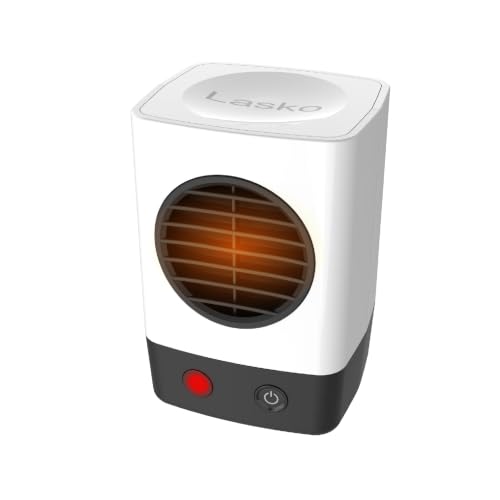 Lasko MyHeat Mini Personal Ceramic HeaterThe honest low-draw pick. Not a trailer heater - a person heater, and the only one here you can run without doing amp arithmetic first. | Running heat without touching the amp budget | Strong | |
| 4 | 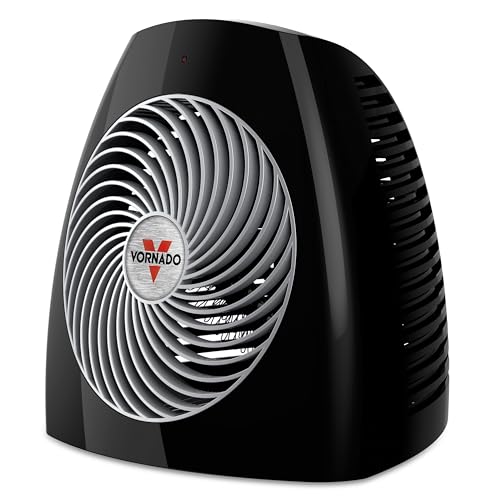 Vornado MVH Whole Room Space HeaterThe pick if your complaint is that one end of the trailer is warm and the other is not. Circulation, three steps, and the safety pair published. | Moving warm air the length of the trailer | Strong | |
| 5 | 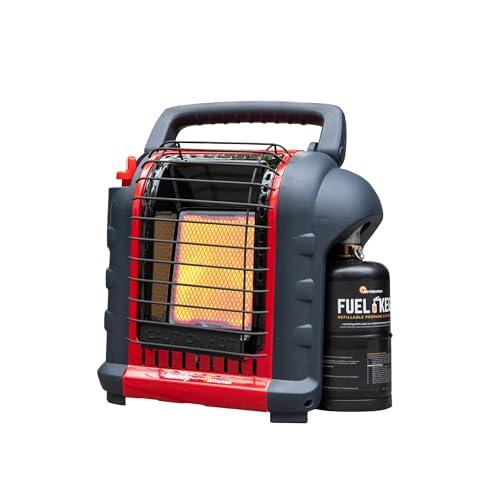 Mr. Heater Portable Buddy Propane Heater (MH9BX)The no-hookup answer, with conditions attached: ventilation, working CO and LP alarms, and never while anyone is asleep. | Heat with no hookup at all | Adequate |
Prices come from Amazon and were last checked November 27, 2026. They change constantly, so a price older than 48 hours is withdrawn rather than shown stale — those rows read “Check price on Amazon” instead and go straight to the current listing. #ad — these are affiliate links.
Winter changes three things about this purchase
Run time, not peak output. In October you want a heater that takes the chill off for an hour. In January you want one that can run from 10 pm to 7 am without you thinking about it. That moves the decision onto the thermostat and onto what the unit does once the trailer is up to temperature — which is exactly where an ECO mode or an oil-filled body earns its money.
Your amp budget is already under pressure. A 1500 W heater is roughly 12.5 A at 120 V by arithmetic. On a 30-amp pedestal in cold weather you are also running the converter charging the battery, the fridge on electric, and possibly a second heater at the other end of the trailer. Two 1500 W heaters is roughly 25 A before anything else, which is why the low-draw pick on this page matters more in winter than it does in summer. The full arithmetic is on the electrical hookup guide.
Moisture becomes the real enemy. Electric heat is dry. Burning propane inside produces water vapor, and a trailer in winter is already condensing on every single-pane window. That is not a reason to never use propane — it is the reason the propane pick is ranked last here and carries a ventilation warning rather than a recommendation to run it overnight. A dehumidifier is a real part of a winter setup.
How we chose
A published thermostat, not a published maximum. Every 1500 W heater on the market produces about the same heat. What separates them overnight is whether they cycle, how low the low setting goes, and whether the maker publishes the figure.
The low setting’s actual draw. Lasko publishes 7.0 A on low for its tabletop ceramic and about 400 W for the MyHeat. Those are the numbers that decide whether a heater is usable alongside the rest of your hookup, and we rank a published low figure above a vague “energy saving” claim.
Safety features published, not implied. Tip-over protection, overheat cut-out, cool-touch housings, and on the propane unit an oxygen depletion sensor. Where a maker does not publish one, we say that rather than assuming it.
Whether it is realistic to store and travel with. An oil-filled radiator is the nicest heat here and the most annoying object to secure in a moving trailer. That trade is stated on the card rather than hidden.
We do not test products and say so on how we choose. No heater here was run in a cold trailer by us, no temperature was measured, and no amp draw was metered. Every wattage and amperage is the maker’s own published figure; the conversions to amps are arithmetic at 120 V and are labeled as such. Sources are linked at the end.
The picks
1. Best for A thermostat, a timer and an ECO mode that cuts the draw
Dreo 1500 W PTC Ceramic Space Heater with Thermostat
The upgrade pick for a trailer you heat every night: a proper thermostat, an ECO mode that keeps the draw down, and a timer so it stops by itself.
- Specification
- 1500 W PTC ceramic element
- Specification
- Thermostat with an ECO mode and five modes in total
- Specification
- 70 degree oscillation, remote control, 12 hour timer
What it does well
- The ECO mode is the feature to buy here: it drops to a lower power level once the room reaches temperature instead of cycling the full 1500 W on and off, which is gentler on a pedestal and on your breaker
- A 12 hour timer means you can set it to run until morning and stop, which is the right way to use electric heat in a trailer you are not watching
- The remote sounds like a gimmick until it is 3 am and the heater is at the other end of a 24 ft trailer
The real tradeoff
- 1500 W on full is still roughly 12.5 A, and oscillation does not change that. The ECO mode is what manages the draw, so use it
- Taller and heavier than the Lasko, so it needs a floor spot where it will not be knocked over and a travel home where it will not roll around
- More features means more to fail, and a heater is not a product category where features age well
How it measures up
These are judgments from published specifications and what we see at the lodge, not laboratory results. How we choose.
- Beginner fit
- Good — Five modes to learn, all optional.
- Amp draw
- Adequate — About 12.5 A at the full 1500 W.
- Safety features
- Good — Dreo lists an overheat sensor and a tip-over switch.
- Value
- Good — ECO and a timer for a little over the Lasko.
Specifications from Dreo.
2. Best for Silent heat that keeps giving after it switches off
De'Longhi Oil-Filled Radiator Heater 1500 W (EW7707CM)
The quiet overnight option: steady radiant heat with no fan noise, at the cost of weight, warm-up time and storage space.
- Specification
- 1500 W, permanently sealed oil-filled radiator
- Specification
- No fan, so no noise and no moving air
- Specification
- Model EW7707CM
What it does well
- Silent. There is no fan, which matters more than people expect in a trailer where you can hear a toothbrush two rooms away
- The oil stays warm after the element cuts out, so the heat is steady rather than arriving in blasts. For sleeping, it is the nicest heat on this page
- Nothing glowing and no hot air stream, which makes it the easiest of these to live with in a small space
The real tradeoff
- Heavy, tall and awkward - this is the one product here that is genuinely annoying to store and to secure for travel, and it is not designed to be bolted down
- Slow. It takes a while to warm a space and a while to stop, so it suits overnight running rather than taking the chill off in ten minutes
- Still a 1500 W heater, so it occupies the same roughly 12.5 A of your pedestal as the plastic ones that cost a third as much
How it measures up
These are judgments from published specifications and what we see at the lodge, not laboratory results. How we choose.
- Beginner fit
- Good — Simple, but heavy to move.
- Amp draw
- Adequate — About 12.5 A at 1500 W.
- Safety features
- Good — No exposed element; De'Longhi lists safety features.
- Value
- Adequate — The most expensive electric pick here.
Specifications from De'Longhi.
3. Best for Running heat without touching the amp budget
Lasko MyHeat Mini Personal Ceramic Heater
The honest low-draw pick. Not a trailer heater - a person heater, and the only one here you can run without doing amp arithmetic first.
- Specification
- Lasko publishes 400 W at 120 V, on a single heat setting
- Specification
- Roughly 3.3 A at 120 V by arithmetic from that figure
- Specification
- Cool-touch exterior, ceramic element, overheat protection, ETL listed
- Specification
- 6 ft cord
- Specification
- 6.2 in tall and about 1.1 lb, rated for roughly 100 sq ft
What it does well
- About 400 W. You can run this on a 20 A household outlet, off a modest inverter, or alongside everything else on a loaded 30 A pedestal and not think about it once
- Cool-touch housing and a ceramic element rather than a glowing coil, which is the right design for a space where a blanket can end up against it
- Small and quiet enough to point at a footwell, a bunk or a wet bathroom and leave running
The real tradeoff
- It will not heat a trailer. Lasko rates it for about 100 sq ft, so it warms the air immediately around it, and treating it as the trailer's heat source in January is how you get a cold night and a disappointed review
- No thermostat and no timer - one heat setting, on or off
- No tip-over switch is published, which is less alarming on a cool-touch 400 W unit than on a 1500 W one but still worth knowing
How it measures up
These are judgments from published specifications and what we see at the lodge, not laboratory results. How we choose.
- Beginner fit
- Strong — Plug in. One switch.
- Amp draw
- Strong — About 3.3 A from Lasko's 400 W figure.
- Safety features
- Good — Cool touch, overheat protection; no tip switch.
- Value
- Strong — The cheapest heat on this page.
Specifications from Lasko, MyHeat Mini model 201 specifications.
4. Best for Moving warm air the length of the trailer
Vornado MVH Whole Room Space Heater
The pick if your complaint is that one end of the trailer is warm and the other is not. Circulation, three steps, and the safety pair published.
- Specification
- Three heat settings with an adjustable thermostat
- Specification
- Tip-over protection and auto shut-off
- Specification
- Vornado's vortex circulation rather than a directional fan
What it does well
- Vornado's whole point is air circulation rather than a hot stream aimed at one spot, and a travel trailer is a long narrow box where that distinction is unusually easy to feel
- Three heat settings instead of two gives you a middle step, which is useful when low is not quite enough and high is more amps than you have
- Both tip-over protection and auto shut-off are published, which is the pair you want in a vehicle
The real tradeoff
- Costs roughly twice the Lasko for a difference that is about comfort rather than capability
- The top setting is still a 1500 W class heater, so the amp arithmetic is unchanged
- Metal and plastic housings on a circulating heater are bulky to store in a trailer where every cabinet is already full
How it measures up
These are judgments from published specifications and what we see at the lodge, not laboratory results. How we choose.
- Beginner fit
- Strong — A dial and a switch.
- Amp draw
- Adequate — 1500 W class on the top setting.
- Safety features
- Strong — Tip-over plus auto shut-off published.
- Value
- Adequate — You are paying for air movement.
Specifications from Vornado.
5. Best for Heat with no hookup at all
Mr. Heater Portable Buddy Propane Heater (MH9BX)
The no-hookup answer, with conditions attached: ventilation, working CO and LP alarms, and never while anyone is asleep.
- Specification
- 4,000 and 9,000 BTU/hr settings, stock number F232000
- Specification
- Oxygen depletion sensor and tip-over switch
- Specification
- Mr. Heater's information sheet states it is certified for indoor use in the USA and outdoor use only in Canada
- Specification
- Listings give 200 to 225 sq ft of heating area and roughly 3 hours at the high setting on a 1 lb cylinder
What it does well
- Zero amps. This is the only heater here that works at a site with no electric hookup, in a storage lot, or during the outage that made you look for a heater in the first place
- An oxygen depletion sensor and a tip-over switch are both published, which is the specification that separates this category from the unvented heaters that should never be indoors
- Radiant heat warms you rather than the air, so it feels effective fast in a space that is losing heat through single-pane windows
The real tradeoff
- Burning propane inside produces water vapor, and a trailer is already the dampest place you own. Running one of these for hours with the windows shut is how you get condensation on every surface and mold by spring
- Not a heater to sleep with. Mr. Heater's own literature is explicit about ventilation requirements, and your trailer's carbon monoxide and LP alarms must be working before you light it - if yours are past their date stamp, replace them first
- A 1 lb cylinder is about three hours on high, so real use means a hose and filter to a 20 lb tank, which is an extra purchase and an extra thing to store
How it measures up
These are judgments from published specifications and what we see at the lodge, not laboratory results. How we choose.
- Beginner fit
- Adequate — Safe use has rules you must read.
- Amp draw
- Strong — None. That is the entire point.
- Safety features
- Good — ODS and tip-over switch published.
- Value
- Good — Cheap heat where there is no power.
Specifications from Mr. Heater.
What each one draws and what it is for in winter
| Pick | Published power | Rough amps at 120 V | The winter job |
|---|---|---|---|
| Dreo PTC with thermostat | 1500 W, ECO mode | About 12.5 A on full | Overnight heat with a timer and a lower ECO step |
| De'Longhi oil-filled radiator | 1500 W, sealed oil | About 12.5 A | Silent steady heat for sleeping; slow to warm, slow to cool |
| Lasko MyHeat | 400 W (Lasko) | About 3.3 A | The one you can add to a loaded pedestal; warms a person, not a trailer |
| Vornado MVH | 1500 W class, three settings | About 12.5 A on high | Moving warm air the length of a long trailer |
| Mr. Heater Portable Buddy | 4,000 / 9,000 BTU/hr propane | Zero amps | No hookup at all - with ventilation and working alarms |
The amps column is arithmetic from the published wattage at 120 V, not a metered reading. It is there because the pedestal limit is the real constraint in winter and nobody prints amps on a heater box.
Pick by what your site gives you
Full hookup and a cold night: the Dreo, set on ECO with the timer running. A pedestal already carrying the converter and the fridge: the 400 W MyHeat, which barely registers. No electric at all: the propane Buddy, ventilated, with your CO and LP alarms checked first.
Best for A thermostat, a timer and an ECO mode that cuts the draw
Dreo 1500 W PTC Ceramic Space Heater with Thermostat
The upgrade pick for a trailer you heat every night: a proper thermostat, an ECO mode that keeps the draw down, and a timer so it stops by itself.
Best for Running heat without touching the amp budget
Lasko MyHeat Mini Personal Ceramic Heater
The honest low-draw pick. Not a trailer heater - a person heater, and the only one here you can run without doing amp arithmetic first.
Best for Heat with no hookup at all
Mr. Heater Portable Buddy Propane Heater (MH9BX)
The no-hookup answer, with conditions attached: ventilation, working CO and LP alarms, and never while anyone is asleep.
Running electric heat overnight without tripping anything
Use the low setting and the thermostat, not high. High is for the first twenty minutes. A thermostat on low, cycling, holds a trailer far more comfortably than high running flat out and then being switched off because it got stuffy.
Do not run two 1500 W heaters on one 30-amp pedestal. Roughly 25 A between them leaves almost nothing for the converter and the fridge, and the failure mode is a pedestal breaker at 2 am in the cold. One 1500 W unit plus the 400 W MyHeat is the sane two-heater setup.
Plug into the wall, never into a lightweight extension cord. A heater is a continuous full-load appliance. If you need more reach, the question is wire gauge, and that is covered on what size extension cord for an RV.
Put it where it cannot be knocked over or covered. A flat clear surface, nothing flammable within a few feet, and no bedding that can migrate against it. Check whether the model you buy publishes a tip switch; the near-identical older variants of some ceramic heaters do not.
Protect the whole trailer upstream. Cold-weather parks run hard on their wiring and a loaded pedestal is where voltage sags. A surge protector or EMS is the device that notices low voltage before your converter does.
Winter heating mistakes
Turning the furnace off entirely to save propane. The furnace is what keeps the underbelly and the plumbing above freezing. Electric heaters warm the air you are sitting in and leave the pipes cold.
Running a propane heater while asleep. Mr. Heater’s own literature is explicit about ventilation requirements. Treat the oxygen depletion sensor as a last line of defence, not a permission slip, and replace any CO or LP alarm that is past its date stamp before you light anything.
Sealing the trailer up tight. It feels right and it is how you get condensation on every window and mould by spring. A cracked roof vent plus a dehumidifier is the standard answer.
Buying a bigger heater to fix a cold floor. Cold floors in a travel trailer are an insulation and airflow problem. Circulation — which is the Vornado’s whole argument — does more for it than watts.
Expecting a 400 W personal heater to heat a 24 ft trailer. Lasko rates the MyHeat for roughly 100 sq ft. It is an excellent product used as intended and a disappointment used as a furnace.
Questions people actually ask
What is the best heater for an RV in winter?
For a trailer on a full hookup, a 1500 W ceramic heater with a real thermostat, an ECO mode and a timer is the practical answer - it holds temperature overnight instead of running flat out. For quiet overnight heat, an oil-filled radiator is better because it has no fan and stays warm after the element cuts out. Neither replaces the trailer's propane furnace, which is the only heat source that warms the underbelly where the plumbing runs.
Can you run an electric heater in an RV all night?
Yes, on a hookup, if you use the thermostat and the low setting rather than running on high. The limit is your amp budget: a 1500 W heater is roughly 12.5 A at 120 V by arithmetic, and on a 30-amp pedestal you are also feeding the converter and the fridge. One 1500 W unit is fine; two is roughly 25 A between them and that is how you trip a pedestal breaker at 2 am.
How many amps does an RV space heater use?
A 1500 W heater is about 12.5 A at 120 V, and a 900 W low setting is about 7.5 A - Lasko publishes 12.7 A and 7.0 A respectively for its tabletop ceramic model, which is close to that arithmetic. A small 400 W personal heater is around 3.3 A. Those are the figures that decide what else you can run at the same time.
Is a propane heater safe inside a travel trailer?
Mr. Heater states that its Portable Buddy is certified for indoor use in the USA and outdoor use only in Canada, and it publishes both an oxygen depletion sensor and a tip-over switch. Even so: ventilate, make sure your carbon monoxide and LP alarms are working and in date, and do not run it while anyone is asleep. Burning propane indoors also adds a lot of water vapor to a space that is already condensing in winter.
Do I still need to run the furnace if I have electric heaters?
In freezing weather, yes. The furnace is ducted and it warms the underbelly where the fresh water lines and tanks live; a space heater only warms the air in the living area. The usual approach is to run the furnace enough to keep the plumbing above freezing and use electric heat on top of it to save propane and keep the cabin comfortable.
What heater should I use for a travel trailer in storage?
The honest answer is that a stored trailer should be winterized rather than heated - antifreeze in the lines removes the freeze risk without depending on power staying on. If you do want to keep a stored trailer above freezing, a thermostatically controlled electric heater on a circuit you trust is the only sensible option, and a dehumidifier or moisture absorber matters just as much as the heat.
Sources
Read next
Power & Surge Protection
Best RV Space Heater for a Travel Trailer
Space heaters for a travel trailer, ranked by what they cost you in amps: thermostats, low settings, and the propane option's conditions.
Power & Surge Protection
RV Electrical Hookup for Beginners (Step by Step)
The full pedestal connection sequence, why order matters, and what to do when the protective device refuses.
First-Season Starter Kit
How to Winterize a Travel Trailer for Storage
The winter storage routine in order, from draining the water system to the moisture and tire protection that prevents a spring surprise.
First-Season Starter Kit
Winter RV Camping Accessories for a Travel Trailer
Heated hose, overnight electric heat, moisture control and the winterizing parts to keep on board.
Reviewed November 22, 2026. Spot something out of date? Tell us and we will fix it.