Best Trailer Coupler Lock
An unhitched trailer can be reversed up to, dropped onto a ball and driven away in under a minute. This is the product that prevents that specific thing.
Heads up: this page contains affiliate links. If you buy through one, Camp & Chock may earn a commission at no extra cost to you. It never changes which product we put first — how this site is funded.

The short answer
Buy a heavy universal coupler lock that fully blocks the coupler throat, not a small padlock through the latch. Weight and visible bulk are the deterrent here, and a lock that plainly takes tools and time to defeat moves your trailer down the list. The lighter option is fine for a home driveway.
Part of our towing and security guide, and the companion to the hitch lock roundup — these protect different things and you want both.
Our picks at a glance
Tap any row to jump to the full write-up.
| # | Product | Best for | Beginner fit | Price |
|---|---|---|---|---|
| 1 | Trimax UMAX100 Universal Coupler LockThe lock that matters when the trailer is parked and unhitched: it blocks the coupler so it cannot be dropped onto another ball. | Locking the trailer itself | Good | |
| 2 | Master Lock Trailer Coupler LockThe lighter coupler lock. Easier to fit and carry, a less serious obstacle, and the right trade for a driveway rather than a truck stop. | A simpler, lighter coupler lock | Strong | |
| 3 | 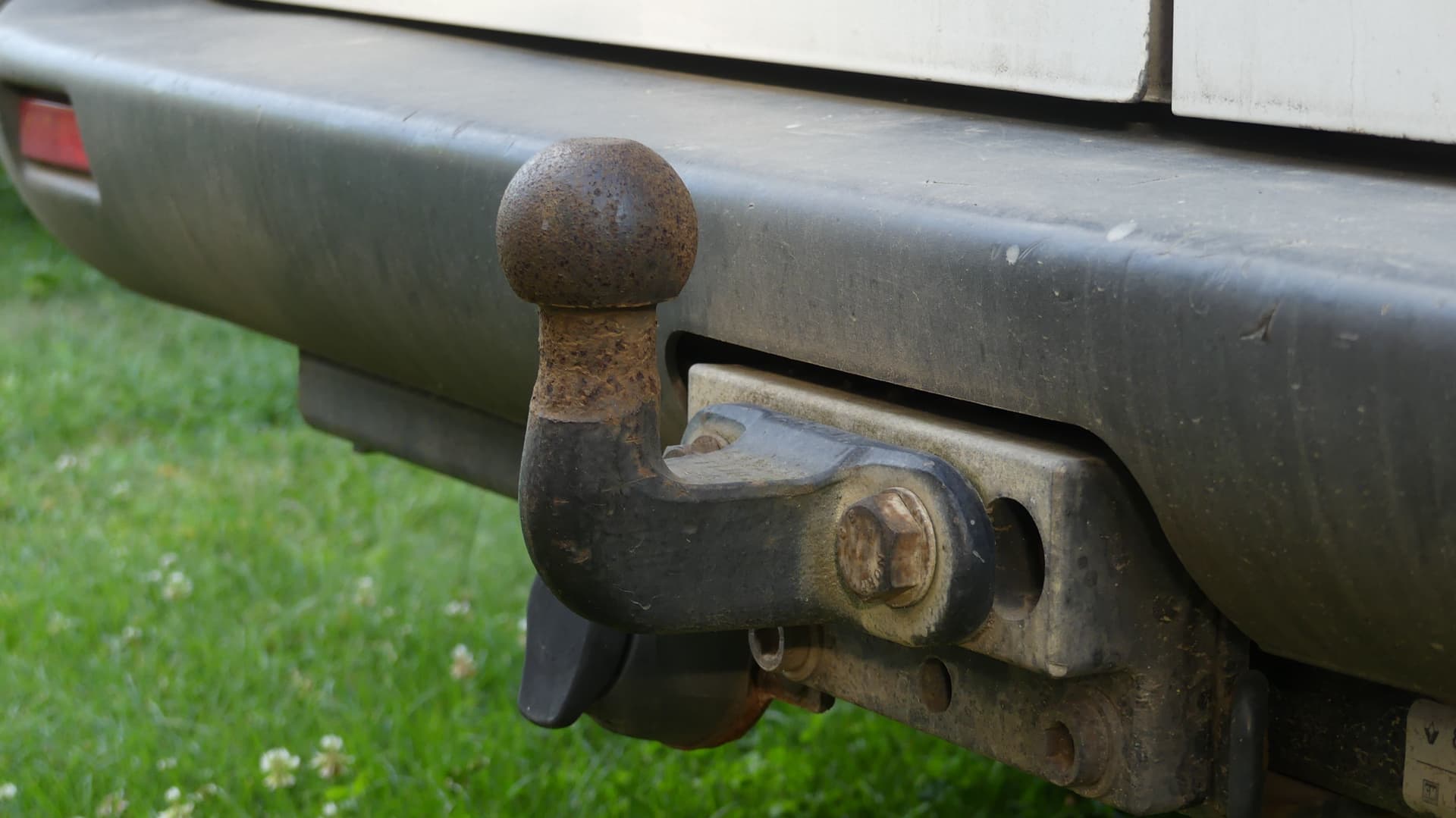 Master Lock Receiver Hitch Pin LockReplaces the clip pin anyone can pull out in a parking lot. It protects the ball mount, not the trailer. | Keeping the ball mount | Strong |
Prices are not published here. They change constantly and a stale number is worse than no number, so every button goes straight to the current Amazon listing. #ad — these are affiliate links and photographs are stock images of the category, not of the individual product.
What it prevents, specifically
An unhitched trailer sitting at a campsite or on a driveway has a coupler that is designed to accept a ball. Anybody with a truck and a ball mount can reverse up to it, drop the coupler on, and tow it away. It takes less than a minute and it looks entirely normal while it happens.
A coupler lock fills or blocks the throat of the coupler so no ball will seat in it. That is the whole mechanism, and it is remarkably effective against the only realistic theft method for a trailer.
The picks
1. Best for Locking the trailer itself
Trimax UMAX100 Universal Coupler Lock
The lock that matters when the trailer is parked and unhitched: it blocks the coupler so it cannot be dropped onto another ball.
- Specification
- Universal coupler lock
- Specification
- Hardened steel body
- Specification
- Fits a range of coupler sizes
What it does well
- Blocks the coupler so nobody can drop your trailer onto their own ball and drive away
- The universal fit covers common coupler sizes, so it survives a trailer upgrade
- Heavy enough to look like more trouble than the next trailer along
The real tradeoff
- Bulky and heavy to stow
- Universal fit means it is not a perfect fit on anything in particular
How it measures up
These are judgments from published specifications and what we see at the lodge, not laboratory results. How we choose.
- Beginner fit
- Good — Fitting it the first time takes a minute of fiddling.
- Install effort
- Strong — None.
- Deterrence
- Strong — Visible, heavy and slow to defeat.
- Value
- Good — Real money, real deterrence.
Specifications from Trimax.
2. Best for A simpler, lighter coupler lock
Master Lock Trailer Coupler Lock
The lighter coupler lock. Easier to fit and carry, a less serious obstacle, and the right trade for a driveway rather than a truck stop.
- Specification
- Coupler lock
- Specification
- Fits common coupler sizes
- Specification
- Keyed cylinder
What it does well
- Lighter and easier to fit than the heaviest universal locks
- Widely stocked, and keys can often be matched across other locks in the range
The real tradeoff
- A lighter build is a lighter deterrent
- Check your coupler size before buying. Fit is not truly universal
How it measures up
These are judgments from published specifications and what we see at the lodge, not laboratory results. How we choose.
- Beginner fit
- Strong — Straightforward.
- Install effort
- Strong — None.
- Deterrence
- Good — Opportunists, yes.
- Value
- Strong — Sensible price.
Specifications from Master Lock.
3. Best for Keeping the ball mount
Master Lock Receiver Hitch Pin Lock
Replaces the clip pin anyone can pull out in a parking lot. It protects the ball mount, not the trailer.
- Specification
- Locking receiver pin
- Specification
- Common 5/8 in diameter for 2 in receivers
- Specification
- Weather-resistant
What it does well
- Replaces the clip pin anyone can pull out in a parking lot in two seconds
- Stops the ball mount walking off, which is the cheap theft that happens constantly
The real tradeoff
- Protects the ball mount, not the trailer. A coupler lock is a different product
- The lock cylinder wants a squirt of lubricant once a season
How it measures up
These are judgments from published specifications and what we see at the lodge, not laboratory results. How we choose.
- Beginner fit
- Strong — Swap it for the clip pin.
- Install effort
- Strong — None.
- Deterrence
- Good — Stops opportunists, not a determined thief.
- Value
- Strong — Cheap relative to a ball mount.
Specifications from Master Lock.
What to look for
Check your coupler size first
Universal means a range, not everything. Most travel trailers use a two-inch or a two-and-five-sixteenths inch ball, and the coupler is stamped with its size on the side or the top.
Read the size off your coupler before ordering, and check it against the lock's stated range. A lock that does not properly fill the throat can sometimes be worked around, which defeats the purpose.
Weight and visible bulk are the feature
This is one of the few product categories where heaviness is genuinely desirable. A large steel lock that is obviously substantial does work before anyone touches it, because the decision to try or not is made from twenty feet away.
The cost is that you have to carry it and stow it. That is a real tradeoff, and it is the reason lighter locks exist and sell.
Latch-blocking versus throat-filling
| Type | What it does | Verdict |
|---|---|---|
| Throat-filling universal lock | Fills the coupler so no ball seats | Best. This is what you want |
| Latch-blocking pin lock | Stops the latch closing | Weaker. The throat is still open |
| Padlock through the latch hole | Stops the latch closing | Minimal. Better than nothing |
| Wheel lock (clamp) | Stops the wheel turning | Excellent addition for storage |
Cylinder protection
The lock sits at the front of the trailer, low, exposed to road spray when towing and weather when parked. Look for a shrouded cylinder, and lubricate it once a season. A frozen coupler lock on your own trailer is a memorable problem.
How to use one properly
Unhitch the trailer fully and let the coupler come to rest. Open the coupler latch so the throat is clear. Push the lock body fully into the throat, seat it against the coupler, then engage the locking mechanism and pull to confirm it will not come back out.
Two habits worth building. First, fit it every time you unhitch, including for a single night, because the exception becomes the habit quickly. Second, lower the tongue jack onto a pad afterwards so the trailer is stable and the lock is not the thing taking load — the sequence is in the setup checklist.
What to pair it with
A wheel lock for storage. If the trailer sits in a storage lot or on a driveway for weeks, a clamp on a wheel adds a completely separate obstacle. Two different types of lock is considerably better than two of the same.
A receiver lock for the ball mount. Different product, different target. See hitch lock versus coupler lock.
Positioning. Backing the trailer in so the coupler faces a wall or a hedge is free and it makes the reverse-up-and-hook approach impossible. Do that first, then lock it.
Mistakes first-timers make
Not checking the coupler size. Universal has limits.
Using a small padlock through the latch. The throat is still open, and the throat is the vulnerability.
Only locking it for long stays. A single night unlocked is the night it matters.
Never lubricating it. Then one day it will not open.
Questions people actually ask
How do you use a trailer coupler lock?
Unhitch fully, open the coupler latch so the throat is clear, push the lock body fully into the throat, engage the mechanism, then pull to confirm it will not come out.
What size coupler lock do I need?
Read the ball size stamped on your coupler, usually two inches or two and five-sixteenths, and check it against the lock's stated range. Universal covers a range rather than everything.
Is a padlock through the latch good enough?
It is better than nothing but much weaker, because the coupler throat is still open. A throat-filling lock is what stops a ball seating at all.
Should I lock the trailer for one night?
Yes. The night you skip is the night it matters, and fitting it takes under a minute once you have done it twice.
What else should I use alongside a coupler lock?
A wheel clamp for anything stored more than a few days, and a receiver lock for the ball mount. Two different types of obstacle is considerably better than two of the same.
Can I leave the coupler lock on while towing?
No. It comes off before the coupler goes onto the ball. It is a parking device only.
Sources
Read next
Towing & Security
Best RV Hitch Lock
Receiver locks and coupler locks explained, with what each actually protects and why you want both.
Towing & Security
Hitch Lock vs Coupler Lock: What Each One Protects
The two lock types compared on what they protect, when each applies, and the situations that need both at once.
Towing & Security
RV Towing Safety Checklist
A pre-departure towing checklist covering hitch, chains, brakes, tires, loading and the rooftop items people forget.
Reviewed September 25, 2026. Spot something out of date? Tell us and we will fix it.