Hitch Lock vs Coupler Lock: What Each One Protects
One stops your ball mount being lifted out of the receiver. The other stops your trailer being towed away. You want both, and together they cost very little.
Heads up: this page contains affiliate links. If you buy through one, Camp & Chock may earn a commission at no extra cost to you. It never changes which product we put first — how this site is funded.

The verdict
Buy both. If you can only buy one today, buy the coupler lock, because it protects the trailer rather than a component of the hitch. Then add the receiver lock, which costs very little and stops the most casual theft there is.
Part of our towing and security guide. The terms get used loosely, which is exactly how people end up buying one and believing they are covered.
Side by side
| Receiver hitch lock | Coupler lock | |
|---|---|---|
| Protects | The ball mount in your tow vehicle | The trailer itself |
| Where it goes | Through the receiver, replacing the pin and clip | Over or into the trailer's coupler |
| When it applies | Whenever the ball mount is in the receiver | Whenever the trailer is unhitched |
| Stops the trailer being towed away | No | Yes |
| Stops the ball mount being lifted out | Yes | No |
| Typical cost | Very low | Low to moderate |
| Weight to carry | Negligible | Real, on the heavier ones |
What each one is actually stopping
The receiver lock
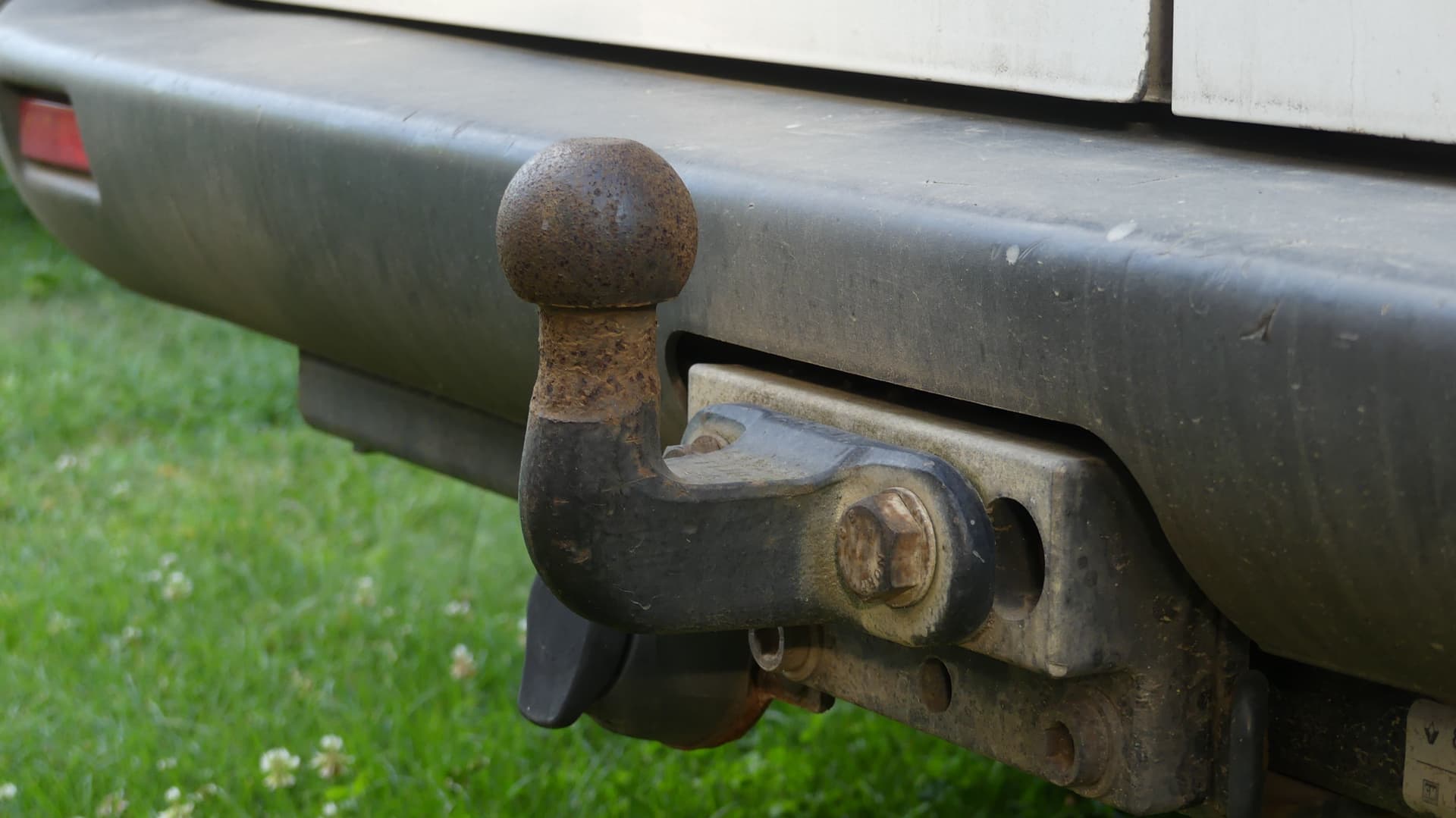
Your ball mount is held in the receiver by a pin with a clip through it. The clip comes out with two fingers. Then the pin slides out, and the ball mount walks away.
Ball mounts are worth money, they are completely anonymous once removed, and this takes about two seconds in a parking lot. A locking pin replaces the clip pin and ends it.
It protects a component. It does nothing at all for the trailer.
The coupler lock
An unhitched trailer has a coupler designed to accept a ball. Anyone with a truck and a ball mount can reverse up, drop the coupler on and tow it away in under a minute, looking entirely normal while doing it.
A coupler lock blocks the throat so no ball will seat. That is the only realistic theft method for a trailer, and this is the product that prevents it.
When you need which
By situation
| Situation | Receiver lock | Coupler lock |
|---|---|---|
| Trailer unhitched at a campsite | Not relevant | Yes |
| Trailer stored at home or in a lot | Not relevant | Yes, plus a wheel clamp |
| Hitched up, stopped at a store | Yes | Yes, through the closed latch |
| Ball mount left in the receiver, no trailer | Yes | Not relevant |
| Driving | Yes, it stays fitted | No, it comes off |
The row people miss is the third: hitched up and parked. The trailer is attached, so a coupler lock cannot fill the throat, but it can pass through the closed latch to stop somebody unlatching it. And the receiver lock stops the whole ball-mount-and-trailer assembly being drawn out of the receiver.
What neither of them does
Stop a determined thief with tools. Neither will, and nothing at this price point does. The realistic goal is comparative: be a less attractive target than the trailer next to you.
Stop the wheels turning. That is a wheel clamp, and it is the best addition for anything stored more than a few days. Two different types of obstacle beats two of the same.
Protect the contents. A locked door and not leaving valuables visible does that. These protect the trailer as an object.
Which one for you
You camp at campgrounds and unhitch on arrival: coupler lock is the priority, receiver lock second.
You store the trailer at home or in a lot: coupler lock plus a wheel clamp. Visible deterrence does the work.
You leave the ball mount in the receiver between trips: receiver lock, today. It is the cheapest thing on this site.
You travel with the trailer hitched and make stops: both, and use them at every stop rather than only overnight.
1. Best for Locking the trailer itself
Trimax UMAX100 Universal Coupler Lock
The lock that matters when the trailer is parked and unhitched: it blocks the coupler so it cannot be dropped onto another ball.
- Specification
- Universal coupler lock
- Specification
- Hardened steel body
- Specification
- Fits a range of coupler sizes
What it does well
- Blocks the coupler so nobody can drop your trailer onto their own ball and drive away
- The universal fit covers common coupler sizes, so it survives a trailer upgrade
- Heavy enough to look like more trouble than the next trailer along
The real tradeoff
- Bulky and heavy to stow
- Universal fit means it is not a perfect fit on anything in particular
How it measures up
These are judgments from published specifications and what we see at the lodge, not laboratory results. How we choose.
- Beginner fit
- Good — Fitting it the first time takes a minute of fiddling.
- Install effort
- Strong — None.
- Deterrence
- Strong — Visible, heavy and slow to defeat.
- Value
- Good — Real money, real deterrence.
Specifications from Trimax.
2. Best for Keeping the ball mount
Master Lock Receiver Hitch Pin Lock
Replaces the clip pin anyone can pull out in a parking lot. It protects the ball mount, not the trailer.
- Specification
- Locking receiver pin
- Specification
- Common 5/8 in diameter for 2 in receivers
- Specification
- Weather-resistant
What it does well
- Replaces the clip pin anyone can pull out in a parking lot in two seconds
- Stops the ball mount walking off, which is the cheap theft that happens constantly
The real tradeoff
- Protects the ball mount, not the trailer. A coupler lock is a different product
- The lock cylinder wants a squirt of lubricant once a season
How it measures up
These are judgments from published specifications and what we see at the lodge, not laboratory results. How we choose.
- Beginner fit
- Strong — Swap it for the clip pin.
- Install effort
- Strong — None.
- Deterrence
- Good — Stops opportunists, not a determined thief.
- Value
- Strong — Cheap relative to a ball mount.
Specifications from Master Lock.
What to buy
A throat-filling coupler lock, a locking receiver pin sized to your receiver, and a lighter coupler lock if you mostly park at home.
Best for Locking the trailer itself
Trimax UMAX100 Universal Coupler Lock
The lock that matters when the trailer is parked and unhitched: it blocks the coupler so it cannot be dropped onto another ball.
Best for Keeping the ball mount
Master Lock Receiver Hitch Pin Lock
Replaces the clip pin anyone can pull out in a parking lot. It protects the ball mount, not the trailer.
Best for A simpler, lighter coupler lock
Master Lock Trailer Coupler Lock
The lighter coupler lock. Easier to fit and carry, a less serious obstacle, and the right trade for a driveway rather than a truck stop.
Questions people actually ask
What is the difference between a hitch lock and a coupler lock?
A receiver hitch lock replaces the pin holding your ball mount in the tow vehicle and protects that component. A coupler lock blocks the trailer's coupler when unhitched and stops the trailer being towed away.
Which one should I buy first?
The coupler lock, because it protects the trailer rather than a hitch component. Then add the receiver lock, which costs very little.
Do I need a coupler lock while the trailer is hitched?
It cannot fill the throat while a ball is in it, but it can pass through the closed latch to stop somebody unlatching. Combined with a receiver lock, that covers a hitched-and-parked trailer.
Will these stop a determined thief?
No. Nothing at this price does. The realistic goal is to be a less attractive target than the trailer next to you, which visible hardware achieves.
What should I add for long-term storage?
A wheel clamp. Two different types of obstacle is considerably better than two of the same, and a clamp is highly visible from a distance.
Does the receiver lock stay on while driving?
Yes. It replaces the pin and clip, so it is fitted whenever the ball mount is in the receiver. The coupler lock comes off before hitching.
Sources
Read next
Towing & Security
Best RV Hitch Lock
Receiver locks and coupler locks explained, with what each actually protects and why you want both.
Towing & Security
Best Trailer Coupler Lock
Coupler locks compared on deterrence, fit and weight, with fitting instructions and the sizing check to do first.
Towing & Security
RV Towing Safety Checklist
A pre-departure towing checklist covering hitch, chains, brakes, tires, loading and the rooftop items people forget.
Reviewed September 25, 2026. Spot something out of date? Tell us and we will fix it.