RV Towing Safety Checklist
Ten minutes of checks, in the same order every time. The point of a fixed list is that it works when you are tired and somebody is waiting for your site.
Heads up: this page contains affiliate links. If you buy through one, Camp & Chock may earn a commission at no extra cost to you. It never changes which product we put first — how this site is funded.
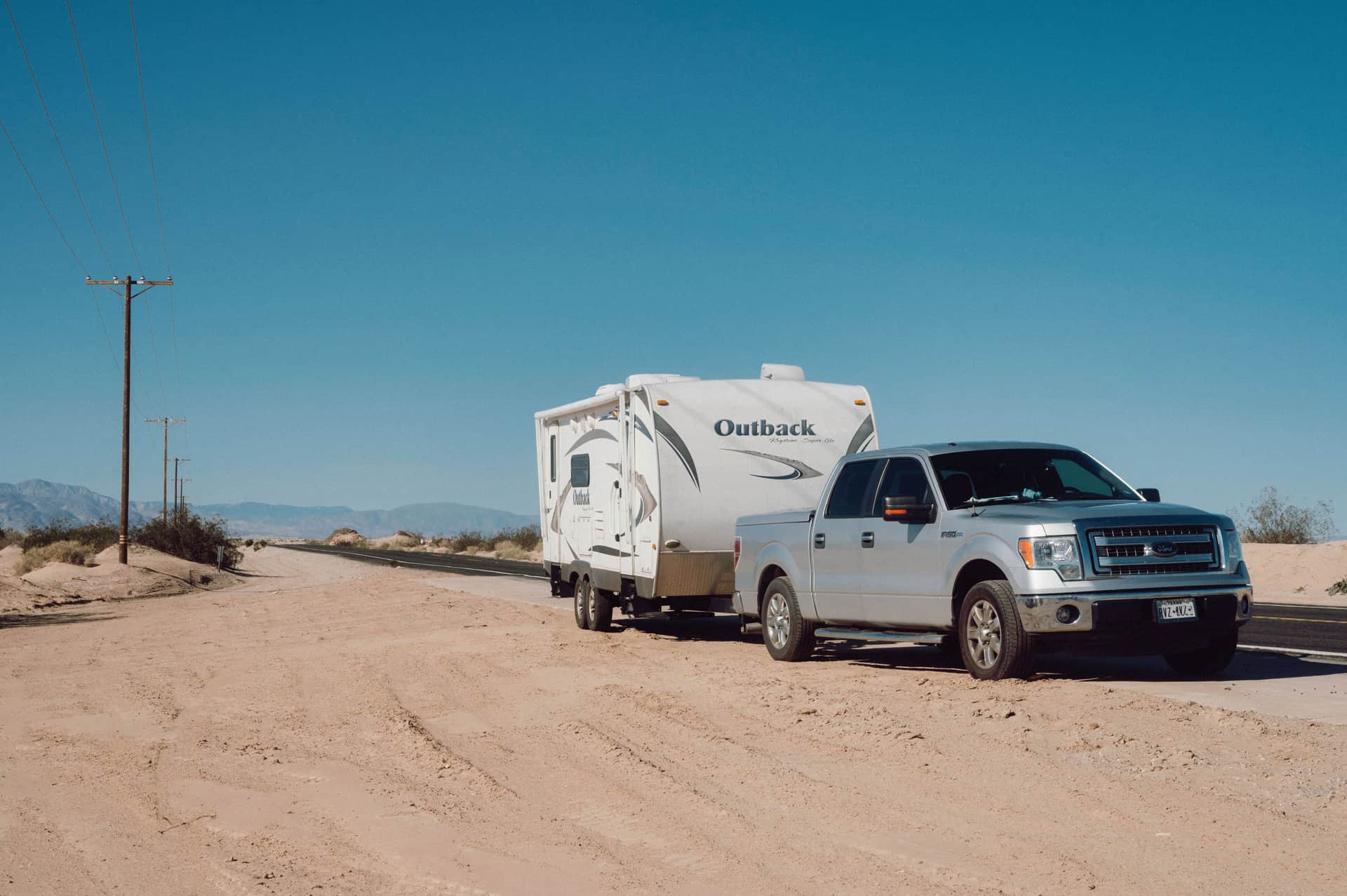
Work through this in the same order every departure. That is the whole point of a list: it works when you are tired, in the dark, or being hurried. Ten minutes, and it catches the things that actually get forgotten.
Part of our towing and security guide. The hitching steps themselves are in how to hitch a travel trailer.
The hitch
- Coupler fully seated on the ball, and the ball is the correct size for the coupler
- Latch closed and pinned
- Lift test done: raising the tongue jack lifts the back of the vehicle, not the trailer
- Weight distribution bars fitted and tensioned to their established setting
- Receiver pin lock in place
- Safety chains attached to the vehicle, crossed, correct slack
- Breakaway cable attached to the vehicle, not to a chain or the ball mount
- Tongue jack fully retracted
Electrical and brakes
- Connector plugged in and latched, cable routed so it cannot drag
- Running lights, brake lights and both indicators confirmed by a walk-round
- Brake controller powered and set for your load
- Brakes tested with a short roll and a light application before leaving the site
The lights check needs a second person or a reflective surface. Do it properly — a trailer with no brake lights is both dangerous and the fastest way to meet a state trooper.
Tires and wheels
- Pressures set to the trailer placard figure, not the tire sidewall maximum
- Lug nuts checked with a torque wrench, especially after any wheel has been off
- Sidewalls inspected for cracking, bulges and cuts
- Date code checked at the start of the season: age retires a trailer tire regardless of tread
- Spare present, inflated, and its carrier secure
- Tire monitor sensors reading and paired
A trailer tire gives you no warning through the steering wheel, which is why a monitoring system matters more on a trailer than on a car.
Weights and loading
- Loaded trailer weight within the tow vehicle's rating
- Tongue weight within the vehicle and hitch ratings
- Heavy items low and ahead of the axles, not piled at the back
- Nothing loose inside that can move in a hard stop
- Water tanks filled or emptied deliberately, not by accident
Loading matters more than most first-timers expect. Weight behind the axles makes a trailer want to sway, and no amount of sway control fully compensates for a badly loaded trailer. General guidance is published by NHTSA.
The gear this checklist assumes
A tire monitor because a trailer cannot tell you itself, a weight distribution hitch sized to your tongue weight, and a locking pin instead of the clip anyone can pull.
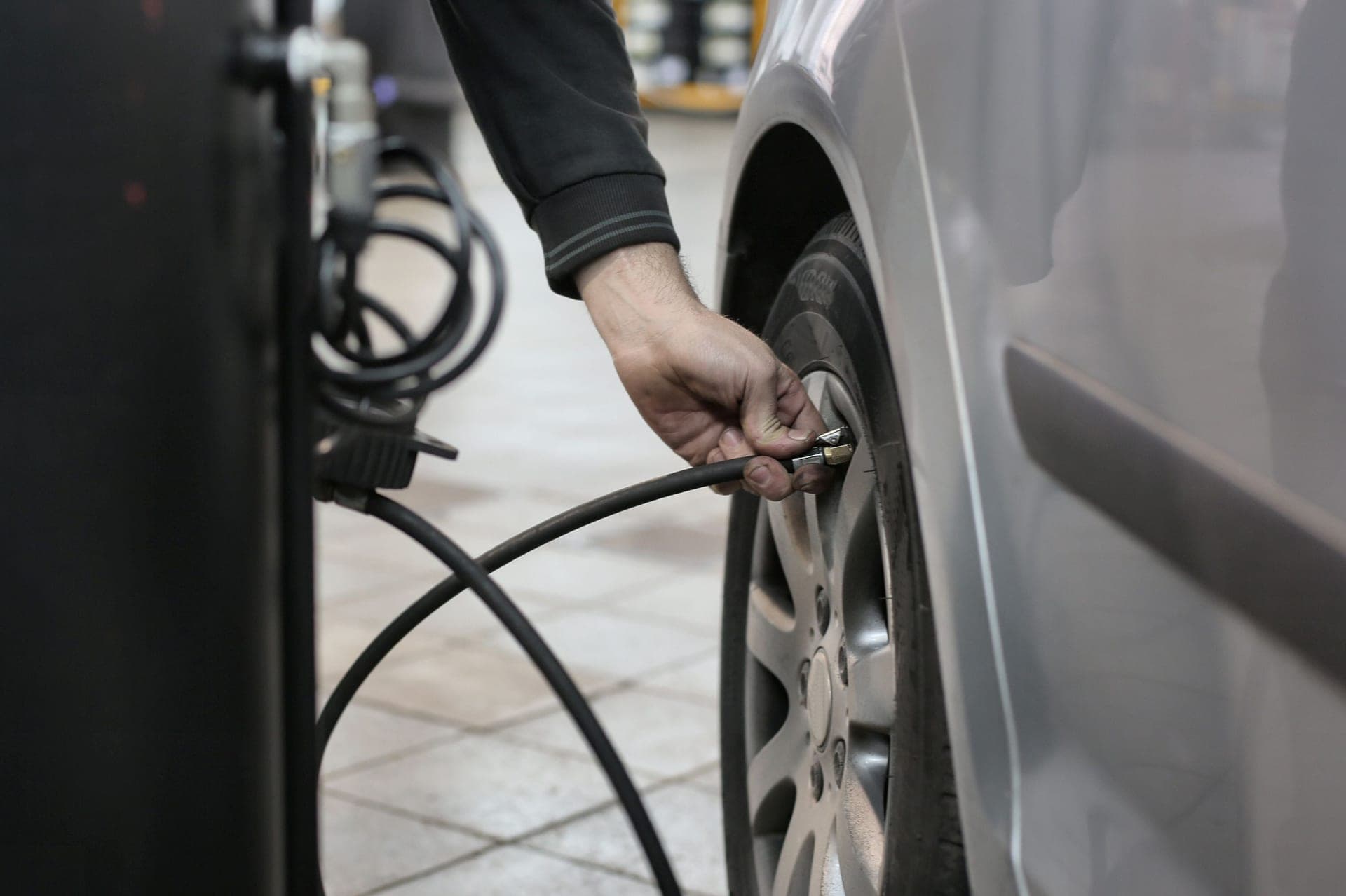
Best for Knowing before the blowout
TST 507 Tire Pressure Monitoring System
The only warning you get before a trailer tire fails, because a trailer gives you no feedback through the steering wheel.
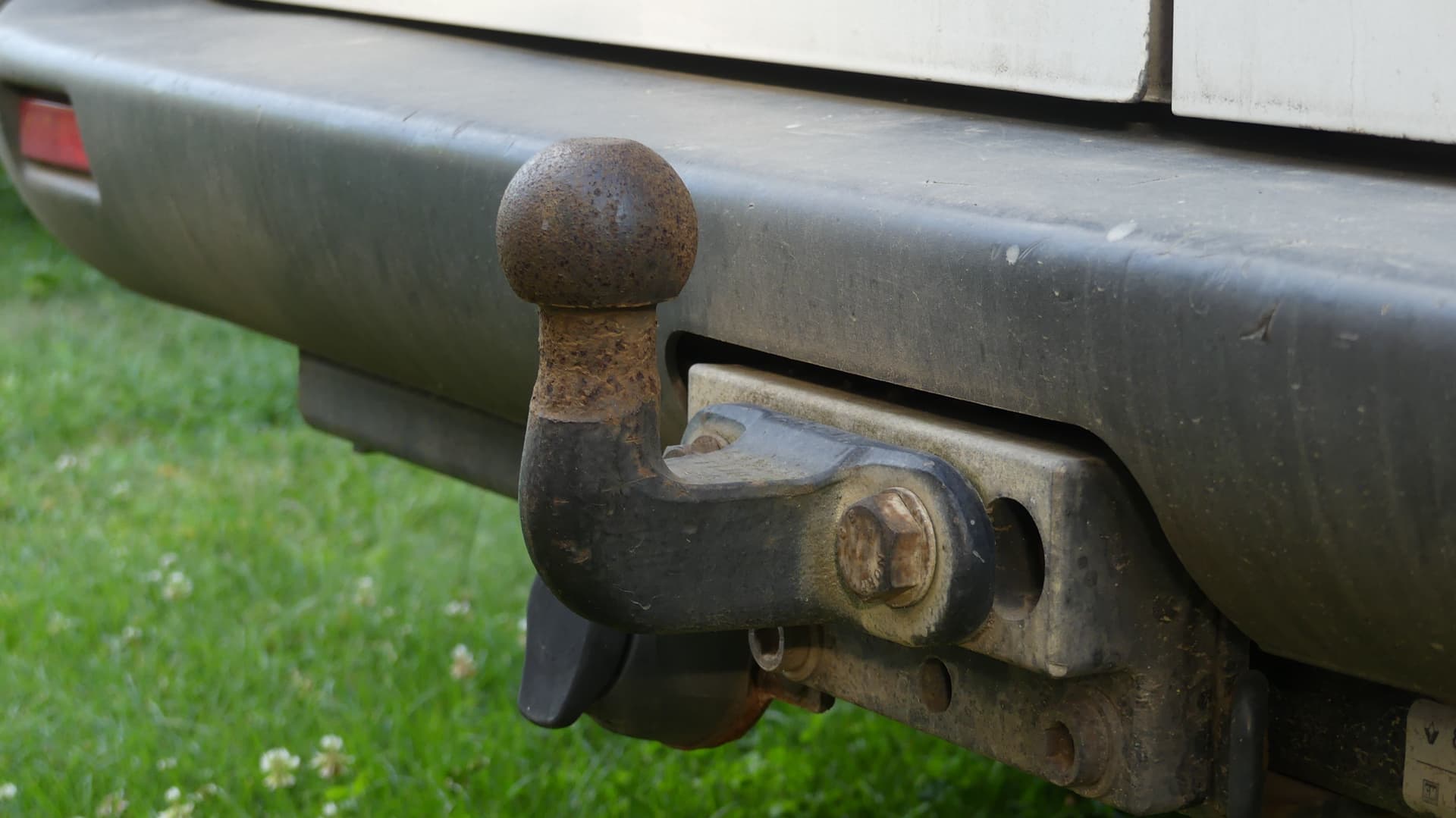
Best for Sway control built in
Equal-i-zer 4-Point Sway Control Hitch
Weight distribution with sway control built in rather than bolted on. Size it to your real tongue weight and let a shop set it up once.
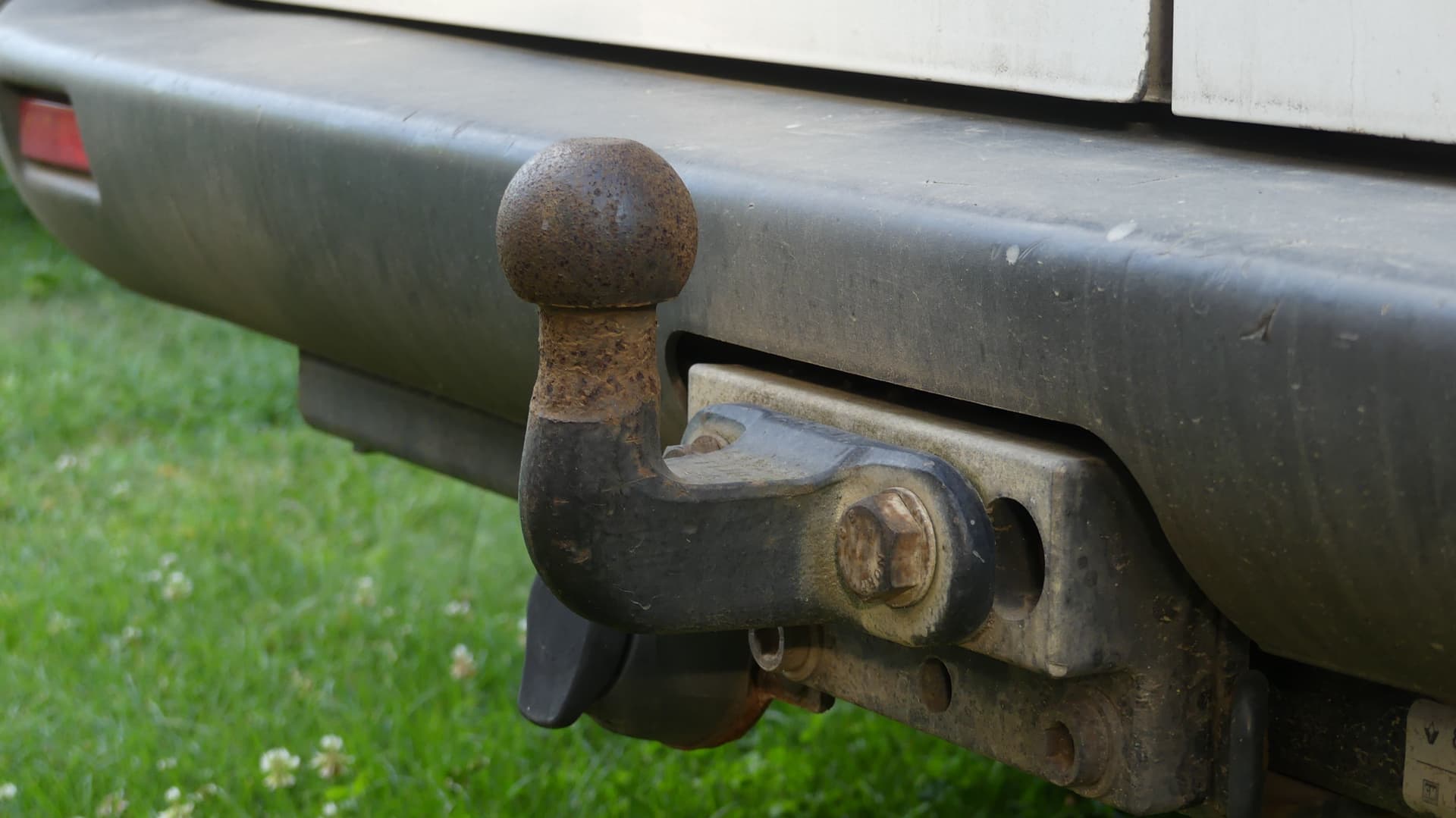
Best for Keeping the ball mount
Master Lock Receiver Hitch Pin Lock
Replaces the clip pin anyone can pull out in a parking lot. It protects the ball mount, not the trailer.
Outside the trailer
- Steps retracted
- Awning fully in and locked
- All compartment doors closed and latched
- Antenna and any vent covers down
- Roof clear: nothing left up there from a repair or a cleaning session
- Power cord, water hose and sewer hose disconnected and stowed
- Chocks, leveling blocks and jack pads collected and counted back in
- Stabilizer jacks fully retracted
- Both propane valves closed
The counted-back-in habit is the one that saves money. The reason everybody eventually owns an odd number of leveling blocks is a stack left under a wheel — see how many leveling blocks you need.
Inside the trailer
- Fridge switched to the correct mode and its door latched
- Cupboards and drawers latched
- Roof vents closed
- Windows closed and latched
- Nothing on countertops
- TV and anything loose on a mount secured
- Bathroom door latched open or closed, not free to swing
The walk-round
Last thing, before you get in: walk all the way around the trailer and the tow vehicle. Slowly. Look under both. Look at the roof line.
This is where you find the thing the list did not cover, and it is the single most reliable step on the page. Every experienced tower does it, and most of them can tell you what it once caught.
The five most common departure mistakes
| Forgotten | Consequence |
|---|---|
| Awning not fully retracted | It departs at highway speed. Expensive and dangerous |
| Steps left out | They catch a curb on the first turn |
| Latch pin not fitted | The latch can vibrate open |
| Leveling blocks left behind | You own nine blocks now |
| Power cord still plugged in | You discover it at the end of the cord's travel |
Questions people actually ask
What should I check before towing a travel trailer?
Hitch and latch pin, the lift test, crossed safety chains, the breakaway cable, lights and brakes, tire pressures against the trailer placard, loading, and a full walk-round of the trailer and vehicle.
What tire pressure should trailer tires be?
The figure on the trailer's placard, not the maximum printed on the tire sidewall. The sidewall number is a maximum rather than a recommendation.
How do I test trailer brakes before leaving?
Roll forward slowly and apply the brake controller manually. You should feel the trailer brakes take hold. Do it on the site rather than discovering a problem at the first junction.
How should I load a travel trailer?
Heavy items low and ahead of the axles. Weight behind the axles makes a trailer want to sway, and sway control hardware does not fully compensate for bad loading.
What is the most commonly forgotten item?
The awning, followed by the steps. Both are on the outside, both are easy to miss in the dark, and both are expensive. A walk-round catches them.
Do I need to check lug nuts every trip?
Check them at the start of each season and any time a wheel has been off, with a torque wrench rather than by feel. A quick visual check each trip is sensible.
Sources
Read next
Towing & Security
How to Hitch a Travel Trailer (Step by Step)
The full hitching sequence with the latch and jack checks that prevent a trailer coming off the ball.
Towing & Security
Best RV Tire Pressure Monitoring System
Tire pressure monitoring systems compared, with the reason a trailer needs one far more than a car does.
First-Season Starter Kit
RV Setup and Departure Checklist
The arrival and departure sequence for a travel trailer, in the order that avoids redoing work or damaging something.
First-Season Starter Kit
Travel Trailer Essentials Checklist
A first-trip checklist for a new travel trailer, grouped by utility with the commonly forgotten items called out.
Reviewed September 25, 2026. Spot something out of date? Tell us and we will fix it.