Best Weight Distribution Hitch for a Half-Ton Truck
Your truck's tow rating is almost never what stops you. Payload is. And a steel spring-bar hitch spends 60 to 100 pounds of it before you load a single bag.
Heads up: this page contains affiliate links. If you buy through one, Camp & Chock may earn a commission at no extra cost to you. It never changes which product we put first — how this site is funded.
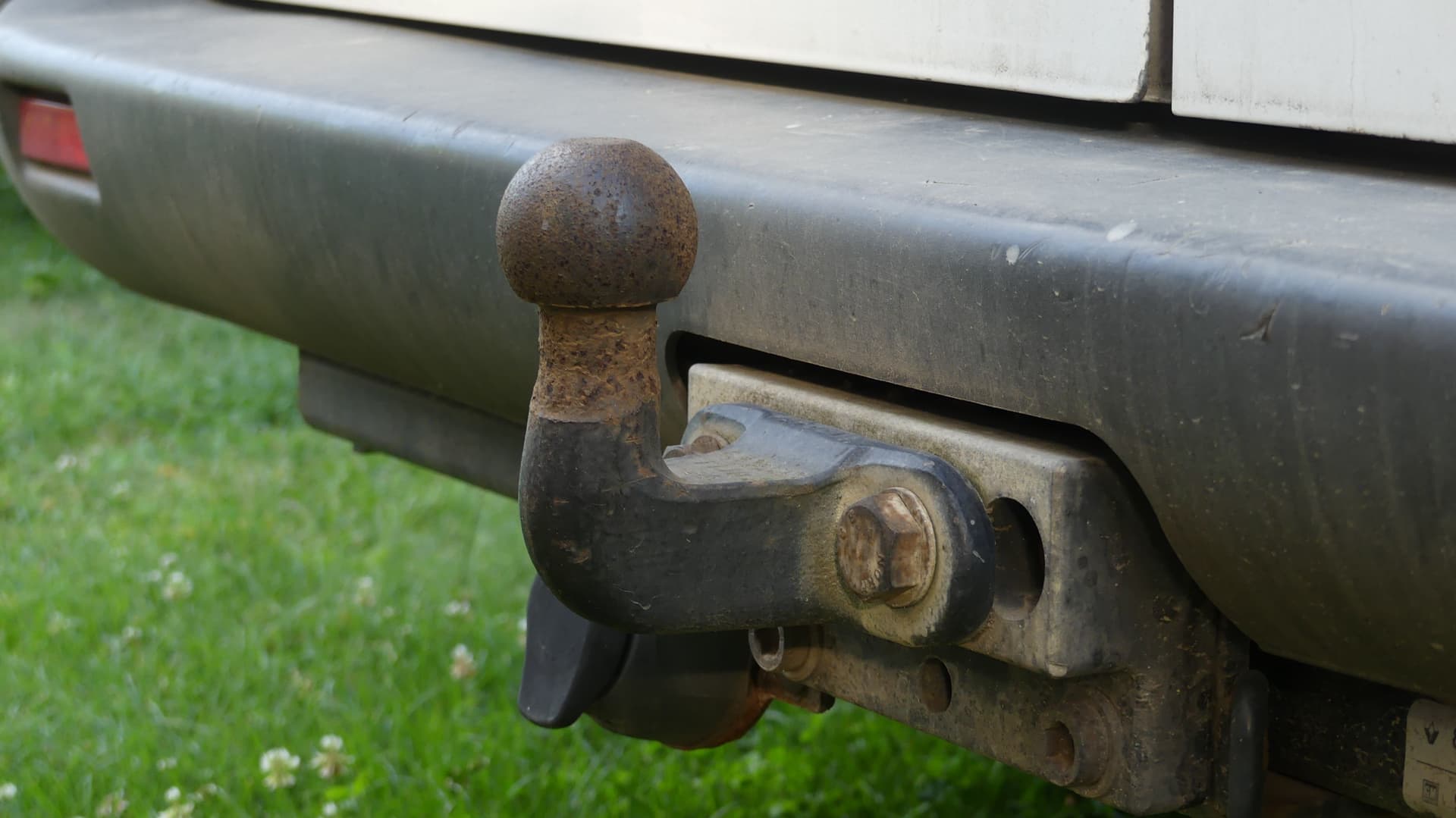
The short answer
On a half-ton truck, start with the lightest system that still controls sway, because the number that limits a half-ton is almost always payload rather than tow rating — and the hitch is payload. A chain-tensioned system weighs dramatically less than a steel spring-bar hitch, which gives you that weight back for people, water and gear. If sway control matters more to you than pounds, a conventional integrated-sway hitch is the right call instead. Either way, size it to your real loaded tongue weight, because a correctly sized hitch of any design beats a wrongly sized better one.
Part of our towing and security guide. The general version of this page is the weight distribution hitch roundup, which ranks on sway control. This page ranks the same category for one specific tow vehicle, and the answer changes — which is the point of having it.
Our picks at a glance
Tap any row to jump to the full write-up.
| # | Product | Best for | Beginner fit | Price |
|---|---|---|---|---|
| 1 | 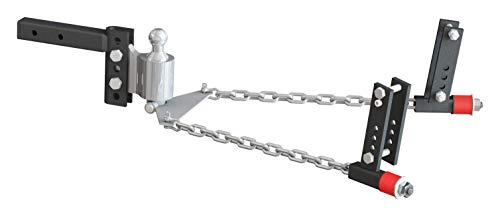 Andersen No-Sway Weight Distribution HitchThe light one. Far easier to handle than steel spring bars, at the cost of being different from every hitch tutorial you will read. | Weight, and easier hitching | Good | |
| 2 | 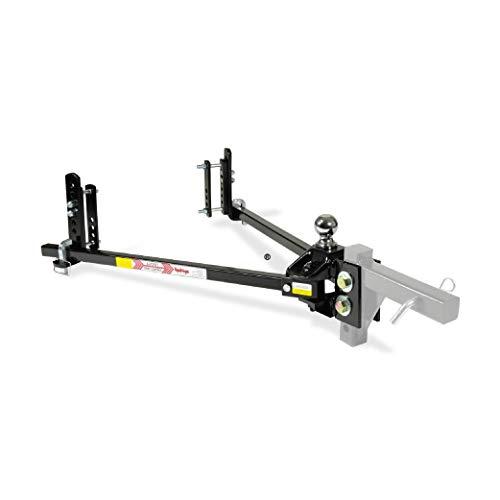 Equal-i-zer 4-Point Sway Control HitchWeight distribution with sway control built in rather than bolted on. Size it to your real tongue weight and let a shop set it up once. | Sway control built in | Adequate | |
| 3 | Husky Centerline TS Weight Distribution HitchThe same category of hitch without the famous squeak. Same sizing homework, same argument for a professional first setup. | Quieter sway control | Adequate | |
| 4 | 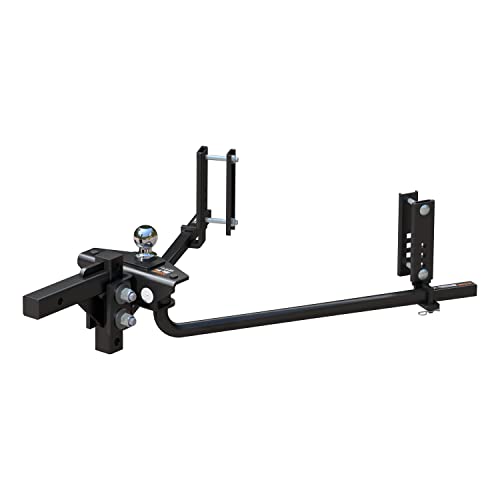 CURT TruTrack Weight Distribution HitchThe widely stocked option: integrated sway control, several weight ratings, and parts you can actually source mid-trip. | Availability and parts support | Adequate |
Prices come from Amazon and were last checked November 12, 2026. They change constantly, so a price older than 48 hours is withdrawn rather than shown stale — those rows read “Check price on Amazon” instead and go straight to the current listing. #ad — these are affiliate links.
Why a half-ton is its own question
Dealerships sell trailers against a truck’s tow rating, which is the big impressive number on the brochure. That number is almost never what you run out of first.
What you run out of is payload: the weight your truck is rated to carry, printed on the yellow sticker in the driver’s door jamb. On a half-ton that figure is often considerably less than people expect, and four things eat it before you have loaded anything fun. The tongue weight of the trailer, which is typically 10 to 15 percent of its loaded weight. The passengers. Anything in the bed. And the hitch system itself.
That last one is the item nobody counts, and on a steel spring-bar system it is not trivial. The head, the shank, the bars and the brackets are all carried by the truck, and all of it comes off the same yellow sticker as your family.
What is actually consuming a half-ton's payload
| Item | Where the weight lands | Commonly forgotten? |
|---|---|---|
| Trailer tongue weight | On the ball, carried by the truck | No - but it is usually underestimated |
| The weight distribution hitch | On the receiver, carried by the truck | Yes, almost always |
| Passengers | In the cab | Frequently |
| Cargo in the bed | Behind the cab | Sometimes |
| Fresh water in the trailer | Mostly forward, so partly on the tongue | Yes, at roughly 8.3 lb per gallon |
| Propane and battery | At the very front of the trailer | Yes - nearly all of it lands on the ball |
Add those up against the door-jamb figure before you choose a hitch, because the result sometimes changes which trailer you should be towing at all. If the arithmetic is new to you, what size weight distribution hitch do I need walks through getting to a real tongue weight figure.
How we choose for this use case
System weight, first. This is the one criterion that is genuinely different from the general roundup. On a three-quarter-ton truck the weight of the hitch is noise. On a half-ton it is a meaningful fraction of what is left.
Sway control that is designed in, not added on. A separate friction bar is a part you can forget to fit, and a half-ton with a tall trailer behind it is exactly the combination where sway matters. Every pick here handles sway as part of the design.
Correct sizing available for your tongue weight. Bars rated far above your real figure tow harshly; bars rated below it do not distribute the load at all. A system with a rating band that brackets your number comfortably beats one where you sit at an edge.
How often you will handle it. If you hitch and unhitch every weekend, the weight you lift matters as much as the weight the truck carries. This is the quiet advantage of the lighter systems and it is the thing owners mention most.
We do not test products and say so on how we choose. The published specifications for each system are linked at the end.
The picks
1. Best for Weight, and easier hitching
Andersen No-Sway Weight Distribution Hitch
The light one. Far easier to handle than steel spring bars, at the cost of being different from every hitch tutorial you will read.
- Specification
- Chain-tensioned weight distribution
- Specification
- Much lighter than steel-bar systems
- Specification
- Sway control via the coupler design
What it does well
- Dramatically lighter than a steel spring-bar hitch, which matters every single time you handle it
- Hitching and unhitching is faster once you are used to the tensioning
- No spring bars to store in the back of the truck
The real tradeoff
- Different enough from a conventional hitch that most advice you read online will not apply directly
- Tension setting matters, and it is easy to get casual about it
How it measures up
These are judgments from published specifications and what we see at the lodge, not laboratory results. How we choose.
- Beginner fit
- Good — Simple once learned, unfamiliar at first.
- Install effort
- Good — Lighter to handle than any bar system.
- Warning quality
- Good — Sway handled at the coupler.
- Value
- Good — Priced with the steel systems. Weight is the win.
Specifications from Andersen Hitches.
2. Best for Sway control built in
Equal-i-zer 4-Point Sway Control Hitch
Weight distribution with sway control built in rather than bolted on. Size it to your real tongue weight and let a shop set it up once.
- Specification
- Weight distribution with integrated four-point sway control
- Specification
- Friction-based sway control, no separate bar
- Specification
- Sized by trailer tongue weight
What it does well
- Sway control is built into the design rather than added as a separate friction bar you can forget to fit
- Nothing extra to remove before a tight reversing maneuver, unlike some add-on sway bars
- Well understood, so any RV shop has set one up before
The real tradeoff
- It squeaks. Everyone says so, and it is normal rather than a fault
- Must be sized to your actual tongue weight, and getting that wrong makes towing worse, not better
- Setup is genuinely a job. This is the one purchase on this site worth having a shop do the first time
How it measures up
These are judgments from published specifications and what we see at the lodge, not laboratory results. How we choose.
- Beginner fit
- Adequate — The one item here where a shop setup is money well spent.
- Install effort
- Weak — Initial setup is measurement and adjustment, not just bolting.
- Warning quality
- Strong — Sway is handled by design, not by a bar you might forget.
- Value
- Good — Expensive, and the correct answer for most travel trailers.
Specifications from Equal-i-zer.
3. Best for Quieter sway control
Husky Centerline TS Weight Distribution Hitch
The same category of hitch without the famous squeak. Same sizing homework, same argument for a professional first setup.
- Specification
- Weight distribution with integrated sway control
- Specification
- Rated by tongue weight
- Specification
- No friction pads to squeal
What it does well
- Does not produce the squeak the friction-pad designs are famous for
- Comparable sway performance without a separate bar to remove
The real tradeoff
- Same sizing requirement and same setup complexity
- Less universally familiar to small-town RV shops
How it measures up
These are judgments from published specifications and what we see at the lodge, not laboratory results. How we choose.
- Beginner fit
- Adequate — Setup is still a job.
- Install effort
- Weak — Measurement and adjustment required.
- Warning quality
- Strong — Integrated sway control.
- Value
- Good — Comparable money, quieter life.
Specifications from Husky Towing.
4. Best for Availability and parts support
CURT TruTrack Weight Distribution Hitch
The widely stocked option: integrated sway control, several weight ratings, and parts you can actually source mid-trip.
- Specification
- Weight distribution with integrated sway control
- Specification
- Several tongue-weight ratings
- Specification
- Widely stocked
What it does well
- Easy to find and easy to get parts for
- Integrated sway control rather than an add-on bar
The real tradeoff
- Same sizing and setup requirements as the rest of the category
How it measures up
These are judgments from published specifications and what we see at the lodge, not laboratory results. How we choose.
- Beginner fit
- Adequate — Setup is a job, as always.
- Install effort
- Weak — Measurement and adjustment.
- Warning quality
- Good — Integrated sway control.
- Value
- Good — Fair, with good parts availability.
Specifications from CURT.
How the four compare, as published
| Andersen No-Sway | Equal-i-zer 4-point | Husky Centerline TS | CURT TruTrack | |
|---|---|---|---|---|
| Sway control | Via the coupler design | Friction-based, integrated four-point | Integrated, no friction pads | Integrated |
| Spring bars to store | No | Yes | Yes | Yes |
| Relative system weight | Much lighter than steel bar systems | Conventional steel | Conventional steel | Conventional steel |
| Known to squeak | No | Yes, and it is normal | No | Not noted |
| Sized by | Tongue weight | Tongue weight | Tongue weight | Tongue weight, several ratings |
| Shop familiarity | Less conventional, so advice differs | Very high - any RV shop has set one up | Good, less universal in small towns | High, widely stocked |
| Parts availability mid-trip | Brand-specific | Good | Good | Very good |
The honest summary of that table: all four do the job, and the differences are about weight, noise and familiarity rather than about whether the trailer tows straight. Which is why the half-ton framing changes the ranking rather than the shortlist.
The lighter system’s honest tradeoff
We lead with the chain-tensioned system on this page, so it is worth being clear about what you give up.
It works differently from a conventional spring-bar hitch, which means most of the advice you will read online — forum posts, videos, general towing articles — does not apply directly to it. The tensioning procedure is its own thing and it does matter; it is easy to get casual about it after a few trips, and casual is where the performance goes.
A conventional integrated-sway hitch is, by contrast, the thing every RV shop in the country has set up a hundred times. If you want the option where help is easiest to find and the squeak is a known joke rather than a worry, that is a completely defensible choice, and it is why it sits at number two rather than number four.
Pick by what your yellow sticker says
Payload is tight and you hitch most weekends: the chain-tensioned system, for the weight you get back and the weight you are not lifting. Payload is comfortable and you want the most familiar setup: the four-point friction hitch. Same thing without the squeak: the Centerline. Want parts you can source in any town mid-trip: the CURT.
Best for Weight, and easier hitching
Andersen No-Sway Weight Distribution Hitch
The light one. Far easier to handle than steel spring bars, at the cost of being different from every hitch tutorial you will read.
Best for Sway control built in
Equal-i-zer 4-Point Sway Control Hitch
Weight distribution with sway control built in rather than bolted on. Size it to your real tongue weight and let a shop set it up once.
Best for Quieter sway control
Husky Centerline TS Weight Distribution Hitch
The same category of hitch without the famous squeak. Same sizing homework, same argument for a professional first setup.
Best for Availability and parts support
CURT TruTrack Weight Distribution Hitch
The widely stocked option: integrated sway control, several weight ratings, and parts you can actually source mid-trip.
Three things to do before you buy anything
Read the yellow sticker in your door jamb. It gives the combined weight of occupants and cargo your truck is rated to carry. Everything on this page is in service of that number.
Get a real loaded tongue weight, not a brochure figure. Dry weight excludes everything you own. Fresh water, propane and the front pass-through are all at or ahead of the axles, so a disproportionate share lands on the ball.
Confirm you need one at all. Some combinations do not, and some trailers specify one. The straight answer is in do I need a weight distribution hitch.
What a hitch does not fix
Being over payload. No hitch raises your truck’s rating. A weight distribution hitch moves load forward onto the front axle; it does not reduce the total the truck is carrying.
Not being able to see past the trailer. That is mirrors, and state rules are written about mirrors rather than cameras — see the tow mirror roundup.
A tire about to fail. A trailer gives you no steering feedback when a tire goes down. Tire pressure monitoring is the only warning you get, and what psi should travel trailer tires be covers getting them right in the first place.
Questions people actually ask
Do I need a weight distribution hitch with a half-ton truck?
Often yes, and many trailer manufacturers specify one above a certain tongue weight. The more important check on a half-ton is payload rather than tow rating: add tongue weight, passengers, bed cargo and the hitch itself against the figure on the yellow sticker in your door jamb.
Does the weight distribution hitch count against payload?
Yes, and it is the item most people forget. The head, shank, bars and brackets are all carried by the truck and come off the same payload figure as your passengers. On a half-ton that is a meaningful fraction of what is left, which is why lighter systems are worth considering.
Which weight distribution hitch is lightest?
Chain-tensioned systems such as the Andersen No-Sway weigh dramatically less than conventional steel spring-bar hitches, and there are no spring bars to store or lift. The tradeoff is that it works differently enough that most general towing advice does not apply directly to it.
How do I size a weight distribution hitch?
By loaded tongue weight, not trailer weight. Bars rated far above your real figure tow harshly; bars rated below it do not transfer load forward at all. Aim for a rating band that puts your number comfortably inside it rather than at an edge.
Should I pay a shop to set up a weight distribution hitch?
For a first setup, yes. It is measurement and adjustment rather than bolting - ride heights measured hitched and unhitched, with the bars tensioned to transfer the right proportion forward - and a wrongly set up hitch tows worse than none while feeling normal from the driver's seat. Watch, write the settings down, and repeat it yourself afterwards.
Sources
Read next
Towing & Security
Best Weight Distribution Hitch for a Travel Trailer
Weight distribution hitches with integrated sway control, sized by tongue weight, with an honest account of setup complexity.
Towing & Security
What Size Weight Distribution Hitch Do I Need?
How to size spring bars from your real loaded tongue weight, including the gear everyone forgets to count.
Towing & Security
Do I Need a Weight Distribution Hitch?
The tongue-weight test that decides whether you need weight distribution, and why a big truck does not exempt you.
Towing & Security
Equal-i-zer vs Husky Centerline TS
Two integrated sway-control hitches compared on mechanism, noise, setup and parts support.
Reviewed October 17, 2026. Spot something out of date? Tell us and we will fix it.