How to Back Up a Travel Trailer
Everyone is bad at this on day one and almost nobody is bad at it by the end of the season. Here is the method, and the practice that compresses the learning.
Heads up: this page contains affiliate links. If you buy through one, Camp & Chock may earn a commission at no extra cost to you. It never changes which product we put first — how this site is funded.
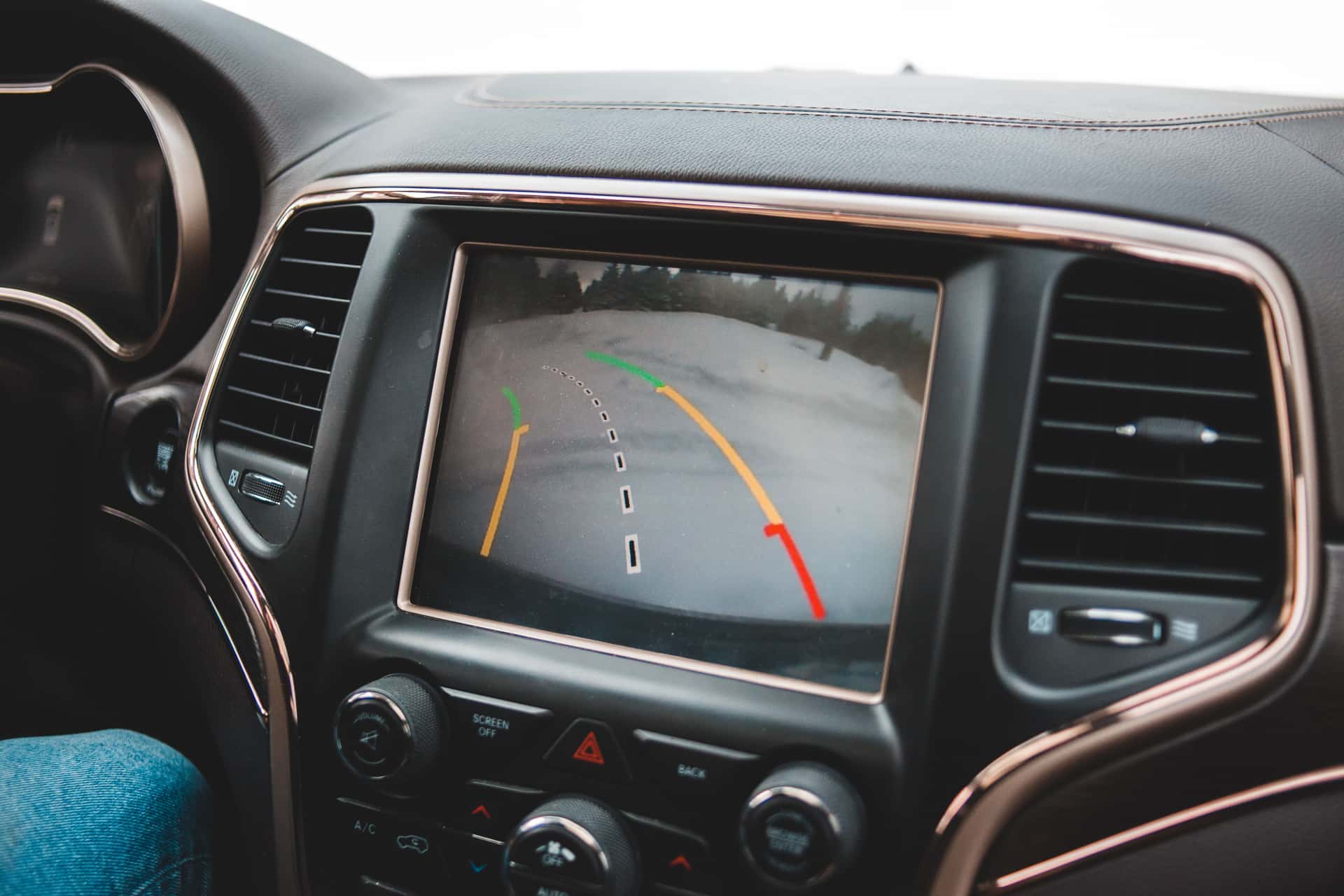
Put your hand at the bottom of the steering wheel and move it the way you want the back of the trailer to go, make small inputs, and pull forward to reset whenever the angle goes wrong. That is the whole method. Everything else on this page is detail, practice and the equipment that makes it less stressful. The single most useful thing to know on day one is that pulling forward is the technique rather than an admission of defeat — experienced owners do it constantly.
Part of our towing and security guide. If you have not hitched yet, how to hitch a travel trailer comes first.
Why it feels impossible at first
Reversing a car is intuitive because the back of the car goes where the back of the car is pointed. Reversing a trailer is not, because the trailer pivots around a point behind your rear axle and responds to the angle between the two vehicles rather than to the direction you are steering.
The practical consequence is that the trailer appears to do nothing, then does everything. That delay is what makes people over-correct, and over-correction is what produces the jackknife. The hand-at-the-bottom trick solves the direction confusion; small inputs and pauses solve the delay.
The hand position trick, explained properly
Hold the wheel at the six o’clock position with one hand. Now move that hand left, and the back of the trailer goes left. Move it right, and the trailer goes right.
It works because moving your hand left at the bottom of the wheel turns the front wheels right, which pushes the back of the truck right, which swings the trailer left. You do not need to hold that chain of reasoning in your head while someone waits behind you — that is the point of the trick. One hand, bottom of the wheel, move it where you want the trailer to go.
What the mirror is telling you
| What you see | What it means | What to do |
|---|---|---|
| Too much trailer side in the mirror you are turning toward | The angle is getting too sharp. This becomes a jackknife | Straighten the wheel, or pull forward to reset |
| The trailer disappearing from one mirror entirely | You have lost track of that side | Stop. Get out and look |
| Equal amounts of trailer in both mirrors | You are straight | Keep it there with tiny inputs |
| The trailer drifting steadily one way | A small steering input is still being applied | Correct early and small, then re-center |
What makes the real difference: the approach
Most of the difficulty of a reverse is decided before you put it in reverse, and this is the part nobody teaches.
Drive past the site, then swing wide so that when you stop, the trailer is already at an angle pointing slightly into the pitch. Backing a trailer that is already turned the right way is a gentle continuation. Backing one that is dead straight means creating the angle from nothing, which is the hard version of the maneuver.
Pull-through sites exist to remove this problem entirely. If you are new and the choice is available, book one for the first few trips and spend the learning curve on something else.
The spotter conversation to have before you start
More first-season arguments happen during reversing than during any other part of RVing, and almost all of them are a communication failure rather than a driving one. Three agreements fix it.
Agree what stop means and who can say it. Either person can call a stop, immediately, no discussion. That one rule prevents most of the damage.
Agree which way is which. “Left” is ambiguous between two people facing opposite directions. Use “toward the picnic table” or “toward the trees” instead, or agree that left always means the driver’s left.
The spotter stands where the driver can see them. A spotter behind the trailer is invisible and therefore not spotting. Stand to the side, in a mirror, and if you have to move out of view, stop the vehicle first.
Phones on speaker work better than shouting, and better than hand signals at dusk.
Equipment that genuinely helps
You can learn this with no equipment at all, and plenty of people have. Two things reduce the stress meaningfully, and in this order.
Extended mirrors, first. A factory mirror on a truck with a wider trailer behind it shows you the trailer’s skin and hides everything past it. Since the mirror is where all the information in this maneuver comes from, widening your view is the highest-value change you can make. It is also what state towing rules are written about.
A rear camera, second. A camera shows you the one thing no mirror can: what is directly behind the trailer at ground level. That is exactly the information you want when the obstacle is a fire ring, a post or a tree stump, and it is why a camera is a genuine reversing aid rather than a gadget. It does not replace the mirrors.
What makes reversing easier, in order of value
Extended mirrors first, because the mirror is where all the information comes from and factory mirrors cannot see past a wider trailer. A wireless rear camera second, for the ground-level view behind the trailer that no mirror shows. Both, if the site is tight and the obstacle is low.
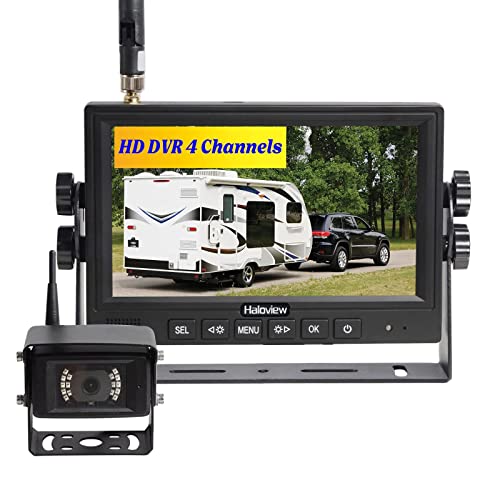
Best for Trailers with no factory mount
Haloview MC7108 Wireless Backup Camera System
The answer when your trailer has no factory camera plate: it works on anything, at the cost of mounting and powering it yourself.
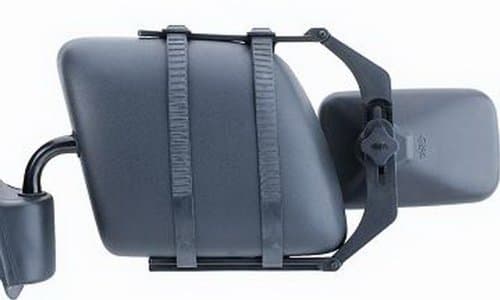
Best for A first set of towing mirrors
CIPA Adjustable Clip-On Towing Mirror
The starting point: a clip-on that fits a stated mirror size range, costs little, and comes off when you are not towing.
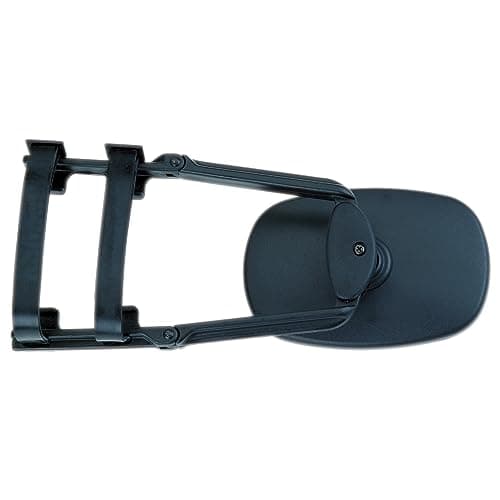
Best for Factory mirrors up to 11 inches tall
K Source Universal Clip-On Towing Mirror
The one with the widest stated fit: a tool-free clip-on listed for factory mirrors up to 11 inches tall.
Practice, in an empty parking lot, for free
This is the advice that actually works and the advice people skip because it feels remedial.
Find a large empty lot — a closed business on a Sunday, a fairground, a school out of term. Put four cheap cones or four plastic bottles down as a campsite-sized box. Then reverse into it, twenty times, with nobody waiting and nothing to hit.
Twenty attempts in an empty lot teaches you more than a whole season of one nervous attempt per weekend with an audience, and it costs an afternoon. Practice both a straight back and a 90-degree back from each side, because the blind side — reversing to the passenger side, where you cannot see the trailer as well — is the one that catches people at a real site.
Mistakes that are worth naming
Big steering inputs. The trailer lags, you add more, and then it all arrives at once. Small and early.
Reversing fast enough that you cannot stop thinking. At walking pace you have time to correct. Faster, you do not.
Not getting out. Getting out to look costs fifteen seconds. Hitting the post you forgot about costs a weekend.
Refusing to pull forward. The single most common beginner error, and purely psychological. Reset the angle.
Forgetting the chocks afterwards. Once you are in position, chock before unhitching, while the trailer still cannot move. On a sloped site this matters a great deal — see how to level a camper on a hill.
Questions people actually ask
What is the easiest way to back up a travel trailer?
Put one hand at the bottom of the steering wheel and move it the way you want the back of the trailer to go. That removes the mental reversal that makes it hard at first. Then make small inputs, roll slowly, pause to look, and pull forward to reset the angle whenever it goes wrong.
Why does my trailer jackknife when I reverse?
Because the trailer lags behind your steering input and then responds all at once, so large late corrections produce too sharp an angle. If you can see a lot of the trailer's side in the mirror you are turning toward, straighten the wheel or pull forward to reset before it goes further.
How do I practice backing up a trailer?
Put four cones or plastic bottles out as a campsite-sized box in a large empty parking lot and reverse into it twenty times with nobody waiting. Practice from both sides, especially backing toward the passenger side, which is the harder one at a real site.
Is it bad to pull forward while backing into a site?
No - it is the technique. Resetting the angle by pulling forward is what experienced owners do constantly, and two resets plus a clean reverse is faster than fighting one bad angle for ten minutes.
Do I need a backup camera to reverse a travel trailer?
No, but extended mirrors help more than anything else, because the mirrors are where all the information in this maneuver comes from and factory mirrors cannot see past a wider trailer. A rear camera adds the ground-level view behind the trailer that no mirror can show, which is what you want when the obstacle is low.
How should a spotter help with backing up?
Agree three things before you start: either person can call an immediate stop, directions are given as landmarks rather than left and right, and the spotter stands where the driver can see them in a mirror. A spotter behind the trailer is invisible and is not spotting.
Sources
Read next
Towing & Security
How to Hitch a Travel Trailer (Step by Step)
The full hitching sequence with the latch and jack checks that prevent a trailer coming off the ball.
Towing & Security
Best Tow Mirrors for a Travel Trailer
Universal clip-on and clamp-on towing mirrors compared on published fit range, glass size and how much width they add.
Towing & Security
Best RV Backup Camera for a Travel Trailer
Backup cameras for a travel trailer, split by whether your rig has a pre-wired factory mount.
Towing & Security
RV Towing Safety Checklist
A pre-departure towing checklist covering hitch, chains, brakes, tires, loading and the rooftop items people forget.
Reviewed October 17, 2026. Spot something out of date? Tell us and we will fix it.