Wired vs Wireless RV Backup Camera
The honest answer for a travel trailer is wireless, and not because wireless is better. It is because a wired camera has to get video past a coupler that comes apart.
Heads up: this page contains affiliate links. If you buy through one, Camp & Chock may earn a commission at no extra cost to you. It never changes which product we put first — how this site is funded.
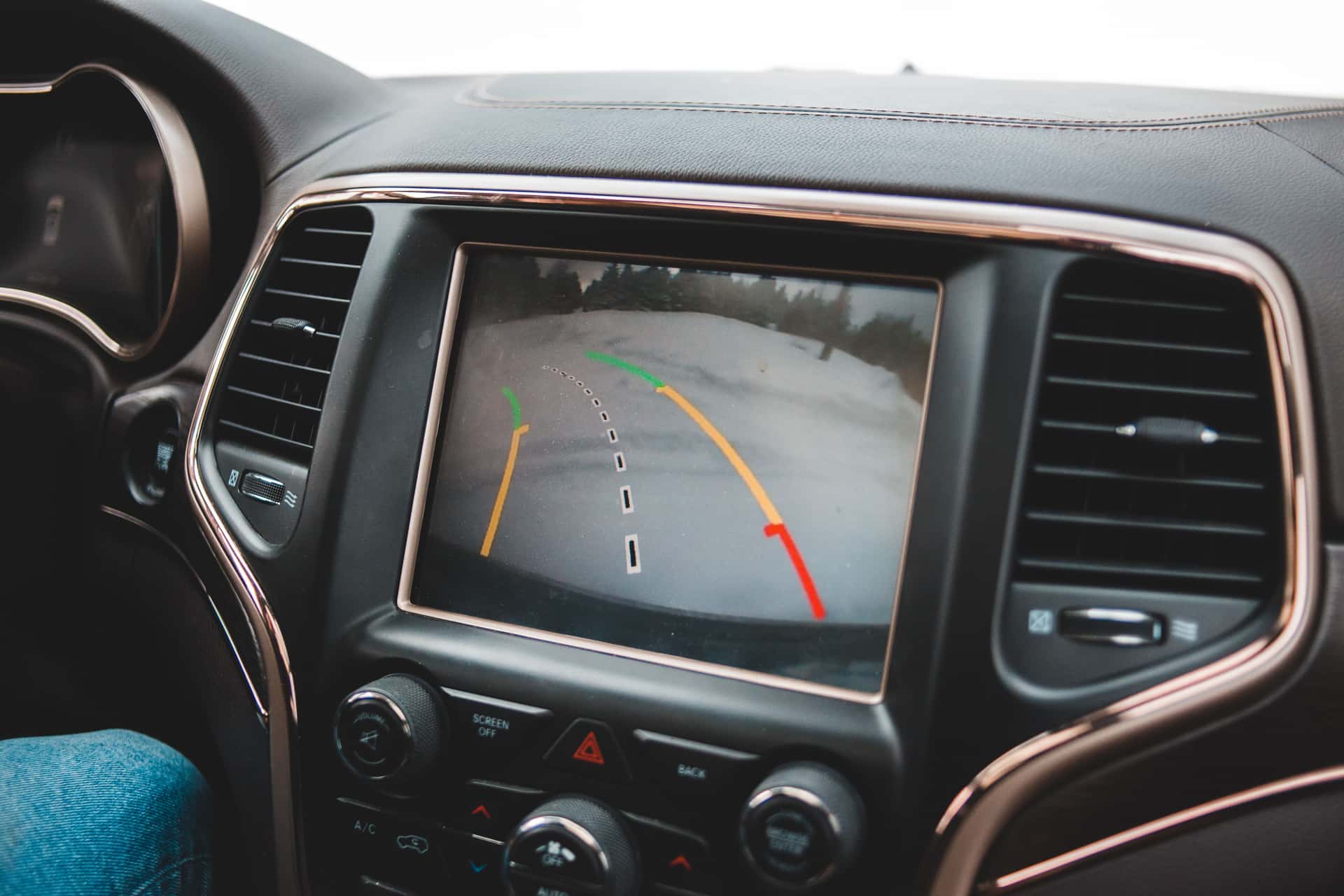
For a travel trailer you tow, buy wireless — because a wired camera would have to carry video across the hitch, and the hitch comes apart every time you park. That is the entire reason the trailer camera market is wireless, and it is why searching for the best wired RV backup camera returns mostly motorhome and van products. Wired makes sense when the camera and the screen never separate: a motorhome, a van, a truck camper, or a permanently parked rig. On a towable, wireless is not the compromise choice, it is the only workable one.
Part of our towing and security guide. Once you have settled the type, which specific system to buy is in the wireless camera roundup, and the install is in how to install a wireless RV backup camera.
The hitch is the whole problem
A wired camera system runs a video cable from the camera to the monitor. In a motorhome that is a single continuous run inside one vehicle, done once, and then it never moves. It is genuinely the more reliable arrangement: no pairing, no interference, no latency, nothing to lose signal.
On a towed trailer, that same cable has to leave the trailer, cross the coupler, and enter the truck. Which means a connector you plug and unplug every single time you hitch, carrying a video signal, mounted where road spray, grit and the safety chains all live. People have done it. It is a lot of fabrication to arrive at a worse version of something you can buy.
So the market responded by removing that one cable. Everything else about a trailer camera install is unchanged.
What each arrangement suits
| Wired | Wireless | |
|---|---|---|
| Right for | Motorhomes, vans, truck campers, permanently parked rigs | Any trailer you hitch and unhitch |
| Video across the hitch | Needs a connector you plug in every trip | No cable to cross |
| Latency | Effectively none | Small, and fine for reversing |
| Interference | None | Possible - distance and obstructions matter |
| Camera still needs power | Yes | Yes. This is the part people miss |
| Install difficulty | A long cable run inside one vehicle | Mounting and powering the camera only |
| Monitor | Wired to the same vehicle | Sits in the tow vehicle, independent |
What wireless does not remove
This is the sentence worth taking away from the page: wireless removes the video cable, not the power.
The camera at the back of your trailer still needs twelve volts. The monitor in the cab is easy — it runs off a socket. The camera is the job, and there are three realistic ways to feed it: a factory camera plate that is already wired, a tap into a high marker light circuit, or a feed you run yourself.
Which of those applies to you is decided by one thing, so go and look: is there a black plate, roughly the size of a hand, high and centered on the back wall of your trailer? If there is, your trailer is pre-wired, power is already at the mount, and fitting a camera is close to a screwdriver job. If there is not, you are mounting and powering it yourself.
The two routes, and what each costs you
You have the factory plate. Buy the camera designed for that mount. No cable run, no drilling, power already present. The caveat is that this is only a good deal if you have the plate — otherwise you are paying for compatibility you cannot use.
You do not have the plate. Buy a system that does not depend on any manufacturer’s mount. It works on anything, usually comes with a larger monitor, and often supports adding a second camera later rather than treating that as a hack. The cost is that mounting and power are on you, which in practice means a marker-light tap or a short cable run on the trailer itself.
Either way you are buying a wireless system. The decision is which one, not whether.
Pick by what is on the back of your trailer
No factory plate: the independent wireless system with the larger monitor, which works on anything. A black factory plate high and centered on the rear wall: the camera built for that mount, which is close to plug-and-play. And whichever you choose, extended mirrors first - a screen does not do a mirror's job.
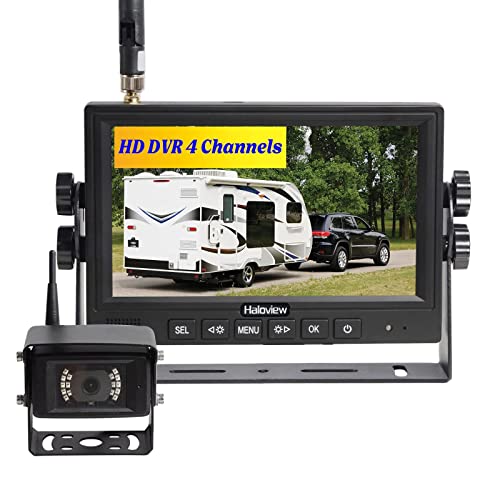
Best for Trailers with no factory mount
Haloview MC7108 Wireless Backup Camera System
The answer when your trailer has no factory camera plate: it works on anything, at the cost of mounting and powering it yourself.
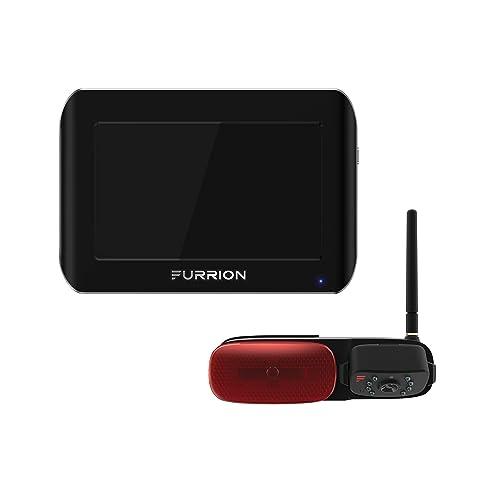
Best for Trailers with a factory Furrion mount
Furrion Vision S Wireless Backup Camera
If there is a black plate on the back of your trailer, this is the camera it was designed for, and fitting it is roughly a screwdriver job.
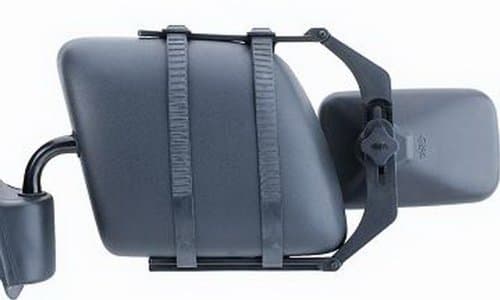
Best for A first set of towing mirrors
CIPA Adjustable Clip-On Towing Mirror
The starting point: a clip-on that fits a stated mirror size range, costs little, and comes off when you are not towing.
Where wireless genuinely falls down
We are not going to pretend the tradeoff is free, because two situations make it real.
Length. Wireless range and interference vary with distance and with what is in between. A 22-foot travel trailer is an easy case. A long fifth wheel, with more metal and more distance between camera and monitor, is a harder one, and it is the case where a repeater or a higher-end system earns its money.
Expecting a reversing camera to be a driving camera. A system intended to show you what is behind the trailer while you back into a site is doing a different job from one you watch continuously at 65 mph. If the continuous view is what you want, that is a different product class and it has its own page: best RV rear view camera.
If you really do want a wired camera on a trailer
There is one version of this that is sensible, and it is worth naming so the page is honest.
If your trailer lives on a seasonal site and effectively never moves, the hitch objection disappears. You can run a cable, and you get a system with no pairing and no interference. The same applies to a camera used for watching the site rather than for reversing.
What does not work is buying a wired automotive kit and planning to solve the hitch crossing with a connector. That is where this project usually ends: a connector that corrodes over one winter, in the dirtiest place on the whole rig, carrying the signal you need precisely when you are reversing toward something expensive.
What to buy, in order
Extended mirrors. Cheapest, covers the legal requirement, no electronics.
A wireless camera matched to your trailer’s mount. Factory plate: the camera for it. No plate: the independent system.
A repeater, only if you need one. Long rig, or a signal that drops at full trailer length. Do not buy it up front.
For the full picture of what works on something you tow rather than drive, see travel trailer backup cameras.
Questions people actually ask
Is a wired or wireless backup camera better for a travel trailer?
Wireless, for a structural reason rather than a performance one: a wired system would have to carry video across the hitch, through a connector you plug and unplug every trip in the dirtiest place on the rig. Wired is the better arrangement only when camera and screen never separate - a motorhome, van, truck camper or a rig that stays parked.
Why are there so few wired RV backup cameras for trailers?
Because a towable separates from the tow vehicle. Most wired RV camera products are aimed at motorhomes and vans, where the cable is a single continuous run inside one vehicle. Searching for the best wired RV backup camera mostly returns products for driven rigs rather than towed ones.
Does a wireless backup camera still need wiring?
Yes. Wireless removes the video cable, not the power. The camera at the back of the trailer still needs twelve volts, from a factory camera plate if your trailer has one, from a tap into a high marker light circuit, or from a feed you run yourself.
How do I know if my trailer is pre-wired for a camera?
Look for a black plate about the size of a hand, high and centered on the rear wall, usually with a removable cover. If there is a connector behind it the trailer is pre-wired, power is already at the mount, and fitting a camera designed for that plate is roughly a screwdriver job.
Does wireless camera range matter on a long trailer?
Yes. Range and interference vary with distance and with the metal in between, so a short travel trailer is an easy case and a long fifth wheel is a harder one. A signal repeater is the fix, but buy it only if you actually see the picture drop at full trailer length.
Sources
Read next
Towing & Security
Best Wireless RV Backup Camera
Wireless camera systems that work on any trailer, with range guidance by rig length.
Towing & Security
Travel Trailer Backup Cameras: What Actually Works
Why a trailer camera is a different problem from a motorhome one, the factory plate check, and the two routes that work.
Towing & Security
How to Install a Wireless RV Backup Camera
Mounting and powering a wireless trailer camera, including the factory plate route and the marker light tap.
Towing & Security
Best RV Rear View Camera
Why a trailer camera is always-on, what that changes about latency, monitor placement and power, and which to buy.
Reviewed October 17, 2026. Spot something out of date? Tell us and we will fix it.