Best Wireless RV Backup Camera
No cable down the length of the trailer, which is the job that stops most people. The camera still needs power, and that is the part to plan for.
Heads up: this page contains affiliate links. If you buy through one, Camp & Chock may earn a commission at no extra cost to you. It never changes which product we put first — how this site is funded.
The short answer
Buy a self-contained wireless system with a monitor of seven inches or more. It works on any trailer because it does not depend on a manufacturer's mounting plate, and the larger monitor is what makes it readable on a sunny dash. If your trailer does have a factory plate, the plate-matched camera is easier to fit and usually cheaper overall.
Part of our towing and security guide, and the no-factory-plate half of the main backup camera roundup.
Our picks at a glance
Tap any row to jump to the full write-up.
| # | Product | Best for | Beginner fit | Price |
|---|---|---|---|---|
| 1 | Haloview MC7108 Wireless Backup Camera SystemThe answer when your trailer has no factory camera plate: it works on anything, at the cost of mounting and powering it yourself. | Trailers with no factory mount | Good | |
| 2 | Furrion Vision S Wireless Backup CameraIf there is a black plate on the back of your trailer, this is the camera it was designed for, and fitting it is roughly a screwdriver job. | Trailers with a factory Furrion mount | Strong | |
| 3 |  EEZTire Tire Pressure Monitoring SystemThe lower-cost way into tire monitoring: the same fundamental warning, a plainer monitor, and replaceable sensor batteries. | A cheaper way in | Good |
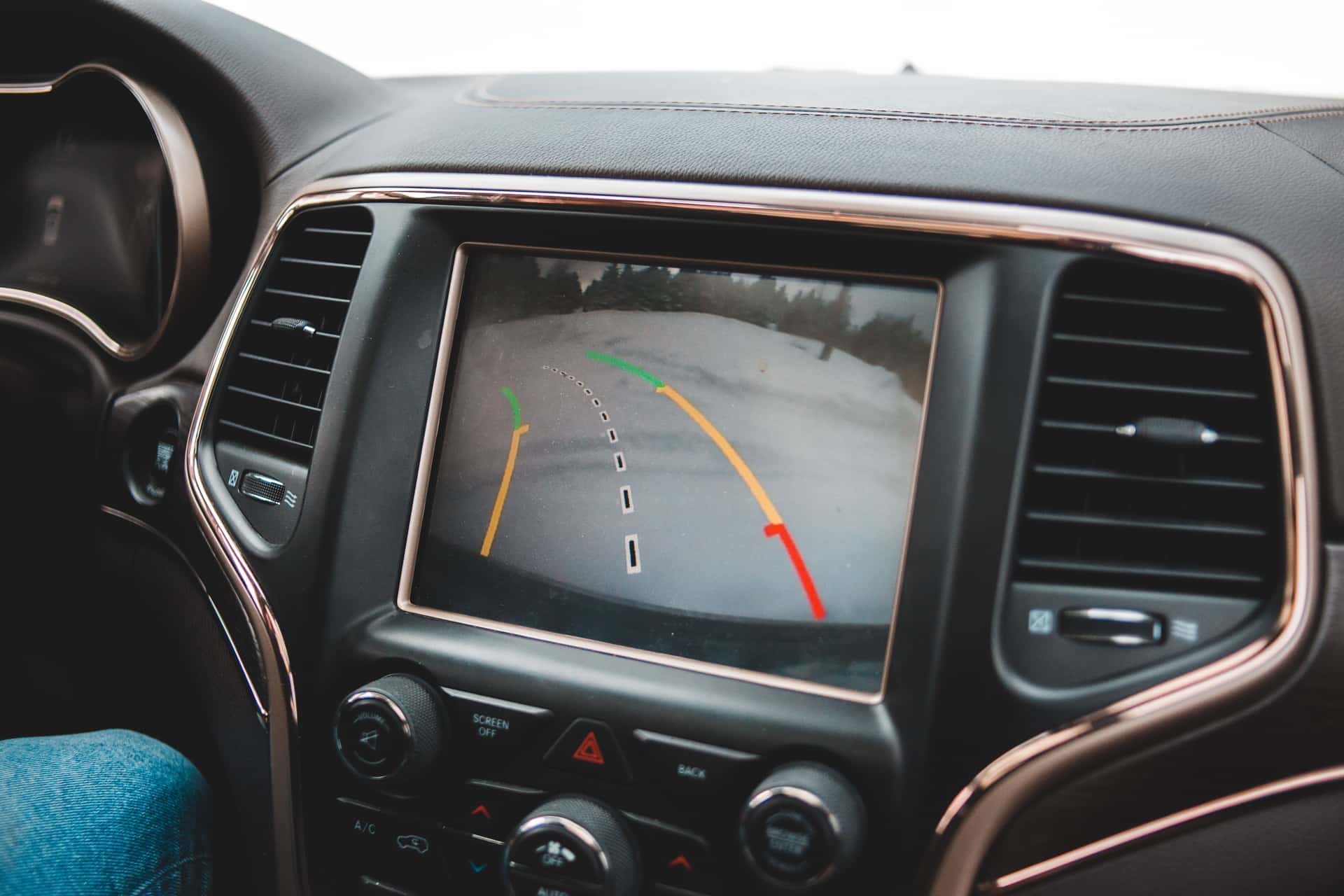
Prices are not published here. They change constantly and a stale number is worse than no number, so every button goes straight to the current Amazon listing. #ad — these are affiliate links and photographs are stock images of the category, not of the individual product.
What wireless actually means here
It means there is no video cable running from the back of the trailer to the tow vehicle. That is the win, and it is a big one: running a cable the full length of a trailer, through the frame, past the hitch, and into the truck is the job that stops most people from ever fitting a camera.
It does not mean the camera has no power. A camera needs volts, and they have to come from somewhere at the back of the trailer. Your options are a factory camera plate that already has power, a tap into a marker light circuit, or a dedicated feed you run yourself.
The monitor is the easy end: it powers from a cigarette lighter socket or a USB port in the cab.
The picks
1. Best for Trailers with no factory mount
Haloview MC7108 Wireless Backup Camera System
The answer when your trailer has no factory camera plate: it works on anything, at the cost of mounting and powering it yourself.
- Specification
- Wireless system with a 7-inch monitor
- Specification
- Expandable to additional cameras
- Specification
- Independent of any factory plate
What it does well
- Works on any trailer, because it does not depend on a manufacturer's mounting plate
- A bigger monitor than most bundled systems, which matters when it sits on the dash in daylight
- Adding a second camera later is supported rather than a hack
The real tradeoff
- You are mounting and powering the camera yourself, which means drilling or a marker-light tap
- More setup decisions than the plug-in option
How it measures up
These are judgments from published specifications and what we see at the lodge, not laboratory results. How we choose.
- Beginner fit
- Good — The install is the hard part, not the use.
- Install effort
- Adequate — Mounting and power are on you.
- Picture in daylight
- Strong — The larger monitor is a real advantage.
- Value
- Good — Fair for a complete, non-proprietary system.
Specifications from Haloview.
2. Best for Trailers with a factory Furrion mount
Furrion Vision S Wireless Backup Camera
If there is a black plate on the back of your trailer, this is the camera it was designed for, and fitting it is roughly a screwdriver job.
- Specification
- Wireless camera and monitor
- Specification
- Designed for the pre-wired Furrion mounting plate found on many trailers
- Specification
- Monitor mounts in the tow vehicle
What it does well
- If your trailer already has the black Furrion plate on the back, this is close to plug-and-play
- No cable to run the length of the trailer, which is the job that stops most people
- The pre-wired plate means power is already there
The real tradeoff
- Only a bargain if you have that plate. Otherwise you are paying for compatibility you cannot use
- Wireless range and interference vary. A long fifth-wheel is a harder case than a 22 ft trailer
How it measures up
These are judgments from published specifications and what we see at the lodge, not laboratory results. How we choose.
- Beginner fit
- Strong — With the plate, genuinely easy.
- Install effort
- Strong — No cable run and no drilling, if the plate is there.
- Picture in daylight
- Good — Clear enough for hitching and lane checks.
- Value
- Good — Strong with the plate, poor without it.
Specifications from Furrion.
3. Best for A cheaper way in
EEZTire Tire Pressure Monitoring System
The lower-cost way into tire monitoring: the same fundamental warning, a plainer monitor, and replaceable sensor batteries.
- Specification
- Monitor plus sensors
- Specification
- Sensor kits sold in several counts
- Specification
- User-replaceable sensor batteries
What it does well
- Usually costs less than the category leader for the same fundamental job
- Sensor batteries are user-replaceable, which keeps the running cost sane
The real tradeoff
- A more basic monitor interface
- Long rigs will want the repeater here too
How it measures up
These are judgments from published specifications and what we see at the lodge, not laboratory results. How we choose.
- Beginner fit
- Good — Comparable setup.
- Install effort
- Good — Screw-on sensors.
- Warning quality
- Good — Pressure and temperature alerts.
- Value
- Strong — The reason to choose it.
What to look for
Range against your rig length
| Your rig | What to check | Repeater needed? |
|---|---|---|
| Travel trailer under 25 ft | Any stated range will do | No |
| Travel trailer 25 to 35 ft | Stated range comfortably above your length | Unlikely |
| Fifth wheel or trailer over 35 ft | Stated range, and repeater availability | Possibly |
| Towing a boat or car behind | Range plus obstruction tolerance | Likely |
The stated range figure is measured in ideal conditions, so allow margin. The signal has to get around an aluminum-skinned box, and metal is not helpful.
Monitor size and brightness
Seven inches is the size that works on a dash in daylight. Smaller screens are cheaper and genuinely harder to read at noon, which matters because that is exactly when you are reversing into an unfamiliar site.
Power source at the camera end
Read the listing for how the camera is powered. Some systems include a solar option, some expect a marker light tap, and some include a proper hardwired feed. Whichever it is, this is the part of the install you should understand before ordering, not after — details in the install guide.
Weather rating
The camera lives on the back of a trailer in road spray, sun, and ice. Look for a stated ingress rating rather than a vague claim of weather resistance. This is where cheap systems fail first, usually after one winter.
Expansion
A second camera on the side of the trailer covers the blind spot when changing lanes, and it is the upgrade people want after a season. Check whether the system supports it properly before buying, because retrofitting a second camera to a system that does not is not worth the effort.
Mistakes first-timers make
Buying a plate-specific camera without a plate. Check the back of the trailer before ordering. It is the most common error in this whole category.
Underestimating the power job. Wireless solves the video cable, not the power. Plan it.
Buying the smallest monitor to save money. The monitor is the part you interact with every single time. Do not economize there.
Mounting the camera too low. High and centered gives you the useful view. Low means you see the bumper and not much else.
Questions people actually ask
Does a wireless RV backup camera need any wiring?
The video link is wireless, but the camera still needs power at the back of the trailer. That comes from a factory camera plate, a marker light tap, or a feed you run yourself.
What wireless range do I need?
Comfortably more than the length of your rig, because the stated figure is measured in ideal conditions and a metal-skinned trailer is an obstruction. Long rigs may need the repeater some systems offer.
What size monitor should I get?
Seven inches or more. The monitor sits on a dash in direct sun, and a small screen that looks fine in a shop is harder to read at noon.
Can I add a second camera later?
On some systems, yes, and a side camera covering the lane-change blind spot is the upgrade people want after a season. Check that it is a supported option before buying.
Where should the camera be mounted?
High and centered on the rear wall. Mounted low you mostly see the bumper, which is not the view you need when reversing into a site.
Do wireless cameras drop out while driving?
They can, at the edge of their range or with the signal path obstructed. Choosing a system with range well above your rig length is the practical defense, and a repeater solves the long-rig case.
Sources
Read next
Towing & Security
Best RV Backup Camera for a Travel Trailer
Backup cameras for a travel trailer, split by whether your rig has a pre-wired factory mount.
Towing & Security
How to Install a Wireless RV Backup Camera
Mounting and powering a wireless trailer camera, including the factory plate route and the marker light tap.
Towing & Security
Furrion Vision S Review: Check for the Plate First
The plate-matched wireless camera reviewed, with the compatibility check that decides whether it is the right buy.
Reviewed September 25, 2026. Spot something out of date? Tell us and we will fix it.