Travel Trailer Backup Cameras: What Actually Works
On a towed trailer there is no cable to the truck and no reversing light to tap. That single fact decides which cameras are realistic and which are a weekend with a drill.
Heads up: this page contains affiliate links. If you buy through one, Camp & Chock may earn a commission at no extra cost to you. It never changes which product we put first — how this site is funded.
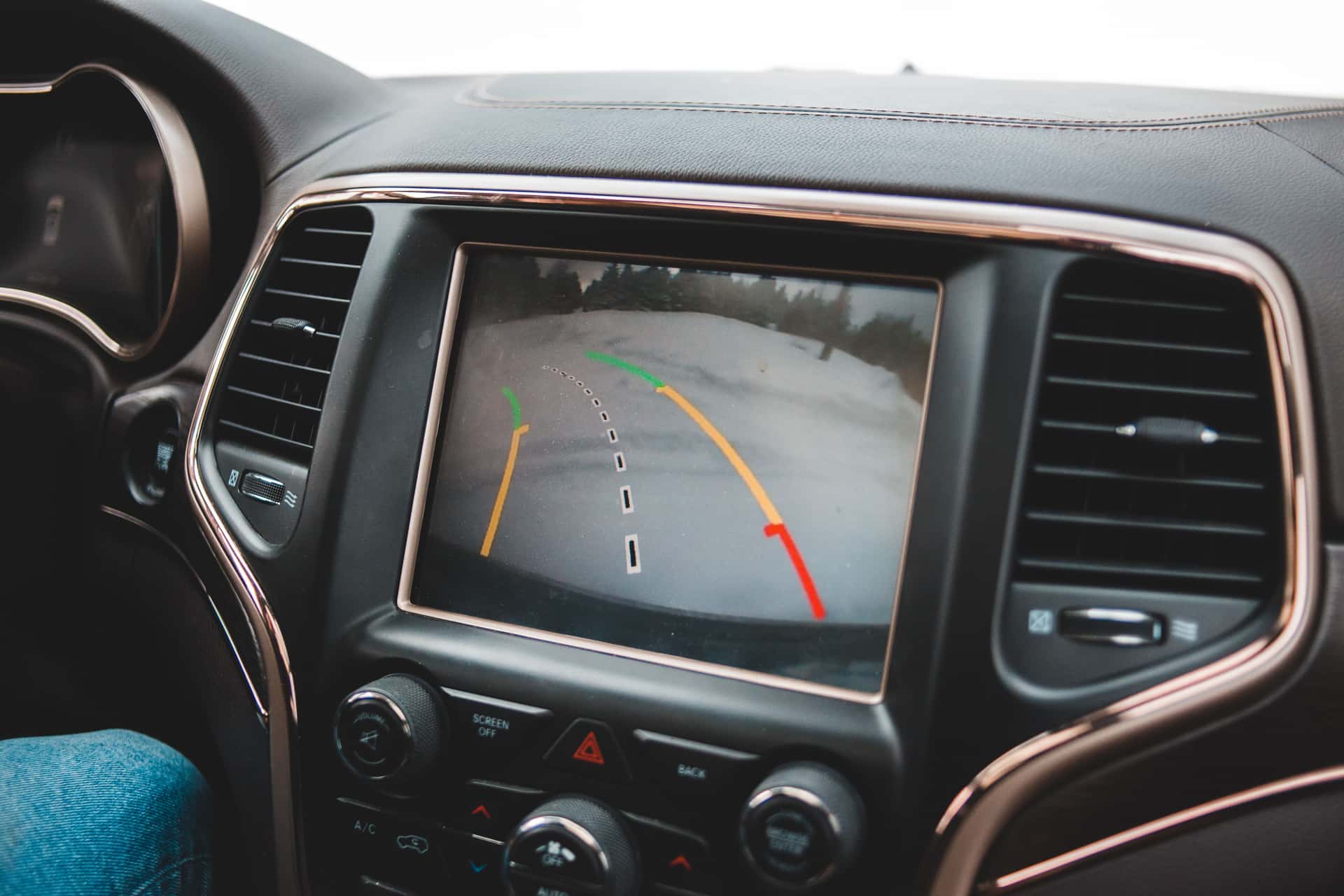
Check the back of your trailer for a black rectangular plate first. If it is there with a connector behind the cover, your trailer is pre-wired and the matching plate camera is close to a screwdriver job. If there is no plate, buy a self-contained wireless system and plan to mount and power the camera yourself from a marker light. There is no third route on a towed trailer, because unlike a motorhome there is no continuous wiring between the camera position and the driver's seat.
This is part of our towing and security guide. Our backup camera roundup ranks systems generally. This page is about the specific case of a travel trailer, which is harder than the motorhome case and gets answered as though it were the same.
Why a trailer is the harder case
On a motorhome, the camera and the monitor are in the same vehicle. You can run a cable, tap into reverse, and never think about wireless range or battery life. On a travel trailer, the camera is on something that detaches from the thing the screen is in. That changes three decisions at once.
Power. There is no switched reverse feed at the back of a trailer. Power has to come from the trailer's own 12-volt system — most commonly by tapping a rear marker light, which is live whenever the running lights are — or from a battery in the camera itself.
Signal. The camera is 20 to 35 feet from the monitor with an aluminum-skinned box in between. Wireless range figures on the box are measured in open air, and a long trailer is not open air. This is the single most common disappointment.
Mounting. The rear wall of a trailer is thin, and anything you screw through it needs sealing properly or it becomes a leak. This is the step that makes people put the project off for a season.
The plate check, in thirty seconds
Walk behind the trailer and look high and centered on the rear wall. You are looking for a black rectangular plate, usually with a removable cover. Unclip the cover: if there is a connector behind it, the trailer is pre-wired for a plate-matched camera.
A large number of travel trailers built in recent years have this, and a large number of slightly older ones do not. Do not infer it from the model year — look. We cover exactly what each outcome means in our review of the plate-matched camera.
What you find, and what to buy
| On the rear wall | What it means | Buy |
|---|---|---|
| Black plate with a connector | Pre-wired. Power and mount are done | The plate-matched wireless camera |
| Black plate, no connector | Mount yes, power no | Check behind the wall before committing |
| No plate | You are mounting and powering it | A self-contained wireless system |
| Another brand's plate | Connector type decides it | Check for an adapter before assuming |
The two routes that work on a trailer
A self-contained system goes on any trailer and asks you to mount and power it. The plate-matched camera is far easier, and only if you have the plate.
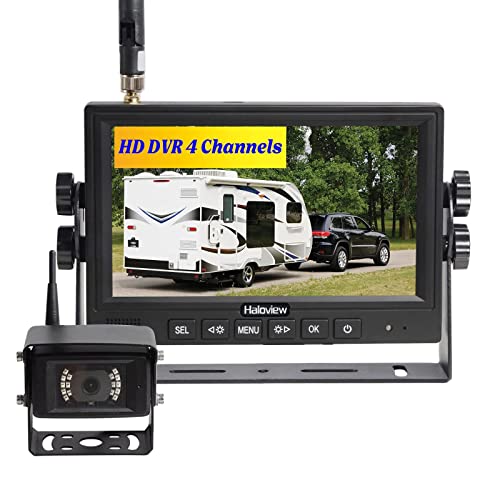
Best for Trailers with no factory mount
Haloview MC7108 Wireless Backup Camera System
The answer when your trailer has no factory camera plate: it works on anything, at the cost of mounting and powering it yourself.
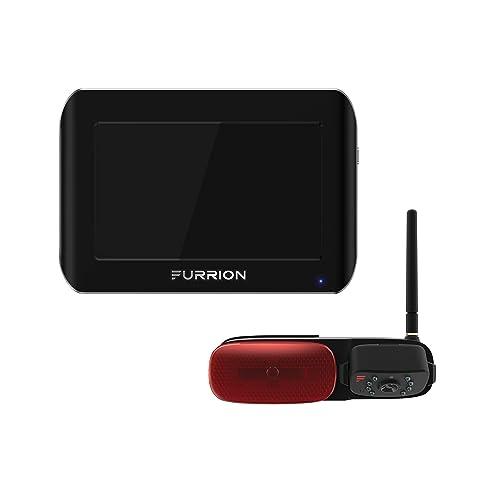
Best for Trailers with a factory Furrion mount
Furrion Vision S Wireless Backup Camera
If there is a black plate on the back of your trailer, this is the camera it was designed for, and fitting it is roughly a screwdriver job.
What a trailer camera is genuinely good at
Worth being honest about this, because expectations are where the disappointment comes from. A rear camera on a travel trailer is excellent at two jobs and mediocre at a third.
Backing into a site. This is the one. A view from the actual back corner of the trailer removes the guesswork about the tree, the post and the picnic table that your mirrors cannot show you.
Hitching on your own. A camera that shows the coupler and the ball turns a two-person job into a one-person job.
Lane changes at speed. Useful, but a rear view is not a blind-spot view, and most wireless systems have enough latency that you should not rely on them for a merge. Mirrors remain the primary tool.
Wireless range, realistically
Treat published range figures as a best case in open air. What actually matters is the distance from the camera to the monitor through the trailer, plus whatever else in the campground is using the same frequencies. Longer trailers are harder. If you have a long rig, prioritize a system with a larger antenna arrangement and accept that some picture dropout while maneuvering is normal rather than faulty.
A larger monitor matters more than people expect, because it will sit on a dash in daylight and you will be looking at it while concentrating on something else. Seven inches is noticeably more usable than five.
Powering a camera on a trailer, in practice
Since this is the step that stops most installations, it is worth being concrete about the options.
A marker-light tap. The rear marker or clearance lights on a trailer are live whenever the running lights are, which is whenever you are towing. Tapping that circuit gives the camera power exactly when you need it and none when the trailer is parked. It is the most common approach and it is a small wiring job rather than a big one, but it does mean the camera is off when the trailer is unhitched and the lights are not on.
A battery-powered or solar camera. No wiring at all, which removes the step people put off for a season. The trade is that you are now responsible for charge state, and a camera with a flat battery is worse than no camera because you were counting on it. Magnetic mounting removes the drilling question as well, at the cost of trusting a magnet on a highway.
A feed from the trailer battery. Always live, which suits a camera you also want for security while parked, and it means running a cable the length of the trailer or finding an existing run to follow. This is the most work and the most capable result.
Whichever you choose, seal every penetration you make in the rear wall properly. A screw hole in a trailer wall is a water path, and water damage is the failure that compounds quietly on a travel trailer.
For the wider comparison of wireless systems including the plug-and-play options, see best wireless RV backup camera. Two consequences of the no-wiring fact get their own pages: because nothing can trigger the camera it simply runs while you drive, which is best RV rear view camera, and if you want a side view as well as a rear one that needs a multi-channel monitor rather than a second kit — best RV camera system. And if you are still weighing the two arrangements rather than the products, the reason the trailer market is wireless at all is in wired vs wireless RV backup camera.
Questions people actually ask
Can you put a backup camera on a travel trailer?
Yes, and there are two routes. If the trailer has a factory camera plate on the rear wall, a plate-matched wireless camera is close to plug-and-play. Without a plate, a self-contained wireless system works on any trailer but you mount and power the camera yourself.
How is a trailer camera powered?
From the trailer's own 12-volt system, usually by tapping a rear marker light circuit that is live whenever the running lights are, or from a battery built into the camera. There is no switched reverse feed at the back of a towed trailer.
Do wireless backup cameras work on long trailers?
They work, but range figures on the box are open-air best cases and a trailer puts an aluminum-skinned box between the camera and the monitor. Longer rigs see more dropout, so prioritize antenna arrangement and expect occasional interruption while maneuvering.
How do I know if my trailer is camera-ready?
Look high and centered on the rear wall for a black rectangular plate with a removable cover. Unclip the cover: a connector behind it means the trailer is pre-wired. Do not assume it from the model year.
Can I use a backup camera for lane changes?
Only as a supplement. A rear view is not a blind-spot view, and most wireless systems have enough latency that mirrors should remain your primary tool for merging.
What monitor size should I get?
Larger than you think. The monitor sits on a dash in daylight while you are concentrating on maneuvering, and seven inches is noticeably more usable than five.
Sources
Read next
Towing & Security
Best RV Backup Camera for a Travel Trailer
Backup cameras for a travel trailer, split by whether your rig has a pre-wired factory mount.
Towing & Security
Best Wireless RV Backup Camera
Wireless camera systems that work on any trailer, with range guidance by rig length.
Towing & Security
Furrion Vision S Review: Check for the Plate First
The plate-matched wireless camera reviewed, with the compatibility check that decides whether it is the right buy.
Towing & Security
How to Install a Wireless RV Backup Camera
Mounting and powering a wireless trailer camera, including the factory plate route and the marker light tap.
Reviewed October 10, 2026. Spot something out of date? Tell us and we will fix it.