Best Wheel Chocks for a Tandem-Axle Trailer
Two axles per side changes the shopping list. You need four wedges for rolling and a tire-locking chock for rocking, and most people buy only one of the two.
Heads up: this page contains affiliate links. If you buy through one, Camp & Chock may earn a commission at no extra cost to you. It never changes which product we put first — how this site is funded.
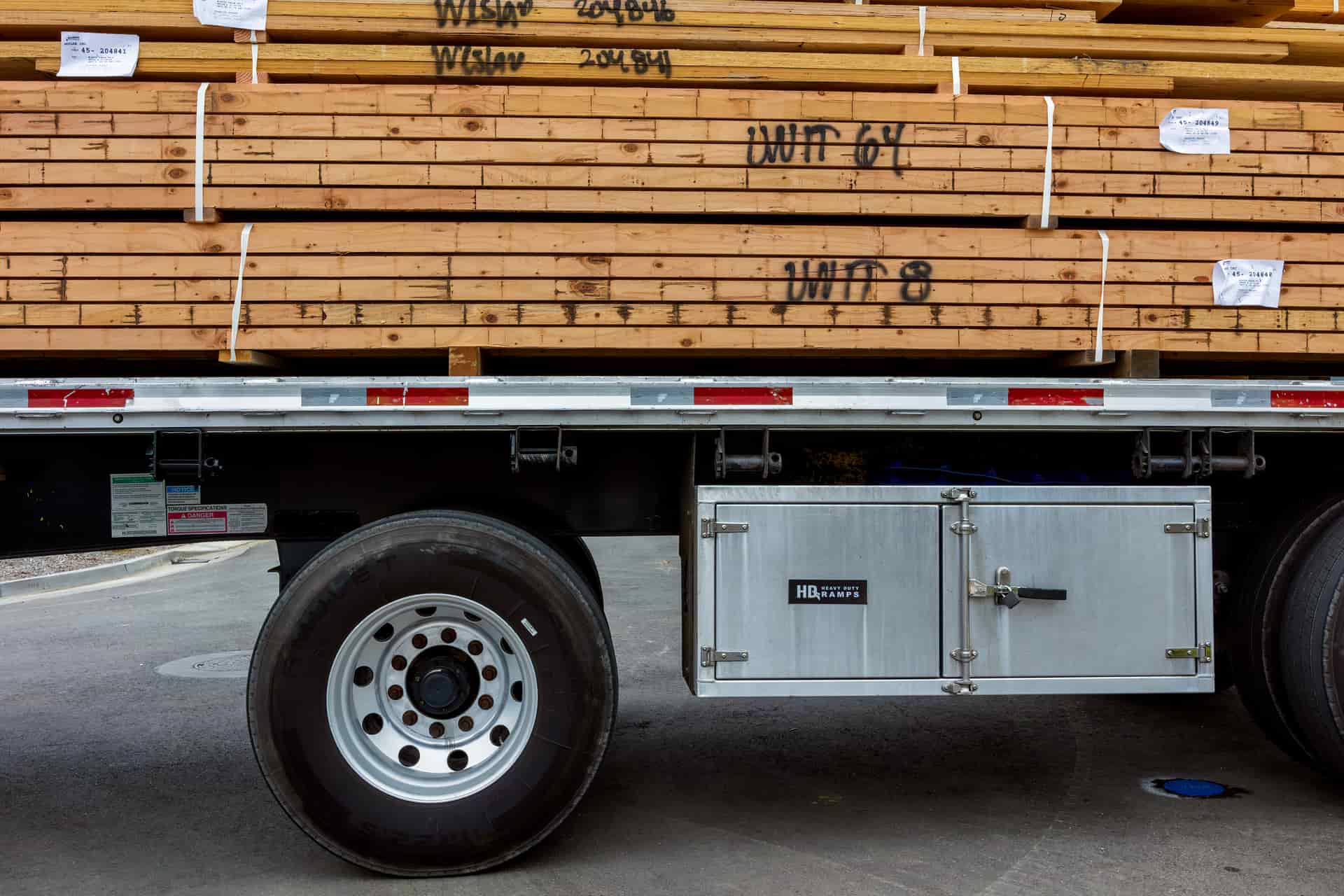
The short answer
For a tandem-axle travel trailer, buy four wedge chocks and one tire-locking chock per side. The wedges stop the trailer rolling and are the part you are practically obliged to have; the tire-locking chock ratchets outward between the two tires on one side and is the only thing in this category that meaningfully reduces side-to-side rocking. They are not alternatives and buying one instead of the other is the mistake this page exists to prevent.
Part of our leveling and chocks guide. We already have a page for the single-axle trailer, where the answer is genuinely different, because the product that most tandem owners end up buying cannot be fitted to a single axle at all. This is the two-axle version of the same shopping list.
Our picks at a glance
Tap any row to jump to the full write-up.
| # | Product | Best for | Beginner fit | Price |
|---|---|---|---|---|
| 1 | 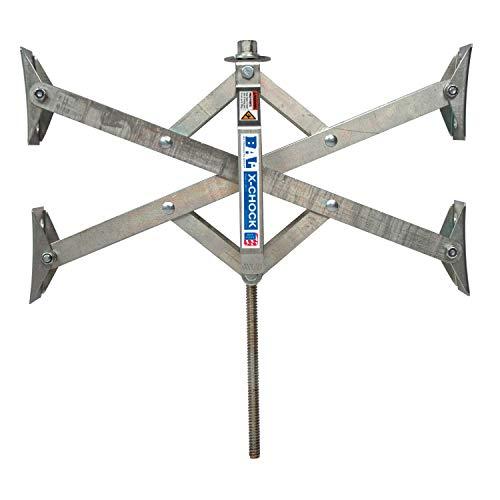 BAL X-Chock Tire Locking ChockThe standard answer to a trailer that rocks when you walk across it, and only useful if you have two axles per side. | Tandem-axle rigs that rock | Good | |
| 2 | 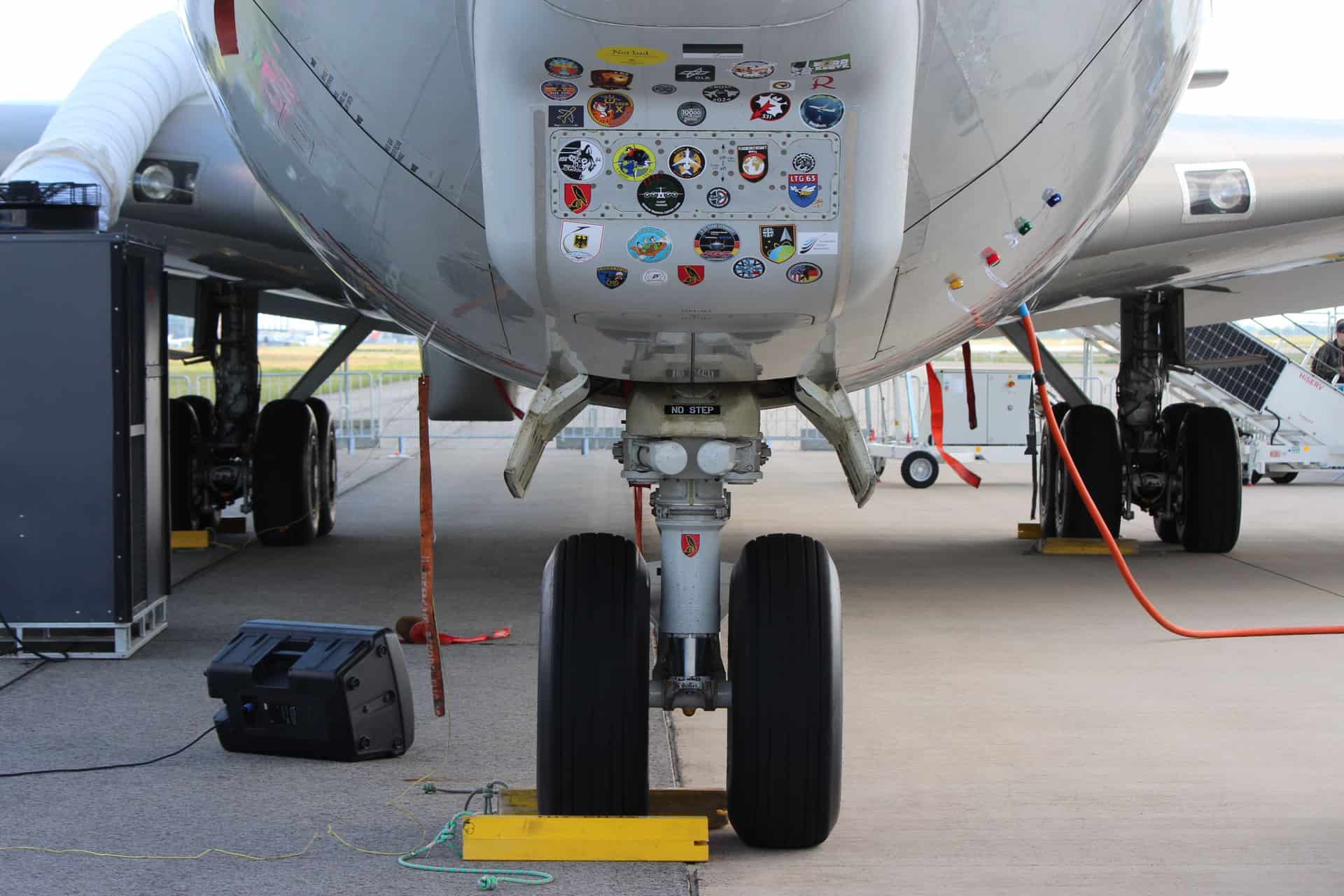 Camco Heavy-Duty Wheel Chocks (pair)The chock that stops the trailer rolling. Not the one that stops it rocking, which is a different product, and you need both. | The non-negotiable basics | Strong | |
| 3 | 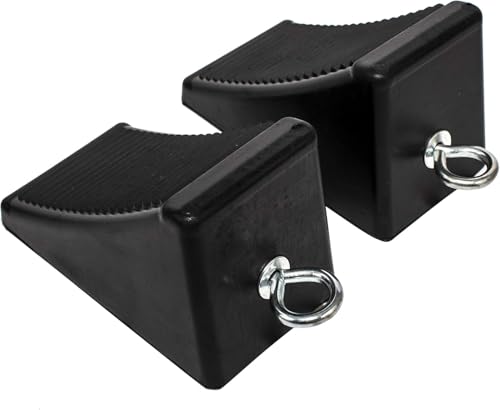 MaxxHaul Solid Rubber Wheel Chocks (pair)Rubber rather than plastic: the version that does not slide when the pad is smooth and slightly damp. | Smooth concrete pads | Strong |
Prices come from Amazon and were last checked November 12, 2026. They change constantly, so a price older than 48 hours is withdrawn rather than shown stale — those rows read “Check price on Amazon” instead and go straight to the current listing. #ad — these are affiliate links.
Who this is for
Walk to the side of your trailer and count the wheels. Two wheels on each side, close together, sharing one fender: that is a tandem axle, and it is what most travel trailers over about 20 feet are built on. One wheel per side is a single axle, and you want the single-axle page instead.
The reason the distinction matters is mechanical rather than bureaucratic. A tire-locking chock works by sitting in the gap between two tires on the same side and then being ratcheted outward so it pushes both tires apart. The two tires are what it braces against. On a single-axle trailer there is nothing for it to push against, and no adapter changes that.
The two jobs, and why one product cannot do both
A parked trailer can move in two completely different ways and the category sells a different product for each.
Rolling and rocking are different problems
| Problem | What causes it | What fixes it |
|---|---|---|
| Rolling | Gravity on any gradient, plus a nudge from hitching or unhitching | Wedge chocks, placed in opposing pairs so neither direction is open |
| Rocking | The trailer is still carried on its leaf springs, which flex as you walk | A tire-locking chock between the tandem tires, one per side |
| Sinking | A narrow contact patch pressing into soft ground | Not a chock problem. See jack pads and leveling blocks |
This is the single most common confusion in the category, and it costs people money in both directions. Someone buys a pair of wedge chocks, discovers the trailer still rocks when their partner walks to the bathroom, and concludes the chocks are bad. Someone else buys a tire-locking chock, leaves the wedges at home, and has nothing stopping the trailer rolling while they unhitch. Both devices are doing exactly what they are designed to do. Neither does the other one’s job.
How we choose
Does it suit two axles. The whole premise of this page. A tire-locking chock needs the tandem gap; a wedge works on any axle count. Anything sold as an X-chock alternative for a single axle is solving a different problem.
Does it grip the surface you park on. A molded plastic wedge is fine on gravel and grass, where it digs in slightly. On smooth, slightly damp concrete it can skate, which is the one failure mode that matters. Solid rubber grips concrete instead.
Does it stay tight. A ratchet-driven chock that you tighten by feel stays where you set it. A friction fit does not.
Can a beginner use it right the first time. A wedge needs no explanation at all. A tire-locking chock needs one demonstration and then is thirty seconds a side.
We do not test products and do not claim to. The figures here are each manufacturer’s own published specifications. Full methodology here.
The picks
1. Best for Tandem-axle rigs that rock
BAL X-Chock Tire Locking Chock
The standard answer to a trailer that rocks when you walk across it, and only useful if you have two axles per side.
- Specification
- Fits between tandem-axle tires
- Specification
- Ratchet-driven expansion
- Specification
- One per side is the normal setup
What it does well
- It pushes the two tires apart instead of blocking them, which is what actually stops the side-to-side rock
- The ratchet means you tighten by feel and it stays tight
- Survives being left outside for years
The real tradeoff
- Useless on a single-axle trailer. There is no second tire to push against
- Needs a wrench or the matching ratchet, which is one more thing to keep track of
- Tight tire gaps on some rigs make it a fight to seat the first time
How it measures up
These are judgments from published specifications and what we see at the lodge, not laboratory results. How we choose.
- Beginner fit
- Good — Simple once shown, mildly fiddly the first time.
- Stability once set
- Strong — This is the one thing it does, and it does it.
- Speed to level
- Good — Thirty seconds a side with the ratchet.
- Value
- Good — Buy one per side, not one per trailer.
2. Best for The non-negotiable basics
Camco Heavy-Duty Wheel Chocks (pair)
The chock that stops the trailer rolling. Not the one that stops it rocking, which is a different product, and you need both.
- Specification
- Wedge chock, sold in pairs
- Specification
- Molded grip handle
- Specification
- Works on any axle count
What it does well
- This is the part you are practically obliged to have, and it costs very little
- Works on any trailer, any axle count. There is no compatibility question
- Bright color means you notice them before you drive off
The real tradeoff
- Stops rolling, does nothing about rocking
- Plastic wedges skate on wet concrete if you do not seat them properly
How it measures up
These are judgments from published specifications and what we see at the lodge, not laboratory results. How we choose.
- Beginner fit
- Strong — Push it against the tire. That is the whole method.
- Stability once set
- Good — Against rolling, yes. Against rocking, no.
- Speed to level
- Strong — Instant.
- Value
- Strong — The cheapest genuinely essential thing on this site.
Specifications from Camco.
3. Best for Smooth concrete pads
MaxxHaul Solid Rubber Wheel Chocks (pair)
Rubber rather than plastic: the version that does not slide when the pad is smooth and slightly damp.
- Specification
- Solid rubber
- Specification
- Sold in pairs
- Specification
- Heavier than molded plastic
What it does well
- Rubber grips concrete instead of skating across it
- Heavy enough that it stays where you put it in wind
The real tradeoff
- Noticeably heavier to carry and store
- Rubber marks whatever shares a compartment with it
How it measures up
These are judgments from published specifications and what we see at the lodge, not laboratory results. How we choose.
- Beginner fit
- Strong — Identical method, better grip.
- Stability once set
- Strong — The grip is the whole point.
- Speed to level
- Strong — Instant.
- Value
- Good — A small premium for a real improvement on concrete.
Side by side, as published
| BAL X-Chock | Camco heavy-duty wedge | MaxxHaul solid rubber | |
|---|---|---|---|
| Type | Tire-locking, fits between tandem tires | Wedge | Wedge |
| Works on a single axle | No | Yes | Yes |
| Stops rolling | Not its job | Yes | Yes |
| Stops rocking | Yes | No | No |
| Material | Steel, ratchet-driven | Molded plastic | Solid rubber |
| Sold as | One chock | Pair | Pair |
| How many for a tandem trailer | One per side, so two | Two pairs, so four | Two pairs, so four |
| Best surface | Any | Gravel and grass | Smooth or damp concrete |
The last two rows are the ones to act on. A tire-locking chock is sold as a single chock and you need one for each side, which catches people at checkout constantly. Wedges are sold in pairs and a tandem trailer wants four of them — one in front of and one behind a tire on each side — because a wedge only blocks one direction of travel.
Which one to buy first if you are buying one thing
Wedges. They cost very little, they are the thing you are effectively obliged to have before you unhitch, and nothing else in the category substitutes for them. Buy four.
Add the tire-locking chock when the rocking starts to annoy you, which for most people is the first weekend somebody tries to sleep while somebody else walks to the fridge. It is a real improvement rather than a marginal one, and it is the reason this product exists.
Fitting a tire-locking chock the first time
The first fit is the only awkward one, and it is awkward on every rig, so it is worth knowing in advance rather than deciding the product is faulty.
Collapse it fully before you try to seat it. It needs to be at its narrowest to drop into the gap between the tires. People try to force a partly expanded chock into the gap and conclude it does not fit their trailer.
Seat it against the tread, centered on the gap. Not against the sidewalls, and not angled.
Tighten by feel, not by force. You are looking for firm contact on both tires, not maximum torque. Over-tightening is how people damage the ratchet.
Keep the wrench with the chock. Whatever tool drives the ratchet should live in the same compartment as the chock, because a tire-locking chock with the wrench at home is a piece of steel.
Pick by what your site looks like
Gravel or grass sites: four molded plastic wedges plus a tire-locking chock per side. Smooth concrete pads: make the wedges solid rubber, because plastic skates when the pad is damp. Either way, the tire-locking chock is the thing that stops the rocking.
Best for Tandem-axle rigs that rock
BAL X-Chock Tire Locking Chock
The standard answer to a trailer that rocks when you walk across it, and only useful if you have two axles per side.
Best for The non-negotiable basics
Camco Heavy-Duty Wheel Chocks (pair)
The chock that stops the trailer rolling. Not the one that stops it rocking, which is a different product, and you need both.
Best for Smooth concrete pads
MaxxHaul Solid Rubber Wheel Chocks (pair)
Rubber rather than plastic: the version that does not slide when the pad is smooth and slightly damp.
What we would skip
One pair of wedges for a tandem trailer. Two chocks leave one direction open on each side, or both directions open on one side. Four is the number.
A chock sat on top of a leveling block. Smooth plastic on smooth plastic is relying on friction that is not there. Chock on the ground, in front of or behind the block stack.
Stabilizer jacks as a substitute. Stabilizer jacks steady a level trailer. They are not a brake, they are not rated to carry the trailer, and they do nothing about rolling.
Improvised timber. A sawn offcut on a slope slides, and sliding rather than splitting is the usual failure. We cover the tradeoff honestly in jack pads vs wood blocks.
The rest of the parked-trailer setup
Chocks are one of four things that decide whether the trailer feels solid. Leveling blocks get the low wheel up, jack pads stop the stabilizer feet burying themselves overnight, and how many wheel chocks do I need covers placement in more detail than the table above. If the ground slopes, start with how to level a camper on a hill, because chock placement changes when gravity is working against you.
Questions people actually ask
How many wheel chocks does a tandem-axle trailer need?
Four wedge chocks, placed as opposing pairs: one in front of and one behind a tire on each side. A wedge blocks one direction of travel only, so two chocks always leave a direction open. Add one tire-locking chock per side, which is a separate product for a separate problem.
Do X-chocks replace regular wheel chocks?
No. A tire-locking chock between the tandem tires reduces side-to-side rocking and is not designed to stop the trailer rolling. Wedge chocks stop rolling and do nothing about rocking. A tandem-axle trailer wants both.
Are tire-locking chocks sold in pairs?
Usually they are sold one chock at a time, because the chock fits between the two tires on one side. A tandem-axle travel trailer has two sides, so the normal setup is two chocks. Check the quantity in your cart before checking out.
Should I use plastic or rubber wheel chocks?
Plastic is fine on gravel and grass, where the wedge digs in slightly. Solid rubber grips smooth concrete, which is where plastic wedges can skate when the pad is damp. Rubber is heavier to carry and store, which is the tradeoff.
Can I put a wheel chock on top of a leveling block?
No. Smooth plastic on smooth plastic has very little friction, so the chock can slide out from under the tire. Place chocks on the ground, in front of or behind the block stack, not on it.
Sources
Read next
Leveling & Chocks
Best Wheel Chocks for a Single-Axle Trailer
Chocks that work on a one-axle trailer, including why the X-chock everyone recommends is the wrong buy for your rig.
Leveling & Chocks
X-Chocks vs Wheel Chocks: What Each One Actually Stops
The difference between rolling and rocking, which chock fixes which, and why the answer is usually both.
Leveling & Chocks
How Many Wheel Chocks Do I Need?
The chock count by axle layout, why one pair is not enough, and when X-chocks come into it.
Leveling & Chocks
How to Keep a Travel Trailer From Rocking
Why a parked trailer still moves, and the order of operations plus gear that stops it.
Reviewed October 17, 2026. Spot something out of date? Tell us and we will fix it.