Best RV Sewer Hose for Cold Weather
Cold does two things to a sewer hose: it stiffens the wall, so forcing a coil cracks it, and it freezes whatever you left inside. One of those is a buying decision and the more important one is a habit.
Heads up: this page contains affiliate links. If you buy through one, Camp & Chock may earn a commission at no extra cost to you. It never changes which product we put first — how this site is funded.
The short answer
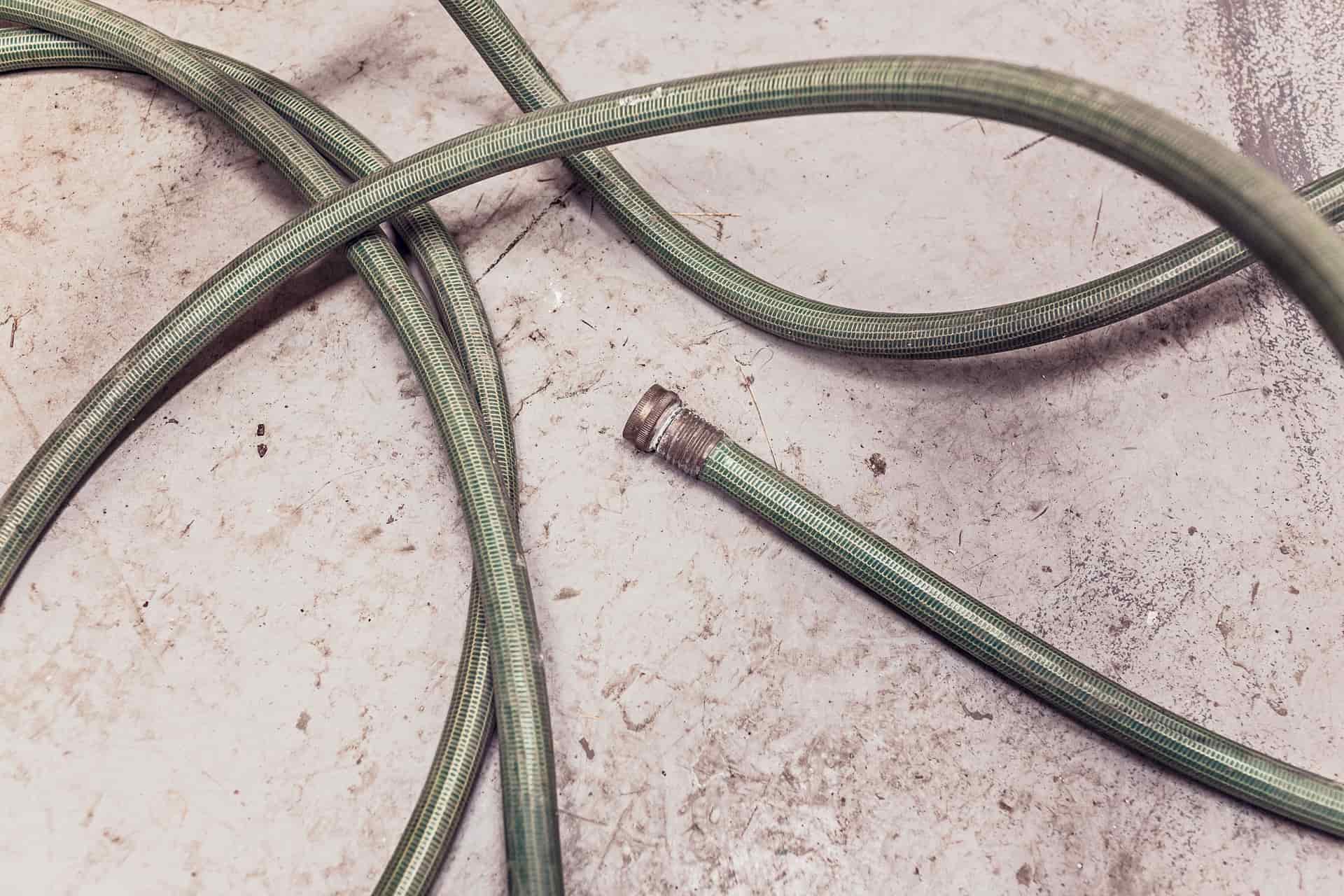
For cold weather, run the standard-wall hose kit, not the heaviest one. Every hose gets stiffer as the temperature drops, and the heavier wall starts stiffer — which makes it harder to coil in the cold and more likely to be forced, and forcing a cold hose is how they crack. Then do the part no hose can do for you: dump, rinse, drain it completely, and store it dry and uncoiled. Nothing inside the hose means nothing to freeze.
This page is part of our sewer and water guide. Our main sewer hose roundup answers which hose to own generally. This one answers a narrower question that gets asked every October, and it has a different answer, because cold changes which property of the hose matters most.
Our picks at a glance
Tap any row to jump to the full write-up.
| # | Product | Best for | Beginner fit | Price |
|---|---|---|---|---|
| 1 | 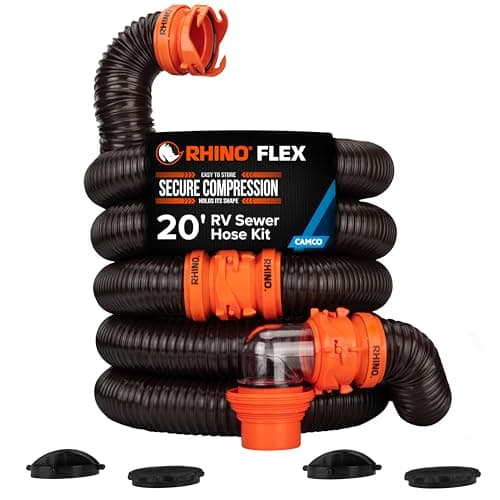 Camco RhinoFLEX 20-Ft Sewer Hose KitThe complete first kit: 20 ft in two sections, both fittings, and a clear elbow so you can see when the tank is actually done. | The first sewer hose to own | Strong | |
| 2 | 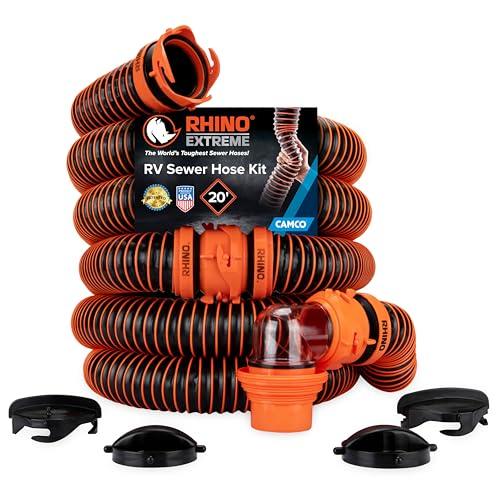 Camco RhinoEXTREME 20-Ft Sewer Hose KitThe same kit with a heavier wall. Worth the upgrade if your hose gets dragged across gravel rather than laid on grass. | Full-season and rougher sites | Strong | |
| 3 | 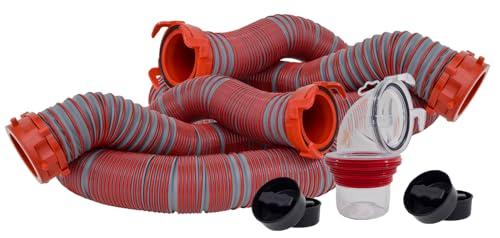 Valterra Viper 20-Ft Sewer Hose KitThe alternative worth knowing: the hose is comparable and the fitting is built where these kits usually fail first. | A stronger fitting | Good | |
| 4 | 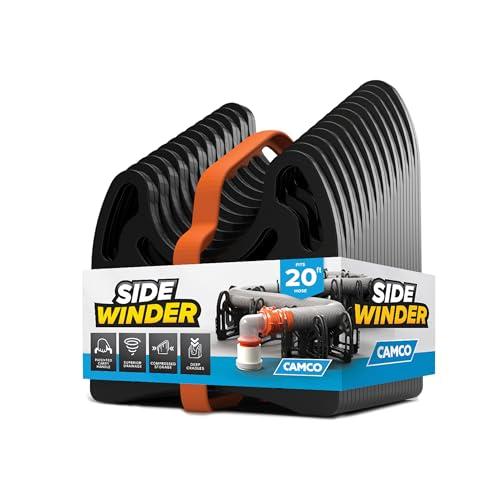 Camco Sidewinder RV Sewer Hose Support (20 ft)The item first-timers most often arrive without: a fixed-slope cradle that makes the tank actually drain instead of sit. | The support most people should buy | Strong |
Prices come from Amazon and were last checked November 12, 2026. They change constantly, so a price older than 48 hours is withdrawn rather than shown stale — those rows read “Check price on Amazon” instead and go straight to the current listing. #ad — these are affiliate links.
What cold actually does to a sewer hose
There are two separate failures and they are worth keeping apart, because only one of them is solved by spending money.
The wall stiffens, so forcing a coil becomes cracking
An RV sewer hose is a thin polymer wall over a helical wire. Warm, it folds down to almost nothing and springs back. Cold, the same wall is noticeably stiffer, and the places it used to fold willingly become the places it splits when you make it fold anyway. The split is rarely obvious at the time — you find it at the next dump, leaking from somewhere other than the end.
This is the reason the heaviest hose is not automatically the cold-weather answer. A thicker wall is stiffer to begin with, so in freezing weather it is the more awkward of the two to handle and the one you are more likely to force. We make the same point in RhinoFLEX versus RhinoEXTREME: the heavy hose is bought for abrasion, not for cold.
The exception is worth stating plainly. If your cold-weather sites are gravel and the hose gets dragged rather than laid, abrasion is a bigger threat to it than handling is, and the heavier wall is the right buy — handled deliberately and never forced into a tight coil while cold.
Whatever is left inside freezes
The second failure is simpler and cannot be bought off. Any water left standing in a low spot in the hose will freeze, expand, and stretch or split the wall from inside. The hose is now a liability that looks fine. The fix is procedural: drain the whole length by walking it from the rig end to the sewer end before you pack it, every single time the temperature is going to drop.
How we choose
We do not run a test lab and do not claim to. Picks are judged on published manufacturer specifications, current availability, and whether a first-season owner can use the thing correctly the first time. What this site adds is a lodge that hosts RV sites every weekend through the cold months, where the same hoses fail in the same ways. The full methodology is here.
The picks
1. Best for The first sewer hose to own
Camco RhinoFLEX 20-Ft Sewer Hose Kit
The complete first kit: 20 ft in two sections, both fittings, and a clear elbow so you can see when the tank is actually done.
- Specification
- 20 ft supplied as two 10 ft sections
- Specification
- Swivel bayonet fitting at the rig end
- Specification
- Clear 45-degree adapter included in the kit
What it does well
- The kit arrives complete: hose, both fittings and the clear elbow, so nothing is missing at the first dump station
- Two 10 ft sections means you use 10 ft at most sites and 20 ft when you need it, instead of coiling slack
- The clear elbow lets you see when the tank has actually finished, which is the entire job
The real tradeoff
- Bulkier collapsed than a thin-wall hose, and a 4-inch bumper will not take 20 ft of it
- The bayonet fittings need a firm quarter-turn. A lazy connection is how people end up with a mess
How it measures up
These are judgments from published specifications and what we see at the lodge, not laboratory results. How we choose.
- Beginner fit
- Strong — Nothing to buy separately, nothing to work out.
- Durability
- Good — Thicker than the hose bundled with a used trailer.
- Storage
- Adequate — Twenty feet will not fit a 4-inch bumper. Plan for that.
- Value
- Strong — The category default, and deservedly.
Specifications from Camco.
2. Best for Full-season and rougher sites
Camco RhinoEXTREME 20-Ft Sewer Hose Kit
The same kit with a heavier wall. Worth the upgrade if your hose gets dragged across gravel rather than laid on grass.
- Specification
- 20 ft as two 10 ft sections
- Specification
- Heavier wall than the standard kit
- Specification
- Same swivel fittings and clear elbow
What it does well
- A noticeably tougher wall, which matters if the hose gets dragged over gravel rather than laid on grass
- Same fittings as the standard kit, so sections interchange with what you already own
The real tradeoff
- Heavier and stiffer to coil, especially in the cold
- Costs more for a difference you may never need if you camp on grass
How it measures up
These are judgments from published specifications and what we see at the lodge, not laboratory results. How we choose.
- Beginner fit
- Strong — Identical to use.
- Durability
- Strong — The reason to buy it.
- Storage
- Adequate — Slightly bulkier than the standard hose.
- Value
- Good — Pays back over a full season, not a weekend.
Specifications from Camco.
3. Best for A stronger fitting
Valterra Viper 20-Ft Sewer Hose Kit
The alternative worth knowing: the hose is comparable and the fitting is built where these kits usually fail first.
- Specification
- 20 ft kit
- Specification
- Reinforced fitting design
- Specification
- Standard bayonet connection
What it does well
- The fitting design is the part people praise, and the collar is usually what fails first, not the hose
- Directly interchangeable with the common bayonet standard
The real tradeoff
- Less widely stocked, so a mid-trip replacement section is harder to find
- Kit contents vary by listing
How it measures up
These are judgments from published specifications and what we see at the lodge, not laboratory results. How we choose.
- Beginner fit
- Good — Same connection method as everything else.
- Durability
- Strong — Fittings are the strong point.
- Storage
- Adequate — Same bulk problem as any 20 ft hose.
- Value
- Good — Competitive, if you can find it stocked.
Specifications from Valterra.
4. Best for The support most people should buy
Camco Sidewinder RV Sewer Hose Support (20 ft)
The item first-timers most often arrive without: a fixed-slope cradle that makes the tank actually drain instead of sit.
- Specification
- 20 ft folding support
- Specification
- Fixed slope molded in
- Specification
- Folds flat, accordion style
What it does well
- Holds the slope by itself. No adjusting, and no collapsing halfway through a dump
- Folds flat rather than telescoping, so it does not jam with grit
- This is the single most common thing first-timers arrive without
The real tradeoff
- Long when folded, and it needs a full-length storage space
- A fixed slope means a badly placed sewer connection still fights you
How it measures up
These are judgments from published specifications and what we see at the lodge, not laboratory results. How we choose.
- Beginner fit
- Strong — Unfold it, lay the hose in, done.
- Durability
- Good — Folding beats telescoping over a season of grit.
- Storage
- Adequate — Flat, but long.
- Value
- Strong — Cheap, and it fixes the slow-drain complaint outright.
Specifications from Camco.
What to look for when it is cold
Cold-weather priorities versus warm-weather ones
| Property | Matters in summer | Matters in the cold |
|---|---|---|
| Wall thickness | Abrasion on gravel | Cuts both ways - tougher, but stiffer to handle cold |
| Fitting quality | Convenience | Critical - cold fittings are harder to seat and easier to crack |
| Length | Reaching the inlet | Shorter is better; less hose, fewer low spots to hold water |
| Hose support | Keeps the flow moving | Essential - a continuous slope leaves nothing standing |
| Storage | Keeping it out of the way | Store drained and uncoiled, not folded under load |
Use a support, and use the shortest run that reaches
A hose support matters more in winter than at any other time, because its job is to hold a continuous downhill slope. A sagging hose holds water in every dip, and every dip is a place for ice to form. Combine a support with the shortest length that reaches the inlet and the hose empties itself. Our hose support roundup covers the options.
Seat the fittings before they get cold
Bayonet fittings need a firm quarter-turn, and cold plastic gives less warning before it cracks. Connect carefully, do not force a fitting that is resisting, and if a collar feels brittle, replace the section rather than persuading it.
Keep the dump quick, and do it in daylight where you can
Everything about this job is slower and less pleasant when it is cold, which means it is the job most likely to be rushed and the one where rushing causes the problem. A dump that happens in the afternoon, with both tanks full enough to flush properly, is one connection and one disconnection. A dump put off until after dark in freezing rain is where fittings get forced.
Do not buy a heated hose for this
Heated hoses are a fresh-water product. They exist because your supply line carries water continuously and can freeze solid while in use. A sewer hose should be empty almost all of the time, so the money is better spent on a tougher hose and a support that keeps it draining.
If you camp below freezing regularly
At that point the hose stops being the main question. Insulating the gray and black valves, keeping the tanks warm enough to stay liquid, and using a tank treatment suited to cold conditions all matter more than the wall thickness of your hose. We cover the tank side in the black tank flush guide, and if you are putting the rig away rather than using it, start with how to winterize a travel trailer for storage.
One more thing worth saying plainly: a sewer hose is a consumable. It is the cheapest item in the dump-station chain and the one with the shortest life. Replacing it at the first sign of a crack — whichever wall thickness you bought — is the correct approach rather than a failure of the purchase.
The mirror image of this page is a hose left connected through a warm season, where the recommendation reverses: sunlight and fitting load do the damage rather than cold handling, and the heavier wall becomes the right buy. That case is best RV sewer hose for long term use.
The other half of cold-weather camping is the fresh-water side, and it is the half that actually needs a product rather than a habit: a supply line carries water continuously and freezes while in use, which is what a heated water hose exists for. There is nothing equivalent to buy for the sewer side, because a sewer hose should be empty between dumps.
Questions people actually ask
Can an RV sewer hose freeze?
The hose itself does not freeze, but any water left standing in it does. The ice expands and stretches or splits the wall, usually somewhere in the middle where a sag held the water. Draining the hose completely before storing it prevents it.
What is the best sewer hose for cold weather?
The standard-wall kit rather than the heaviest one. Every hose stiffens as the temperature falls and a thicker wall starts stiffer, so it is harder to coil cold and more likely to be forced. Buy the heavy hose for abrasion on gravel, not for cold.
Should I leave my gray tank open in winter?
No. A slow trickle through a cold hose freezes into a plug, and then the next sink of water backs up toward the trailer. Keep the valves closed and dump when the tanks are full, so the hose is empty almost all the time.
Do heated sewer hoses exist?
Heated hoses are a fresh-water product, because a supply line carries water continuously and can freeze while in use. A sewer hose should be empty between dumps, so the better investment is a tougher hose and a support that keeps it draining.
How should I store a sewer hose in freezing weather?
Drained, dry and uncoiled, in a compartment where nothing is stacked on it. Walk the length from the rig end to the sewer end to push the last of the water out before you put it away.
Sources
Read next
Sewer & Water
Best Heated RV Water Hose for a Travel Trailer
Heated fresh-water hoses for freezing nights, ranked on diameter, published cold rating and what happens when the power goes off.
Sewer & Water
Best RV Sewer Hose for a First Travel Trailer
Complete sewer hose kits compared on length, wall thickness, fittings and storage, for someone doing this for the first time.
Sewer & Water
Camco RhinoFLEX vs RhinoEXTREME: Which Should You Buy?
The two Camco sewer hose kits compared on wall thickness, handling in cold weather and which sites justify the upgrade.
Sewer & Water
Best RV Sewer Hose Support
Folding and compressing hose supports compared, plus why the homemade versions usually disappoint.
Reviewed October 10, 2026. Spot something out of date? Tell us and we will fix it.