First-Time Travel Trailer Owner Tips
Not a list of gear. These are the habits and the small pieces of knowledge that separate a smooth first season from an expensive one, in roughly the order they come up.
Heads up: this page contains affiliate links. If you buy through one, Camp & Chock may earn a commission at no extra cost to you. It never changes which product we put first — how this site is funded.

Most first-season trouble is not caused by missing gear. It is caused by four things: not knowing your real weights, not having a fixed order of operations, not checking anything before leaving, and assuming the dealer demonstration covered what you needed. Everything below comes from a lodge that hosts RV sites every weekend and watches new owners discover the same things in the same order.
This is part of our first-season starter kit guide, and it is deliberately not a shopping list. The shopping list is in RV must-haves for beginners.
Before you tow it anywhere
1. Weigh the trailer loaded, on a real scale
The dry weight on the brochure is a trailer with no water, no propane, no battery and nothing in the cupboards. Your trailer is heavier, and the gap decides your hitch, your tires and whether you are inside your tow rating. A public scale costs very little and ends the guesswork. Where that number leads is do I need a weight distribution hitch.
2. Find and photograph everything that matters
Walk the trailer with your phone and photograph the VIN plate, the tire sidewall codes, the water heater and fridge model plates, the fuse panel, and the location of every valve and shutoff. You will need at least three of these before the season is over, usually in a parking lot with poor signal.
3. Check the tire dates, not just the pressure
Trailer tires age out before they wear out, and a trailer that sat on a dealer lot has tires older than its model year. The date code is on the sidewall. Pressure matters too, and it matters at the number on the sidewall rather than the number in your truck. A monitor takes the guesswork out permanently — see our TPMS roundup.
Setting up, every time
4. Have one order of operations and never vary it
Level side to side, chock, unhitch, level front to back, stabilize, power, water, sewer. The order matters because each step depends on the one before it. Written down and followed, it takes fifteen minutes. Improvised, it takes forty and you will redo something. Ours is in the RV setup checklist.
5. Test the pedestal before you plug the trailer into it
A campground pedestal is an unknown piece of wiring and it is not always right. Plug a protector in first, read what it says, and only then connect the rig. This is the single habit most likely to save you a four-figure repair, and we explain the faults in the RV electrical hookup guide.
6. The step rug is not a luxury item
Gravel and grass come inside on shoes, get ground into the floor, and scratch it. A rug that clips over the step costs very little and removes most of it. It is the cheapest quality-of-life purchase in this entire category. The companion complaint — that the last step down to the ground is a stretch, which gets worse once the trailer is up on blocks — is a separate and equally cheap fix, covered in the RV steps roundup.
Three things worth having from the first trip
Not the hookup gear - that list is elsewhere. These are the three items first-season owners most often wish they had packed.
Best for The screws that back out
Compact Household Tool Kit
Most first-season repairs are a screw that vibrated loose. Keep a dedicated kit in the trailer and they stay two-minute jobs.

Best for Every hookup after sunset
Rechargeable LED Headlamp
You will hook up in the dark more often than you expect, and every one of those jobs needs both hands.
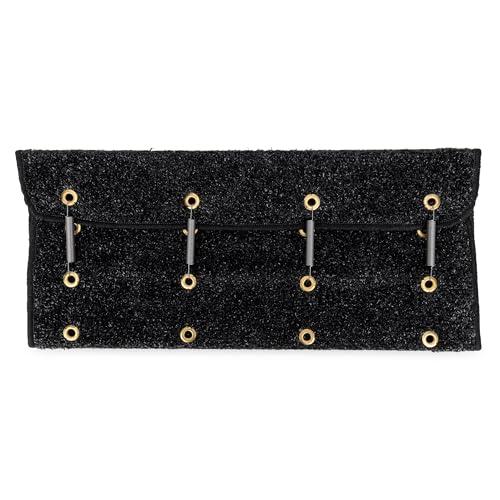
Best for Keeping the site outside
Camco Wrap-Around RV Step Rug
The cheapest way to stop tracking the campsite through the trailer. It clips over the entry step in seconds.
Living in it
7. Things vibrate loose, and most repairs are a screwdriver
A trailer is a house being driven down a highway. Screws back out, trim lifts, cabinet catches loosen. A dedicated tool kit that lives in the trailer turns almost all of this into a two-minute job. The tools in your garage are not the tools you have at a campsite.
8. Keep both tank valves closed until the tank is full
Leaving the gray valve open seems convenient and causes two problems: solids in the black tank need volume to flush properly, and a slow trickle through a hose invites smells and, in cold weather, ice. Dump when the tank reads full. The whole procedure is in how to hook up an RV sewer hose.
9. Everything happens in the dark eventually
Arrival after sunset, a hookup in the rain, a fuse at midnight. Every one of those jobs needs both hands, which means a headlamp rather than a flashlight. Buy two, charge them before the trip.
10. Learn what your fridge needs
An absorption fridge wants the trailer close to level to work properly, and it wants several hours to come down to temperature. Start it the night before, not on the way out. If the fridge is not cooling at a site, check level before you check the fridge.
Between trips
11. Walk the roof seals twice a season
Water damage is the one problem on a travel trailer that compounds quietly and expensively. Sealant around vents, skylights and the front cap is a consumable. Looking at it in June and September, and re-sealing anything cracked, is the highest-value hour you will spend on the trailer all year. Two tubes cover it — which RV roof sealant to buy explains self-leveling versus non-sag and which products the makers tell you to keep off a rubber roof.
12. Do not let it sit damp
A closed trailer with any moisture in it develops a smell and then a mold problem. Moisture absorbers cost very little and work unattended for months, which is exactly what storage needs. The full routine is in how to winterize a travel trailer for storage.
13. Keep a written record of what you have done to it
Dates for tank sanitizing, seal checks, battery replacement, tire pressures and anything a shop touched. A note on your phone is enough. The reason is that a trailer's maintenance is seasonal, which means you are always trying to remember something you last did eight months ago, and the honest answer is usually that you cannot.
If you have not bought anything yet, the fastest useful read is what not to buy for your first RV — the money you do not spend in month one is the money you have for the sewer hose upgrade in month two.
Questions people actually ask
What should a first-time travel trailer owner do first?
Weigh the loaded trailer on a public scale and read the ratings on your receiver and in your vehicle manual. Those numbers decide your hitch, your tires and whether you are inside your tow rating, and every other decision follows them.
What do first-time RV owners get wrong most often?
Improvising the setup order. Each step depends on the one before it, so leveling after chocking or unhitching before chocking means doing part of it twice. A written order takes about fifteen minutes to follow.
Should I leave the gray tank valve open when hooked up?
No. Keep both valves closed and dump when the tank is full. Volume is what flushes the black tank properly, and a hose with a slow trickle in it invites smells and, in cold weather, ice.
How often should I check the roof seals?
Twice a season. Sealant around vents, skylights and the front cap is a consumable, and water damage is the problem that compounds quietly. An hour looking at it in June and September is the best-value maintenance on the trailer.
Is the dealer walkthrough enough training?
No. It covers where things are rather than how to use them under pressure. Do one full setup and teardown in your own driveway with nothing at stake before the first trip.
Sources
Read next
First-Season Starter Kit
RV Must-Haves for Beginners
The first-season shortlist, ordered by when you need each item: leaving the lot, arriving, hooking up, the first night, the first dump.
First-Season Starter Kit
Best RV Roof Sealant for a Travel Trailer
RV roof and seam sealant explained by what it goes on: self-leveling, non-sag, tape, and the clear tube to keep off a rubber roof.
First-Season Starter Kit
RV Setup and Departure Checklist
The arrival and departure sequence for a travel trailer, in the order that avoids redoing work or damaging something.
First-Season Starter Kit
What Not to Buy for Your First RV
The nine accessories first-season owners most often waste money on, and what to buy instead of each.
Reviewed October 10, 2026. Spot something out of date? Tell us and we will fix it.