Best RV Stabilizer Jacks for a Travel Trailer
A stabilizer jack is not a lifting jack, and four of them pointing straight down will not stop a trailer rocking. This is what each kind of jack actually does, what it is rated for, and the cheap part that fixes the real complaint.
Heads up: this page contains affiliate links. If you buy through one, Camp & Chock may earn a commission at no extra cost to you. It never changes which product we put first — how this site is funded.
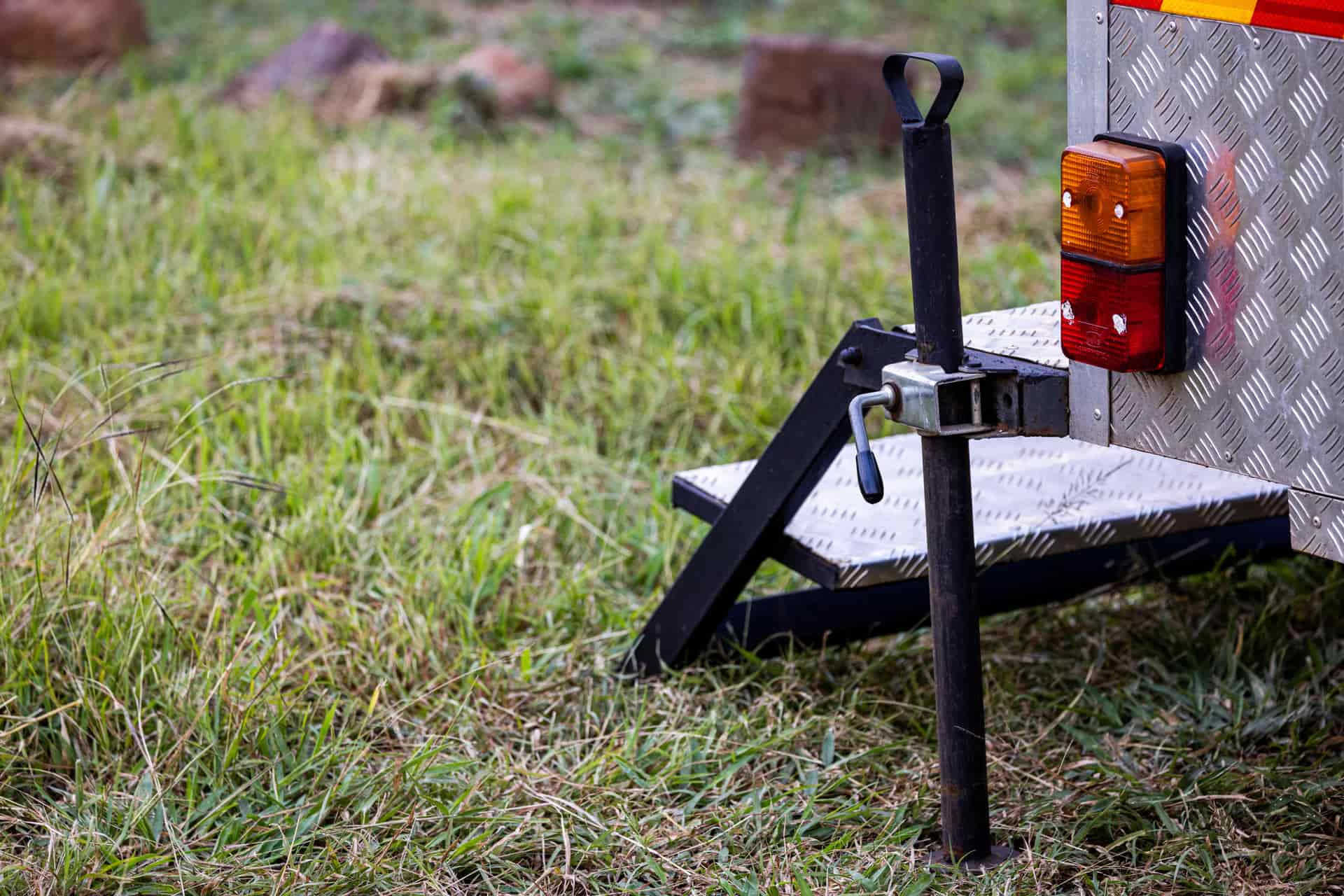
The short answer
If you are replacing or adding bolt-on jacks, the Lippert 24 in manual scissor jack kit is the OEM part on a huge share of travel trailers, it publishes a 5,000 lb per-jack load rating, and it retracts to 4-1/4 in so it clears the road. If you do not want to drill anything, four aluminum stack jacks placed where the movement actually is will do more good than two more bolt-on jacks in the factory brackets. Buy the drill socket with whichever you choose — it is the cheapest thing on this page and it saves four minutes on every arrival. And know the limit before you spend: every jack here is rated to stabilize a share of the trailer’s weight, not to lift it, and none of them is the right tool for a flat tire.
Part of our leveling and chocks guide. If you are not yet sure which job you are solving, stabilizers versus levelers is the page that separates them, and how to keep a travel trailer from rocking is the free version of this page — the technique that comes before any purchase.
Our picks at a glance
Tap any row to jump to the full write-up.
| # | Product | Best for | Beginner fit | Price |
|---|---|---|---|---|
| 1 | 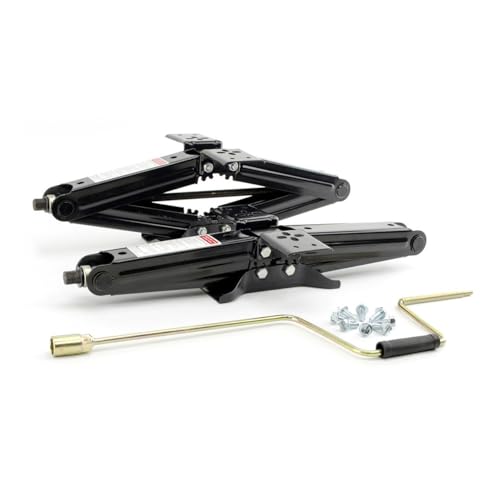 Lippert Manual RV Scissor Jack Kit, 24 in (2-pack, 285326)The default scissor jack: OEM fit, published capacity, and the right retracted height. Measure your travel before you choose 24 or 30 in. | Replacing or adding bolt-on scissor jacks on a travel trailer | Good | |
| 2 | 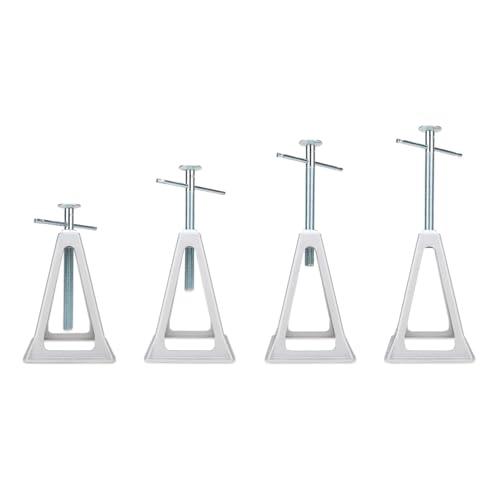 Camco Aluminum Stack Jacks, 4-pack (44560)The no-installation answer, and a genuinely good one: four points of support you can place where the movement actually is. Check your frame height against 11 to 17 in first. | Adding stability with no drilling and nothing bolted on | Strong | |
| 3 | 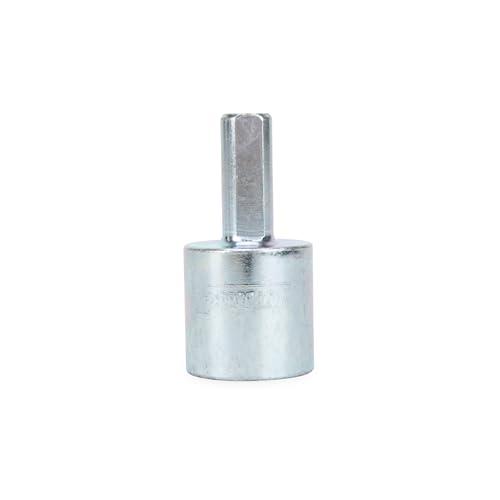 Camco RV Leveling Scissor Jack Socket Drill Adapter (57363)A few dollars that remove four minutes and a sore shoulder from every single arrival. Buy it with whatever jacks you choose. | Turning four jacks down without the crank handle | Strong | |
| 4 | JT's Strong Arm Travel Trailer Jack Stabilizer Kit (191025)The actual fix for a trailer that rocks, and priced like it. Buy it last, after leveling, chocking and X-chocks have had their turn. | The owner whose trailer still rocks with the jacks down | Adequate | |
| 5 | 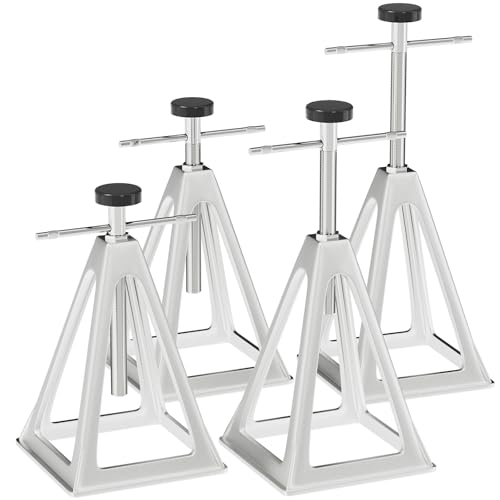 RVGUARD RV Stack Jacks, 4-packThe budget pick. Same idea as the Camco set at a lower price, with a capacity claim that nobody publishes a specification for. | The cheapest way to put four points under the frame | Strong | |
| 6 | 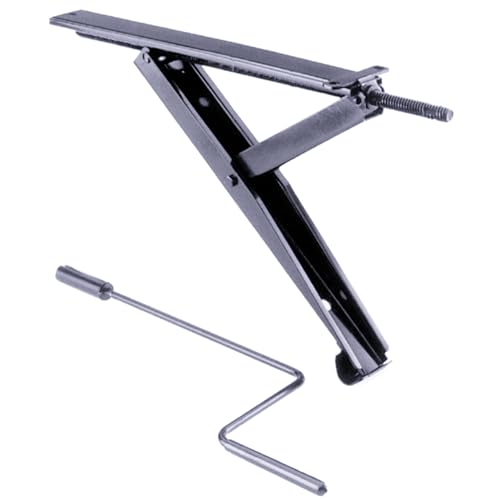 BAL Light Trailer Stabilizing Jacks, 17 in (set of 2, 23025)The right answer on a light trailer and the wrong one on a heavy trailer. Check your weight against 1,000 lb per jack before you buy. | Pop-ups, teardrops and genuinely light trailers | Strong |
Prices come from Amazon and were last checked November 27, 2026. They change constantly, so a price older than 48 hours is withdrawn rather than shown stale — those rows read “Check price on Amazon” instead and go straight to the current listing. #ad — these are affiliate links.
The one thing to understand before you buy a jack
Almost every disappointment in this category comes from the same misunderstanding, and it is worth spending a paragraph on.
A stabilizer jack does not lift and does not level. Its job is to take a share of the trailer’s weight off the suspension so the body stops moving on its springs and tires. It is not a bottle jack, it is not a floor jack, and the load figures on these products are stabilizing ratings. etrailer’s guidance on this class of jack is explicit: it is designed to stabilize a portion of your trailer’s weight, not to support its full gross weight, and it should not be used to lift the trailer. If you have a blowout on the road, you want a proper jack and the right pressure, not these.
Leveling happens first, and it happens under the tires. Side to side with leveling blocks under the low-side wheels, front to back with the tongue jack. Only when the trailer is level and chocked do the stabilizer jacks come down. Run a scissor jack down to lift a corner into level and you are using a 5,000 lb stabilizing rating as a 5,000 lb lifting rating, and the frame mount is usually what gives first.
And the rocking is not vertical. This is the part that surprises people. Stand in a parked travel trailer and the movement you feel when someone walks across it is mostly fore-aft and side-to-side sway, pivoting around the axles. A jack pointing straight down at each corner resists compression beautifully and does very little about a horizontal shove. That is why owners put four jacks down, feel the trailer still move, and assume they bought the wrong jacks. They did not. They bought the wrong axis.
The four kinds of jack sold under this name
“Stabilizer jack” covers four genuinely different products, and the search that brought you here does not distinguish them.
Bolt-on scissor jacks. The folding steel jacks mounted under the frame at each corner, cranked by hand or by drill. Almost every modern travel trailer has four from the factory. These are what you replace when one seizes, and what you add if your trailer came with only two.
Stack or screw jacks. Free-standing aluminum or steel columns you place under the frame and spin up by hand. Nothing is attached to the trailer, which means they install in zero minutes and can go anywhere the frame is solid. For a first-season owner this is usually the better first purchase, and it is rarely the one people are shown.
Triangulating kits. Braces that tie the existing scissor jacks back to the frame at an angle, converting a vertical column into a triangle. This is the only shape in the category that resists the horizontal movement described above, and it is also the most expensive and the most work to fit.
Electric and power jacks. Real products, and deliberately not featured here. A powered stabilizer is a wiring job on a trailer whose frame mounts and switch positions vary by model, and for a first-season owner the honest answer is the drill socket below: a few dollars, no wiring, and the same outcome. Autocomplete offers “best electric rv stabilizer jacks” and we are answering it here rather than selling the wrong thing.
How we choose
Published load rating, and what kind of load it is. We rank a jack whose maker states a per-jack capacity above one that states a total, and both above a listing with a number and no document behind it. Where listings disagree with each other — as they do on the BAL light-duty pair — we say so rather than pick the bigger figure.
Travel range against real trailer frames. The most common way this purchase goes wrong is a jack that does not reach, or one that hangs too low when stowed. Range and retracted height are weighted heavily, and they are the first two numbers in every spec list below.
What it takes to fit. A product that needs an afternoon under the trailer with a drill is held to a higher standard than one you set on the ground, because for most first-season owners the second thing actually gets used. That is the whole reason the stack jacks rank where they do.
Whether it addresses the real complaint. Vertical support is easy and most of these products deliver it. We give explicit credit to the one design that braces the horizontal movement, and we are equally explicit that it costs several times as much as everything else here.
We do not test products and say so on how we choose. No jack on this page was loaded to its rating by us, no deflection was measured, and no trailer was instrumented. Every capacity, travel range and retracted height below is the maker’s or the retailer’s own published figure, reported as a claim, and where a brand publishes nothing we say that instead of inventing a number. Sources are linked at the end.
The picks
1. Best for Replacing or adding bolt-on scissor jacks on a travel trailer
Lippert Manual RV Scissor Jack Kit, 24 in (2-pack, 285326)
The default scissor jack: OEM fit, published capacity, and the right retracted height. Measure your travel before you choose 24 or 30 in.
- Specification
- 5,000 lb load capacity per jack (Lippert)
- Specification
- 24 in extended, 4-1/4 in retracted
- Specification
- Two jacks and a crank handle in the kit
- Specification
- Lippert part number 285326; a 30 in version exists for taller frames
What it does well
- The OEM part on an enormous number of travel trailers, so it bolts to the frame the way the factory jack did and the geometry is already right
- 4-1/4 in retracted is low enough to clear most frames on the road, which is the measurement that disqualifies cheaper jacks
- Takes a 3/4 in hex drive, so the drill socket below turns a two-minute chore into a ten-second one
- Sold as a pair with the handle, which is how you need them
The real tradeoff
- A bolt-on or weld-on job. If your frame has no existing bracket you are drilling, and that is a bigger afternoon than the product suggests
- 24 in of travel is not enough for every trailer; measure your frame-to-ground height before ordering, because the 30 in kit exists for a reason
- The 5,000 lb figure is a stabilizing load rating. It is not permission to lift the trailer on them
- Steel, painted, outdoors. They will want a wire brush and paint eventually
How it measures up
These are judgments from published specifications and what we see at the lodge, not laboratory results. How we choose.
- Beginner fit
- Good — Simple to operate; fitting is real work.
- Install effort
- Adequate — Bolt-on if brackets exist, drilling if not.
- Stability gained
- Good — Kills vertical movement, not sway.
- Value
- Strong — Pair plus handle, OEM specification.
Specifications from Lippert published specifications.
2. Best for Adding stability with no drilling and nothing bolted on
Camco Aluminum Stack Jacks, 4-pack (44560)
The no-installation answer, and a genuinely good one: four points of support you can place where the movement actually is. Check your frame height against 11 to 17 in first.
- Specification
- Supports up to 6,000 lb (Camco)
- Specification
- Extends from 11 in to 17 in
- Specification
- Aluminum, four per pack
- Specification
- Camco part number 44560
What it does well
- Nothing to install: you set them under the frame, spin them up by hand and they are working, which makes them the only pick here a renter or a first-week owner can use immediately
- Aluminum, so four of them are light enough to actually keep in the storage bay rather than leave at home
- Four jacks means you can put them where the rocking is rather than where the factory put brackets - usually at the rear corners and just behind the axles
- Nothing to break: a screw thread and a pad
The real tradeoff
- The 11 to 17 in range is the whole decision. Measure your frame height first, because a trailer sitting higher than 17 in needs a block underneath and a lower one will not accept them at all
- Hand-spun, so there is no drill shortcut and no mechanical advantage beyond the thread
- They stand on whatever is under them. On soft ground they want a pad, which is a separate purchase
- Positioning is on you. Badly placed, they do very little
How it measures up
These are judgments from published specifications and what we see at the lodge, not laboratory results. How we choose.
- Beginner fit
- Strong — Set, spin, done.
- Install effort
- Strong — None.
- Stability gained
- Good — Four extra points, well placed.
- Value
- Strong — Four jacks for less than one bolt-on pair.
Specifications from Camco.
3. Best for Turning four jacks down without the crank handle
Camco RV Leveling Scissor Jack Socket Drill Adapter (57363)
A few dollars that remove four minutes and a sore shoulder from every single arrival. Buy it with whatever jacks you choose.
- Specification
- Fits 3/8 in and 1/2 in power drills (Camco)
- Specification
- Works with all 3/4 in hex drive jacks (Camco)
- Specification
- Camco also sells a 1/4 in quick-connect version for impact drivers, which is a different part number
- Specification
- Camco part number 57363
What it does well
- The cheapest upgrade to your setup routine on this entire site: four jacks go down in well under a minute instead of four separate sessions with a crank handle
- Fits the 3/8 in and 1/2 in chucks that ordinary cordless drills actually have, rather than the 1/4 in hex quick-connect that only an impact driver takes
- Works with almost any scissor jack, because 3/4 in hex is the standard drive on all of them
The real tradeoff
- A drill applies more torque than your arm does, and these jacks are not meant to lift. Run it down until it touches and the load comes on, then stop - over-cranking on a drill is how a jack or a frame mount gets bent
- Does nothing on a stack jack or a hand-spun jack, which have no hex head to drive
- You are now carrying a drill as camping equipment, which is either a feature or a nuisance depending on the person
How it measures up
These are judgments from published specifications and what we see at the lodge, not laboratory results. How we choose.
- Beginner fit
- Strong — Push into the chuck; that is the install.
- Install effort
- Strong — None.
- Stability gained
- Adequate — No extra stability - it is speed.
- Value
- Strong — The best few dollars in the hub.
Specifications from Camco.
4. Best for The owner whose trailer still rocks with the jacks down
JT's Strong Arm Travel Trailer Jack Stabilizer Kit (191025)
The actual fix for a trailer that rocks, and priced like it. Buy it last, after leveling, chocking and X-chocks have had their turn.
- Specification
- Bolt-on kit of telescoping tubes that triangulate the existing scissor jacks to the frame
- Specification
- Published fit is travel trailers with C-channel, I-beam or H-beam frames, working with traditional stabilizer, scissor or landing-gear jacks
- Specification
- Published as a six-jack kit: six outer tubes, six inner tubes and hardware, four stabilizers at the front and two at the rear
- Specification
- Bolts to the frame with no welding required, and carries a published 1-year warranty
- Specification
- No load rating is published for this kit, so we are not quoting one
- Specification
- Lippert part number 191025; separate fifth-wheel and short fifth-wheel kits exist
What it does well
- It is the only product on this page that addresses the movement people actually complain about. Scissor jacks resist up and down; the Strong Arm braces fore-aft and side to side, which is what the rocking is
- Works with the jacks you already own instead of replacing them, so it stacks on top of an OEM setup
- Telescoping tubes lock at length, so once it is set up, deployment is part of the same routine as cranking the jacks down
- The fit question has a published answer rather than a guess: C-channel, I-beam or H-beam travel trailer frames, traditional stabilizer, scissor or landing-gear jacks, and separate kits for the two fifth-wheel layouts
The real tradeoff
- By far the most expensive thing on this page, and the price is the reason most owners try everything else first
- A real install under the trailer, on your back. It bolts to the frame with no welding, but the published parts list runs to thirty nuts and forty-eight washers, so set aside proper time for it
- It makes a good setup excellent and a bad setup slightly less bad. If your trailer is not level and chocked properly, fix that first and you may not need this at all
- Amazon stock for the genuine Lippert kit comes and goes, and it was unavailable there when we last checked while RV specialists still had it. Worse, the Amazon results fill up with look-alike kits quoting the same 191025 number at about a third of genuine retail - those are not Lippert's, so check the brand on the listing before you buy
How it measures up
These are judgments from published specifications and what we see at the lodge, not laboratory results. How we choose.
- Beginner fit
- Adequate — Simple to use, real work to fit.
- Install effort
- Weak — Bolt-on, no welding, and a long session underneath.
- Stability gained
- Strong — Triangulation is the mechanism that works.
- Value
- Adequate — Effective, and the most money here by far.
Specifications from JT's Strong Arm travel trailer kit (191025) - published frame and jack fit, kit contents and warranty.
5. Best for The cheapest way to put four points under the frame
RVGUARD RV Stack Jacks, 4-pack
The budget pick. Same idea as the Camco set at a lower price, with a capacity claim that nobody publishes a specification for.
- Specification
- 6,000 lb support claimed per the listing
- Specification
- Adjustable from 11 in to 17 in
- Specification
- Aluminum, four per pack
- Specification
- A 7,500 lb version of the same design is also listed
What it does well
- Roughly half the price of the Camco set for the same published range and the same mechanism, which on a screw thread and a pad is a defensible saving
- Four jacks, no installation, nothing bolted to the trailer
- Light enough to carry four without thinking about it
The real tradeoff
- A marketplace brand: the 6,000 lb figure is the listing's own and there is no manufacturer specification sheet behind it, which is why it is ranked below Camco rather than above on price
- Same 11 to 17 in constraint as every stack jack - measure first
- No part number continuity to rely on if you later want a matching fifth or sixth jack
How it measures up
These are judgments from published specifications and what we see at the lodge, not laboratory results. How we choose.
- Beginner fit
- Strong — Set, spin, done.
- Install effort
- Strong — None.
- Stability gained
- Good — Four points, placed by you.
- Value
- Strong — The least money for four jacks.
6. Best for Pop-ups, teardrops and genuinely light trailers
BAL Light Trailer Stabilizing Jacks, 17 in (set of 2, 23025)
The right answer on a light trailer and the wrong one on a heavy trailer. Check your weight against 1,000 lb per jack before you buy.
- Specification
- 1,000 lb load capacity per jack per retailer listings; some list a separate 700 lb lifting figure
- Specification
- 17 in of travel, set of two with a crank handle
- Specification
- Rust-inhibiting e-coat finish
- Specification
- BAL / Norco Industries part number 23025
What it does well
- Sized and rated for the trailers the big scissor jacks are overkill on - tent trailers, teardrops and small single-axle campers
- 17 in of travel from a compact jack, which suits a low-slung light trailer
- An e-coated finish rather than paint, on a part that lives in road spray
- A real manufacturer with a part number and a published rating, which is rare at this size
The real tradeoff
- 1,000 lb per jack is a fraction of the scissor jacks above. On a 6,000 lb travel trailer these are the wrong product and we would rather say so than sell you two
- Retailer listings disagree about the lifting figure, so treat anything beyond the 1,000 lb load rating as unverified
- Set of two, so a four-corner setup is two kits
- Still a bolt-on or bracket-mounted part, not a drop-under jack
How it measures up
These are judgments from published specifications and what we see at the lodge, not laboratory results. How we choose.
- Beginner fit
- Strong — Crank handle, nothing to learn.
- Install effort
- Adequate — Mounted, not free-standing.
- Stability gained
- Good — On a light trailer. Not on a heavy one.
- Value
- Good — Fair for a branded, rated light-duty pair.
Range, rating and what it takes to fit
| Pick | Travel range | Published rating | Install |
|---|---|---|---|
| Lippert 24 in scissor jack kit | 4-1/4 in retracted to 24 in | 5,000 lb per jack (Lippert) | Bolt-on; drilling if no brackets |
| Camco aluminum stack jacks (4) | 11 in to 17 in | Up to 6,000 lb (Camco) | None - set them under the frame |
| Camco drill adapter socket | Not applicable | Fits 3/8 and 1/2 in drills, 3/4 in jack head | Push it into a drill |
| JT's Strong Arm travel trailer kit | Telescoping, set to your frame | No load rating published | Bolts to the frame, no welding |
| RVGUARD stack jacks (4) | 11 in to 17 in | 6,000 lb claimed by the listing | None |
| BAL 23025 light trailer pair | 17 in | 1,000 lb per jack (retailer listings) | Mounted, not free-standing |
Read that table as two separate purchases rather than one ranking. The scissor jacks and the BAL pair are replacement hardware chosen by frame fit and trailer weight; the stack jacks and the Strong Arm kit are additions that improve a trailer whose factory jacks are fine. The drill socket belongs with all of them.
If your trailer already has four factory jacks
Do not replace them. Add four stack jacks where the movement is, drive the factory jacks with a drill instead of the crank handle, and put something solid under every foot. That is under a hundred dollars of parts and it is most of the improvement available to you.
Best for Adding stability with no drilling and nothing bolted on
Camco Aluminum Stack Jacks, 4-pack (44560)
The no-installation answer, and a genuinely good one: four points of support you can place where the movement actually is. Check your frame height against 11 to 17 in first.
Best for Turning four jacks down without the crank handle
Camco RV Leveling Scissor Jack Socket Drill Adapter (57363)
A few dollars that remove four minutes and a sore shoulder from every single arrival. Buy it with whatever jacks you choose.
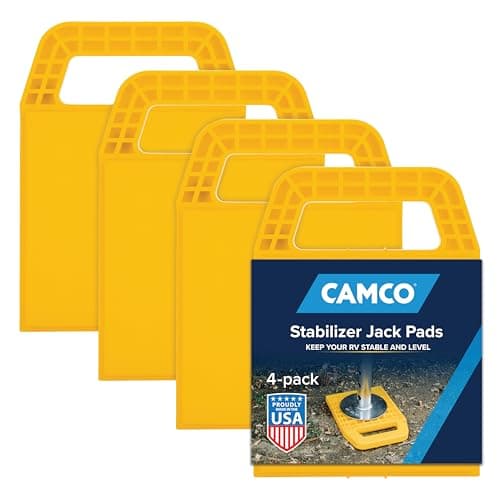
Best for Stopping jacks sinking
Camco Stabilizing Jack Pads
Four squares of plastic that stop your stabilizer jacks burying themselves in a wet grass site overnight.
The order that actually stops the rocking
If you only read one section, read this one. It is cheaper than the product list above.
One: get level, under the tires. Blocks on the low side, then the tongue jack for front to back. A trailer that is not level is already loading one corner and one spring differently from the others, and nothing you bolt on afterwards fixes that. The leveling walkthrough is the sequence.
Two: chock the wheels properly. Ordinary chocks stop the trailer rolling. X-chocks between tandem tires do something different and more valuable here: they wedge the two tires apart, which takes the fore-aft play out of the suspension. On a tandem axle trailer this is the single biggest reduction in rocking per dollar spent, and it costs less than a pair of scissor jacks.
Three: put the jacks down onto something solid. A jack foot on gravel or soft ground sinks a fraction of an inch under load and gives all the movement straight back. Jack pads spread the load; our pads versus wood comparison covers whether the purpose-made ones are worth it over a scrap 2x8.
Four: snug, do not lift. Run each jack down until the foot is loaded and the body stops settling, then stop. You are transferring weight off the springs, not raising the trailer. This is also the step a drill makes dangerous if you are not paying attention, because a cordless drill will happily keep going.
Five: add points, then add triangles. Four stack jacks under the frame rails, placed where you feel the movement rather than symmetrically, is the next improvement. Only after all of that does a triangulating kit earn its price, and at that point it genuinely works.
Mistakes that cost a jack or a frame mount
Using a stabilizer jack to change a tire. The one real safety item on this page. These jacks are rated to stabilize, their mounts are welded to a thin frame rail, and a trailer that comes off one is a very bad afternoon. Carry a bottle jack.
Cranking a corner up to level the trailer. It feels like it works and it loads the jack and its mount in exactly the way the rating does not cover. Level with blocks under the tires.
Leaving them down over a long stay without checking. Ground settles, especially after rain, and a jack that was snug on Friday can be carrying nothing by Monday or carrying far too much. Re-snug them.
Buying a 24 in jack for a tall frame. Measure. The 30 in version of the same Lippert kit exists precisely because the 24 in does not reach on every trailer, and a jack at full extension is at its weakest.
Never greasing the screw. A scissor jack is a threaded rod living in road spray. A little grease on the thread once a season is the difference between a jack you crank and a jack you replace.
Expecting jacks to fix a soft floor. If the movement you feel is the floor flexing rather than the whole trailer swaying, no jack addresses it. That is a different conversation with a dealer.
Where this sits in a first season
Most first-season owners do not need to buy a stabilizer jack at all. Your trailer almost certainly came with four, and the gap between a trailer that rocks and one that feels solid is usually technique and thirty dollars of accessories rather than new hardware. That is why the cheapest items on this page — the drill socket, the pads, the stack jacks — are ranked as highly as they are.
Where a purchase is genuinely warranted: a seized or bent factory jack needs replacing and the Lippert kit is the part; a trailer that only came with two jacks benefits enormously from four; a light trailer with no jacks at all is what the BAL pair is for; and a trailer that still moves after everything in the sequence above is the case the Strong Arm kit was built for. Beyond that, the money is better spent on chocks and on knowing how many blocks you need before you arrive. And if the trailer is going into storage rather than back out next weekend, leave the jacks down on pads and read the winterizing walkthrough for the rest of that job, plus which storage cover to buy if it is sitting in the open — a trailer that settles unevenly over four months is also a trailer whose cover stops fitting the way you left it.
Questions people actually ask
Can you use RV stabilizer jacks to lift the trailer?
No. They are rated to stabilize a portion of the trailer's weight, which is a different thing from lifting it. etrailer's guidance on this class of jack states plainly that it is not intended to support the full weight of the trailer and should not be used to lift it. For a tire change or any work under the trailer, use a bottle jack or a floor jack rated for the weight.
Why does my travel trailer still rock with all four stabilizer jacks down?
Because the movement is mostly horizontal and the jacks are vertical. A parked trailer sways fore-aft and side-to-side around its axles, and a column pointing straight down at each corner barely resists that. The fixes, in order of cost: X-chocks between tandem tires to take the play out of the suspension, solid pads under every jack foot so nothing sinks, extra stack jacks placed where you feel the movement, and finally a triangulating kit that braces the jacks back to the frame at an angle.
What size stabilizer jack do I need, 24 inch or 30 inch?
Measure from your frame rail to the ground on a level pad at the spot where the jack mounts, and allow some margin so the jack is not working at full extension. A jack at maximum reach is at its weakest. The 24 in kit suits most travel trailers; the 30 in version of the same kit exists because taller frames and fifth wheels need it. Also check the retracted height - the Lippert 24 in kit folds to 4-1/4 in, and that is the number that decides whether it clears a steep driveway.
Why can't I find the JT's Strong Arm kit on Amazon?
Because Amazon's own listing for the genuine Lippert kit went unavailable, not because the kit was discontinued. RV specialists still stock part 191025 as a current product. What fills the Amazon search results instead is look-alike kits that quote the same 191025 number at roughly a third of genuine retail, and those are not Lippert's product - the brand on the listing is the tell. If you want the real kit, buy it from an RV parts specialist, or check whether Amazon has restocked it before ordering something that merely says it fits. Everything else on this page is a cheaper first move anyway, and the order they go in is in the section above.
Are stack jacks better than scissor jacks?
They are different tools. Scissor jacks bolt to the frame and are what came on the trailer; stack jacks are free-standing columns you set under the frame wherever you like. For a first-season owner with four working factory jacks, adding four stack jacks is usually the bigger improvement because you can put them where the movement actually is rather than where the factory welded brackets. Check your frame height against the 11 to 17 in range before ordering.
Can I use a drill on my RV scissor jacks?
Yes, and it is the best few dollars in this category. A socket adapter drives the standard 3/4 in hex jack head from an ordinary 3/8 in or 1/2 in drill chuck, and four jacks go down in under a minute. The one caution is torque: run the jack down until the foot is loaded and the body stops settling, then stop. A cordless drill will keep going well past the point your arm would have given up, and that is how a jack or a frame mount gets bent.
Do stabilizer jacks need pads underneath them?
On anything other than concrete, yes. A jack foot is small, and on gravel, grass or soft ground it sinks under load and hands the movement straight back. A pad spreads the load over a wider area and keeps the foot out of the dirt. Purpose-made pads stack and store neatly; a cut piece of lumber does the same job for less if you do not mind carrying it.
Should I buy electric stabilizer jacks?
Probably not as a first-season purchase. Powered stabilizers are real products, but fitting one is a wiring job on a frame whose mounts and switch locations vary by trailer, and the outcome you are buying is mostly speed. A drill adapter socket costs a fraction as much, needs no wiring and gets four jacks down just as fast, which is why this roundup recommends the socket instead.
How much weight should a stabilizer jack hold?
Read the rating as a per-jack stabilizing load and match it to your trailer, not to the biggest number available. The Lippert scissor jacks publish 5,000 lb per jack and the aluminum stack jacks publish up to 6,000 lb, both of which are ample for a travel trailer when the jacks are only taking weight off the springs. The light-duty BAL pair publishes 1,000 lb per jack, which is right for a pop-up or teardrop and wrong for a 6,000 lb travel trailer.
Sources
Read next
Leveling & Chocks
RV Stabilizers vs Levelers: What Each One Is For
The difference between leveling gear and stabilizing gear, and why using a stabilizer jack to lift can damage the frame.
Leveling & Chocks
How to Keep a Travel Trailer From Rocking
Why a parked trailer still moves, and the order of operations plus gear that stops it.
Leveling & Chocks
Best RV Jack Pads for a Travel Trailer
Jack pads and jack blocks compared on the one number that matters: how much ground they spread the load across.
Leveling & Chocks
X-Chocks vs Wheel Chocks: What Each One Actually Stops
The difference between rolling and rocking, which chock fixes which, and why the answer is usually both.
Reviewed November 16, 2026. Spot something out of date? Tell us and we will fix it.